
Sign up to save your podcasts
Or

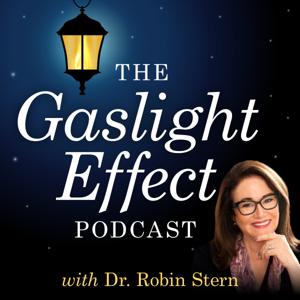

In this episode of The Gaslight Effect Podcast, Dr. Robin Stern launches a new limited series, Conversations at the Edge—exploring what it takes to stay grounded, curious, and connected when discussions move into charged, uncertain, or deeply divided territory. The goal isn't to "win" an argument, but to understand how we can remain in relationship without erasing, attacking, or diminishing the other.
For the first episode in the series, Robin is joined by Dr. Sarah Stein Lubrano, author of Don't Talk About Politics: Do Something, for a timely conversation about why so many political conversations leave us feeling more divided—and why "better arguments" rarely change minds. Sarah shares what led her to write the book, from growing up in Washington, D.C. and witnessing polarization up close, to her experiences in prisons, academia, and community work that reshaped how she thinks about power, persuasion, and real-world change.
Together, Robin and Sarah unpack the myth of the "marketplace of ideas," why debate often reinforces identity instead of shifting it, and how certainty and authority can create conditions where people second-guess themselves—opening the door to manipulation.
At the heart of the conversation is a practical alternative: if we want change, we need to invest less in argument and more in relationships, organizing, and shared action. Sarah explains what research shows actually moves people—deep connection, civic infrastructure, and "gateway actions" that create agency and momentum—while Robin connects these ideas to emotional intelligence, moral injury, and the possibility of "moral beauty" in taking action together.
This episode is an invitation to step out of endless discourse and into a different kind of power—one rooted in community, dignity, and doing the work.
To check out this and other episodes, head over to robinstern.com.
Don't forget to subscribe to The Gaslight Effect Podcast on your favorite podcast platform, and be sure to leave us a review to let us know what you think. Until next time, remember: healing is a journey, and you don't have to walk it alone.
Dr. Robin Stern's Social Media Links:
Facebook - https://www.facebook.com/drrobinstern/
Instagram - https://www.instagram.com/dr.robinstern/
Twitter (X) - https://twitter.com/RobinSStern
LinkedIn - https://www.linkedin.com/in/robin-stern-220b403a
Dr. Robin Stern's Books:
The Gaslight Effect
The Gaslight Effect Recovery Guide
Emotional Intelligence for School Leaders
Disclaimer: The views and opinions expressed on The Gaslight Effect Podcast do not necessarily reflect the official policy or position of the podcast. Any content provided by our guests, bloggers, sponsors or authors are of their opinion and are not intended to malign any religion, group, club, organization, business individual, anyone or anything.
 View all episodes
 By Robin Stern

4.5
4949 ratings
In this episode of The Gaslight Effect Podcast, Dr. Robin Stern launches a new limited series, Conversations at the Edge—exploring what it takes to stay grounded, curious, and connected when discussions move into charged, uncertain, or deeply divided territory. The goal isn't to "win" an argument, but to understand how we can remain in relationship without erasing, attacking, or diminishing the other.
For the first episode in the series, Robin is joined by Dr. Sarah Stein Lubrano, author of Don't Talk About Politics: Do Something, for a timely conversation about why so many political conversations leave us feeling more divided—and why "better arguments" rarely change minds. Sarah shares what led her to write the book, from growing up in Washington, D.C. and witnessing polarization up close, to her experiences in prisons, academia, and community work that reshaped how she thinks about power, persuasion, and real-world change.
Together, Robin and Sarah unpack the myth of the "marketplace of ideas," why debate often reinforces identity instead of shifting it, and how certainty and authority can create conditions where people second-guess themselves—opening the door to manipulation.
At the heart of the conversation is a practical alternative: if we want change, we need to invest less in argument and more in relationships, organizing, and shared action. Sarah explains what research shows actually moves people—deep connection, civic infrastructure, and "gateway actions" that create agency and momentum—while Robin connects these ideas to emotional intelligence, moral injury, and the possibility of "moral beauty" in taking action together.
This episode is an invitation to step out of endless discourse and into a different kind of power—one rooted in community, dignity, and doing the work.
To check out this and other episodes, head over to robinstern.com.
Don't forget to subscribe to The Gaslight Effect Podcast on your favorite podcast platform, and be sure to leave us a review to let us know what you think. Until next time, remember: healing is a journey, and you don't have to walk it alone.
Dr. Robin Stern's Social Media Links:
Facebook - https://www.facebook.com/drrobinstern/
Instagram - https://www.instagram.com/dr.robinstern/
Twitter (X) - https://twitter.com/RobinSStern
LinkedIn - https://www.linkedin.com/in/robin-stern-220b403a
Dr. Robin Stern's Books:
The Gaslight Effect
The Gaslight Effect Recovery Guide
Emotional Intelligence for School Leaders
Disclaimer: The views and opinions expressed on The Gaslight Effect Podcast do not necessarily reflect the official policy or position of the podcast. Any content provided by our guests, bloggers, sponsors or authors are of their opinion and are not intended to malign any religion, group, club, organization, business individual, anyone or anything.

21,141 Listeners
2,529 Listeners
1,432 Listeners

27,775 Listeners
782 Listeners
361 Listeners

41,321 Listeners

43 Listeners
1,114 Listeners

19,524 Listeners
291 Listeners
379 Listeners

83 Listeners

8,481 Listeners

1,794 Listeners