
Sign up to save your podcasts
Or

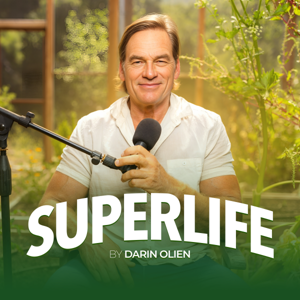

In this solo episode, Darin dives into one of the most universal modern experiences: the feeling that time is accelerating. Drawing from neuroscience, psychology, cognitive science, and lived experience, he breaks down why time doesn't actually speed up, but our experience of it radically changes.
From the impact of digital distraction and divided attention to the way novelty, memory, aging, and even COVID reshaped our internal sense of time, this episode offers both clarity and agency. Darin shows how reclaiming attention, breaking monotony, and creating richer experiences can give us the feeling of having our time back.
What You'll Learn
Why time measured by a clock is different from time experienced by the brain
How attention, memory, and emotion construct subjective time
Why boredom feels slow while flow states feel fast
How novelty creates richer memories and longer-feeling lives
The role of routine and monotony in time compression
How digital technology fragments attention and erases memory
Why social media scrolling makes time disappear without satisfaction
How COVID disrupted temporal landmarks and distorted time perception
Why time feels faster as we age
The neuroscience behind memory density and perceived duration
Whether time itself is an illusion or a constructed experience
Practical ways to slow down your experience of time
How breaking routine restores a sense of fullness and presence
Why life is measured in experiences, not seconds
Chapters
00:00:03 – Welcome to SuperLife and the exploration of time 00:00:32 – Sponsor: TheraSage and frequency-based healing 00:02:16 – Why time feels like it's speeding up 00:03:07 – Measured time vs experienced time 00:03:39 – Subjective time and how the brain constructs duration 00:04:38 – Boredom, flow, and why time feels slow or fast 00:05:20 – Memory density and time compression 00:05:42 – Clock models vs attention and memory models 00:06:13 – Novelty, travel, and rich experiences 00:06:34 – Routine, repetition, and unremarkable days 00:07:21 – Divided attention and disappearing moments 00:07:56 – The digital shift and fragmented attention post-2000 00:08:30 – Micro-stimulation and wasted time 00:09:12 – Why scrolling doesn't equal flow 00:09:46 – Social acceleration and modern life 00:10:25 – COVID as a global experiment in time perception 00:10:55 – Loss of temporal landmarks during lockdown 00:11:57 – Sponsor: Caldera Lab and clean skincare 00:13:39 – Research on monotony and time compression 00:14:40 – Aging, fewer neural events, and faster time 00:15:30 – Childhood vs adulthood time perception 00:16:22 – Is time real or constructed? 00:16:57 – Physics, relativity, and subjective experience 00:17:56 – How to slow down your experience of time 00:18:12 – Novelty, adventure, and memory creation 00:19:00 – Sustained attention vs multitasking 00:19:37 – Breaking monotony in daily life 00:20:06 – Reducing digital distraction 00:20:25 – Enjoying life as a scientific practice 00:20:49 – Time as memory, not seconds 00:21:08 – Gaining agency over your experience of life 00:21:29 – Creating a richer year through experience 00:22:10 – Curiosity, adventure, and Darin's fascination with time 00:23:27 – Closing thoughts and call to action
Thank You to Our Sponsors
Therasage: Go to www.therasage.com and use code DARIN at checkout for 15% off
Caldera Lab: Experience the clinically proven benefits of Caldera Lab's clean skincare regimen and enjoy 20% off your order by visiting calderalab.com/darin and using code DARIN at checkout.
Join the SuperLife Community
Get Darin's deeper wellness breakdowns — beyond social media restrictions:
Weekly voice notes
Ingredient deep dives
Wellness challenges
Energy + consciousness tools
Community accountability
Extended episodes
Join for $7.49/month → https://patreon.com/darinolien
Find More from Darin Olien:
Instagram: @darinolien
Podcast: SuperLife Podcast
Website: superlife.com
Book: Fatal Conveniences
Key Takeaway
Time isn't speeding up — your brain is compressing it. When you change how you pay attention and what you experience, you change how long your life feels.
Bibliography & Research Sources
Droit-Volet, S., Gil, S., Martinelli, N., Andant, N., Clinchamps, M., Parreira, L., ... & Dutheil, F. (2020). Time paradox in COVID-19 lockdown: A web-based study. Frontiers in Psychology, 11, 2185.
https://doi.org/10.3389/fpsyg.2020.577735
Lugtmeijer, S., Geerligs, L., & Cam-CAN. (2025). Temporal dedifferentiation of neural states with age during naturalistic viewing. Communications Biology, 8, Article 123. (This is the "2025 brain study" on older adults having fewer distinct neural states).
https://doi.org/10.1038/s42003-025-08792-4
Ma, Q., & Wiener, M. (2024). Memorability shapes perceived time (and vice versa). Nature Human Behaviour, 8, 1–13. (The study showing memorable images dilate time).
https://doi.org/10.1038/s41562-024-01863-2
Matthews, W. J., & Meck, W. H. (2016). Temporal cognition: Connecting subjective time to perception, attention, and memory. Psychological Bulletin, 142(8), 865–907. (The core review often attributed to leading field researchers linking time to attention/memory).
https://doi.org/10.1037/bul0000045
Ogden, R. S. (2020). The passage of time during the UK Covid-19 lockdown. PLOS ONE, 15(7), e0235871. (The longitudinal study showing 80%+ reported time distortion).
https://doi.org/10.1371/journal.pone.0235871
Rosa, H. (2013). Social acceleration: A new theory of modernity. Columbia University Press. (The sociological framework on "social acceleration").
https://cup.columbia.edu/book/social-acceleration/9780231148344
Wearden, J. H. (2016). The psychology of time perception. Palgrave Macmillan. (Comprehensive overview by the author mentioned in your notes).
https://doi.org/10.1057/978-1-137-40883-9
Winkler, I., et al. (2020). The impact of the COVID-19 pandemic on time perception. Scientific Reports. (Likely reference for "Scientific Reports" findings on content-dependent timing).
 View all episodes
 By Darin Olien

4.8
12431,243 ratings
In this solo episode, Darin dives into one of the most universal modern experiences: the feeling that time is accelerating. Drawing from neuroscience, psychology, cognitive science, and lived experience, he breaks down why time doesn't actually speed up, but our experience of it radically changes.
From the impact of digital distraction and divided attention to the way novelty, memory, aging, and even COVID reshaped our internal sense of time, this episode offers both clarity and agency. Darin shows how reclaiming attention, breaking monotony, and creating richer experiences can give us the feeling of having our time back.
What You'll Learn
Why time measured by a clock is different from time experienced by the brain
How attention, memory, and emotion construct subjective time
Why boredom feels slow while flow states feel fast
How novelty creates richer memories and longer-feeling lives
The role of routine and monotony in time compression
How digital technology fragments attention and erases memory
Why social media scrolling makes time disappear without satisfaction
How COVID disrupted temporal landmarks and distorted time perception
Why time feels faster as we age
The neuroscience behind memory density and perceived duration
Whether time itself is an illusion or a constructed experience
Practical ways to slow down your experience of time
How breaking routine restores a sense of fullness and presence
Why life is measured in experiences, not seconds
Chapters
00:00:03 – Welcome to SuperLife and the exploration of time 00:00:32 – Sponsor: TheraSage and frequency-based healing 00:02:16 – Why time feels like it's speeding up 00:03:07 – Measured time vs experienced time 00:03:39 – Subjective time and how the brain constructs duration 00:04:38 – Boredom, flow, and why time feels slow or fast 00:05:20 – Memory density and time compression 00:05:42 – Clock models vs attention and memory models 00:06:13 – Novelty, travel, and rich experiences 00:06:34 – Routine, repetition, and unremarkable days 00:07:21 – Divided attention and disappearing moments 00:07:56 – The digital shift and fragmented attention post-2000 00:08:30 – Micro-stimulation and wasted time 00:09:12 – Why scrolling doesn't equal flow 00:09:46 – Social acceleration and modern life 00:10:25 – COVID as a global experiment in time perception 00:10:55 – Loss of temporal landmarks during lockdown 00:11:57 – Sponsor: Caldera Lab and clean skincare 00:13:39 – Research on monotony and time compression 00:14:40 – Aging, fewer neural events, and faster time 00:15:30 – Childhood vs adulthood time perception 00:16:22 – Is time real or constructed? 00:16:57 – Physics, relativity, and subjective experience 00:17:56 – How to slow down your experience of time 00:18:12 – Novelty, adventure, and memory creation 00:19:00 – Sustained attention vs multitasking 00:19:37 – Breaking monotony in daily life 00:20:06 – Reducing digital distraction 00:20:25 – Enjoying life as a scientific practice 00:20:49 – Time as memory, not seconds 00:21:08 – Gaining agency over your experience of life 00:21:29 – Creating a richer year through experience 00:22:10 – Curiosity, adventure, and Darin's fascination with time 00:23:27 – Closing thoughts and call to action
Thank You to Our Sponsors
Therasage: Go to www.therasage.com and use code DARIN at checkout for 15% off
Caldera Lab: Experience the clinically proven benefits of Caldera Lab's clean skincare regimen and enjoy 20% off your order by visiting calderalab.com/darin and using code DARIN at checkout.
Join the SuperLife Community
Get Darin's deeper wellness breakdowns — beyond social media restrictions:
Weekly voice notes
Ingredient deep dives
Wellness challenges
Energy + consciousness tools
Community accountability
Extended episodes
Join for $7.49/month → https://patreon.com/darinolien
Find More from Darin Olien:
Instagram: @darinolien
Podcast: SuperLife Podcast
Website: superlife.com
Book: Fatal Conveniences
Key Takeaway
Time isn't speeding up — your brain is compressing it. When you change how you pay attention and what you experience, you change how long your life feels.
Bibliography & Research Sources
Droit-Volet, S., Gil, S., Martinelli, N., Andant, N., Clinchamps, M., Parreira, L., ... & Dutheil, F. (2020). Time paradox in COVID-19 lockdown: A web-based study. Frontiers in Psychology, 11, 2185.
https://doi.org/10.3389/fpsyg.2020.577735
Lugtmeijer, S., Geerligs, L., & Cam-CAN. (2025). Temporal dedifferentiation of neural states with age during naturalistic viewing. Communications Biology, 8, Article 123. (This is the "2025 brain study" on older adults having fewer distinct neural states).
https://doi.org/10.1038/s42003-025-08792-4
Ma, Q., & Wiener, M. (2024). Memorability shapes perceived time (and vice versa). Nature Human Behaviour, 8, 1–13. (The study showing memorable images dilate time).
https://doi.org/10.1038/s41562-024-01863-2
Matthews, W. J., & Meck, W. H. (2016). Temporal cognition: Connecting subjective time to perception, attention, and memory. Psychological Bulletin, 142(8), 865–907. (The core review often attributed to leading field researchers linking time to attention/memory).
https://doi.org/10.1037/bul0000045
Ogden, R. S. (2020). The passage of time during the UK Covid-19 lockdown. PLOS ONE, 15(7), e0235871. (The longitudinal study showing 80%+ reported time distortion).
https://doi.org/10.1371/journal.pone.0235871
Rosa, H. (2013). Social acceleration: A new theory of modernity. Columbia University Press. (The sociological framework on "social acceleration").
https://cup.columbia.edu/book/social-acceleration/9780231148344
Wearden, J. H. (2016). The psychology of time perception. Palgrave Macmillan. (Comprehensive overview by the author mentioned in your notes).
https://doi.org/10.1057/978-1-137-40883-9
Winkler, I., et al. (2020). The impact of the COVID-19 pandemic on time perception. Scientific Reports. (Likely reference for "Scientific Reports" findings on content-dependent timing).
7,205 Listeners

4,986 Listeners
11,865 Listeners
2,025 Listeners

2,628 Listeners
4,872 Listeners
3,457 Listeners

9,231 Listeners

2,330 Listeners

1,781 Listeners
840 Listeners

29,207 Listeners
1,461 Listeners

1,196 Listeners
3,097 Listeners