
Sign up to save your podcasts
Or

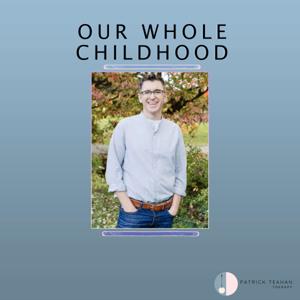

In this episode, Patrick Teahan, MSW, explores the profound impact of growing up in an abusive or neglectful environment, detailing how childhood trauma survivors often struggle with intense self-blame and self-hatred. He introduces the concept of emotional math, moving beyond simple advice to just be kinder to yourself, focusing instead on the deep rooted self-contempt that develops when children lack a healthy adult guide.
The episode begins by unpacking a complex dynamic: the development of damaged perceptions about personal self-worth. Patrick uses this concept to illustrate how normal human needs and mistakes are calculated as evidence of being fundamentally flawed, trapping survivors in a painful but brilliant childhood survival mechanism used to avoid the terrifying reality of having unsafe parents.
Listeners will learn:
Patrick also provides a guided reflection to help listeners express gratitude to their inner child for their protective instincts, paving the way to replace self-hatred with self-compassion. By understanding how these feelings developed, survivors who struggle with perfectionism, ruminate over past social mistakes, or constantly feel like a burden can find clarity and begin to change the narrative.
Keywords: childhood trauma, self-hate, emotional math, inner child work, emotional neglect, family roles, trauma recovery, self-blame, toxic family systems
Join the Healing Community!
Join the Monthly Healing Community Membership
 View all episodes
 By Patrick Teahan

4.9
306306 ratings
In this episode, Patrick Teahan, MSW, explores the profound impact of growing up in an abusive or neglectful environment, detailing how childhood trauma survivors often struggle with intense self-blame and self-hatred. He introduces the concept of emotional math, moving beyond simple advice to just be kinder to yourself, focusing instead on the deep rooted self-contempt that develops when children lack a healthy adult guide.
The episode begins by unpacking a complex dynamic: the development of damaged perceptions about personal self-worth. Patrick uses this concept to illustrate how normal human needs and mistakes are calculated as evidence of being fundamentally flawed, trapping survivors in a painful but brilliant childhood survival mechanism used to avoid the terrifying reality of having unsafe parents.
Listeners will learn:
Patrick also provides a guided reflection to help listeners express gratitude to their inner child for their protective instincts, paving the way to replace self-hatred with self-compassion. By understanding how these feelings developed, survivors who struggle with perfectionism, ruminate over past social mistakes, or constantly feel like a burden can find clarity and begin to change the narrative.
Keywords: childhood trauma, self-hate, emotional math, inner child work, emotional neglect, family roles, trauma recovery, self-blame, toxic family systems
Join the Healing Community!
Join the Monthly Healing Community Membership
677 Listeners
5,827 Listeners
1,412 Listeners
2,529 Listeners
1,545 Listeners

752 Listeners
361 Listeners

1,852 Listeners
43 Listeners
1,732 Listeners
344 Listeners
291 Listeners

379 Listeners

83 Listeners
350 Listeners