
Sign up to save your podcasts
Or



Based on Podcast App listening data
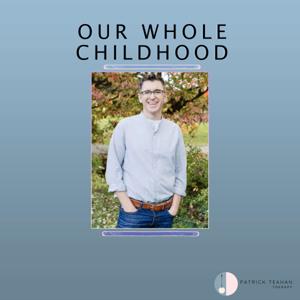
In this episode, Patrick Teahan, MSW explores the heavy burden of guilt carried by childhood trauma survivors. When growing up in a toxic or dysfunctional family, children are often trapped in no-win situations, blamed for things entirely out of their control, and expected to manage adult problems. This creates a deeply rooted sense of guilt that persists into adulthood, fueled by underlying, internalized shame.
Patrick breaks down the crucial difference between guilt and shame. Guilt focuses on the actions we feel we are failing to do, while shame provides the painful internal narrative that we are inherently selfish or bad for failing. This combination often leads survivors to cave in, self-sacrifice, and abandon their own boundaries to avoid making others uncomfortable.
To help break this cycle, this episode features two detailed reparenting roleplays that demonstrate how to communicate effectively with a wounded inner child.
Key Takeaways
Join the Healing Community!
Join the Monthly Healing Community Membership
In this episode, Patrick Teahan, MSW, explores the hidden psychological barriers that prevent childhood trauma survivors from reaching their personal and professional goals. While often labeled simply as imposter syndrome, this struggle is rarely just a lack of confidence. Instead, it is a complex intersection of survival mechanisms, unresolved grief, and toxic family system dynamics. Patrick breaks down four specific patterns that keep survivors anchored in familiar dysfunction rather than risking the vulnerability required for success.
What You Will Learn:
The Suffering Trap: Understanding the paradox of having a high tolerance for familiar pain but a low tolerance for the new discomfort necessary for growth and change.
Perfectly Incapable: How toxic family branding and assigned roles (such as the scapegoat or the laborer) disconnect survivors from their true capabilities and establish invisible ceilings.
Can I Keep Up the Facade?: The pervasive anxiety that success is fragile and the distorted belief that anything less than perfect, unwavering effort makes you an imposter.
Why Bother?: How the heartbreak of not being seen or celebrated by an apathetic or abusive family of origin neutralizes the drive to achieve major life milestones.
Personal success is highly subjective, whether it means getting out of debt, pursuing an advanced degree, or simply living with more calmness instead of operating in messy survival mode. By recognizing how a wounded inner child confuses new discomfort with a literal threat to survival, survivors can begin to rewrite these outdated narratives. Healing involves seeking safe, external mirroring to build a grounded sense of self and reconnecting with your inherent capabilities.
Join the Healing Community!
Join the Monthly Healing Community Membership
In this episode, Patrick Teahan, MSW, steps away from the teleprompter to share real testimonials from his community about the life-changing impact of good therapy. While discussions around mental health often focus on poor fits or damaging experiences, Patrick highlights what it looks and feels like to find a safe and competent practitioner. He introduces a lighthearted analogy comparing a great therapist to a trusted mechanic, someone who understands the complex machinery of your history, manages your emotions with compassion, and is honest about the repairs needed to keep you moving forward.
By exploring stories of profound healing, Patrick unpacks how effective therapy directly counters the anti-process environment of a toxic family system.
Listeners will learn:
Patrick also reflects on his own transformative experiences with his clinical mentor and details how finding a therapist who acts as a safe home base can radically alter your recovery trajectory. For those not yet ready for individual therapy or those seeking additional structured support, Patrick shares information about his healing membership and his recently published clinical assessment designed to measure toxic family environments.
Keywords: childhood trauma, trauma therapy, somatic experiencing, nervous system regulation, toxic family systems, inner child work, mental boundaries, family estrangement, trauma recovery, meaning making, boundary setting.
Join the Healing Community!
Join the Monthly Healing Community Membership
In this episode, Patrick Teahan, MSW, is joined by personality psychologist William Todd Schultz to explore the complicated emotional landscape of family estrangement and how early childhood loss intersects with creative expression.
Todd specializes in profiles of artists and has published books such as Tiny Terror on Truman Capote, An Emergency in Slow Motion on Diane Arbus, Torment Saint on Elliott Smith, and The Mind of the Artist. Together, they detail how childhood trauma and the death of an estranged toxic family member elicit complex forms of grief. They introduce the concept of ambiguous loss and how individuals use creative mediums to process unresolved family systems issues.
The episode begins by unpacking a complex dynamic: the dual reality of an abusive sibling being both a perpetrator and a victim within a dysfunctional family hierarchy. Patrick and Todd use this concept to illustrate why survivors often experience a muted emotional response when an estranged family member physically passes, as the psychological passing of the relationship occurred long ago.
Listeners will learn:
Patrick and Todd also provide insights into meaning-making and grief-related growth, encouraging listeners to understand how modern psychological frameworks apply to these complex forms of grief. By understanding how trauma shapes personality, survivors can begin to safely set boundaries and use creative outlets for self-preservation and healing.
Keywords: childhood trauma, family estrangement, ambiguous loss, creative expression, meaning-making, multigenerational trauma, grief-related growth, personality psychology, toxic family systems, boundary setting.
Join the Healing Community!
Join the Monthly Healing Community Membership
In this episode, Patrick Teahan, MSW, explores the profound impact of rage as a byproduct of childhood trauma, detailing how unsafe environments force children to either weaponize or absorb intense emotional energy. He introduces the concept of inward and outward rage, moving beyond the stigma of "anger issues" to focus on the underground emotional deposits that develop when a child is erased, ignored, or exposed to volatility.
The episode begins by unpacking a complex dynamic: the four specific childhood situations that fuel adult rage. Patrick uses these roots to illustrate how survivors often struggle with a "well of childhood" that runs their present-day reactions, where symptoms like road rage or chronic exhaustion are actually valid byproducts of old injustices.
Listeners will learn:
Patrick also provides a case study of two sisters to highlight how the same traumatic environment can produce polar opposite rage strategies. By understanding how these survival tactics were formed, listeners can begin to move toward a healthy middle ground where anger is a tool for advocacy rather than a source of shame or self-sabotage.
Keywords: childhood trauma, repressed rage, inward rage, outward rage, inner child work, emotional neglect, parentification, nervous system, toxic family systems, trauma recovery, justice-based anger.
Join the Healing Community!
Join the Monthly Healing Community Membership
In this episode, Patrick Teahan, MSW, explores the profound impact of growing up in an abusive or neglectful environment, detailing how childhood trauma survivors often struggle with intense self-blame and self-hatred. He introduces the concept of emotional math, moving beyond simple advice to just be kinder to yourself, focusing instead on the deep rooted self-contempt that develops when children lack a healthy adult guide.
The episode begins by unpacking a complex dynamic: the development of damaged perceptions about personal self-worth. Patrick uses this concept to illustrate how normal human needs and mistakes are calculated as evidence of being fundamentally flawed, trapping survivors in a painful but brilliant childhood survival mechanism used to avoid the terrifying reality of having unsafe parents.
Listeners will learn:
Patrick also provides a guided reflection to help listeners express gratitude to their inner child for their protective instincts, paving the way to replace self-hatred with self-compassion. By understanding how these feelings developed, survivors who struggle with perfectionism, ruminate over past social mistakes, or constantly feel like a burden can find clarity and begin to change the narrative.
Keywords: childhood trauma, self-hate, emotional math, inner child work, emotional neglect, family roles, trauma recovery, self-blame, toxic family systems
Join the Healing Community!
Join the Monthly Healing Community Membership
In this episode, Patrick Teahan, MSW, explores the profound impact of unsafe home environments, detailing how childhood trauma forces kids to trade their early years for survival. He introduces the concept of the survival exchange, moving beyond simple symptom management to focus on the deep rooted hypervigilance that develops when growing up around chaos, neglect, or emotional abuse.
The episode begins by unpacking a complex dynamic: the development of a highly sensitive radar system in place of a grounded sense of self. Patrick uses this concept to illustrate how survivors often struggle to be fully present in adulthood, trapped in a lifelong transaction where they had to skip being a kid just to stay safe.
Listeners will learn:
Patrick also provides practical reflections and prompts, encouraging listeners to practice tolerating the unknown and to notice how they might subconsciously exclude themselves from peer connection. By understanding how trauma hijacked their developmental years, survivors can begin to teach their nervous system that rest is not a danger, but rather a vital restoration process to get more of their life back.
Keywords: childhood trauma, hypervigilance, growing up too fast, inner child work, emotional neglect, emotionally immature parents, nervous system, downtime anxiety, peer relationships, grief work, trauma recovery, healing childhood wounds.
Join the Healing Community!
Join the Monthly Healing Community Membership
In this episode, Patrick Teahan, MSW, dives into the complex world of intuition and safety: how childhood trauma can break our internal radar and how to tell the difference between a safe person and an unsafe one. He introduces a framework centered on Authenticity, moving beyond simple checklists of red flags to focus on the gut-level ick that signals when a person’s public performance doesn't match their private motives.
The episode begins with a nuanced workplace hypothetical: a new coworker who is "extra"—personable and welcoming, yet intense and slightly "performative."
Patrick uses this scenario to illustrate how trauma survivors often struggle with the "was it me or was it them?" dilemma, feeling triggered by the very people who claim to be helpful.
Listeners will learn:
Patrick also provides practical recovery insights, encouraging listeners to stop asking "Are they nice?" and start asking "Are they real?" By understanding how trauma hijacks our "audio preferences" (like the Zoom vs. Music Software analogy), survivors can begin to clear the "CPU" and trust their internal protective systems once again.
Keywords: childhood trauma, trauma recovery, intuition, red flags, authenticity, boundaries, attachment wounds, gaslighting, safe people, people pleasing, self-worth, emotional regulation, internal radar.
Join the Healing Community!
Join the Monthly Healing Community Membership
In this episode, Patrick Teahan, MSW, explores a difficult and personal topic: how abusive family dynamics can scale into larger systems, and what happens when legal authority functions like an abusive parent. He introduces a framework he calls the Abusive Parent State, using trauma pattern recognition to connect family systems language to collective trauma.
Rather than staying inside the usual home-based roles, Patrick widens the lens to examine how gaslighting, enforcer dynamics, and discard phases can appear at a societal level. The episode begins with a family story from County Kerry, Ireland in 1920, when a home invasion by the Black and Tans changed his family’s lineage and left a long nervous system legacy. From there, he draws parallels to historical and present-day examples, including Hitler’s SA and a current lens on ICE, to illustrate how state-sponsored fear can imprint across generations.
Listeners will learn:
Patrick also discusses recovery tools for holding reality clearly, staying regulated, and resisting the pull to normalize abusive dynamics, whether they come from family or from systems.
If you feel activated by the current climate, carry inherited fear, or recognize familiar abuse patterns playing out on a larger scale, this episode offers language, validation, and a way to think about collective trauma without losing sight of healing.
Keywords: collective trauma, intergenerational trauma, childhood trauma, state violence, hypervigilance, gaslighting, family systems, abusive parent dynamics, enforcer dynamics, scapegoating, trauma patterns, trauma recovery
Join the Healing Community!
Join the Monthly Healing Community Membership
In this episode, Patrick, explores why memories of school bullies can still feel visceral years later, even after you have done a lot of healing work. Using a poll with over 2,000 participants, Patrick breaks down the different ways bullying can stick in the nervous system, from occasional intense flashbacks to lingering resentment and revenge fantasies.
Rather than treating bullying as a standalone issue, Patrick connects it to childhood trauma and family systems. He explains how bullies often target vulnerability, how being disconnected at home can amplify what happens at school, and why many survivors cannot fully process bullying until they also confront the bully at home or the caregivers who minimized it, blamed them, or failed to protect them.
A major turning point in the episode comes from Patrick’s own story: years after high school, he looks up a bully online and finds a single comment that reframes the entire relationship...
Listeners will learn:
Patrick also discusses recovery themes like validating your younger self, noticing “trauma detective” dynamics where bullies spot fear and disconnection, and how reclaiming your own humanity makes it easier to see humanity in others without excusing harm.
If you still think about a bully once in a while and the feelings hit hard, this episode offers a grounded way to understand why, and a path toward loosening what is still stuck.
Keywords: school bullying, childhood trauma, emotional flashbacks, resentment, revenge fantasies, family systems, emotional neglect, unsafe parents, hypervigilance, self-worth, healing, compassion
Join the Healing Community!
Join the Monthly Healing Community Membership
From the publisher's feed
This is "Our Whole Childhood" - hosted by Patrick Teahan - where we discuss everything childhood trauma, from the issues that we experience, to the stuff that comes up in our families, and to the…
Ranked by our users in the last 21 days
678 Listeners
5,825 Listeners
1,407 Listeners
2,510 Listeners
1,535 Listeners
755 Listeners
366 Listeners
1,852 Listeners
36 Listeners
1,740 Listeners
341 Listeners
293 Listeners
382 Listeners

83 Listeners
344 Listeners