
Sign up to save your podcasts
Or

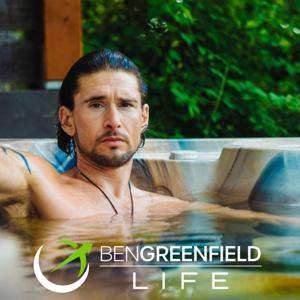


Based on Podcast App listening data
https://bengreenfieldfitness.com/telomeretest
Recently, I had my telomeres tested by the company "TeloYears", which offers a simple and surprisingly affordable in-home genetic test that reveals the cellular age encoded in your DNA, specifically by using something called a quantitative polymerase chain reaction (qPCR) assay.
Teloyears measure your average telomere length by analyzing the DNA found in the many thousands of white blood cells (leukocytes) in just one drop of blood. Then, they enter your data into a mathematical model they derived from measuring telomere length at the population level to calculate your biological age in TeloYears, or the actual age of a typical man or woman whose telomere length is similar to yours. So, for example, my chronological age is 34, but my biological age (I was shocked) was far different. You find out what it was in today's podcast with my guest Jason Shelton. Jason Shelton joined Telomere Diagnostics in 2014 with nearly two decades of start-up, medical device, and consumer healthcare experience. Most recently, Jason was CEO of EarLens Corporation where he led the company’s efforts in product development, regulatory affairs, and operational milestones. Prior to joining EarLens, he served as Vice President of Marketing, Health Policy, and Clinical Affairs for Sonitus Medical, a medical device company marketing the SoundBite™ Hearing System. While at Sonitus he helped achieve critical milestones including product design, development, clinical trials, FDA clearance, reimbursement, and commercial launch in the US and Europe. Jason also held leadership positions at BioForm Medical, Align Technology, and SmithKline Beecham, Inc. (now GlaxoSmithKline). Jason received a Bachelor of Science degree in Biochemistry from The Ohio State University and an MBA from the University of Pittsburgh.
During our discussion, you'll discover:
-What telomeres are and why they are so important when it comes to anti-aging and longevity...[14:40]
-The results of the fascinating NASA twin study on astronauts on telomere length...[18:45]
-Why different people of different ages and populations have different telomere lengths...[22:05]
-How you can find out your age in "Teloyears" based on a single drop of blood that analyzes your white blood cells...[24:30]
-How often to repeat a telomere test to see if what you are doing is actually working...[31:05]
-How a "popular" Westernized version of a Mediterranean diet may be flawed when it comes to anti-aging effect...[33:00]
-The best kind of exercise to do if you want to decrease the rate at which your telomeres shorten...[49:40 & 64:00]
-And much more...
Resources from this episode: -The Teloyears telomere testing Jason and I discuss -Ben Greenfield's own telomere testing results [pdf-embedder url="https://bengreenfieldfitness.com/wp-content/uploads/2017/03/Greenfield-Ben-16004513.pdf" title="Greenfield, Ben – 16004513"] -Chilipad -Oura Ring -The Anti-Aging Secrets Of Some Of The Fittest Old People -Book: The Telomere Effect -Book: The Metabolic Approach to Cancer: Integrating Deep Nutrition, the Ketogenic Diet, and Nontoxic Bio-Individualized Therapies
Do you have questions, thoughts or feedback for Jason or me? Leave your comments at BenGreenfieldFitness.com and one of us will reply!
See omnystudio.com/listener for privacy information.
https://bengreenfieldfitness.com/roadtosparta
In 490 BCE, some masochistic Greek guy named Pheidippides ran for 36 hours straight from Athens to Sparta to seek help in defending Athens from a Persian invasion in the Battle of Marathon. In doing so, he saved the development of Western civilization and inspired the birth of the marathon as we know it. Even now, some 2,500 years later, that run stands enduringly as one of greatest physical accomplishments in the history of mankind.
Dean Karnazes, my guest on today's podcast, came up with the crazy idea of honoring Pheidippides (and Dean's own Greek heritage) by recreating this entire ancient journey in modern times. During his run, Karnazes even abstained from contemporary endurance nutrition like sports drinks and energy gels and only ate what was available in 490 BCE, such as figs, olives, cured meats and even some stuff called "mastic gum".
Then he wrote about the whole experience is his new book "The Road to Sparta: Reliving the Ancient Battle and Epic Run That Inspired the World's Greatest Footrace". The new book is intriguing, comical, sometimes tear-jerking, and certainly thought-provoking and entertaining, and Dean is probably even more intriguing. Get a load of this guy... TIME magazine named Dean one of the “Top 100 Most Influential People in the World.” Men’s Fitness hailed him as one of the fittest men on the planet. Stan Lee called him, “Super Human.” He's an acclaimed endurance athlete and NY Times bestselling author, who has pushed his body and mind to inconceivable limits. Among his many accomplishments, he has run 350 continuous miles, foregoing sleep for three nights. He’s run across the Sahara Desert in 120-degree temperatures, and he’s run a marathon to the South Pole in negative 40 degrees. On ten different occasions he’s run a 200-mile relay race solo, racing alongside teams of twelve. He has swum the San Francisco Bay, scaled mountains, bike raced for 24-hours straight, and surfed the gigantic waves off the coast of Hawaii & California. His long list of competitive achievements include winning the world’s toughest footrace, the Badwater Ultramarathon, running 135 miles nonstop across Death Valley during the middle of summer. He has raced and competed on all seven continents of the planet, twice over. In 2006 he accomplished the seemingly impossible by running 50 marathons, in all 50 US states, in 50 consecutive days, finishing with the NYC Marathon, which he ran in three hours flat! In 2011 Dean ran 3,000-miles from the coast of California to New York City, averaging 40 to 50-miles per day (one day covering more than 70!). Along the way he stopped at schools to speak to students about the importance of exercise and healthy eating. When passing through Washington DC, he was invited to run through the White House to meet with First Lady Michelle Obama and be honored for his tireless commitment to helping this country get back in shape. Dean and his incredible adventures have been featured on The Today Show, 60 Minutes, The Late Show with David Letterman, CBS News, CNN, ESPN, The Howard Stern Show, NPR’s Morning Edition, Late Night with Conan O’Brien, the BBC, and many others. He has appeared on the cover of Runner’s World, Outside, and Wired magazine’s, and has been featured in TIME, Newsweek, People, GQ, The New York Times, USA TODAY, The Washington Post, Men’s Journal, Forbes, The Chicago Tribune, The Los Angeles Times, and the London Telegraph, to mention a few. Dean is the winner of an ESPN ESPY and a 3-time recipient of Competitor magazines Endurance Athlete of the Year award. Dean has also raised millions of dollars for charity and was awarded the prestigious Community Leadership Award by the President’s Council on Physical Fitness & Sports.
During our discussion, you'll discover:
-Why it is a myth that Pheidippides ran 26.2 miles...[14:50]
-How humans can actually outrun horses...[19:30]
-Whether Dean ran barefoot or in leather sandals in the same way that Pheidippides did...[22:30]
-The hardest part of Dean's entire run...[30:45]
-How it went for Dean to eat for this race different than he ate for your other races, and why he chewed on something called "mastic gum"...[38:55]
-How Dean ran for 70+ miles with no food...[41:15]
-Why Dean adds rosemary to his coffee and consumes large amounts of wild salmon...[46:15]
-How Dean recovers so darn fast between his events, and why he bulked up before his 50 marathons in 50 days...[51:00]
-Why Dean splits his day into multiple 12-14 minute body weight workouts, and what his exact routine is...[53:00]
-How Dean manages with such little sleep when running marathons over multiple days...[57:50]
-Dean's take on all the talk about chronic cardio being bad for testosterone levels, increased risk of mortality, etc...[63:05]
-And much more!
Resources from this episode: -Dean's book: The Road to Sparta: Reliving the Ancient Battle and Epic Run That Inspired the World's Greatest Footrace -My Waterlogged interview with Dr. Tim Noakes -Earthrunners sandals that Ben wears -The mastic gum capsules that Ben and Dean talk about -The chewable mastic gum straight from Greece that you can order from Amazon -The fat based energy gel article that Ben wrote -The Elliptigo elliptical trainer that Dean and Ben use -The Oura ring Ben uses to track his sleeping
Do you have questions, thoughts or feedback for Dean or me? Leave your comments at BenGreenfieldFitness.com and one of us will reply!
See omnystudio.com/listener for privacy information.
https://bengreenfieldfitness.com/lifewater
Today's special episode is a real doozy - recorded straight from a steelhead fishing trip with my twin 9 year old boys at the Lifewater Ranch near Kooskia, Idaho.
One night, while feasting on beef heart, wild-caught steelhead fish, roasted chicken, brussel sprouts, bacon and mashed sweet potatoes, we flipped on the microphones, gathered around the table, and recorded an epic discussion on air, light, water, electricity, ketosis, fish oil, cancer, a $17,000 healing machine, chem trails and much, much more. Enjoy!
Resources from this episode: -Lifewater Ranch (mention Ben's name and get a 5% discount on your entire stay) -The Quantum Pulse Vibe Machine -Christopher Claunch (our fishing guide and chef) GunsAndDuns website -Chris's nutbutter recipe -My Dr. Thomas Cowan interview on why the heart is not a pump/the importance of structured water -The dangers of smart meters -My article on estrogen dominance -The Zona high blood pressure device -High dose allicin via "Allimax" from Amazon -Recent research on sauna/Alzheimer's -Book: Tripping Over The Truth -Book: Fat as Fuel -Superessentials Fish Oil
Do you have questions, thoughts or feedback for Chris, Sandy or me? Leave your comments at BenGreenfieldFitness.com and one of us will reply!
See omnystudio.com/listener for privacy information.
For the past couple months, I've been toying around with a new app and website called Brain.fm for everything from sleep to focus to creativity. Frankly, I have no clue how it works, but it can knock me out like a baby for sleep, especially for napping or when I wake up in the middle of the night, it puts me directly into "The Zone" when I'm writing fiction or reading, and when I play it on an airplane I doze off like a baby. I do know that it is far different than binaural beats and white noise, but know little else about the science behind Brain.fm, so for for today's episode, I managed to get the minds behind Brain.fm on the podcast to explain how you can use sound waves and artificial intelligence for sleep, focus, creativity and beyond.
During today's podcast, I interview Junaid Kalmadi, the CEO Co-Founder of Brain.fm, along with Adam Hewett, the mastermind behind the sound innovation and technology, and during our discussion, you'll discover: Adam has been innovating with audio and brain stimulation for 14 years. Prior to brain.fm, Adam invented the first research focused entrainment software used by auditory neuroscientists and research labs around the world. Mind WorkStation (brain.fm’s predecessor) remains the gold standard for auditory stimulation and branches of neuroscience. He holds a patent on a method of his own invention for embedding brainwave stimulation into audio among others pending. Junaid specializes in transporting innovation breakthroughs made in R&D to a consumer product experience that's easy for any human to use. Since April 2014, Junaid lead the company to growing to 300k+ users, 3 to 13 people in team size, published 2 pilot studies from respected neuroscientists, and featured on Inc Magazine, Guardian, Newsweek, New York Observer, Futurism. Entrepreneur Magazine, Forbes, Vice, TechCrunch, Mashable, etc. Brain.fm also partnered with the team USA Olympic Wrestling team to help their insomnia & performance anxiety during preparation for the Rio Olympics in 2016. Their advisory board consists of leading auditory neuroscientists, notable serial entrepreneurs and angel investors.
During our discussion, you'll discover:
-What exactly is BrainFM...[8:45]
-How music can create neuronal oscillations in your brain...[13:00]
-Why listening to Bach or Beethoven for long periods of time can actually distract and "stress" your brain...[19:00]
-How the music and soundtracks used in brain.fm is different than binaural beats (and the unfortunate reality of binaural beats research)...[ 25:30]
-The fascinating artificial intelligence software that Adam invented to use "note-bots" for creating music for sleep, focus and creativity...[32:10]
-Whether any actual studies exist on the use of something like brain.fm to changing brain wave states...[44:15]
-The best kind of headphones to use with brain.fm...[50:45]
-And much more!
Resources from this episode: -Brain.fm app and website -SleepPhones (Headphones For Enhancing Sleep or Naps) -My recent article on how I use brain.fm for naps -Bose QuietComfort 25 Acoustic Noise Cancelling Headphones
Do you have questions, thoughts or feedback for Junaid, Adam or me? Leave your comments at BenGreenfieldFitness.com and one of us will reply!
See omnystudio.com/listener for privacy information.
https://bengreenfieldfitness.com/drugdealer
Three out of four people addicted to heroin probably started on a prescription opioid, according to the director of the Centers for Disease Control and Prevention. In the United States alone, 16,000 people die each year as a result of prescription opioid overdose...
...but perhaps the most frightening aspect of the prescription drug epidemic is that it’s built on well-meaning doctors treating patients with real problems. In the new book "Drug Dealer, MD: How Doctors Were Duped, Patients Got Hooked, and Why It’s So Hard to Stop", my guest on this podcast Dr. Anna Lembke uncovers the unseen forces driving drug addiction nationwide. Combining case studies from her own practice with vital statistics drawn from public policy, cultural anthropology, and neuroscience, she explores the complex relationship between doctors and patients, the science of addiction, and the barriers to successfully addressing drug dependence and addiction. Chock full of extensive interviews with health care providers, pharmacists, social workers, hospital administrators, insurance company executives, journalists, economists, advocates, and patients and their families, this podcast and book is a must-listen for anyone whose life has been touched in some way by addiction to prescription drugs. Dr. Lembke singles out the real culprits behind the rise in drug addiction: cultural narratives that promote pills as quick fixes, pharmaceutical corporations in cahoots with organized medicin e, and a new medical bureaucracy focused on the bottom line that favors pills, procedures, and patient satisfaction over wellness. Dr. Lembke is Assistant Professor at the department of Psychiatry and Behavioral Sciences at Stanford University School of Medicine. She is the Program Director for the Stanford Addiction Medicine Fellowship and Chief of the Stanford Addiction Medicine Dual Diagnosis Clinic. She received her undergraduate degree in Humanities from Yale University and her medical degree from Stanford University. She completed a residency in Psychiatry, and a fellowship in mood disorders at the Stanford School of Medicine. She is a diplomate of the American Board of Psychiatry and Neurology, and a diplomate of the American Board of Addiction Medicine. She has published over 50 peer-reviewed articles, chapters, and commentaries, including in the New England Journal of Medicine, the Journal of the American Medical Association, the Journal of General Internal Medicine, American Family Physician, and Addiction.
During our discussion, you'll discover:
-The shocking truth Anna discover when treating patients for substance abuse regarding where were most of them getting their actual drugs...[9:10]
-What happens to a brain's reward circuitry over time when using something like a painkiller...[15:12]
-How activities like hard exercise, cold, heat and even neurofeedback can be used to "reboot" the body's dopamine response...[24:10 & 26:35]
-Why pain is good and why you shouldn't try to constantly shut it down...[25:15 & 29:00]
-How people around the world are using something called "Pipemania" to get their hands on new drugs...[30:40]
-Why we can't blame this all on big Pharma, and who is really responsible for the extreme surge of pill-taking in America and beyond...[43:30]
-The 12 different strategies that drug seeking patients use to get drugs from their doctor...[56:30]
-The growing problem of "pill mills"...[60:35]
-What an RVU is and why it keeps a doctor highly motivated to do a "procedure" or "prescription"...[63:25]
-Why something called "42CFR Part 2" keeps doctors from even knowing or having access to a patient's electronic medical record...[66:30]
-How we can stop the cycle of compulsive prescribing...[70:20]
-And much more...
Resources from this episode: -Kratom as a natural, non-addictive painkiller -The Peak Brain Institute to "rewire" the brain for tolerance to things like alcohol and weed
Do you have questions, thoughts or feedback for Anna or me? Leave your comments at BenGreenfieldFitness.com and one of us will reply!
See omnystudio.com/listener for privacy information.
From the publisher's feed
Ranked by our users in the last 21 days

176 Listeners

765 Listeners

672 Listeners
4,585 Listeners
580 Listeners

363 Listeners
7,181 Listeners

7,222 Listeners

141 Listeners
718 Listeners
4,872 Listeners

3,422 Listeners
9,165 Listeners

2,571 Listeners
1,089 Listeners

1,777 Listeners

845 Listeners
122 Listeners
294 Listeners

1,190 Listeners
3,135 Listeners