
Sign up to save your podcasts
Or

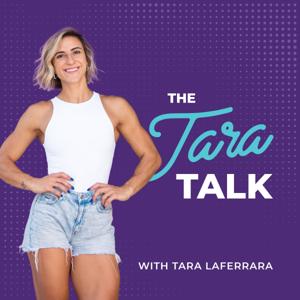


You know what consistent people have that you don’t?
Nothing.
They’re not more motivated than you. They don’t wake up excited to train. There’s no personality trait, no chip in their brain, no secret discipline gene that makes this easier for them. I don’t wake up wanting to train either, and this is my whole life.
The difference between a woman who’s been training for three years and a woman who’s been restarting for three years isn’t motivation. One of them just stopped resetting the clock.
So this episode is about building the version of training that survives your actual life. Not the fantasy version of your schedule, where nothing goes wrong and every day has two extra hours hidden in it.
In this episode:
Fifteen minutes done is worth more than sixty minutes imagined. A smaller plan that keeps going beats a perfect plan that resets.
Write that one down somewhere you’ll see it on a Wednesday.
Timestamps00:00 Cold open
00:18 Welcome to Broads
00:53 Consistent people have nothing you don't
02:09 What we're building today
03:25 I don't wake up motivated either
04:13 The day that's never coming
04:36 Already in her leggings
06:22 Closer to brushing your teeth than a marathon
07:05 Monday perfect, Wednesday missed
07:38 Thursday: this week is ruined
08:41 What's underneath the Thursday thought
09:30 The boring version
10:03 Perpetually week one
12:03 Imperfect and continuous beats perfect and interrupted
12:23 What survives your busiest month
13:23 Minimum Viable Consistency
13:49 What it looks like in practice
15:56 The plan bends so you don't break
16:28 But won't I use it as an excuse?
17:28 Stop measuring in weeks
18:07 Eight years and a 105 bench
18:56 The pull-up that took two years
19:40 Still training in 2036
21:32 What to do with this
Learn more about Broads: broads.app
Apply to BroadsCOACH: broads.app/broadscoach
Connect with Tara:
instagram.com/taralaferrara · instagram.com/broads_coach · youtube.com/@TaraLaferrara · tiktok.com/@taralaferrara
Rocio Cortez had never played a sport. She'd never been in a weight room. At 27 she walked into a jujitsu gym, and three and a half years later she's training wrestling, striking, MMA and Muay Thai, and she's competed at Apex twice.
The number that matters in this conversation is not the 275-pound deadlift she pulled at a bodyweight of 119. It's three and a half years. That's how long it took to build the body she has now, and she never once trained for it directly. She trained to get faster, to jump higher, to get stronger. The body followed.
Tara and Rocio get honest about what that stretch actually felt like: the days she took progress photos and hated them, the clothes that stopped fitting, the body dysmorphia that showed up right as she was making her best gains.
In this episode:
Timestamps:
00:42 Welcome to Broads
01:35 You are who you surround yourself with
04:24 Building your five people
07:11 When friendships fade
09:53 Starting at 27 and grieving lost time
13:00 What makes you an athlete
14:41 Why Rocio likes being a beginner
18:02 Where the intimidation actually comes from
21:18 Training for performance, and the body that followed
23:40 Diet culture and high school
25:26 103 to 120
27:16 Injuries and the machismo mindset
29:09 Being a woman in a male-dominated sport
30:18 How to start jujitsu when you're intimidated
32:31 "I work out but I don't look like I work out"
33:20 Three and a half years of reps
35:44 Progress when the weight stalls
37:25 Perfectionism, imposter syndrome and screen time
42:34 Curating who you follow
44:36 For the woman focused on how she looks
46:53 Get a coach
Connect with Rocio:
https://www.instagram.com/rockin_rocio/
https://www.rociocortez.com/
Learn more about Broads: www.broads.app
Episode Notes
Nutrition advice for women is loud, contradictory and usually built for someone else's body. In this solo Q&A, Tara answers the nutrition questions you sent in, and keeps it real about what actually matters.
In this episode:
You don't need to weigh every bite forever. Give it three days of looking at what's actually on your plate, find the protein, and build from there.
Tara is a Precision Nutrition–certified coach, not a registered dietitian. This episode is for education, not medical advice.
Resources mentioned:
Macronutrient Guide: broads.app/macronutrient-guide
Learn more about Broads: broads.app
Connect with Tara:
instagram.com/taralaferrara
instagram.com/broads_coach
youtube.com/@TaraLaferrara
tiktok.com/@taralaferrara
If this one helped, leave a five-star review. It's the fastest way to get Broads in front of more women who need it.
For women who strength train consistently and feel like something is still missing, it is probably not the program or the effort. The tools that elite collegiate strength coaches use with their athletes — plyometrics, isometrics, contrast training, tempo work — are almost never included in general fitness programming. In this episode, Erica Lowery breaks down exactly what those tools are, why they work, and how any woman can start adding them to her week without overhauling what she is already doing.
Erica Lowery, MS, CSCS, is the Director of Athletic Performance at the University of South Alabama, where she oversees strength and conditioning for volleyball and women's soccer. A former Division I volleyball player at Texas A&M and Liberty, Erica has spent her career on both sides of the barbell — competing at an elite level and coaching young female athletes through the fears and patterns that hold most women back from ever touching a weight they actually need to be lifting. She is also an APEX athlete and has trained for the USA Bobsled team.
What's Discussed:
Ready to have programming that builds on itself the way it is supposed to? Apply for BroadsCOACH at https://www.broads.app/broadscoach.
Learn more about Broads: https://www.broads.app/ https://www.instagram.com/broads_coach/
Check out more from Tara LaFerrara: https://www.taralaferrara.com/ https://www.instagram.com/taralaferrara/ YouTube: @TaraLaferrara TikTok: @taralaferrara
Check out more from Erica Lowery: Instagram: https://www.instagram.com/ericalowerystrength/ Links: https://linktr.ee/ericalowery
Most women who are not seeing results from their training are not failing because of their program, their supplements, or how hard they are pushing. The problem is consistency — and not in the way most people think. This episode breaks down seven specific ways to build the kind of consistency that actually holds, so you can stop spinning your wheels and start making progress that compounds.
If you have been training for months and nothing is changing, the answer is almost never a new program. It is almost always the gap between what you are doing and what you are doing every single week without negotiating. Consistency is not a personality trait. It is a system. And once you have the right one, everything else — strength, body composition, confidence — follows.
What's Discussed:
[00:55] The hard truth about why results are not showing up — and why it is almost never the workout plan
[03:30] The one thing most women overlook that silently costs them progress week after week
[09:15] Why measuring success on the scale is keeping you from seeing what is actually changing in your body
[14:40] Why motivation is not a strategy — and what to build instead so you show up even when you do not feel like it
[22:05] What perfectionism in the gym is actually costing you — and why imperfect workouts always beat no workouts
[30:10] The shift that separates women who quit from women who stay — and how to get to the other side of it
Ready to stop figuring it out alone? Apply for BroadsCOACH at https://www.broads.app/broadscoach.
Learn more about Broads: https://www.broads.app/ https://www.instagram.com/broads_coach/
Check out more from Tara LaFerrara: https://www.taralaferrara.com/ https://www.instagram.com/taralaferrara/ YouTube: @TaraLaferrara TikTok: @taralaferrara
For women who care about their health and are already paying attention to what they put in their bodies, skincare should be straightforward. It is not — because the information online is loud, contradictory, and often more driven by fear than evidence. In this episode, triple board-certified dermatologist Dr. Mamina Turegano cuts through all of it: the sunscreen myths, the ingredient fears, the products not worth spending money on, and what your skin actually needs to stay healthy long-term.
Dr. Mamina Turegano is a triple board-certified dermatologist, internist, and dermatopathologist based in New Orleans — one of the only physicians in the country who holds all three certifications. She specializes in medical, cosmetic, and integrative dermatology, blending conventional and holistic approaches to skin health. With over 2 million followers across social media, she co-hosts the Skin Deep MDs podcast, has been published in leading medical journals, and brings the same evidence-based, no-fearmongering approach to everything she touches.
What's Discussed:
Ready for coaching that builds around your training and your health? Apply for BroadsCOACH at https://www.broads.app/broadscoach.
Learn more about Broads: https://www.broads.app/ https://www.instagram.com/broads_coach/
Check out more from Tara LaFerrara: https://www.taralaferrara.com/ https://www.instagram.com/taralaferrara/ YouTube: @TaraLaferrara TikTok: @taralaferrara
Check out more from Dr. Mamina Turegano: Instagram: https://www.instagram.com/dr.mamina/ Website: https://www.drmamina.com/ Consultation services: https://app.futureclinic.com/clinics/drturegano/profile
For way too long, I thought training more meant training better. Six or seven days a week, sometimes twice a day, because if I wasn’t pushing my limits, was I even making progress?
I see this all the time now. People grinding through back-to-back workouts, ignoring the signals their bodies are screaming at them. Constant fatigue, stubborn plateaus, weird little injuries that just won’t go away. And for what? More isn’t always better. In fact, sometimes, it’s the very thing holding you back.
I used to think I had to train like an athlete to see results—until my body literally forced me to slow the hell down. The truth is, real progress happens in the recovery, not just in the reps. And if you’re stuck, exhausted, or just not seeing the changes you expected… it might be time to rethink your approach.
In today’s episode, I’m breaking it all down. We’ll talk about the signs of overtraining—like constant fatigue, plateaus, and mood swings—and why they happen in the first place. I’ll explain how too much exercise can actually mess with your strength, metabolism, and hormones, making it harder to see results. And, most importantly, I’ll show you why rest days are just as critical as your workouts and how you can train smarter (not just harder) to get stronger, feel better, and actually make progress.
If you’ve ever felt guilty for taking a rest day, or wondered why your workouts aren’t hitting the same way anymore… this episode is for you!
Because here’s the deal: training smarter > training more. And learning to listen to your body? That’s where the real gains happen.
I Also Discuss:
(10:46) Effective Strength Training and Fat Loss
(24:42) High-Intensity Interval Training (HIIT) & Mobility
(32:07) Footwear for Strength Training
Ready to work with a coach who integrates training and nutrition the way it was always meant to be? Apply for BroadsCOACH at https://www.broads.app/broadscoach.
Learn more about Broads: https://www.broads.app/ https://www.instagram.com/broads_coach/
Check out more from Tara LaFerrara: https://www.taralaferrara.com/ https://www.instagram.com/taralaferrara/ YouTube: @TaraLaferrara TikTok: @taralaferrara
For women who strength train, nutrition is the thing everyone has an opinion on and almost nobody explains clearly. The information is loud, it is contradictory, and a lot of it is coming from people who spent a week getting a certification online. The result is food noise — the constant mental chatter around what to eat, when to eat it, whether you ate too much or the wrong things — and it is exhausting.
In this episode you will get clear, evidence-based answers from someone who spent four years and over 1,200 supervised clinical hours earning the right to give them.
Sarah Bomer is a registered dietician, personal trainer, pre and postnatal specialist, and one of the newest assistant coaches on the BroadsCOACH team. She holds her master's degree in Nutrition and Dietetics from Metro State University of Denver and completed her dietetic internship at Children's Hospital before passing her national registration exam. She trains primarily women with a focus on building a relationship with food that actually supports their training — not one that makes it harder.
What's Discussed:
Ready to work with a coach who integrates training and nutrition the way it was always meant to be? Apply for BroadsCOACH at https://www.broads.app/broadscoach.
Learn more about Broads: https://www.broads.app/ https://www.instagram.com/broads_coach/
Check out more from Tara LaFerrara: https://www.taralaferrara.com/ https://www.instagram.com/taralaferrara/ YouTube: @TaraLaferrara TikTok: @taralaferrara
Check out more from Sarah Bomer: Instagram: https://www.instagram.com/sarahbomersrd/
Body recomposition for women is one of the most underexplained concepts in all of fitness and the gap between "I know what a cut is" and "I know what recomposition is" has cost a lot of women a lot of wasted time on programs that were built for a completely different goal.
Here is the thing. When most women say they want to tone up or lean out, what they are actually describing is recomposition. They just do not have a word for it. And that word — and the clear explanation of what it actually takes — has been missing from almost every conversation about women's bodies and training. Everyone talks about cutting and bulking. Nobody sits a woman down and says: there is a third option, it is probably the one you actually want, and here is exactly what it looks like.
This episode is that conversation.
What's Discussed:
Why a stalled scale is not a plateau — and what it actually signals for a woman who is strength training and hitting her protein
The simple definition of body recomposition: losing fat and building muscle at the same time, and why most women are already in the middle of it without knowing it
The three options — cut, bulk, and recomposition — what each one actually does to your body and why the third one is the option diet culture never handed you
The honest trade-off: why recomp is slower than a dedicated cut or bulk, why that is not a flaw, and why the metric everyone hands you (scale weight) does not align with the actual goal
The biology of why recomposition works — muscle protein synthesis, fat mobilization, and why these two processes can run in parallel without a calorie surplus if the training stimulus and protein are where they need to be
Who recomposition works best for — and the specific scenarios where a dedicated cut or bulk makes more sense instead
The two non-negotiables: protein at 0.7–1 gram per pound of bodyweight and progressive overload — why both are required, and what happens to the whole process when either one is missing
The four metrics that actually tell you recomposition is working — and why the scale is the least useful one of the bunch
The five most common ways women accidentally sabotage their recomposition: chasing two goals with contradictory behaviors, undereating during the day and overeating at night, switching programs before the current one had time to work, treating lifting as a calorie-burning activity instead of a signal, and quitting in the window right before results actually show up
What a real recomposition week looks like across all five variables: calories, protein, training, cardio, and recovery — made concrete
How to find your starting point based on exactly where you are right now — and the single adjustment that changes more than any new program would
Want to go deeper on everything covered in this episode, including the hormone piece? Our free Body Recomp Webinar covers it all. https://www.broads.app/body-recomp-webinar
Ready to have progressive overload built in by design so recomposition actually happens instead of just being something you hope for? Apply for BroadsCOACH: https://www.broads.app/broadscoach
Learn more about Broads: https://www.broads.app/ https://www.instagram.com/broads_coach/
Check out more from Tara LaFerrara: https://www.taralaferrara.com/ https://www.instagram.com/taralaferrara/ YouTube: @TaraLaferrara TikTok: @taralaferrara
Body image for women who train hard is one of the most common and least talked-about traps in fitness. If you have been hitting your goals, staying consistent, achieving more — and still feel like it is not enough — that is not a discipline problem. That is a pattern that no amount of performance can fix on its own.
In this episode you will hear from a woman who learned that at the highest possible level. Camille Leblanc-Bazinet is a seven-time CrossFit Games competitor and the 2014 Fittest Woman on Earth. At the peak of her career, her hormone labs came back menopausal — her body shutting down while her achievements kept stacking up. What she discovered on the other side of that, about worth, identity, and what strength actually means, is exactly the conversation women who train hard need to hear.
Camille Leblanc-Bazinet is a seven-time CrossFit Games competitor, the 2014 Fittest Woman on Earth, a gymnast, gym owner, coach, and one of the most honest voices in fitness on what it actually costs to chase performance at the expense of everything else.
What's Discussed:
Ready for coaching that builds around the woman you actually are right now? Apply for BroadsCOACH at https://www.broads.app/broadscoach.
Learn more about Broads: https://www.broads.app/
https://www.instagram.com/broads_coach/
Check out more from Tara LaFerrara: https://www.taralaferrara.com/https://www.instagram.com/taralaferrara/YouTube: @TaraLaferrara TikTok: @taralaferrara
Check out more from Camille Leblanc-Bazinet: Instagram: https://www.instagram.com/camillelbaz/ ThunderBro: https://thundrbro.com/
From the publisher's feed

1,067 Listeners
465 Listeners
301 Listeners
3,790 Listeners

2,109 Listeners
1,131 Listeners
132 Listeners

332 Listeners
812 Listeners
1,498 Listeners

1,100 Listeners
347 Listeners
606 Listeners
399 Listeners

97 Listeners