
Sign up to save your podcasts
Or

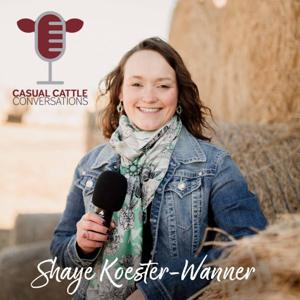
By casualcattleconversations


4.9
7272 ratings


The podcast currently has 304 episodes available.
The most played episodes among Podcast App listeners.
This week, Shaye Wanner interviews Haley Potter from the Ambrook team about how artificial intelligence can support ranch profitability and long-term continuity when used responsibly. Potter, who has North Dakota ranching roots and splits time between ranches in Dell and Alder, Montana, says AI fits best for producers who need help with information gathering and admin tasks while keeping humans in control of decisions and fact-checking outputs. She shares examples such as using Claude to summarize bull sale catalogs based on EPD parameters, building grazing plans, and analyzing financials for expansion scenarios, plus customer examples like an AI-assisted ordering/lead tool for direct-to-consumer beef and a “ranch command center” dashboard. Potter explains Ambrook’s AI-assisted bookkeeping features (tagging, invoice matching, receipt scanning) and emphasizes data quality, transparency, and privacy, including choosing trusted services and requiring approval for data use. See what Ambrook can do for your operation here: ambrook.com/casualcattle Learn more about Noble here: https://bit.ly/3DD7uG0 Learn more about Vence here: https://bit.ly/4kfWrCG 00:00 AI and Ranching Today 00:11 Meet Haley Potter 01:30 AI Not Insemination 01:56 Can AI Help Ranchers 02:51 Haley Ranching Roots 04:10 Responsible AI Basics 05:45 Real Ranch AI Examples 09:56 What Ambrook Does 10:39 AI Features in Ambrook 12:54 Time Savings and Better Data 15:25 Data Privacy and Trust

Today on the Casual Cattle Conversations podcast, Shaye interviews Corteva pasture specialist, Rachel Walker, about prioritizing fall weed control to maximize usable forage and extend grazing days. Walker explains that winter-emerging weeds like plantain, thistles, and poison hemlock should be treated in fall when young, using options such as DuraCor and UltiGraze. She describes DuraCor’s two-actives approach and notes grazing is allowed, with hay sales restrictions depending on state. They discuss why weed control matters in drought and for preventing livestock losses to toxic plants, and how improved control can reduce hay feeding and enable adding diverse grasses and clover. Walker recommends frequent soil testing and taking advantage of free forage testing, and adds fall brush control timing guidance. Learn more about Corteva solutions here: RangeAndPasture.com/CattleConversations Catch more conversations like this one and learn more at https://www.casualcattleconversations.com/ 00:00 Fall Weed Control Urgency 01:10 Meet Rachel Walker 02:43 Drought and Hay Outlook 04:07 Grazing Longer Into Winter 06:19 Targeting Winter Weeds 10:21 Why Weed Control Matters 14:09 UltiGraze and Soil Testing 16:39 Forage Testing and Nutrition 18:23 Clover Integration With NovaGraze 20:16 Brush Control Timing
This week, Shaye interviews Dr. Robin Faulkner, a veterinarian with decades of beef industry experience, about fall calving systems and herd health. Faulkner outlines why fall calving can add value by spreading calf supply to better match year-round packing capacity and by producing more mature fall-born bulls, while noting location-specific challenges. He emphasizes aligning calving with weather “thermal neutral” windows to reduce stress, disease risk, and negative fetal programming, and highlights nutrition as the key constraint for rebreeding when forage quality declines into winter. He advocates proactive, season-ahead management: forage testing, equipment readiness, calving kits, and facility preparation. On vaccines, he stresses tailoring protocols to handling and marketing constraints, using vaccination and weaning to improve marketability, and timing products to their effective protection windows, including pre-calving scour vaccines for colostrum immunity. He discusses fall fly pressure and timing fly control to vulnerability periods, and urges responsible treatment and stewardship of insecticides, dewormers, and antibiotics to preserve efficacy. Learn more at https://farmanimal.elanco.com/us/beef Learn more about Noble here: https://bit.ly/3DD7uG0 Learn more about Vence here: https://bit.ly/4kfWrCG Catch more conversations like this one and learn more at https://www.casualcattleconversations.com/ 00:00 Fall Calving Kickoff 01:18 Meet Dr. Faulkner 03:15 Why Calve in Fall 06:06 Weather Stress Window 09:50 Nutrition and Rebreeding 12:44 Pre Calving Prep 17:35 Vaccines for Value 23:20 Vaccine Timing Matters 29:42 Fly Control Strategy 32:46 Treatment Stewardship 42:45 Observe and Adapt
This week on the Casual Cattle Conversations Podcast, Shaye interviews Jay and Cheyenne Smith, cattle producers on Idaho’s eastern edge near the Montana border, about adopting Vence virtual fencing and coordinating with neighboring permittees to make it cost-effective. After the 2022 Moose Fire and grazing restrictions, they partnered with the University of Idaho and worked with BLM and the Forest Service to implement virtual fencing on rugged public-land range; five permittees now use shared base stations while owning separate collars. They discuss early hesitations about data being used against producers, onboarding lessons about placing fences to match natural cattle trails, and management gains including fewer emergency rides, more schedulable work, improved utilization control, and more efficient gathers. Virtual fencing enabled their shift from winter to fall calving by keeping cattle positioned to come home, reducing labor needs, and providing movement data useful for investigating events like wolf predation or other disturbances. Learn more about Vence here: https://bit.ly/4kfWrCG Catch more conversations like this one and learn more at https://www.casualcattleconversations.com/ 00:00 Virtual Fence Neighbors 01:08 Meet the Smiths 01:34 Ranch and Grazing Setup 04:05 Fire Sparks Adoption 07:02 Getting Neighbors Onboard 09:32 Workload and Riding Changes 11:43 Sharing Towers and Data 14:14 Training and Fence Design 18:01 Better Utilization and Plans 19:15 Fall Calving Made Possible 22:33 Costs and Quality of Life 25:23 Wolves and Movement Clues 27:35 Next Generation Buy In
In this episode of the Casual Cattle Conversations podcast, Shaye interviews Shane White from Ceres Tag. They discuss new features aimed at maximizing cow performance, focusing on fertility, estrous alerts, and calving alerts. Shane highlights how Ceres Tag's technology automates cow behavior tracking via satellite, providing valuable data for improving reproductive efficiency and profitability. They also cover how the new subscription model makes this technology more accessible to ranchers. The episode emphasizes the importance of data-driven decisions to enhance the future of ranching. Learn more about Ceres Tag here: https://bit.ly/45WlwfW Catch more conversations like this one and learn more at https://www.casualcattleconversations.com/ 00:15 Guest Introduction: Shane White from Ceres Tag 01:10 The Importance of Ag Technology 02:13 Overview of Ceres Tag's Offerings 03:48 Maximizing Cow Efficiency with Data 05:37 New Features: Fertility and Reproductive Capabilities 08:35 Natural Service and Mounting Scores 10:33 Synchronization and AI in Cattle 14:27 Calving Alerts and Behavior Metrics 18:51 Business Model and Cost Structure 22:43 Impact on the American Beef Industry 33:52 Final Thoughts and Contact Information
The podcast currently has 304 episodes available.
88 Listeners
439 Listeners
124 Listeners
381 Listeners
23 Listeners
1,342 Listeners
116 Listeners
32 Listeners

231 Listeners
78 Listeners
1,688 Listeners

197 Listeners
23 Listeners
32 Listeners

273 Listeners