
Sign up to save your podcasts
Or



In this episode, Sarah brings a heartfelt and tender question: How do I talk to a friend who shifts from playful connection to subtle moralizing which often causes me to feel infantilized and shut down?
What follows is a rich, layered exploration of how covert control and unconscious superiority can sneak into even our most well-meaning relationships. We unpack the difference between tone-setting and mutual consent, how to reclaim subjectivity without blame, and the deep emotional wound that gets poked when others make decisions for us instead of with us.
And yes, it all begins with chocolate.
Listener Takeaways:
•Why “I just wanted more chocolate” can be code for “I want to matter”
•How to recognize internalized domination programming in ourselves and others
•How to speak up when someone imposes their worldview or preferences on the group
•Practical scripts for initiating a non-defensive, heart-connected conversation about painful dynamics
•How to share emotional vulnerability without over-exposing or collapsing
•Why self-revealing without moralizing is a powerful act of liberation
Want more direct access to me? I warmly invite you to become a member of The School of Human Connection.
Join regular live calls where students in the school bring real relationship dilemmas. We slow things down and I'll help you see what's actually happening and how to respond with more integrity, strength and care.
You will find a safe space for live discussions and a supportive community of like-minded, open-hearted humans.
Stay updated on new episodes and resources by subscribing wherever you listen to podcasts or visiting yvetteerasmus.com.
Here are more ways to connect with me:
What do you do when every conversation with a parent leaves you feeling erased, criticized, or shut down, but walking away feels like betrayal?
In this raw and tender coaching session, we meet Suzanne, who’s struggling to navigate contact with her mother: a woman who routinely gaslights her, shuts down difficult topics, and prioritizes her own emotional comfort over honest connection. Suzanne wants to be seen. She also wants to stay safe. And in her family, those two things feel mutually exclusive.
We explore:
•The heartbreak of being unseen by a parent you still long to connect with.
•The nervous system impact of childhood emotional silencing, and why it still flares in adulthood.
•How to say “I don’t feel safe talking right now” without guilt.
•What to do when someone turns your feelings into personal attacks.
•And how to develop scripts that mirror instead of merge, so you can stay true to yourself in hard conversations.
If you’ve ever felt trapped in a role that doesn’t fit, or stuck in a pattern that leaves you numb, enraged, or ashamed, this one’s for you.
Want more direct access to me? I warmly invite you to become a member of The School of Human Connection.
Join regular live calls where students in the school bring real relationship dilemmas. We slow things down and I'll help you see what's actually happening and how to respond with more integrity, strength and care.
You will find a safe space for live discussions and a supportive community of like-minded, open-hearted humans.
Stay updated on new episodes and resources by subscribing wherever you listen to podcasts or visiting yvetteerasmus.com.
Here are more ways to connect with me:
In this intimate coaching conversation, Colleen brings a familiar dilemma: her husband drives too fast for her nervous system to handle. She doesn’t want to control him, but she does want to feel safe. Together, we unpack how to name her limits without moralizing, how to invite collaboration instead of compliance, and how to speak from care rather than critique.
Key Takeaways for Listeners:
•Boundaries are not about controlling others. They’re about naming what you are or are not available for.
•To foster buy-in, shift from You’re wrong to This doesn’t work for my nervous system.
•Compassionate communication can include honest judgments, especially when they arise from fear and care.
•Sharing your vulnerabilities can diffuse tension and build understanding faster than logic or critique.
•Collaborative planning (in calm moments) is often more effective than reactive correction (in hot moments).
Want more direct access to me? I warmly invite you to become a member of The School of Human Connection.
Join regular live calls where students in the school bring real relationship dilemmas. We slow things down and I'll help you see what's actually happening and how to respond with more integrity, strength and care.
You will find a safe space for live discussions and a supportive community of like-minded, open-hearted humans.
Stay updated on new episodes and resources by subscribing wherever you listen to podcasts or visiting yvetteerasmus.com.
Here are more ways to connect with me:
In this heartfelt and courageous coaching conversation, Prerana brings forward a question so many of us have quietly carried: How much need is too much in a relationship? And what do we do when our emotional needs are met with kind words but little follow-through?
Together, we unpack the gap between good intentions and sustainable intimacy, the heartbreak of feeling like a “complainer” just for wanting closeness, and the painful confusion of loving someone who’s not meeting us where we long to be met.
Key questions explored:
•How do I communicate needs without overwhelming my partner?
•Can someone really change, or are they just trying to appease me?
•What do I do when I feel more like a best friend or roommate than a romantic partner?
•How do I discern whether to stay or go when there’s no malice, just misalignment?
Want more direct access to me? I warmly invite you to become a member of The School of Human Connection.
Join regular live calls where students in the school bring real relationship dilemmas. We slow things down and I'll help you see what's actually happening and how to respond with more integrity, strength and care.
You will find a safe space for live discussions and a supportive community of like-minded, open-hearted humans.
Stay updated on new episodes and resources by subscribing wherever you listen to podcasts or visiting yvetteerasmus.com.
Here are more ways to connect with me:
In this heartfelt coaching call, Nina wrestles with two layered questions:
1.How can I have an honest, meaningful conversation with the boy my daughter is dating, without overwhelming or intimidating him?
2.How do I stay emotionally attuned and supportive to my older daughter who might feel left behind when her younger sister gets engaged first?
Together, we explore what it means to assess someone’s emotional maturity: not by lecturing or preaching, but by creating relational moments that reveal their capacity for humility, self-awareness, and connection. Nina learns to shift from “explaining what matters” to “asking questions that reveal,” including storytelling prompts that elicit vulnerability, repair orientation, and conflict navigation style.
Then we transition to her fear about her older daughter’s emotional reaction to the younger sibling’s engagement. We unpack the cultural and personal sensitivities involved, and I offer a powerful shift: lead with presence, not performance. Ask before reassuring. Witness before reframing. Allow emotional truth to be spoken without trying to fix it.
Listener Takeaways
•How to assess emotional maturity in someone without coming off as judgmental or overbearing
•Conversation starters that reveal someone’s approach to conflict, power struggles, and personal growth
•The difference between performing connection and living it
•How to support adult children through complex sibling dynamics
•Why “fixing” someone’s feelings can feel like disapproval, and what to do instead
Want more direct access to me? I warmly invite you to become a member of The School of Human Connection.
Join regular live calls where students in the school bring real relationship dilemmas. We slow things down and I'll help you see what's actually happening and how to respond with more integrity, strength and care.
You will find a safe space for live discussions and a supportive community of like-minded, open-hearted humans.
Stay updated on new episodes and resources by subscribing wherever you listen to podcasts or visiting yvetteerasmus.com.
Here are more ways to connect with me:
When someone you live with, or love, keeps judging you, how do you protect your peace without shutting down or blowing up?
In this raw and relatable episode, Heather brings a question many of us have quietly carried: How do I set clear boundaries with someone who keeps making subtle (or not-so-subtle) digs at my character?
We unpack what it means to hold your ground when you’re being criticized, misunderstood, or dismissed, and how to stop absorbing other people’s projections as personal truths.
Listener Takeaways:
•Scripts for responding to judgment without defensiveness or collapse
•How to hear criticism as information, not identity
•Why trying to teach people how to treat you rarely works
•What to do when you’re tempted to just leave but want to grow instead
•How to stop explaining yourself and start protecting your peace
Want more direct access to me? I warmly invite you to become a member of The School of Human Connection.
Join regular live calls where students in the school bring real relationship dilemmas. We slow things down and I'll help you see what's actually happening and how to respond with more integrity, strength and care.
You will find a safe space for live discussions and a supportive community of like-minded, open-hearted humans.
Stay updated on new episodes and resources by subscribing wherever you listen to podcasts or visiting yvetteerasmus.com.
Here are more ways to connect with me:
When someone you care about is in crisis, how do you say “no” without guilt? In this episode, Julia brings a powerful, relatable question: how do I set a kind but clear boundary with a friend who wants to move into my space indefinitely?
What unfolds is a rich conversation about friendship, emotional safety, and the difference between care and over-responsibility. We explore what to say when someone “trauma dumps,” how to set boundaries without turning it into a negotiation, and how to stop absorbing others’ emotional projections.
We also talk about what happens when you’re the one being “cut off,” and how to have hard conversations earlier, before resentment builds up.
Listener Takeaways:
•Language for setting kind, non-negotiable boundaries.
•What to do when someone guilts you for not showing up the way they want.
•How to hold your ground when someone weaponizes past generosity.
•A loving reframe for this common myth: If I can’t meet your need, I must be a bad friend.
•Tips for inviting safer, more mutual friendships (from both ends).
Want more direct access to me? I warmly invite you to become a member of The School of Human Connection.
Join regular live calls where students in the school bring real relationship dilemmas. We slow things down and I'll help you see what's actually happening and how to respond with more integrity, strength and care.
You will find a safe space for live discussions and a supportive community of like-minded, open-hearted humans.
Stay updated on new episodes and resources by subscribing wherever you listen to podcasts or visiting yvetteerasmus.com.
Here are more ways to connect with me:
What do you do when you’re bursting with excitement, vulnerability, or a creative new idea, only to be met with silence, critique, or defensiveness from the person you love? In this heartfelt conversation, Liza brings forward the quiet grief of being in a relationship that lacks emotional accompaniment. Together, we explore the lived experience of trying to stay joyful, expressive, and connected when your partner just isn’t available in the way your heart longs for.
We unpack the deeper patterns at play, from relational trauma to the impact of neurodivergence, and identify both internal and external resources that can bring relief. This episode offers real tools for navigating relational misattunement, protecting your spark, and finding connection even when your current environment doesn’t support it.
If you’ve ever wondered how to keep showing up with warmth and wisdom when your needs go unmet, this one is for you.
Show Notes:
•The subtle heartbreak of emotional disconnection
•Why critique from a partner can feel so deflating
•How CPTSD and autism can impact relational communication
•Tools for externalizing emotion (the power of feelings/needs sheets!)
•Why “I need acknowledgement” may not work—and what to say instead
•Turning blame into gold: Translating criticism into needs
•How financial dependence complicates emotional honesty
•Building your own sources of joy, support, and co-regulation
•What to do when your partner doesn’t “join” you emotionally
Want more direct access to me? I warmly invite you to become a member of The School of Human Connection.
Join regular live calls where students in the school bring real relationship dilemmas. We slow things down and I'll help you see what's actually happening and how to respond with more integrity, strength and care.
You will find a safe space for live discussions and a supportive community of like-minded, open-hearted humans.
Stay updated on new episodes and resources by subscribing wherever you listen to podcasts or visiting yvetteerasmus.com.
Here are more ways to connect with me:
Have you ever been on the receiving end of a question that didn’t feel like a genuine invitation but more like a setup? In this week’s episode, we explore the subtle difference between open-hearted curiosity and covert control in our conversations.
First, we hear from Tarjia, who’s navigating interactions that leave her feeling dismissed, startled, or unsure what to say, especially when comments come cloaked in snark or when her mother’s questions feel like emotional landmines. Together, we explore how to recognize the moment you’re no longer in a shared reality and how to gently reclaim your footing without collapsing into silence or defensiveness.
Then, Selina joins with a tender dilemma: how to stay relational with a close friend whose intensity sometimes overwhelms her nervous system. She’s not trying to criticize or abandon, but she’s also trying not to lie. We unpack the inner tangle of judgment, empathy, and responsibility that arises when one person’s vulnerability feels like another’s emotional burden.
This episode is for anyone who’s ever frozen mid-conversation, questioned their own reactions, or struggled to say the true thing kindly. Listen to the end for concrete language to use when you feel trapped by tone, startled by a request, or unsure how to hold your own internal reactions with grace.
Show Notes:
•The hidden agenda behind “loaded questions” and how to name it gently.
•Why your mind goes blank when someone says something “smart-ass” in a certain tone and how to recover mid-moment.
•How to spot the difference between performance and presence in a conversation.
•One phrase you can use when someone projects their feelings onto you and expects agreement.
•How to stay kind and honest when you’re afraid the truth might hurt someone you care about.
Want more direct access to me? I warmly invite you to become a member of The School of Human Connection.
Join regular live calls where students in the school bring real relationship dilemmas. We slow things down and I'll help you see what's actually happening and how to respond with more integrity, strength and care.
You will find a safe space for live discussions and a supportive community of like-minded, open-hearted humans.
Stay updated on new episodes and resources by subscribing wherever you listen to podcasts or visiting yvetteerasmus.com.
Here are more ways to connect with me:
In this touching and insightful conversation, Patrice returns to share an update on her ongoing journey of self-trust, relational clarity, and emotional healing. After creating space from a previous relationship that couldn’t meet her needs, she reflects on patterns of seeking connection in unavailable places, and the surprising grief that can arise even in the presence of new joy and ease. Together, we explore the nuanced process of discerning what it really means to meet our own needs in relationship, not in isolation.
Listen to hear a powerful metaphor about sitting in the sun to illuminate our active role in seeking strategies and environments that help us flourish, without slipping into self-blame or control. The episode highlights the paradoxical healing that can happen when joy brings our old pain into sharper focus, and reminds us that ease, play, and connection are not luxuries: they are pathways home.
Key Takeaways:
1.Self-trust is not all-or-nothing: it can be practiced on a continuum and deepened through lived experiences.
2.Grief often arises after joy, as we finally feel the contrast between past deprivation and present nourishment.
3.We are co-creators in meeting our needs, not passive recipients or isolated islands.
4.Ease and play can feel foreign at first, but are vital indicators of healing environments.
5.Healthy relationship dynamics aren’t about forcing others to change, but about choosing where we bring our longing.
Want more direct access to me? I warmly invite you to become a member of The School of Human Connection.
Join regular live calls where students in the school bring real relationship dilemmas. We slow things down and I'll help you see what's actually happening and how to respond with more integrity, strength and care.
You will find a safe space for live discussions and a supportive community of like-minded, open-hearted humans.
Stay updated on new episodes and resources by subscribing wherever you listen to podcasts or visiting yvetteerasmus.com.
Here are more ways to connect with me:
From the publisher's feed
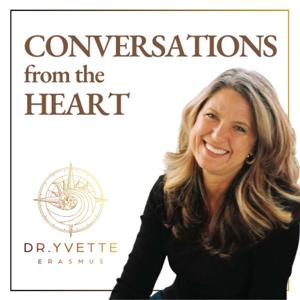
A weekly, soul-nourishing podcast offering psychologically grounded, heart-centered reflections on human relationships, inner healing, and compassion-based communication.…
Focused on live mini-coaching moments to help callers shift from reactive, domination-based communication to collaborative, heart-centered connection. Listen for new scripts for stuck situations, new ways of responding to old relationship dynamics and guidance on how to approach these situations with empathy, self-awareness, and effective communication strategies. Here, we emphasize understanding both one's own needs and the needs of others, creating safe spaces for vulnerable conversations, and finding ways to express ourselves authentically while respecting others' boundaries.

21,794 Listeners

43,324 Listeners

26,808 Listeners

2,583 Listeners

1,953 Listeners

10,531 Listeners

3,330 Listeners

1,413 Listeners

1,853 Listeners

12,666 Listeners

2,520 Listeners

14,903 Listeners

5,091 Listeners

41,313 Listeners

10,742 Listeners