
Sign up to save your podcasts
Or

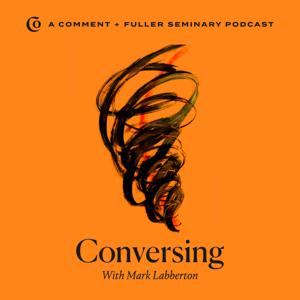


In this Thanksgiving reflection, Mark Labberton opens up about a period of darkness and despair, when as a younger man he considered ending his life. But when he was invited to share Thanksgiving dinner with a local couple, his eyes were opened to concrete acts of hope, friendship, and joy—all embodied in the simple feast of a community "Friendsgiving" potluck.
Every year since, Mark calls these friends on Thanksgiving Day, in gratitude for and celebration of the hospitality, generosity, beauty, friendship, and hope he encountered that day.
Here Mark reflects on the emotional and psychological difficulties he was going through, the meaning and beauty of friendship, how every dish of a Thanksgiving dinner is an act of hope and community, and how hospitality and generosity can uplift every member of a community.
If you or anyone you know is struggling with depression or considering suicide, there is help available now. Simply call or text 988 to speak with someone right away, share what you're going through, and get the support you need.
About Mark Labberton
Mark Labberton is the Clifford L. Penner Presidential Chair Emeritus and Professor Emeritus of Preaching at Fuller Seminary. He served as Fuller's fifth president from 2013 to 2022. He's the host of Conversing.
Show Notes
Production Credits
Conversing is produced and distributed in partnership with Comment magazine and Fuller Seminary.
To exist as a black male in America is to be perceived as a threat, where criminality is attributed by default and violence is justified from racial bias. And as a young man, Pastor Mike McBride learned through personal experience that following Jesus does not protect you from the violence of the state. How could it, when Jesus himself was crucified by religious- and state-sponsored violence?
In this episode, Pastor Mike (The Way Christian Center, Berkeley, CA) joins Mark Labberton to discuss the confluence of Black Pentecostal holiness, police brutality, gun violence prevention, Christian nationalism, political polarization, racial justice, and the urgent spiritual crisis facing the American church.
From his childhood in the San Francisco neighborhood of Bayview–Hunter's Point, to the trauma of a police assault in 1999, to national leadership in Ferguson, to confronting the rise of authoritarian Christianity, Pastor Mike traces the formation of his vocation and the cost of staying faithful to Jesus in a nation shaped by anti-blackness and state-sponsored violence. His story of survival, theological awakening, moral urgency, and hopeful action is rooted in the gospel's call to respond with peaceful action against the violence of the world.
Episode Highlights
Helpful Links and Resources
About Michael McBride
Pastor Michael McBride (often known as "Pastor Mike") is the National Director of Live Free USA, a nationwide movement of faith leaders and congregations dedicated to ending gun violence, mass incarceration, and the criminalization of Black and Brown communities. A respected activist, pastor, and organizer, he has been a prominent voice in national efforts to address police violence, promote community-based safety strategies, and mobilize churches for racial justice. Pastor Mike is also the founding pastor of The Way Christian Center in Berkeley, California. His leadership, advocacy, and public witness have been featured across major media outlets, integrating faith, justice, and community transformation.
Show Notes
Production Credits
Conversing is produced and distributed in partnership with Comment Magazine and Fuller Seminary.
How would the black church's public witness guide Christians through today's polarization, culture-war dynamics, and ideological captivity? Drawing from Don't Let Nobody Turn You Around, Justin Giboney joins Mark Labberton to reflect on Christian credibility (and lack thereof), the black church's public witness, and the deep forces shaping American polarization.
Reflecting on the legacy of the twentieth-century civil rights generation, Giboney describes how the black church's fusion of orthodoxy and social action offers a model for healing division, resisting ideological captivity, and embodying what he calls "moral imagination."
Citing the formative influences of his grandmother Willie Faye, the example of Mahalia Jackson, and the ongoing challenge of navigating truth, justice, family, unity, and political engagement in a fractured moment, Giboney explores discipleship in an ideological age, the cost of a credible public witness, and the hope of a church capable of transcending partisan allegiance to seek the good of neighbor and the glory of God.
Episode Highlights
"One thing that I saw in the civil rights generation is they were able to have a bigger perspective, even in songs like 'Keep Your Eyes on the Prize.'"
"Love is self-sacrifice. It's being willing to at my own expense in some instances give up what I have to others."
"This was a deliberate decision that they made to say, we're not gonna choose one of these two sides that these groups are creating for us."
"Within the public square, credibility is currency."
"I want all Christians to take that as their own and build on that."
Helpful Links and Resources
Don't Let Nobody Turn You Around by Justin Giboney https://www.ivpress.com/don-t-let-nobody-turn-you-around
The AND Campaign https://andcampaign.org/
Mahalia Jackson biography (PBS) https://www.pbs.org/wnet/americanmasters/mahalia-jackson-about-the-singer/602/
Reading While Black by Esau McCaulley https://ivpress.com/reading-while-black
About Justin Giboney
Justin Giboney is an attorney and political strategist in Atlanta, Georgia. He is also the co-founder and president of the AND Campaign, a Christian civic organization focused on asserting the compassion and conviction of the gospel in the public square. He has served as an attorney, political organizer, and civic leader, and he regularly speaks and writes on the intersection of Christianity and politics.
Show Notes
Production Credits
Conversing is produced and distributed in partnership with Comment magazine and Fuller Seminary.
What is the book of Revelation really about? For ages, it has been the source of sensationalism, idolatry, confusion, and end-times predictions. But at its root, it is about the power and worship of the Lamb who was slain.
Biblical scholar Michael J. Gorman joins Mark Labberton to explore how Christians can read the book of Revelation with wisdom, faith, and hope rather than fear or sensationalism. Drawing from his book Reading Revelation Responsibly: Uncivil Worship and Witness—Following the Lamb into the New Creation, Gorman offers a reorientation to Revelation's central vision: worshipping the Lamb, resisting idolatrous power, and embodying faithful discipleship in the world. Together they discuss Revelation's misuses in popular culture, its critique of empire and nationalism, and its invitation to follow the crucified and risen Christ into the new creation.
Episode Highlights
Helpful Links and Resources
About Michael J. Gorman
Michael J. Gorman is the Raymond E. Brown Professor of Biblical Studies and Theology at St. Mary's Seminary & University in Baltimore, Maryland. A leading New Testament scholar, he is the author of numerous books on Pauline theology and Revelation, including Reading Revelation Responsibly, Cruciformity, and Participating in Christ. Gorman's teaching and writing emphasize Scripture as a call to cruciform discipleship, faithful worship, and the hope of new creation.
Show Notes
Production Credits
Conversing is produced and distributed in partnership with Comment magazine and Fuller Seminary.
Adverse childhood experiences are notoriously hard to overcome, and they can affect a person well into adulthood. But the grace of close, stable, nurturing relationships can offer hope.
Terence Lester—author of From Dropout to Doctorate and founder of Love Beyond Walls—joins Mark Labberton for a conversation about resilience, faith, and the redemptive power of seeing and being seen. Lester recounts his life's journey from poverty, homelessness, and gang membership in southwest Atlanta to earning his PhD in public policy and social change. Together, they explore the impact of childhood trauma on personal development; education as a form of love, justice, and community service; and the healing potential of local community and proximity. Lester's story is a testament to divine grace, human courage, and the transformative impact of compassionate words and faithful presence.
Episode Highlights
Helpful Links and Resources
About Terence Lester
Terence Lester is a speaker, activist, author, and founder of Love Beyond Walls, a non-profit organization dedicated to raising awareness about poverty and homelessness while mobilizing communities to serve those in need. A graduate of Union Institute & University with a PhD in public policy and social change, he is the author of I See You: How Love Opens Our Eyes to Invisible People, When We Stand: The Power of Seeking Justice Together, **and All God's Children: How Confronting Buried History Can Build Racial Solidarity. His latest book is From Dropout to Doctorate: Breaking the Chains of Educational Injustice. Through storytelling, advocacy, and faith-rooted organizing, Lester seeks to dismantle systemic barriers and call communities toward justice, empathy, and proximity.
Show Notes
Production Credits
Conversing is produced and distributed in partnership with Comment magazine and Fuller Seminary.
How can we address the problem of violence against the poor? International Justice Mission exists to answer this question by protecting and rescuing victims, bringing criminals to justice, restoring survivors to safety and strength, and helping local law enforcement build a safe future that lasts.
In this episode, International Justice Mission's founder and CEO, Gary Haugen, joins Mark Labberton to reflect on almost three decades of IJM's fight against violence and slavery worldwide—and the spiritual formation that sustains it. Haugen shares the origins of IJM in response to systemic violence against the poor, the evolution from individual rescues to transforming justice systems, and the remarkable rise of survivor leaders transforming their own nations. Together they reflect on courage, joy, and faith amid immense risk—bearing witness to God's power to bring justice and healing through ordinary people.
Episode Highlights
Helpful Links and Resources
International Justice Mission – https://www.ijm.org
Gary Haugen, The Locust Effect: Why the End of Poverty Requires the End of Violence –
https://www.amazon.com/Locust-Effect-Poverty-Requires-Violence/dp/0199937877
Gary Haugen, Just Courage: God's Great Expedition for the Restless Christian – https://www.amazon.com/Just-Courage-Expedition-Restless-Christian-ebook/dp/B001PSEQR4
Riverside Church Sermon by Martin Luther King Jr., "Beyond Vietnam" — https://kinginstitute.stanford.edu/encyclopedia/beyond-vietnam
William Lloyd Garrison biography – https://www.britannica.com/biography/William-Lloyd-Garrison
Rwanda Genocide Investigation (UN Historical Overview) – https://www.un.org/en/preventgenocide/rwanda
About Gary Haugen
Gary Haugen is the founder and CEO of International Justice Mission (IJM), the world's largest international anti-slavery organization. Before founding IJM in 1997, he served as the director of the United Nations' investigation into the Rwandan genocide and previously worked at the US Department of Justice, focusing on police misconduct. A graduate of Harvard University and the University of Chicago Law School, Haugen has dedicated his life to ending violence against the poor and mobilizing the global church for justice.
Show Notes
Production Credits
Conversing is produced and distributed in partnership with Comment magazine and Fuller Seminary.
What is the theological meaning of American history? In this episode, American church historian Grant Wacker joins Mark Labberton to explore the theological dimensions of American history, the legacy of Billy Graham, and the evolving face of evangelicalism. Wacker reflects on his Pentecostal upbringing, his formation as a historian, and his conviction that faith and scholarship must speak honestly to one another. Together they trace how religion has both shaped and distorted American life—from the enduring wound of slavery to the reformist spirit woven through its history. Wacker, now in his eighties, offers his perspective on evangelicalism's past, present, and global future.
Episode Highlights
Helpful Links and Resources
About Grant Wacker
Grant Wacker is the Gilbert T. Rowe Distinguished Professor Emeritus of Christian History at Duke Divinity School. A leading scholar of American religious history, he is the author of numerous books including Heaven Below: Early Pentecostals and American Culture and America's Pastor: Billy Graham and the Shaping of a Nation. His research has helped shape modern understanding of American evangelicalism, Pentecostalism, and the intersection of faith and culture.
Show Notes
Production Credits
Conversing is produced and distributed in partnership with Comment magazine and Fuller Seminary.
"Migration is grace," says UCLA professor Robert Chao Romero, author of Brown Church: Five Centuries of Latina/o Social Justice, Theology, and Identity. In this episode, he joins Mark Labberton to discuss the immigration crisis through stories from Southern California, theology of migration, and the challenge of Christian nationalism for the American response to the immigration crisis we face.
Romero narrates heartbreaking accounts of ICE raids, racial profiling, and dehumanization, while also offering hope rooted in scripture and the early church. He points out the "Xenodochias" of the ancient and medieval church that cared for migrants. And he shows how biblical narratives—from Abraham to Jesus—reveal God's mercy in migration. Romero calls Christians to see the image of God in migrants, resist the "Latino threat narrative," and reclaim the church's historic role in welcoming the stranger.
Episode Highlights
Helpful Links and Resources
About Robert Chao Romero
Robert Chao Romero is an associate professor in the UCLA César E. Chávez Department of Chicana/o and Central American Studies and in the Asian American Studies Department. With a background in law and history, his research and teaching explore the intersections of race, immigration, faith, and justice. He is the author of Brown Church: Five Centuries of Latina/o Social Justice, Theology, and Identity (IVP Academic), which chronicles the long history of Latino Christian social justice movements. Romero is also an ordained pastor, active in local church ministry and theological reflection on immigration, Christian nationalism, and the global church.
Show Notes
Immigration Crisis and ICE Raids
Historical Parallels and Christian Nationalism
Theology of Migration and Outsiders
Policy Challenges and Misconceptions
Faith, Empathy, and the Church
Production Credits
Conversing is produced and distributed in partnership with Comment Magazine and Fuller Seminary.
Millions of people today face dire medical and mental health challenges. What role should the church play in foreign humanitarian aid to address starvation and deadly illness? In this episode, Eric Ha, CEO of Medical Teams International, joins Mark Labberton for a sobering, hopeful conversation on global humanitarian crises and the role of the church in responding to both the physical and spiritual needs of those who are suffering. Drawing from his years at International Justice Mission and now at Medical Teams International, Ha shares vivid accounts from refugee camps in East Africa and migrant communities in Colombia. He reflects on the collapse of US foreign aid, the limits of humanitarian response, and the urgent need for churches to reclaim their historic role in caring for the vulnerable. Ha wrestles candidly with the calling of Christian communities to embody God's expansive love even amid staggering need.
Episode Highlights
Helpful Links and Resources
About Eric Ha
Eric Ha is the chief executive officer of Medical Teams International, a Christian humanitarian relief organization providing life-saving medical care for people in crisis worldwide. Before joining Medical Teams, he served more than a decade in senior leadership roles at International Justice Mission, advancing global efforts to combat human trafficking and slavery. A lawyer by training, Ha brings a deep commitment to justice, compassion, and the mobilization of the church in service of the vulnerable.
Show Notes
Global Humanitarian Crises and Refugee Care
Healthcare and Human Dignity
Hope and Despair in Humanitarian Work
Empathy, Collaboration, and Mental Health
Invitation to the Church and Listeners
Production Credits
Conversing is produced and distributed in partnership with Comment magazine and Fuller Seminary.
The church is so much more than a building—but when it comes to managing the physical property of church real estate, we often overlook the great good that can emerge from the land and structures. In this episode, social entrepreneur, strategic executive, and author Mark Elsdon joins Mark Labberton on Conversing to explore how churches and faith communities can reimagine their assets—land, buildings, and money—as instruments for mission, community transformation, and spiritual flourishing. From his decades of work at Pres House in Madison, Wisconsin, to his role as consultant, author, and co-leader of RootedGood, Elsdon shares stories of innovation, courage, and the hard but hopeful work of repurposing property and resources for God's mission in the world.
Episode Highlights
Helpful Links and Resources
About Mark Elsdon
Mark Elsdon lives and works at the intersection of money and meaning as an entrepreneur, non-profit executive, author, and speaker. He is the author of We Aren't Broke: Uncovering Hidden Resources for Mission and Ministry (2021) and editor of Gone for Good? Negotiating the Coming Wave of Church Property Transition (2024). In addition to his role as a director with RootedGood, Mark is also executive director at Pres House, where he led the transformation of a dormant non-profit into a growing, vibrant, multi-million-dollar organization.
Mark has a BA in psychology from the University of California–Berkeley, a master of divinity from Princeton Theological Seminary, and an MBA from the University of Wisconsin School of Business. He is an ordained minister in the Presbyterian Church, USA, and lives in Madison, Wisconsin. Mark is an avid cyclist and considers it a good year when he rides more miles on his bike than he drives in his car.
Show Notes
Production Credits
Conversing is produced and distributed in partnership with Comment magazine and Fuller Seminary.
From the publisher's feed

1,120 Listeners

1,102 Listeners

4,430 Listeners
371 Listeners

5,088 Listeners
364 Listeners

465 Listeners

576 Listeners

220 Listeners

1,929 Listeners

561 Listeners

847 Listeners

131 Listeners
874 Listeners
913 Listeners