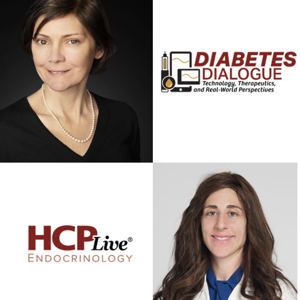
Diabetes Dialogue: Technology, Therapeutics, & Real-World Perspectives

Diabetes Dialogue: Technology, Therapeutics, & Real-World Perspectives

By Diabetes Dialogue: Technology, Therapeutics, & Real-World PerspectivesScienceMedicineHealth & FitnessTechnologyTech News
Download on the App Store

Diabetes Dialogue: Technology, Therapeutics, & Real-World Perspectives episodes

  • American Diabetes Association 2025 Trial Recap - Part 1
    In this episode of Diabetes Dialogue, cohosts Diana Isaacs, PharmD, an endocrine clinical pharmacist, director of Education and Training in Diabetes Technology, and co-director of Endocrine Disorders in Pregnancy at the Cleveland Clinic, and Natalie Bellini, DNP, program director of Diabetes Technology at University Hospitals Diabetes and Metabolic Care Center, recap some of the biggest clinical trials presented at the American Diabetes Association (ADA) 2025 conference in Chicago, Illinois.

    00:00 Introduction
    2:04 The Vertex Trial
    6:57 The T1D Trial
    15:23 The Achieve 1 Trial
    21 min
  • American Diabetes Association 2025 Trial Recap - Part 1
    In this episode of Diabetes Dialogue, cohosts Diana Isaacs, PharmD, an endocrine clinical pharmacist, director of Education and Training in Diabetes Technology, and co-director of Endocrine Disorders in Pregnancy at the Cleveland Clinic, and Natalie Bellini, DNP, program director of Diabetes Technology at University Hospitals Diabetes and Metabolic Care Center, recap some of the biggest clinical trials presented at the American Diabetes Association (ADA) 2025 conference in Chicago, Illinois.

    00:00 Introduction
    2:04 The Vertex Trial
    6:57 The T1D Trial
    15:23 The Achieve 1 Trial
    56 min
  • The Diabetes Collective, with Rachael Sood, RN, MSN, APRN
    In this episode of Diabetes Dialogue: Technology, Therapeutics, & Real-World Perspectives, recorded during the 85th Scientific Sessions of the American Diabetes Association (ADA 2025) in Chicago, hosts Diana Isaacs, PharmD, and Natalie Bellini, DNP, speak with Rachael Sood, RN, MSN, APRN, NP, CDCES, founder of The Diabetes Collective, about modern approaches to diabetes care, patient engagement, and the role of social media in education and advocacy.

    The discussion highlights Sood’s innovative use of social media to make diabetes education accessible and engaging. Known for creative and widely shared content—such as her wedding-themed video announcing the Dexcom G7 and Omnipod 5 integration—Sood shares how spontaneous, relatable messaging can improve awareness and patient connection. Her content spans emerging therapeutics like GLP-1 receptor agonists, type 1 diabetes staging and screening, and technology updates such as ketone monitoring and CGM integration.

    Sood reflects on the emotional impact of recent ADA presentations, including advances in islet cell therapy and the evolving treatment landscape for both type 1 and type 2 diabetes. She emphasizes the importance of healthcare providers offering clear, empathetic, and tailored care, recounting a patient case where basic interventions—CGM use, education, and therapeutic escalation—had a transformative effect after years of clinical inertia.

    The episode underscores the value of clinician-led care, continuity, and communication, particularly in independent practices. Sood also points to the importance of collaborative energy within the diabetes community, noting the power of partnerships among healthcare professionals, patients, and advocacy groups to drive progress.

    Relevant disclosures for Isaacs include Eli Lilly and Company, Novo Nordisk, Sanofi, Abbott Diabetes Care, Dexcom, Medtronic, and others. Relevant disclosures for Bellini include Abbott Diabetes Care, MannKind, Sanofi, and others. Sood has no relevant disclosures to report.

    20 min
  • Addressing America's Shortage of Diabetes Care Providers, with Jay Shubrook, DO, & Conan Tu, MD
    In this episode of Diabetes Dialogue, recorded live at the 85th Scientific Sessions of the American Diabetes Association (ADA 2025), hosts Diana Isaacs, PharmD, and Natalie Bellini, DNP, welcome Jay Shubrook, DO, and Conan Tu, MD, to explore the mission and momentum of the American College of Diabetology.

    The conversation centers on addressing the national shortage of diabetes specialists. Shubrook, a primary care diabetologist and founding figure in diabetology training, details the evolution of fellowship programs dating back to 2004, with the current infrastructure supporting 11 programs and plans for further expansion. Tu, an internist from New York, shares his personal journey into diabetology, emphasizing the increasing demand for diabetes-focused care in primary settings and the transformative impact of timely, expert-level interventions.

    The guests outline how the American College of Diabetology is building a standardized, certified workforce through board certification, with an emphasis on team-based care. The College is also actively expanding to include pharmacists, nurse practitioners, and other healthcare professionals in its educational and certification efforts, helping to equip interdisciplinary teams to manage diabetes more effectively.

    Additional discussion highlights include the importance of continuity of care—particularly during the transition from pediatric to adult diabetes services—the integration of cardiometabolic risk management, and the critical need for scalable models of care. The speakers advocate for diabetologists to serve not only as direct providers but as in-house experts, mentors, and system-level educators capable of elevating care across large networks.

    Learn more about the American College of Diabetology.

    Relevant disclosures for Isaacs include Eli Lilly and Company, Novo Nordisk, Sanofi, Abbott Diabetes Care, Dexcom, Medtronic, and others. Relevant disclosures for Bellini include Abbott Diabetes Care, MannKind, Sanofi, and others. Relevant dislcures for Tu include AstraZeneca, Eli Lilly and Company, and Optum. Relevant disclosures for Shubrook include Abbott, AstraZeneca, Bayer, Eli Lilly and Company, and Novo Nordisk.

    20 min
  • CATALYST Trial, Mifepristone, and Hypercortisolism in T2D, with John Buse, MD, PhD
    In this episode of Diabetes Dialogue: Technology, Therapeutics, & Real-World Perspectives, hosts Diana Isaacs, PharmD, and Natalie Bellini, DNP, speak with John Buse, MD, PhD, of the University of North Carolina School of Medicine, about the treatment phase of the CATALYST trial.

    Findings from the phase 4 CATALYST trial suggest that mifepristone (Korlym), a glucocorticoid receptor antagonist, significantly improves glycemic control, reduces body weight, and lowers waist circumference in patients with hypercortisolism and difficult-to-control type 2 diabetes—offering a promising therapeutic option for a population with limited treatment success.

    The two-part, multicenter study enrolled 1055 adults with type 2 diabetes and HbA1c >7.5% despite optimized therapy. In part 1, participants underwent dexamethasone suppression testing to identify hypercortisolism, defined by post-test cortisol levels >1.8 µg/dL and dexamethasone >140 ng/dL. Results revealed a 24% prevalence of hypercortisolism in this population (95% CI, 21.4–26.7%).

    Part 2 randomized 136 patients with confirmed hypercortisolism in a 2:1 ratio to receive mifepristone or placebo for 24 weeks. The primary endpoint was change in HbA1c. Mifepristone treatment led to a least squares mean HbA1c reduction of 1.3 percentage points compared to placebo (95% CI, –1.81 to –0.83; P < .001).

    Secondary endpoints also favored mifepristone: body weight decreased by 5.12 kg (95% CI, –8.20 to –2.03), and waist circumference dropped by 5.1 cm (95% CI, –8.23 to –1.99) relative to placebo.

    Despite its efficacy, 49% of mifepristone-treated patients discontinued therapy, compared to 18% on placebo. Adverse events included hypokalemia, fatigue, nausea, vomiting, and elevated blood pressure, consistent with the drug’s known safety profile.

    During the episode, which was recorded during the 85th Scientific Sessions of the American Diabetes Association (ADA 2025), Buse provides hosts with a deep dive into the background of the trial, prevalence of hypercortisolism in difficult-to-control type 2 diabetes, and the historic relevance of the CATALYST results. Buse also discusses how the trial offers insight into dosing approaches with mifepristone and advocates for broader cortisol screening in patients with complex type 2 diabetes—suggesting that ADA Standards of Care should reflect these findings.

    Relevant disclosures for Isaacs include Eli Lilly and Company, Novo Nordisk, Sanofi, Abbott Diabetes Care, Dexcom, Medtronic, and others. Relevant disclosures for Bellini include Abbott Diabetes Care, MannKind, Provention Bio, and others. Relevant disclosures for Buse include Altimmune, AstraZeneca, Boehringer-Ingelheim, CeQur, Corcept Therapeutics, Eli Lilly, embecta, Moderna, Novo Nordisk, Tandem, Vertex, and others.


    28 min
  • Updates from Dexcom at ADA 2025, with Kevin Sayer
    In this special episode recorded at 85th Scientific Sessions of the American Diabetes Association (ADA 2025), hosts Diana Isaacs, PharmD, an endocrine clinical pharmacist, director of Education and Training in Diabetes Technology, and co-director of Endocrine Disorders in Pregnancy at the Cleveland Clinic, and Natalie Bellini, DNP, program director of Diabetes Technology at University Hospitals Diabetes and Metabolic Care Center, welcome Kevin Sayer, chief executive officer of Dexcom, for a candid conversation about the evolving landscape of continuous glucose monitoring (CGM). From Dexcom’s origins to the latest updates on G7 and the emerging Stelo app, the discussion traces the company's journey and innovation roadmap.

    Sayer reflects on how sharing real-time glucose data transformed the diabetes management experience—making life safer not just for children but also for adults living independently, caregivers, and entire family networks. Dexcom’s emphasis on data transparency has laid the groundwork for a broader shift toward individualized care, especially for those with type 2 diabetes.

    The episode dives into Dexcom’s growing footprint in type 2 diabetes management, with expanded coverage across the nation’s three largest pharmacy benefit managers. Sayer emphasizes that CGM is not just about preventing hypoglycemia in insulin users anymore—it’s a behavioral and educational tool. Patients can now “see” the impact of food choices, physical activity, and medication adherence in real time, prompting lifestyle changes that might otherwise take years of trial-and-error clinical encounters.

    The hosts also explore the integration of AI-powered features like food recognition, enhancements in the Stelo app for wellness tracking, and the implications of new CGM algorithms as G7 expands to 15-day wear. Sayer addresses the unique needs of people with and without diabetes and the regulatory constraints in tailoring CGM algorithms to specific use cases.

    In a lighter moment, Sayer shares his enthusiasm for Dexcom’s public-facing campaigns, including recent collaborations with Lance Bass and Nick Jonas as well as the company’s network of “Dexcom Warriors.”

    Relevant disclosures for Isaacs include Eli Lilly and Company, Novo Nordisk, Sanofi, Abbott Diabetes Care, Dexcom, Medtronic, and others. Relevant disclosures for Bellini include Abbott Diabetes Care, MannKind, Provention Bio, and others.


    25 min
  • REDEFINE 1 and REDEFINE 2, with Timothy Garvey, MD, and Melanie Davies, MD
    In this special episode recorded at 85th Scientific Sessions of the American Diabetes Association (ADA 2025), hosts Diana Isaacs, PharmD, an endocrine clinical pharmacist, director of Education and Training in Diabetes Technology, and co-director of Endocrine Disorders in Pregnancy at the Cleveland Clinic, and Natalie Bellini, DNP, program director of Diabetes Technology at University Hospitals Diabetes and Metabolic Care Center, take a deep dive into the REDEFINE 1 and REDEFINE 2 trials with trial investigators W. Timothy Garvey, MD, of University of Alabama at Birmingham, and Melanie Davies, MD, of the University of Leicester.

    REDEFINE 1 was a 68-week, phase 3a trial enrolling over 3400 adults without diabetes but with obesity or overweight and at least one comorbidity. Participants received once-weekly CagriSema, semaglutide alone, cagrilintide alone, or placebo alongside lifestyle intervention.

    • Key outcome: CagriSema led to a mean weight loss of 20.4%, vs 3.0% with placebo.
    • Over 50% of participants on CagriSema reached a non-obese BMI.
    • Gastrointestinal side effects were common (80%), but mostly mild to moderate.
    • REDEFINE 2 enrolled 1206 adults with type 2 diabetes and overweight or obesity, randomized to CagriSema or placebo for 68 weeks.

      • Key outcome: CagriSema led to 13.7% mean weight loss, vs 3.4% with placebo.
      • 73.5% achieved an HbA1c ≤6.5% vs 15.9% on placebo.
      • Significant improvements were seen across all weight loss and glycemic endpoints.
      • The speakers also highlight the agent’s favorable side effect profile, flexibility in real-world dosing, and benefits in body composition and physical function. Garvey emphasizes the shift toward complication-centric obesity care, underscoring the need for clinician-guided treatment beyond online prescription models.

        The conversation closes with a look ahead to REDEFINE 3—a cardiovascular outcomes trial including patients with and without diabetes—and other ongoing studies in the REDEFINE and REIMAGINE trial programs.

        Relevant disclosures for Isaacs include Eli Lilly and Company, Novo Nordisk, Sanofi, Abbott Diabetes Care, Dexcom, Medtronic, and others. Relevant disclosures for Bellini include Abbott Diabetes Care, MannKind, Provention Bio, and others. Relevant disclosures for Garvey include Boehringer-Ingelheim, Novo Nordisk, Eli Lilly and Company, Merck & Co., Inc., Alnylam Pharmaceuticals, Inc., Fractyl Health, Inc., Inogen, Epitomee, Pfizer Inc., and Neurovalens. Relevant disclosures for Davies include Abbie, Amgen, AstraZeneca, Boehringer Ingelheim, Eli Lilly and Company, GSK, Novo Nordisk, Pfizer, Regeneron, Roche, Sanofi, and Zealand Pharma.

        References:
        Garvey WT, Blüher M, Osorto Contreras CK, et al. Coadministered Cagrilintide and Semaglutide in Adults with Overweight or Obesity. The New England Journal of Medicine. Published online June 22, 2025. doi: 10.1056/NEJMoa2502081
        Davies MJ, Bajaj HS, Broholm C. Cagrilintide–Semaglutide in Adults with Overweight or Obesity and Type 2 Diabetes. The New England Journal of Medicine. Published online June 22, 2025. doi: 10.1056/NEJMoa2502082

        20 min
      • ADA 2025 Preview
        With a number of late-breaking presentations and high-profile phase 2 and 3 trials, the 2025 American Diabetes Association (ADA) Scientific Sessions reflect how rapidly the treatment landscape for obesity and diabetes is evolving. This year’s meeting, held June 20–24 in Chicago, will showcase significant updates on combination therapies, once-weekly insulin regimens, and novel mechanisms that may redefine standards of care for both type 1 and type 2 diabetes.

        Among the highlights: new efficacy and safety data for GLP-1–based therapies, novel amylin analog combinations, and once-monthly treatment options signal a shift toward personalization and convenience in metabolic care.

        In this special episode of Diabetes Dialogue cohosts Diana Isaacs, PharmD, an endocrine clinical pharmacist, director of Education and Training in Diabetes Technology, and co-director of Endocrine Disorders in Pregnancy at the Cleveland Clinic, and Natalie Bellini, DNP, program director of Diabetes Technology at University Hospitals Diabetes and Metabolic Care Center, preview the most anticipated data, explore clinical implications, and discuss what may come next in the exciting pipelines for diabetes and obesity.

        During the meeting, Isaacs will also participate in a debate on over-the-counter continuous glucose Monitoring with David Ahn, MD, of Hoag, on Friday, June 20, and Bellini will chair 2 sessions, “Real-World Automated Insulin Delivery System Results” on June 20, and “Advances and Trends in Diabetes Technology” on June 22.

        16 min
      • American Diabetes Association Consensus Report on MASLD
        In this episode of Diabetes Dialogue, cohostsDiana Isaacs, PharmD, an endocrine clinical pharmacist, director of Education and Training in Diabetes Technology, and co-director of Endocrine Disorders in Pregnancy at the Cleveland Clinic, and Natalie Bellini, DNP, program director of Diabetes Technology at University Hospitals Diabetes and Metabolic Care Center, examine a newly released American Diabetes Association (ADA) consensus report titled Metabolic Dysfunction-Associated Steatotic Liver Disease (MASLD) in People with Diabetes: The Need for Screening and Early Intervention. The publication emphasizes the importance of recognizing MASLD as a critical comorbidity in individuals with type 2 diabetes and prediabetes and outlines guidance for clinicians to improve early detection, risk stratification, and treatment strategies.

        The episode begins by placing MASLD in historical context alongside other comorbidities such as cardiovascular disease, chronic kidney disease, and hypertension. The hosts explain that MASLD, previously referred to as nonalcoholic fatty liver disease or NAFLD, reflects a metabolic-driven pathology and is now better understood as a progressive condition that increases the risk of cirrhosis, liver transplantation, cardiovascular disease, and impaired quality of life. The more advanced form, MASH (Metabolic dysfunction-associated steatohepatitis), represents progression toward hepatic fibrosis and cirrhosis.

        A major focus is the Fibrosis-4 (FIB-4) score, a noninvasive, cost-effective screening tool calculated from common laboratory tests (platelets and liver function markers) to assess fibrosis risk. The consensus report advises routine FIB-4 scoring in adults with type 2 diabetes, particularly those with central obesity. Based on risk thresholds, further evaluation may involve transient elastography (FibroScan), advanced imaging, or hepatology referral.

        The hosts commend the ADA for offering a clear clinical algorithm for evaluation and referral, as well as pharmacotherapy recommendations tailored to disease severity. For individuals with early-stage fibrosis, lifestyle modification and diabetes therapies such as GLP-1 receptor agonists (eg, semaglutide) are first-line approaches. For advanced fibrosis (F2–F3), resmetirom is the only currently approved treatment for MASH. The report also highlights complications from hepatic dysfunction—including impaired hypoglycemia awareness and sarcopenia—underscoring the broader metabolic impact of MASLD.

        Isaacs and Bellini stress that MASLD should be approached with the same clinical rigor as other diabetes-related complications. They recommend integrating automated FIB-4 scoring in EHRs, interdisciplinary collaboration with hepatology, and clinician education using decision tools from the consensus report.

        Reference:
        Cusi K, Abdelmalek MF, Apovian CM, et al. Metabolic Dysfunction-Associated Steatotic Liver Disease (MASLD) in People With Diabetes: The Need for Screening and Early Intervention. A Consensus Report of the American Diabetes Association. Diabetes Care. Published online May 28, 2025. doi:10.2337/dci24-0094
        15 min
      • May 2025 Diabetes Tech & Breakthrough T1D Updates
        In this episode of Diabetes Dialogue, co-hosts hosts Diana Isaacs, PharmD, an endocrine clinical pharmacist, director of Education and Training in Diabetes Technology, and co-director of Endocrine Disorders in Pregnancy at the Cleveland Clinic, and Natalie Bellini, DNP, program director of Diabetes Technology at University Hospitals Diabetes and Metabolic Care Center, discuss significant developments in diabetes care from May 2025, including Medtronic’s restructured business model, Sequel Twiist’s technological collaboration with Abbott, and Breakthrough T1D’s efforts to advance early detection of type 1 diabetes (T1D) through national screening initiatives.

        The discussion opens with news of Medtronic’s decision to spin off its diabetes division into a standalone entity, currently referred to as “New Diabetes Company.” While the final name is forthcoming, the move is intended to streamline operations and accelerate innovation within the diabetes space. The hosts highlight the company’s promising technology pipeline, including the forthcoming 800 series insulin pump with full smartphone control and plans for a tubeless insulin delivery system. Both experts express optimism that the independence may foster greater agility in product development, enhance accessibility, and maintain a focus on user-centered design, including for populations with visual impairments.

        Next, Isaacs and Bellini examine the announcement of the Sequel Twiist partnership with Abbott to integrate continuous ketone monitoring (CKM) into a hybrid sensor, which is expected to function similarly to the FreeStyle Libre 3. This device, still in development, will provide real-time data on both glucose and ketone levels—a critical advance for people with type 1 diabetes using insulin pumps, who are at elevated risk for diabetic ketoacidosis (DKA). While excited about the potential for earlier DKA detection, Bellini emphasizes the importance of cost-effective implementation and integration with existing pump platforms.

        The episode concludes with coverage of Breakthrough T1D’s advocacy before the US Preventive Services Task Force to support routine screening for T1D autoantibodies. The goal is to identify individuals in early stages of the disease to prevent DKA and misdiagnosis. The hosts note that despite advancements in understanding T1D progression, many patients remain undiagnosed until presenting with DKA or are mistakenly classified as having type 2 diabetes.

        References:

        1. Medtronic plc. Medtronic announces intent to separate Diabetes business. Medtronic News. Published May 21, 2025. Accessed June 2, 2025. https://news.medtronic.com/2025-05-21-Medtronic-announces-intent-to-separate-Diabetes-business
        2. Sequel Med Tech. Sequel Med Tech to Integrate twiist Automated Insulin Delivery (AID) System with Abbott’s Future Dual Glucose-Ketone Sensor. GlobeNewswire News Room. Published May 22, 2025. Accessed June 2, 2025. https://www.globenewswire.com/news-release/2025/05/22/3086535/0/en/Sequel-Med-Tech-to-Integrate-twiist-Automated-Insulin-Delivery-AID-System-with-Abbott-s-Future-Dual-Glucose-Ketone-Sensor.html
        3. Breakthrough T1D. Breakthrough T1D Submits Application to Make Screening for Type 1 Diabetes Part of Recommended Preventive Services in the US - Breakthrough T1D. Breakthrough T1D. Published May 21, 2025. Accessed June 2, 2025. https://www.breakthrought1d.org/for-the-media/press-releases/breakthrough-t1d-submits-application-to-make-screening-for-type-1-diabetes-part-of-recommended-preventive-services-in-the-us/
        4. 18 min

        About Diabetes Dialogue: Technology, Therapeutics, & Real-World Perspectives

        From the publisher's feed

        Diabetes Dialogue: Technology, Therapeutics, & Real-World Perspectives is a podcast hosted by Drs. Diana Isaacs and Natalie Bellini aimed at providing a regular roundup of the latest clinically applicable insights across diabetes and metabolic diseases, with a focus on leveraging technology to improve care. A video version of each episode is available at HCPLive.com/Clinical/Endocrinology.

        More shows like Diabetes Dialogue: Technology, Therapeutics, & Real-World Perspectives

        JAMA Clinical Reviews by JAMA Network

        JAMA Clinical Reviews

        497 Listeners

        DOC Updates by American Diabetes Association

        DOC Updates

        103 Listeners

        Juicebox Podcast: Type 1 Diabetes by Scott Benner

        Juicebox Podcast: Type 1 Diabetes

        1,633 Listeners

        10% Happier with Dan Harris by 10% Happier

        10% Happier with Dan Harris

        12,718 Listeners

        The Curbsiders Internal Medicine Podcast by The Curbsiders Internal Medicine Podcast

        The Curbsiders Internal Medicine Podcast

        3,342 Listeners

        Real Life Pharmacology - Pharmacology Education for Health Care Professionals by Eric Christianson, PharmD; Pharmacology Expert and Clinical Pharmacist

        Real Life Pharmacology - Pharmacology Education for Health Care Professionals

        730 Listeners

        The Peter Attia Drive by Peter Attia, MD

        The Peter Attia Drive

        8,000 Listeners

        Harrison's PodClass: Internal Medicine Cases and Board Prep by AccessMedicine

        Harrison's PodClass: Internal Medicine Cases and Board Prep

        373 Listeners

        The Holistic GLP-1 Podcast with Elizabeth McGann by Elizabeth McGann

        The Holistic GLP-1 Podcast with Elizabeth McGann

        66 Listeners

        The Hunter Williams Podcast by Hunter Williams

        The Hunter Williams Podcast

        123 Listeners

        Huberman Lab by Scicomm Media

        Huberman Lab

        29,196 Listeners

        The Metabolic Classroom with Dr. Ben Bikman by Insulin IQ

        The Metabolic Classroom with Dr. Ben Bikman

        225 Listeners

        The Dr. Tyna Show by Dr. Tyna Moore

        The Dr. Tyna Show

        1,681 Listeners

        Docs Who Lift by Docs Who Lift

        Docs Who Lift

        413 Listeners

        The Dr. Gabrielle Lyon Show by Dr. Gabrielle Lyon

        The Dr. Gabrielle Lyon Show

        1,198 Listeners