
Sign up to save your podcasts
Or

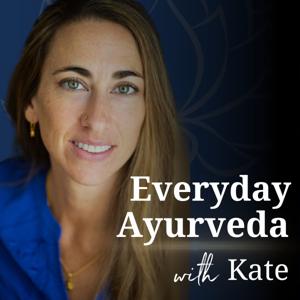


Are apples good for you according to Ayurveda? It depends on your digestion, and on how you prepare them. In this solo episode, Kate O'Donnell explains why apples are one of the best fall foods for cooling excess heat (pitta), why a raw, crisp apple can feel hard on a cold or sensitive gut, and how to cook apples so you get all of the medicine and none of the bloat.
Kate starts with the Ayurvedic qualities of apples: cold, hard, juicy and fibrous. She explains why those qualities calm pitta and move the bowels, and why they can aggravate vata and kapha when the apple is eaten raw. Then she shares the principle behind her "Apple Madness" recipes. Knowing a food's qualities is step one. Step two is how you process it: raw or cooked, pureed, warm or cold, with or without digestive spices.
From there, it's a tour of her fall kitchen: gingered applesauce with the skins left on (pink is a feature), stewed apple compote, stuffed baked apples with cider and dried fruit, apples stir-fried in ghee, apple crisp with an oat and almond flour topping, grated-apple overnight oats and gingerbread chia pudding, a curried apple butternut squash soup, and a simple apple cup filled with nut butter and spice.
In this episode:
Take-home tip: If a raw apple feels cold and hard on your belly, don't skip it. Cook it, puree it, or warm it with ginger and cinnamon.
Mentioned in this episode:
Share your Apple Madness: Tag Kate on Instagram at @kateodonnell.ayurveda, leave a comment on your podcast platform, or email [email protected].
This podcast is for educational purposes only and is not a substitute for medical advice. Consult a qualified healthcare provider before changing your diet or wellness routine.
Connect with Kate: https://www.healwithkate.org
Ayurvedic Living Institute Membership: https://ayurvedicliving.institute/membership
Women's Health Collection: https://courses.ayurvedicliving.institute/collections/womens-healthhttps://courses.ayurvedicliving.institute/products/courses/copy-of-fall-community-cleanse-2024
Are apples good for you according to Ayurveda? It depends on your digestion, and on how you prepare them. In this solo episode, Kate O'Donnell explains why apples are one of the best fall foods for cooling excess heat (pitta), why a raw, crisp apple can feel hard on a cold or sensitive gut, and how to cook apples so you get all of the medicine and none of the bloat.
Kate starts with the Ayurvedic qualities of apples: cold, hard, juicy and fibrous. She explains why those qualities calm pitta and move the bowels, and why they can aggravate vata and kapha when the apple is eaten raw. Then she shares the principle behind her "Apple Madness" recipes. Knowing a food's qualities is step one. Step two is how you process it: raw or cooked, pureed, warm or cold, with or without digestive spices.
From there, it's a tour of her fall kitchen: gingered applesauce with the skins left on (pink is a feature), stewed apple compote, stuffed baked apples with cider and dried fruit, apples stir-fried in ghee, apple crisp with an oat and almond flour topping, grated-apple overnight oats and gingerbread chia pudding, a curried apple butternut squash soup, and a simple apple cup filled with nut butter and spice.
In this episode:
Take-home tip: If a raw apple feels cold and hard on your belly, don't skip it. Cook it, puree it, or warm it with ginger and cinnamon.
Mentioned in this episode:
Share your Apple Madness: Tag Kate on Instagram at @kateodonnell.ayurveda, leave a comment on your podcast platform, or email [email protected].
This podcast is for educational purposes only and is not a substitute for medical advice. Consult a qualified healthcare provider before changing your diet or wellness routine.
Connect with Kate: https://www.healwithkate.org
Ayurvedic Living Institute Membership: https://ayurvedicliving.institute/membership
Women's Health Collection: https://courses.ayurvedicliving.institute/collections/womens-healthhttps://courses.ayurvedicliving.institute/products/courses/copy-of-fall-community-cleanse-2024
So many of you have written in asking about GLP-1s, the Ozempic class of drugs. This week Kate talks with Dr. Sheena Sooraj, chief clinical officer at Kerala Ayurveda Academy and Wellness Center, who sees clients on these medications every month. Dr. Sheena explains how GLP-1s work in the pancreas, stomach and brain, who tends to need them long term and who may be able to come off them with their doctor, and how Ayurveda supports digestion, hydration and the enjoyment of food while someone is on them. This isn't a conversation about Ayurveda versus modern medicine. It's a clinician's honest look at the pros, the cons, and where the two can work together. Stay for Kate's post-roll on the vata imbalances that can come with rapid weight loss.
Vaidya Sheena Sooraj is the Chief Clinical Officer, Ayurvedic Specialist, and Academy Faculty at Kerala Ayurveda Academy in Milpitas, California.Coming from a family with a strong Ayurvedic heritage, Vaidya Sheena developed a deep connection with Ayurveda from an early age. Her grandfather, a respected Ayurvedic physician and astrologer, played an important role in shaping her interest in and commitment to the traditional science of healing.
She holds a Bachelor of Ayurvedic Medical Sciences (BAMS) from Mahatma Gandhi University, Kerala, and brings 23 years of experience in clinical practice, patient care, education, and professional training. Throughout her career, she has been dedicated to bringing the wisdom of classical Ayurvedic principles into contemporary clinical practice and wellness. As a clinician and educator, she is passionate about making Ayurveda accessible, practical, and relevant to modern healthcare and everyday life.
Her work encompasses clinical care, Ayurvedic education, practitioner training, wellness program development, and community education, with a particular interest in translating traditional Ayurvedic knowledge into meaningful, evidence-informed approaches for modern health and well-being.
Website:https://keralaayurveda.us/
Instagram: https://www.instagram.com/drsheenasooraj
Please work with your healthcare provider and a qualified Ayurvedic practitioner before changing any medication, starting herbs, or trying nasya.
The information shared on Everyday Ayurveda with Kate is for educational purposes only and is not a substitute for medical advice, diagnosis or treatment. Never stop, start or change a prescribed medication without talking to your healthcare provider.
Connect with Kate: https://www.healwithkate.org
Ayurvedic Living Institute Membership: https://ayurvedicliving.institute/membership
Women's Health Collection: https://courses.ayurvedicliving.institute/collections/womens-healthhttps://courses.ayurvedicliving.institute/products/courses/copy-of-fall-community-cleanse-2024
So many of you have written in asking about GLP-1s, the Ozempic class of drugs. This week Kate talks with Dr. Sheena Sooraj, chief clinical officer at Kerala Ayurveda Academy and Wellness Center, who sees clients on these medications every month. Dr. Sheena explains how GLP-1s work in the pancreas, stomach and brain, who tends to need them long term and who may be able to come off them with their doctor, and how Ayurveda supports digestion, hydration and the enjoyment of food while someone is on them. This isn't a conversation about Ayurveda versus modern medicine. It's a clinician's honest look at the pros, the cons, and where the two can work together. Stay for Kate's post-roll on the vata imbalances that can come with rapid weight loss.
Vaidya Sheena Sooraj is the Chief Clinical Officer, Ayurvedic Specialist, and Academy Faculty at Kerala Ayurveda Academy in Milpitas, California.Coming from a family with a strong Ayurvedic heritage, Vaidya Sheena developed a deep connection with Ayurveda from an early age. Her grandfather, a respected Ayurvedic physician and astrologer, played an important role in shaping her interest in and commitment to the traditional science of healing.
She holds a Bachelor of Ayurvedic Medical Sciences (BAMS) from Mahatma Gandhi University, Kerala, and brings 23 years of experience in clinical practice, patient care, education, and professional training. Throughout her career, she has been dedicated to bringing the wisdom of classical Ayurvedic principles into contemporary clinical practice and wellness. As a clinician and educator, she is passionate about making Ayurveda accessible, practical, and relevant to modern healthcare and everyday life.
Her work encompasses clinical care, Ayurvedic education, practitioner training, wellness program development, and community education, with a particular interest in translating traditional Ayurvedic knowledge into meaningful, evidence-informed approaches for modern health and well-being.
Website:https://keralaayurveda.us/
Instagram: https://www.instagram.com/drsheenasooraj
Please work with your healthcare provider and a qualified Ayurvedic practitioner before changing any medication, starting herbs, or trying nasya.
The information shared on Everyday Ayurveda with Kate is for educational purposes only and is not a substitute for medical advice, diagnosis or treatment. Never stop, start or change a prescribed medication without talking to your healthcare provider.
Connect with Kate: https://www.healwithkate.org
Ayurvedic Living Institute Membership: https://ayurvedicliving.institute/membership
Women's Health Collection: https://courses.ayurvedicliving.institute/collections/womens-healthhttps://courses.ayurvedicliving.institute/products/courses/copy-of-fall-community-cleanse-2024
Every year around this time, Kate notices it first in her eyes. A little heat, a little dryness, a little irritation — the same early signal, right on schedule. In this solo episode, she uses that personal example to explain one of Ayurveda's most practical seasonal concepts: sandhi, the juncture between seasons, when the body is considered most vulnerable to imbalance.
Kate walks through why the accumulated heat (pitta) of summer can tip into aggravation as the weather turns — through hot, acidic foods and drinks, alcohol, iced coffee, or plain old stress — and why that aggravation shows up differently in every body. For her, it's the eyes. For someone else, it might be skin, digestion, headaches, or mood. She explains the physiology behind fall allergies, heartburn, irritability, and looser digestion, and why catching these signs now — rather than waiting two months — makes all the difference. She also covers why the incoming dryness and wind of vata season (heaters, cold air) can quietly make pitta symptoms worse, and walks through her full fall reset: oiling the skin, a simple at-home ghee nasya for the nose, bringing ghee back into meals to support digestion and detox, and leaning on naturally pacifying foods. She closes with a reminder that none of this requires doing everything at once — and an invitation to join her Ayurvedic Fall Community Cleanse if a more structured reset is what's needed.
The information shared on Everyday Ayurveda with Kate is for educational purposes only and is not a substitute for medical advice, diagnosis, or treatment. Always consult a qualified healthcare provider before making changes to your diet, supplements, or wellness routine.
Connect with Kate: https://www.healwithkate.org
Ayurvedic Living Institute Membership: https://ayurvedicliving.institute/membership
Women's Health Collection: https://courses.ayurvedicliving.institute/collections/womens-healthhttps://courses.ayurvedicliving.institute/products/courses/copy-of-fall-community-cleanse-2024
Every year around this time, Kate notices it first in her eyes. A little heat, a little dryness, a little irritation — the same early signal, right on schedule. In this solo episode, she uses that personal example to explain one of Ayurveda's most practical seasonal concepts: sandhi, the juncture between seasons, when the body is considered most vulnerable to imbalance.
Kate walks through why the accumulated heat (pitta) of summer can tip into aggravation as the weather turns — through hot, acidic foods and drinks, alcohol, iced coffee, or plain old stress — and why that aggravation shows up differently in every body. For her, it's the eyes. For someone else, it might be skin, digestion, headaches, or mood. She explains the physiology behind fall allergies, heartburn, irritability, and looser digestion, and why catching these signs now — rather than waiting two months — makes all the difference. She also covers why the incoming dryness and wind of vata season (heaters, cold air) can quietly make pitta symptoms worse, and walks through her full fall reset: oiling the skin, a simple at-home ghee nasya for the nose, bringing ghee back into meals to support digestion and detox, and leaning on naturally pacifying foods. She closes with a reminder that none of this requires doing everything at once — and an invitation to join her Ayurvedic Fall Community Cleanse if a more structured reset is what's needed.
The information shared on Everyday Ayurveda with Kate is for educational purposes only and is not a substitute for medical advice, diagnosis, or treatment. Always consult a qualified healthcare provider before making changes to your diet, supplements, or wellness routine.
Connect with Kate: https://www.healwithkate.org
Ayurvedic Living Institute Membership: https://ayurvedicliving.institute/membership
Women's Health Collection: https://courses.ayurvedicliving.institute/collections/womens-healthhttps://courses.ayurvedicliving.institute/products/courses/copy-of-fall-community-cleanse-2024
For fifteen years, Cara Brostrom has been the photographer — and co-author — behind every one of Kate's Everyday Ayurveda books. In this episode, Kate and Cara sit down together for the first time to tell the whole story: how a free PDF of five spring recipes and five photographs, made on a whim and shared on early Facebook, racked up 30,000 downloads and landed in front of an acquiring editor — and became The Everyday Ayurveda Cookbook, now a perennial classic translated into seven languages.
From there, they walk book by book through the evolution of the series and Cara's own evolving relationship to the materials she was photographing:
Cara also shares an early look at her forthcoming book (title still under wraps for now, expected to be announced around January), which brings together 19th-century poetry, plant lore from her own Anglo-European lineage, and present-day Western herbalism practice — including a surprising thread she's uncovered about how 19th-century New England housewife manuals centered almost entirely on digestion.
The episode closes with a fun rapid-fire round: Cara's morning tongue-scraping and oil-pulling ritual, her go-to first drink of the day, and her seasonal wind-down (bare feet in the grass in summer, wood stove in winter).
About Cara Brostrom:
Cara Brostrom is a writer, artist, and herbalist, and co-author of The Everyday Ayurveda Cookbook, a perennial classic translated into seven languages. She is a Nautilus Book Award Gold Winner, and her creative work has been recognized by the National Endowment for the Arts. Cara holds a Master of Arts from Aberystwyth University, where she conducted practice-based research on landscape narratives, performance documentation, and the archive; her performance art and installations have been shown at festivals across the US, England, Wales, Scotland, Canada, and Finland, and her photography has appeared in group shows in Boston, New York, and San Francisco. Her words and photography have been published in The Boston Globe, Wildling Magazine, Origin, Mother Earth Living, t.e.l.l. New England, and others. She has spent many years in apprenticeship and study with master herbalists in the Northeast, and now teaches workshops on herbalism and folklore. Cara lives in Western Massachusetts.
Connect with Cara: https://linktr.ee/carabros
Mentioned in this episode:
This episode is supported by:
Banyan Botanicals — Triphala tablets for digestion and daily detox: https://alnk.to/bPhiKjx
Connect with Kate: https://www.healwithkate.org
Ayurvedic Living Institute Membership: https://ayurvedicliving.institute/membership
Women's Health Collection: https://courses.ayurvedicliving.institute/collections/womens-healthhttps://courses.ayurvedicliving.institute/products/courses/copy-of-fall-community-cleanse-2024
From there, they walk book by book through the evolution of the series and Cara's own evolving relationship to the materials she was photographing:
Cara also shares an early look at her forthcoming book (title still under wraps for now, expected to be announced around January), which brings together 19th-century poetry, plant lore from her own Anglo-European lineage, and present-day Western herbalism practice — including a surprising thread she's uncovered about how 19th-century New England housewife manuals centered almost entirely on digestion.
The episode closes with a fun rapid-fire round: Cara's morning tongue-scraping and oil-pulling ritual, her go-to first drink of the day, and her seasonal wind-down (bare feet in the grass in summer, wood stove in winter).
About Cara Brostrom:
Cara Brostrom is a writer, artist, and herbalist, and co-author of The Everyday Ayurveda Cookbook, a perennial classic translated into seven languages. She is a Nautilus Book Award Gold Winner, and her creative work has been recognized by the National Endowment for the Arts. Cara holds a Master of Arts from Aberystwyth University, where she conducted practice-based research on landscape narratives, performance documentation, and the archive; her performance art and installations have been shown at festivals across the US, England, Wales, Scotland, Canada, and Finland, and her photography has appeared in group shows in Boston, New York, and San Francisco. Her words and photography have been published in The Boston Globe, Wildling Magazine, Origin, Mother Earth Living, t.e.l.l. New England, and others. She has spent many years in apprenticeship and study with master herbalists in the Northeast, and now teaches workshops on herbalism and folklore. Cara lives in Western Massachusetts.
Connect with Cara: https://linktr.ee/carabros
Mentioned in this episode:
This episode is supported by:
Banyan Botanicals — Triphala tablets for digestion and daily detox: https://alnk.to/bPhiKjx
Connect with Kate: https://www.healwithkate.org
Ayurvedic Living Institute Membership: https://ayurvedicliving.institute/membership
Women's Health Collection: https://courses.ayurvedicliving.institute/collections/womens-healthhttps://courses.ayurvedicliving.institute/products/courses/copy-of-fall-community-cleanse-2024
Did you know the moon moves through a full cycle — dark to full and back again — in about 28 days, which is also the length of the average menstrual cycle? In this solo episode, Kate explores lunar rhythms: one of her favorite topics, and a subject she covers in Chapter 9 of her book Everyday Ayurveda for Women's Health.
Ayurveda already asks us to live in tune with daily rhythms (sun up, sun down) and seasonal rhythms (what grows and changes through the year). The lunar rhythm sits alongside both of these — a roughly two-week arc of waxing energy followed by a two-week arc of waning energy, repeating all month long. Kate explains why attuning to this cycle matters for everyone, not just people who menstruate: it connects us to something larger than our day-to-day worries, and it offers a built-in, nature-guided balance of activity and rest that modern "always-on" life tends to erase.
Kate walks through the physical logic, too — the same gravitational pull that raises ocean tides and draws moisture into topsoil (which is why farmers plant near the full moon) also affects the water element in our own bodies, which is part of why energy can feel more "juicy" as the moon waxes. She maps out what to focus on during each phase: building, moving, and socializing during the waxing moon; celebrating, baking, and gathering at the full moon; tapering down and finishing projects during the waning moon; and resting, self-care, and simplifying food at the new moon. She also addresses how this maps — or doesn't — onto an individual menstrual cycle, and what to prioritize if the two aren't in sync.
In this episode:
Mentioned in this episode:
Have you noticed your own patterns with the moon? Kate would love to hear about it — leave a comment or send her a message.
Connect with Kate: https://www.healwithkate.org
Ayurvedic Living Institute Membership: https://ayurvedicliving.institute/membership
Women's Health Collection: https://courses.ayurvedicliving.institute/collections/womens-healthhttps://courses.ayurvedicliving.institute/products/courses/copy-of-fall-community-cleanse-2024
Did you know the moon moves through a full cycle — dark to full and back again — in about 28 days, which is also the length of the average menstrual cycle? In this solo episode, Kate explores lunar rhythms: one of her favorite topics, and a subject she covers in Chapter 9 of her book Everyday Ayurveda for Women's Health.
Ayurveda already asks us to live in tune with daily rhythms (sun up, sun down) and seasonal rhythms (what grows and changes through the year). The lunar rhythm sits alongside both of these — a roughly two-week arc of waxing energy followed by a two-week arc of waning energy, repeating all month long. Kate explains why attuning to this cycle matters for everyone, not just people who menstruate: it connects us to something larger than our day-to-day worries, and it offers a built-in, nature-guided balance of activity and rest that modern "always-on" life tends to erase.
Kate walks through the physical logic, too — the same gravitational pull that raises ocean tides and draws moisture into topsoil (which is why farmers plant near the full moon) also affects the water element in our own bodies, which is part of why energy can feel more "juicy" as the moon waxes. She maps out what to focus on during each phase: building, moving, and socializing during the waxing moon; celebrating, baking, and gathering at the full moon; tapering down and finishing projects during the waning moon; and resting, self-care, and simplifying food at the new moon. She also addresses how this maps — or doesn't — onto an individual menstrual cycle, and what to prioritize if the two aren't in sync.
In this episode:
Mentioned in this episode:
Have you noticed your own patterns with the moon? Kate would love to hear about it — leave a comment or send her a message.
Connect with Kate: https://www.healwithkate.org
Ayurvedic Living Institute Membership: https://ayurvedicliving.institute/membership
Women's Health Collection: https://courses.ayurvedicliving.institute/collections/womens-healthhttps://courses.ayurvedicliving.institute/products/courses/copy-of-fall-community-cleanse-2024
From the publisher's feed
Ranked by our users in the last 21 days

1,857 Listeners

1,258 Listeners
12,706 Listeners

4,452 Listeners
202 Listeners

2,540 Listeners

9,157 Listeners
308 Listeners

3,297 Listeners

27,856 Listeners
411 Listeners
1,373 Listeners

1,097 Listeners

19,223 Listeners

2,217 Listeners