FoundMyFitness

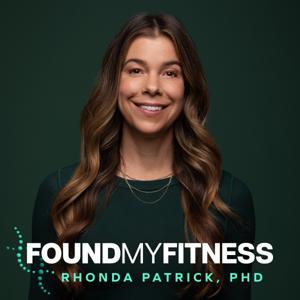
FoundMyFitness

By Rhonda Patrick, Ph.D.MedicineHealth & FitnessNutrition
Download on the App Store
  • Ranking

    14th

    on Medicine

  • Favorites

    3,686

    Followers

  • Typical duration

    125 min

    per episode

  • If it hooks

    19%

    finish an episode

Based on Podcast App listening data

FoundMyFitness episodes

  • #039 Dr. Satchin Panda on Practical Implementation of Time-Restricted Eating & Shift Work Strategies

    Dr. Satchin Panda

    Dr. Satchidananda (Satchin) Panda is a professor in the Regulatory Biology Laboratory at the Salk Institute for Biological Studies.

    We talk about dealing with shift work, black coffee when fasting, and some of the distinctions between Satchin's approach to time-restricted eating which is influenced by his deep background in circadian biology and more conventional protocols like 16:8 that many people are familiar with.

    In addition to these important and very practical how-to tidbits, we dive into lots of interesting new territory as well, including...

    • (00:00) Introduction
    • (05:36) What is time-restricted eating
    • (09:41) Circadian rhythm and eating times
    • (16:05) Dr. Panda's eating window
    • (20:52) Crowdsourced research uses mobile app to collect data
    • (24:34) TRE reduces inflammation
    • (36:16) How to minimize the hazards of shift work
    • (48:03) Blood glucose control changes throughout the day
    • (54:15) Intermittent fasting vs time-restricted eating
    • (01:24:41) TRE improves exercise performance and muscle gain
    • (01:32:33) What starts the daily eating clock?
    • (01:37:32) Eating fewer meals is better
    • (01:48:12) TRE improves sleep and cognition
    • (01:52:41) Participate in Dr. Panda's research by visiting MyCircadianClock.org

    If you're interested in learning more, you can read the full show notes here.

    Join over 300,000 people and get the latest distilled information on time restricted eating straight to your inbox weekly: https://www.foundmyfitness.com/newsletter

    Become a FoundMyFitness premium member to get access to exclusive episodes, emails, live Q+A's with Rhonda and more: https://www.foundmyfitness.com/crowdsponsor

    2 hr 3 min
  • Dr. Satchin Panda on Practical Implementation of Time-Restricted Eating & Shift Work Strategies

    This is a nearly 2-hour round 2 episode with none other than Dr. Satchin Panda of the Salk Institute!

    At nearly two hours of dialog, this episode touches on a lot of material but has a special focus on practical implementation of time-restricted eating. Put another way, I kept a list of a lot of questions that seem to keep coming up and present them directly to Satchin.

    We talk about dealing with shift work, black coffee when fasting, and some of the distinctions between Satchin's approach to time-restricted eating which is influenced by his deep background in circadian biology and more conventional protocols like 16:8 that many people are familiar with.

    In addition to these important and very practical how-to tidbits, we dive into lots of interesting new territory as well, including...

    • How human anecdote and animal evidence suggests time-restricted feeding may be especially useful for gut-related issues, including inflammatory bowel disease and acid reflux.
    • The fascinating way Dr. Panda is using human anecdote from his trial to ask new scientific questions he wouldn't think to ask and then going back to animal data to figure it out and how this unique approach forms a sort of closed loop pattern: animal → human feedback → back to animal for mechanism.
    • How labs doing caloric restriction research may have actually been reaping the benefits of time-restricted without realizing it as an incidental to their experimental design.
    • The revelation that 70% of FDA drugs are subject to circadian effects and are either less effective or more effective at certain times of the day.
    • The effect melatonin has on the pancreatic production of insulin and the insight this lends to why we should probably stop eating 3-4 hours before we go to bed.
    • The bizarre way circadian rhythms affects everything from susceptibility to UV damage to recovery from surgery to cancer risk.

    Sign-up for Dr. Panda's mobile app study on time-restricted eating.

    Grab the full show notes, timeline & glossary from the episode page now.

    Did you enjoy this podcast? It was brought to you by people like you!
    Click here to visit our crowdsponsor page where you can learn more about how you can support the podcast for as little or as much as you like.

    2 hr 3 min
  • #038 Dr. Guido Kroemer on Autophagy, Caloric Restriction Mimetics, Fasting & Protein Acetylation

    Dr. Guido Kroemer

    Dr. Guido Kroemer is a professor at the University of Paris Descartes and an expert in immunology, cancer biology, aging, and autophagy.

    He is one of the most highly cited authors in the field of cell biology and was the most highly cited cell biologist for the period between 2007 and 2013. Especially notable among his contributions: he was the first to discover that the permeabilization of mitochondrial membranes is a concrete step towards apoptotic cell death.

    In this episode, you'll discover:

    • (00:00) Introduction
    • (09:09) The three main nutrient signals that activate autophagy
    • (20:55) The role of fasting and nutrient deprivation in autophagy
    • (28:52) Exercise induces autography
    • (33:07) Autophagy cleans out damaged organelles
    • (35:14) Mitophagy keeps mitochondria healthy
    • (39:38) Autophagy clears away neurodegenerative proteins in the brain
    • (48:29) Autophagy in cancer is a double-edged sword
    • (54:52) Fasting mimetics (e.g., resveratrol, spermidine, hydroxycitrate) induce autophagy

    If you're interested in learning more, you can read the full show notes here.

    Join over 300,000 people and get the latest distilled information on fasting & caloric restriction straight to your inbox weekly: https://www.foundmyfitness.com/newsletter

    Become a FoundMyFitness premium member to get access to exclusive episodes, emails, live Q+A's with Rhonda and more: https://www.foundmyfitness.com/crowdsponsor

    1 hr 11 min
  • Dr. Guido Kroemer on Autophagy, Caloric Restriction Mimetics, Fasting & Protein Acetylation

    Dr. Guido Kroemer is a professor at the University of Paris Descartes and an expert in immunology, cancer biology, aging, and autophagy. He is one of the most highly cited authors in the field of cell biology and was the most highly cited cell biologist for the period between 2007 and 2013. Especially notable among his contributions: he was the first to discover that the permeabilization of mitochondrial membranes is a concrete step towards apoptotic cell death.

    This episode is decidedly focused on autophagy, an important cellular program that is inducible by dietary fasting and has broad implications for aging and cancer. Autophagy discussion includes:

    • How the 3 main signals that activate autophagy all involve nutrient sensing (00:09:09).
    • The role of different types of fasting and nutrient deprivation in autophagy (00:20:55).
    • How different types of exercise can induce autophagy (00:24:35).
    • How a specific type of autophagy called mitophagy keeps mitochondria healthy (00:36:29).
    • How autophagy has been shown to slow cellular aging (00:33:07).
    • How autophagy prevents neurodegenerative diseases by clearing away protein aggregates (00:39:38).
    • The role of autophagy in cancer as a possible double-edged sword (00:48:29).
    • How certain compounds known as caloric restriction mimetics (or fasting mimetics) including resveratrol, spermidine, hydroxycitrate can induce autophagy by tricking the cell through the modulation of one or more of the 3 main autophagy signaling pathways (00:54:52).

    Visit Dr. Guido Kroemer's website.

    Did you enjoy this podcast? It was brought to you by people like you!
    Click here to visit our crowdsponsor page where you can learn more about how you can support the podcast for as little or as much as you like.

    Watch the full video on YouTube.

    1 hr 11 min
  • #037 Dr. Jari Laukkanen on Sauna Use for the Prevention of Cardiovascular & Alzheimer's Disease

    Jari Laukkanen

    This podcast features Jari Laukkanen, M.D., Ph.D., a cardiologist and scientist at the Institute of Public Health and Clinical Nutrition, University of Eastern Finland, Kuopio.

    Dr. Laukkanen has been conducting long-term trials looking at the health effects of sauna use in a population of over 2,000 middle-aged men in Finland.

    In this episode, you'll discover:

    • (00:00) Introduction
    • (01:50) Sauna use improves cardiovascular health and reduces risk of death
    • (06:42) How sauna use lowers blood pressure
    • (08:07) Sauna use mimics aerobic exercise, increasing heart rate up to 150 beats/min
    • (09:40) How long should you stay in the sauna?
    • (11:59) Heat shock proteins help keep the brain healthy
    • (14:52) Sauna use increases growth hormone and improves response to exercise
    • (17:43) The positive effects of sauna on mood may be due to endorphins
    • (20:58) Finnish sauna culture and adding cold-water immersion to the sauna experience

    If you're interested in learning more, you can read the full show notes here.

    Join over 300,000 people and get the latest distilled information on sauna use straight to your inbox weekly: https://www.foundmyfitness.com/newsletter

    Become a FoundMyFitness premium member to get access to exclusive episodes, emails, live Q+A's with Rhonda and more: https://www.foundmyfitness.com/crowdsponsor

    28 min
  • Dr. Jari Laukkanen on Sauna Use for the Prevention of Cardiovascular & Alzheimer’s Disease

    This podcast features Jari Laukkanen, M.D., Ph.D., a cardiologist and scientist at the Institute of Public Health and Clinical Nutrition, University of Eastern Finland, Kuopio. Dr. Laukkanen has been conducting long-term trials looking at the health effects of sauna use in a population of over 2,000 middle-aged men in Finland. The results? Massive reductions in mortality and memory disease in a dose-response fashion at 20-year follow-up.

    In this almost 25-minute episode, we talk about...

    • 00:00:37 - The association between sauna use and fatal cardiovascular outcomes.
    • 00:00:37 - The inverse association between cardiovascular-related deaths and all-cause deaths.
    • 00:02:00 - How men that used the sauna 2-3 times per week had a 27% lower cardiovascular-related mortality than men that used the sauna 1 time per week.
    • 00:02:15 - How men that used the sauna 4-7 times per week had a 50% lower cardiovascular-related mortality than men that used the sauna one time per week.
    • 00:02:50 - The confounding factors Dr. Laukkanen and his colleagues had to adjust for, such as physical exercise, cholesterol, obesity, smoking, alcohol consumption, socioeconomic status.
    • 00:03:26 - The various types of cardiac-related deaths their reductions were shown in, including coronary artery disease, sudden cardiac death and more.
    • 00:05:00 - How one of the major mechanisms by which sauna use improves heart health is by reducing blood pressure and incident hypertension.
    • 00:05:40 - The mechanisms by which the sauna lowers blood pressure, which can occur via balancing of the autonomic nervous system, improvements in blood vessel function, decreases in arterial stiffness and compliance of arteries.
    • 00:06:17 - The increases in heart rate seen with sauna use that make it similar to moderate aerobic exercise in some ways (up to 150 beats/min!).
    • 00:06:56 - How time spent in the sauna was one of the more important factors for risk reduction with at least 20 minutes per session in a 174 F (79C) 4-7 times per week being a "sweet spot."
    • 00:09:29 - The inverse, dose-response relationship between sauna use and all-cause mortality: 24% for 2-3 times per week, 40% for 4-7 times.
    • 00:10:00 - His newest study that now shows a reduction in risk in a similar dose-response fashion for dementia and Alzheimer’s disease by around 65% for the most frequent sauna users.
    • 00:10:18 - The way sauna use increases heat shock proteins which repair damaged proteins and prevent protein aggregates and how this could end up being at least one potential molecular mechanism at play.
    • 00:13:03 - How sauna use increases growth hormone by 200-330%.
    • 00:14:10 - The patterns of sauna use and especially whether to sauna before or after you weight train.
    • 00:15:55 - The effect of sauna on mood which may be from improvements in cardiorespiratory fitness and possibly endorphins as well.
    • 00:18:39 - How sauna improves heart rate variability.
    • 00:20:04 - Cold-water immersion after sauna and a few cautionary words for extreme contrast therapy in people with a pre-existing heart condition that is currently unstable.

    Send Dr. Jari Laukkanen a tweet on Twitter.

    Did you enjoy this podcast? It was brought to you by people like you!
    Click here to visit our crowdsponsor page where you can learn more about how you can support the podcast for as little or as much as you like.

    28 min
  • #036 Judith Campisi, Ph.D. on Cellular Senescence, Mitochondrial Dysfunction, Cancer & Aging

    Dr. Judith Campisi is a professor of biogerentology at the Buck Institute for Research on Aging and a co-editor in chief of the Aging Journal.

    As an expert on cellular senescence, the discussion involves a lot of talk about aging and cancer, where senescence plays a very important fundamental role. What are some of the strategies we might use in the future to prevent senescent cells? What causes them in the first place?

    In this episode, you'll discover:

    • (00:00) Introduction
    • (05:12) Fundamental molecular and cellular processes of aging
    • (13:19) What is senescence and why did we evolve this cellular function?
    • (24:09) The difference between lifespan and healthspan
    • (30:32) DNA damage and mitochondrial dysfunction promote senescence
    • (35:45) Prolonged fasting suppresses senescent cells and stimulates new cell growth
    • (47:30) Exercise extends healthspan, partially by lengthening telomeres
    • (54:03) Consumer tests for DNA damage and cellular senescence
    • (59:58) NAD+ boosters, fasting mimetics, and aging in non-human animals

    If you're interested in learning more, you can read the full show notes here.

    Join over 300,000 people and get the latest distilled information on cancer & aging straight to your inbox weekly: https://www.foundmyfitness.com/newsletter

    Become a FoundMyFitness premium member to get access to exclusive episodes, emails, live Q+A's with Rhonda and more: https://www.foundmyfitness.com/crowdsponsor

    1 hr 9 min
  • Judith Campisi, Ph.D. on Cellular Senescence, Mitochondrial Dysfunction, Cancer & Aging

    Dr. Judith Campisi is a professor of biogerentology at the Buck Institute for Research on Aging and a co-editor in chief of the Aging Journal.

    As an expert on cellular senescence, the discussion involves a lot of talk about aging and cancer, where senescence plays a very important fundamental role. What are some of the strategies we might use in the future to prevent senescent cells? What causes them in the first place?

    In this 1-hour long conversation, we discuss a great number of very interesting things including:

    • Why diseases of aging, despite occurring in vary diverse tissue types, all begin to crop up simultaneously after 50 or 60 years of life.
    • What the fundamental molecular processes of aging are and what some of the on-going research and general thoughts are surrounding these processes.
    • What senescence is and the evolutionary biology explanation for why we have the mechanism of cellular senescence in the first place.
    • The infiltration of immune cells into our tissues that occurs as a function of aging and the role of damaged or senescent cells in attracting these immune cells.
    • The changes in gut permeability that happens with age and how that may increase our susceptibility to chronic, low-level inflammation.
    • The role of senescent cells in cancer metastasis and progression.
    • The clearance of senescent cells as a valid life extension strategy.
    • How mitochondrial dysfunction, even in the absence of DNA damage, can cause cells to undergo senescence.
    • The interesting observation that senescence from damage versus energy crisis (failed mitochondria) demonstrates a different and unique phenotype of cellular senescence.
    • The effects prolonged fasting may have on the clearance of senescent cells.
    • How periodic prolonged fasts might mimic some of the effects associated with an mTOR dampening drug like rapamycin.
    • How the secretions of senescent cells can affect the regenerative capacity of stem cells.
    • The practicality of a consumer available clinical assays for DNA damage and the challenge of assessing tissue-specific senescence without the use of invasive biopsy.
    • The effect of so-called fasting mimetic compounds (e.g. hydroxycitrate, resveratrol & spermidine) on senescent cells.
    • And believe it or not much more!

    Studies mentioned: 1, 2, 3, 4, 5, 6, 7, 8, 9, 10, 11, 12, 13, 14, 15, 16, 17

    Learn more about Dr. Judy Campisi.

    Did you enjoy this podcast? It was brought to you by people like you!
    Click here to visit our crowdsponsor page where you can learn more about how you can support the podcast for as little or as much as you like.

    1 hr 9 min
  • #035 Gordon Lithgow, Ph.D. on Protein Aggregation, Iron Overload & the Search for Longevity Compounds

    Dr. Gordon Lithgow of the Buck Institute for Research on Aging tells us about worms!

    This unassuming scientific model has a lot of important advantages for science: they can be frozen and subsequently thawed and retain viability, they are extremely well understood down to the precise number of cells in their body and the wiring of their nervous system, known as the connectome. Additionally, they have a short lifespan and are cheap to work with. Why would that be advantageous, you may ask?

    This is where Dr. Lithgow's work on the Caenorhabditis Intervention Testing Program comes in. Short-lived organisms give Dr. Lithgow and his colleagues the opportunity to see how their biology responds to compounds in different contexts and to do so cheaply and rapidly. Think a vitamin, pharmaceutical or one of any number of other compounds may have a broad effect on longevity? Try it on Caenorhabditis first! Taking this approach allows the broad screening of compounds that might not otherwise get its chance in the limelight if science were limited to only working with rodents, for example.

    In this episode, you'll discover:

    • (00:00) Introduction
    • (03:30) What is C elegans and why do researchers use it?
    • (06:43) Proteostasis and its involvement in aging
    • (10:59) Shocking worms with heat extends their lifespan
    • (16:40) Sauna use activates human heat-shock proteins, improving health
    • (19:27) Excess dietary iron accelerates protein aggregation, promoting Alzheimer's and Parkinson's diseases
    • (25:07) Vitamin D deficiency accelerates aging
    • (35:19) Using worms to search for compounds that extend life in humans

    If you're interested in learning more, you can read the full show notes here.

    Join over 300,000 people and get the latest distilled information straight to your inbox weekly: https://www.foundmyfitness.com/newsletter

    Become a FoundMyFitness premium member to get access to exclusive episodes, emails, live Q+A's with Rhonda and more: https://www.foundmyfitness.com/crowdsponsor

    47 min
  • Gordon Lithgow, Ph.D. on Protein Aggregation, Iron Overload & the Search for Longevity Compounds

    Dr. Gordon Lithgow of the Buck Institute for Research on Aging tells us about worms! Well, more accurately, his lab does research on nematodes, particularly an animal known as C. elegans.

    This unassuming scientific model has a lot of important advantages for science: they can be frozen and subsequently thawed and retain viability, they are extremely well understood down to the precise number of cells in their body and the wiring of their nervous system, known as the connectome. Additionally, they have a short lifespan and are cheap to work with. Why would that be advantageous, you may ask?

    This is where Dr. Lithgow's work on the Caenorhabditis Intervention Testing Program comes in. Short-lived organisms give Dr. Lithgow and his colleagues the opportunity to see how their biology responds to compounds in different contexts and to do so cheaply and rapidly. Think a vitamin, pharmaceutical or one of any number of other compounds may have a broad effect on longevity? Try it on Caenorhabditis first! Taking this approach allows the broad screening of compounds that might not otherwise get its chance in the limelight if science were limited to only working with rodents, for example.

    But what could nematodes possibly have in common with us? The answer to the question is... gene homology! In fact, around 35% of C. elegans genes have a corresponding human version.

    In this over 40-minute long conversation with professor Dr. Gordon Lithgow, we talk about...

    • Nematodes... especially C. elegans, of course!
    • The synergistic way in which research in lower organisms (C. elegans in this case) works together with rodent research to better understand the biology of aging and identify potential therapeutics.
    • The story behind the Caenorhabditis Intervention Testing Program, a multi-institutional effort using the advantages of C. elegans short lifespan to screen for potential compounds that may increase lifespan. We also discuss the more expensive-but-closer-to-humans version of this program known just the Intervention Testing Program.
    • The various qualities of C. elegans, especially as related to science's deep knowledge of the organism, that make it a perfect fit for this type of research.
    • Some of the early experiences that actually lead to my early interest in the aging field and how it actually holds a bit in common with Gordon's story today.
    • The role of protein aggregation as a possible fundamental mechanism of aging... even beyond its more established role in neurodegenerative diseases.
    • Some of the fascinating research surrounding mild heat stress as a means to increase lifespan in lower organisms.
    • Some of Gordon's research into the effects of metal accumulation, particularly iron, on aging in lower organisms and how, in humans, it may be important to approach the intake of these minerals with care.
    • The interplay between genes that influence iron-binding and the development of Alzheimer's disease.
    • Some of Gordon's research into the (perhaps surprising) effect of vitamin D on aging in C. elegans and, particularly, on the solubility of proteins... the loss of which is a feature of aging of particular interest.
    • The critical involvement of the Nrf2 stress-response pathway in conferring benefits of vitamin D in worms... a pathway many of you may know about from previous discussions of sulforaphane, a robust activator of Nrf2 in humans.
    • Some of the challenges encountered with ensuring standardization of protocols across all of the participating labs in the Caenorhabditis Intervention Testing Program.
    • The amazing genetic diversity represented in soil-dwelling nematodes and how this is also an advantage in longevity research.
    • The interesting possibility that certain compounds may have a different overall effect on lifespan or healthspan that is dependent within certain contexts (e.g. environmentally stressed or not).

    Learn more about Dr. Gordon Lithgow.

    Did you enjoy this podcast? It was brought to you by people like you!
    Click here to visit our crowdsponsor page where you can learn more about how you can support the podcast for as little or as much as you like.

    Have you done a 23andMe genetic test?
    You can learn more about whether you have some of the specific polymorphisms discussed in this podcast, including ones related to the hemochromatosis and transferrin genes, by clicking here.

    47 min

More shows like FoundMyFitness

The Tim Ferriss Show by Tim Ferriss: Bestselling Author, Human Guinea Pig

The Tim Ferriss Show

16,048 Listeners

The Human Upgrade: Biohacking for Longevity & Performance by Dave Asprey

The Human Upgrade: Biohacking for Longevity & Performance

7,183 Listeners

Boundless Life by Ben Greenfield

Boundless Life

4,990 Listeners

The Rich Roll Podcast by Rich Roll

The Rich Roll Podcast

11,797 Listeners

The mindbodygreen Podcast by mindbodygreen

The mindbodygreen Podcast

2,005 Listeners

The Neuro Experience by Louisa Nicola

The Neuro Experience

429 Listeners

The Proof with Simon Hill by Live better for longer

The Proof with Simon Hill

2,600 Listeners

The Genius Life by Max Lugavere

The Genius Life

4,866 Listeners

Dhru Purohit Show by Dhru Purohit

Dhru Purohit Show

3,421 Listeners

The Dr. Hyman Show by Dr. Mark Hyman

The Dr. Hyman Show

9,143 Listeners

The Peter Attia Drive by Peter Attia, MD

The Peter Attia Drive

8,000 Listeners

Everyday Wellness: Midlife Hormones, Menopause, and Science for Women 35+ by Everyday Wellness™

Everyday Wellness: Midlife Hormones, Menopause, and Science for Women 35+

133 Listeners

Huberman Lab by Scicomm Media

Huberman Lab

29,196 Listeners

The Metabolic Classroom with Dr. Ben Bikman by Insulin IQ

The Metabolic Classroom with Dr. Ben Bikman

225 Listeners

The Aliquot Preview by Rhonda Patrick, Ph.D.

The Aliquot Preview

48 Listeners

The Dr. Gabrielle Lyon Show by Dr. Gabrielle Lyon

The Dr. Gabrielle Lyon Show

1,198 Listeners