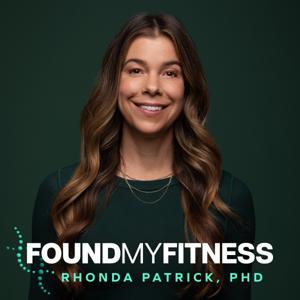
FoundMyFitness

FoundMyFitness

By Rhonda Patrick, Ph.D.MedicineHealth & FitnessNutrition
Download on the App Store
  • Ranking

    14th

    on Medicine

  • Favorites

    3,686

    Followers

  • Typical duration

    125 min

    per episode

  • If it hooks

    19%

    finish an episode

Based on Podcast App listening data

FoundMyFitness episodes

  • #034 Refined Sugar and Its Effects on Mortality, the Brain, Cancer, Hormones & More

    If you're anything like me, having the facts straight can sometimes help you to push through the tough part of building new habits or breaking old bad ones. This podcast talks about the realities of what the science says surrounding the consumption of refined sugar.

    Some of the facts may surprise you! In this episode, you'll discover:

    • (00:00) Introduction
    • (01:16) Excess sugar consumption is common and dangerous
    • (05:16) Sugar accelerates the aging process itself
    • (09:14) Refined sugar harms the brain
    • (11:22) High fructose corn syrup is uniquely dangerous
    • (14:04) How to quit sugar

    If you're interested in learning more, you can read the full show notes here.

    Join over 300,000 people and get the latest distilled information straight to your inbox weekly: https://www.foundmyfitness.com/newsletter

    Become a FoundMyFitness premium member to get access to exclusive episodes, emails, live Q+A's with Rhonda and more: https://www.foundmyfitness.com/crowdsponsor

    16 min
  • Refined Sugar and Its Effects on Mortality, the Brain, Cancer, Hormones & More

    If you're anything like me, having the facts straight can sometimes help you to push through the tough part of building new habits or breaking old bad ones. This podcast talks about the realities about what the science says surrounding the consumption of refined sugar.

    Some of the facts may surprise you! We talk about the relationship of consumption of refined sugar with...

    • mortality and aging
    • brain function, memory, and neuroinflammation
    • the development of cancer and expression of oncogenes
    • sex hormones

    ... and, of special relevance, if you're hoping to cut out a soda habit, the real addictive properties of refined sugar consumption that mirror that of more well-known drugs of abuse.

    Enjoyed this episode?
    Learn how to support the podcast by visiting our crowdsponsor page.

    Studies mentioned in podcast:
    1, 2, 3, 4, 5, 6, 7, 8, 9, 10, 11, 12, 13, 10, 11, 14, 15, 16, 17, 18, 19

    16 min
  • #033 Does Saturated Fat Cause Heart Disease?

    Today we try to answer or at least explore a big question in the world of health: does saturated fat cause heart disease?

    This is not an unreasonable concern given the fact that there have been several associative studies that have found a link between saturated fat and heart disease, which is, no doubt, a fat that we find abundantly in the typical American diet since it is richly found in staples like fatty beef, pork, butter, cheese, and other dairy products.

    And if you're in the United States and you're not at least a little concerned about heart disease, you may be asleep at the wheel since it's currently our leading cause of death.

    In this episode, you'll discover:

    • (00:00) Separating the effects of sugar and saturated fat in research
    • (04:23) Small dense LDL are the problem
    • (07:48) Interactions between genetics, fats, and carbohydrates
    • (16:37) Getting and using your genetic data
    • (18:07) Dangers of cutting out saturated fats

    Join over 300,000 people and get the latest distilled information on meat consumption causing cancer straight to your inbox weekly: https://www.foundmyfitness.com/newsletter

    Become a FoundMyFitness premium member to get access to exclusive episodes, emails, live Q+A's with Rhonda and more: https://www.foundmyfitness.com/crowdsponsor

    25 min
  • Does Saturated Fat Cause Heart Disease?

    Today we try to answer or at least explore a big question in the world of health: does saturated fat cause heart disease?

    This is not an unreasonable concern given the fact that there have been several associative studies that have found a link between saturated fat and heart disease, which is, no doubt, a fat that we find abundantly in the typical American diet since it is richly found in staples like fatty beef, pork, butter, cheese, and other dairy products.

    And if you're in the United States and you're not at least a little concerned about heart disease, you may be asleep at the wheel since it's currently our leading cause of death.

    Studies mentioned in this episode:

    • Association of dietary, circulating, and supplement fatty acids with coronary risk: a systematic review and meta-analysis.
    • Visceral adiposity and metabolic syndrome after very high–fat and low-fat isocaloric diets: a randomized controlled trial.
    • Low to moderate sugar-sweetened beverage consumption impairs glucose and lipid metabolism and promotes inflammation in healthy young men: a randomized controlled trial.
    • Personalized Nutrition by Prediction of Glycemic Responses.
    • Saturated Fats Compared With Unsaturated Fats and Sources of Carbohydrates in Relation to Risk of Coronary Heart Disease.
    • Added sugar intake and cardiovascular diseases mortality among US adults.

    Genetics resources:

    • 23andme.com
    • promethease.com
    • foundmyfitness.com/genetics
    25 min
  • #032 Does Meat Consumption Cause Cancer?

    Does meat consumption cause cancer? Or, put another way… does avoiding meat help prevent cancer?

    If you aren't already savvy to the topic, this may sound more absurd than it should. Here's why: there have been many, many, many correlative studies that have found that higher meat consumption is associated with a significantly higher risk of cancer and cancer mortality.

    In this episode, you'll discover:

    • (00:00) Introduction
    • (01:18) How cancer starts
    • (04:49) Growth factors make cancer thrive
    • (08:54) Applying the science to your needs
    • (11:33) Cycle prolonged fasting with recovery and protein

    Join over 300,000 people and get the latest distilled information on meat consumption causing cancer straight to your inbox weekly: https://www.foundmyfitness.com/newsletter

    Become a FoundMyFitness premium member to get access to exclusive episodes, emails, live Q+A's with Rhonda and more: https://www.foundmyfitness.com/crowdsponsor

    16 min
  • Does Meat Consumption Cause Cancer?

    Does meat consumption cause cancer? Or, put another way… does avoiding meat help prevent cancer?

    If you aren't already savvy to the topic, this may sound more absurd than it should. Here's why: there have been many, many, many correlative studies that have found that higher meat consumption is associated with a significantly higher risk of cancer and cancer mortality.

    To try to answer this question we end up going deep into discussing plausible mechanisms that might help explain this phenomenon and, indeed, discussing a little bit of cancer biology as well.

    Some of the publications mentioned in this podcast:

    • Association of Animal and Plant Protein Intake With All-Cause and Cause-Specific Mortality
    • Effect of aerobic exercise on insulin, insulin-like growth factor-1 and insulin-like growth factor binding protein-3 in overweight and obese postmenopausal women
    • Prospective study of colorectal cancer risk in men and plasma levels of insulin-like growth factor (IGF)-I and IGF-binding protein-3
    • Polymorphic variants of insulin-like growth factor I (IGF-I) receptor and phosphoinositide 3-kinase genes affect IGF-I plasma levels and human longevity: cues for an evolutionarily conserved mechanism of life span control.
    • Functionally significant insulin-like growth factor I receptor mutations in centenarians
    • Congenital IGF1 deficiency tends to confer protection against post-natal development of malignancies
    • Changes in plasma somatomedin-C in response to ingestion of diets with variable protein and energy content

    16 min
  • #031 On Depression and Its Underlying Causes

    The World Health Organization estimates that more than 350 million individuals of all ages have depression and approximately one-third of all patients with depression fail to respond to conventional antidepressant therapies like SSRI's. The good news is that today, good science is starting to illuminate the underlying biological mechanisms of depression. This new understanding may soon help the clinical world develop new and more effective treatments.

    In this episode, you'll discover:

    • (00:00) The scope of depression and SSRI use
    • (03:37) How inflammation can cause depression
    • (09:26) But what causes inflammation?
    • (12:03) Treating depression with diet

    Join over 300,000 people and get the latest distilled information on depression and it's underlying causes straight to your inbox weekly: https://www.foundmyfitness.com/newsletter

    Become a FoundMyFitness premium member to get access to exclusive episodes, emails, live Q+A's with Rhonda and more: https://www.foundmyfitness.com/crowdsponsor

    16 min
  • On Depression and Its Underlying Causes

    The World Health Organization estimates that more than 350 million individuals of all ages have depression and approximately one-third of all patients with depression fail to respond to conventional antidepressant therapies like SSRI’s.

    The good news is that today, perhaps more than ever, good science is starting to illuminate some of the underlying biological mechanisms surrounding the development of depression. This new understanding may soon help the clinical world develop new approaches to treatment that may be vastly more effective and for a greater number of people than the traditional approaches.

    Publications mentioned:

    • Antidepressants versus placebo in major depression: an overview

    • Inflammation: Depression Fans the Flames and Feasts on the Heat

    • Association of high-sensitivity C-reactive protein with de novo major depression.

    • Sex Differences in Depressive and Socioemotional Responses to an Inflammatory Challenge: Implications for Sex Differences in Depression

    • Dopaminergic Mechanisms of Reduced Basal Ganglia Responses to Hedonic Reward During Interferon Alfa Administration

    • Inflammation-induced anhedonia: endotoxin reduces ventral striatum responses to reward.

    • Structural and functional features of central nervous system lymphatic vessels

    • Endurance exercise increases skeletal muscle kynurenine aminotransferases and plasma kynurenic acid in humans

    • Psychological stress and corticotropin-releasing hormone increase intestinal permeability in humans by a mast cell-dependent mechanism

    • Neurobiology: Rise of resilience

    • First biological marker for major depression could enable better diagnosis, treatment

    • Low to moderate sugar-sweetened beverage consumption impairs glucose and lipid metabolism and promotes inflammation in healthy young men: a randomized controlled trial

    • Sweetened-Beverages, Coffee, and Tea in Relation to Depression among Older US Adults (P05.122)

    • Consuming highly refined carbohydrates increases risk of depression

    16 min
  • #030 Roland Griffiths, Ph.D. on Psilocybin, Psychedelic Therapies & Mystical Experiences

    Dr. Roland R. Griffiths

    Dr. Roland R. Griffiths is a clinical pharmacologist at Johns Hopkins and has been researching mood-altering compounds for over 40 years.

    As an unusually prolific scientist, having published over 360-times, he's also responsible for having started the psilocybin research program at Johns Hopkins nearly 2 decades ago.

    In this podcast, you'll discover:

    • (00:00) Introduction
    • (04:05) Psilocybin produces meaningful mind-altering effects
    • (12:52) Psilocybin can treat depression and anxiety in people with life-threatening cancer 1
    • (22:53) Psilocybin rewires the brain, preferentially breaking fear-based circuits
    • (28:11) Meditation and psychedelics quiet neural activity of the default mode network
    • (34:09) "The hard problem of consciousness" may not be solved by neuroscience
    • (40:16) Psilocybin helps people quit smoking (80 percent abstinence at six months post-treatment) 2
    • (47:08) The risks of psilocybin include bad trips and psychiatric problems
    • (01:02:00) Meditation delivers similar benefits to psilocybin without the risks
    • (01:07:18) Sauna use improves mood Salvinorin A
    • (01:10:23) Salvinorin A, ayahuasca, and other psychedelics

    If you're interested in learning more, you can read the full show notes here: https://www.foundmyfitness.com/episodes/roland-griffiths

    Join over 300,000 people and get the latest distilled information on psilocybin, psychedelic therapies & mystical experiences straight to your inbox weekly: https://www.foundmyfitness.com/newsletter

    Become a FoundMyFitness premium member to get access to exclusive episodes, emails, live Q+A's with Rhonda and more: https://www.foundmyfitness.com/crowdsponsor

    1 hr 18 min
  • Roland Griffiths, Ph.D. on Psilocybin, Psychedelic Therapies & Mystical Experiences

    Dr. Roland R. Griffiths is a clinical pharmacologist at Johns Hopkins and has been researching mood-altering compounds for over 40 years. As an unusually prolific scientist, having published over 360-times, he's also responsible for having started the psilocybin research program at Johns Hopkins nearly 2 decades ago.

    In this 1-hour and 15-minute podcast, we discuss…

    • 00:01:03 - the broader story of Dr. Griffiths 40 years of mood-altering drug research, including what got him started and how taking up a meditation practice ultimately influenced the eventual focuses of his research.
    • 00:02:22 - the effect psilocybin has had in clinical trials in eliciting so-called mystical experiences that can act as a long-term catalyst for meaningful spiritual change and is amenable to being reproduced and clinically studied in a prospective manner.
    • 00:03:45 - what distinguishes psilocybin from other drugs, particularly when reflecting backward on the experience months afterward.
    • 00:05:11 - the process by which Dr. Griffiths and his team create an appropriate “setting” and facilitate feelings of safety for those participating in his trials.
    • 00:06:42 - the elusive fundamental nature of a classical psychedelic experience whereby people often simultaneously describe the experience as ineffable (indescribable) but yet also often assign it a truth value that may even exceed that of everyday consensus reality.
    • 00:07:36 - a description of the core features of a classical mystical experience that overlap with those found in a mystical experience induced by psilocybin.
    • 00:08:58 - the qualities of the experience that Dr. Griffiths believes to most underlie the “reorganizational” potential it can have.
    • 00:10:55 - the interesting potential areas for scientific exploration that the reproducibility of the psilocybin experience makes the substance amenable to.
    • 00:11:25 - the promise psilocybin has shown as an effective therapeutic for anxiety and depression in patients with life-threatening cancer and also treatment-resistant depression in otherwise healthy patients (00:18:46).
    • 00:13:04 - the lack of rigor in the very early trials on these compounds and the way in which cultural stigma surrounding psychedelic drugs ultimately played a role in impeding real, substantive clinical research for decades afterward.
    • 00:16:31 - the long-term resilience of the antidepressant and anxiolytic effect, lasting six months and possibly even longer.
    • 00:21:01 - the effect psilocybin has demonstrated in animal studies to increase hippocampal neurogenesis and enhance extinction of trace fear conditioning.
    • 00:23:07 - the somewhat unintuitive neurobiological mechanism that may tie together some of the antidepressant properties of both psilocybin and ketamine, an anesthetic currently being studied as a rapid-onset antidepressant.
    • 00:25:16 - whether or not the mystical subjective experiences are necessary for drugs like psilocybin to exert their antidepressant or anxiolytic effects.
    • 00:26:43 - what the default mode network is and what its pattern of activity is in depression, long-term meditators, and after the acute use of psilocybin.
    • 00:32:16 - the hard problem of consciousness.
    • 00:37:26 - the challenge of finding the neurological correlates to match the phenomenology of individual’s subjective experiences.
    • 00:38:16 - the promise psilocybin has shown in a small trial on smoking cessation where 60% of the treatment group were still abstinent a year afterward and plans Dr. Griffiths has to expand this area of research
    • 00:41:10 - the possibility that the “reorganizational nature” of these experiences may open up new avenues as trials continue to try to embed the experience within different therapeutic contexts.
    • 00:44:02 - the roadmap to FDA approval for use of psilocybin as a medication, particularly in the context of cancer-associated depression and anxiety.
    • 00:45:05 - the risks inherent in taking psilocybin and the frequency of self-reported negative experiences in the general population.
    • 00:47:22 - the criteria Dr. Griffiths and his colleagues use when screening for volunteers to participate in his studies involving psilocybin.
    • 00:49:21 - the inability for clinicians to predict who is at risk of having challenging experiences defined by fear and anxiety (“bad trip”) and whether or not it is desirable, in terms of achieving a therapeutic outcome, to prevent these types of experiences altogether or not.
    • 00:51:43 - the sort of dosages used in the trials.
    • 00:54:45 - the clever ways devised by Dr. Griffiths to placebo control trials where expectation itself can affect outcome.
    • 00:57:45 - some of the interesting anecdotes gleaned from Dr. Griffiths’ working with long-term meditators participating in the psilocybin trial.
    • 01:05:13 - a brief discussion about some of the other psychedelics besides psilocybin, such as salvia divinorum and DMT (at 01:10:24).
    • 01:12:08 - the historical indigenous use of psychedelics in various cultures spread throughout the world.

    Watch this as a video on YouTube.

    1 hr 18 min

More shows like FoundMyFitness

The Tim Ferriss Show by Tim Ferriss: Bestselling Author, Human Guinea Pig

The Tim Ferriss Show

16,048 Listeners

The Human Upgrade: Biohacking for Longevity & Performance by Dave Asprey

The Human Upgrade: Biohacking for Longevity & Performance

7,183 Listeners

Boundless Life by Ben Greenfield

Boundless Life

4,990 Listeners

The Rich Roll Podcast by Rich Roll

The Rich Roll Podcast

11,797 Listeners

The mindbodygreen Podcast by mindbodygreen

The mindbodygreen Podcast

2,005 Listeners

The Neuro Experience by Louisa Nicola

The Neuro Experience

429 Listeners

The Proof with Simon Hill by Live better for longer

The Proof with Simon Hill

2,600 Listeners

The Genius Life by Max Lugavere

The Genius Life

4,866 Listeners

Dhru Purohit Show by Dhru Purohit

Dhru Purohit Show

3,421 Listeners

The Dr. Hyman Show by Dr. Mark Hyman

The Dr. Hyman Show

9,143 Listeners

The Peter Attia Drive by Peter Attia, MD

The Peter Attia Drive

8,000 Listeners

Everyday Wellness: Midlife Hormones, Menopause, and Science for Women 35+ by Everyday Wellness™

Everyday Wellness: Midlife Hormones, Menopause, and Science for Women 35+

133 Listeners

Huberman Lab by Scicomm Media

Huberman Lab

29,196 Listeners

The Metabolic Classroom with Dr. Ben Bikman by Insulin IQ

The Metabolic Classroom with Dr. Ben Bikman

225 Listeners

The Aliquot Preview by Rhonda Patrick, Ph.D.

The Aliquot Preview

48 Listeners

The Dr. Gabrielle Lyon Show by Dr. Gabrielle Lyon

The Dr. Gabrielle Lyon Show

1,198 Listeners