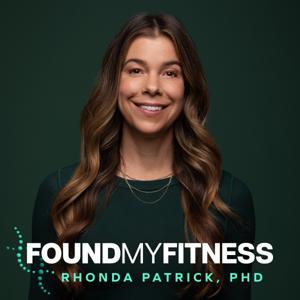
FoundMyFitness

FoundMyFitness

By Rhonda Patrick, Ph.D.MedicineHealth & FitnessNutrition
Download on the App Store
  • Ranking

    14th

    on Medicine

  • Favorites

    3,686

    Followers

  • Typical duration

    125 min

    per episode

  • If it hooks

    19%

    finish an episode

Based on Podcast App listening data

FoundMyFitness episodes

  • #029 Jed Fahey, Sc.D. on Isothiocyanates, the Nrf2 Pathway, Moringa & Sulforaphane Supplementation

    Dr. Jed Fahey is a multi-decade veteran of isothiocyanate research and is the director of the Cullman Chemoprotection Center at Johns Hopkins University.

    In this episode, you'll discover:

    • (00:00) Introduction
    • (03:44) What is sulforaphane?
    • (10:25) The NRF2 pathway, a master regulator of antioxidants
    • (14:22) Cruciferous vegetables are rich sources of sulforaphane
    • (20:39) Does cooking broccoli destroy sulforaphane?
    • (26:00) Sulforaphane supplements vary widely in quality
    • (36:41) Antibiotics wipe out sulforaphane-producing bacteria in the gut
    • (46:44) Managing Helicobacter pylori growth with a sulforaphane-rich diet
    • (56:15) Sulforaphane reduces inflammation, but does it extend lifespan?
    • (01:11:31) The therapeutic potential of sulforaphane for autism spectrum disorders, Alzheimer's disease, and schizophrenia
    • (01:22:44) Research challenges and clinical trials
    • (01:30:51) Is sulforaphane an anti-depressant?
    • 01:34:50 - Moringin from moringa may be an alternative to sulforaphane with similar bioaction
    • (01:53:55) How to maximize sulforaphane conversion
    • (02:13:27) Testing the anticancer power of sulforaphane

    If you're interested in learning more, you can read the full show notes here.

    Join over 300,000 people and get the latest distilled information straight to your inbox weekly: https://www.foundmyfitness.com/newsletter

    Become a FoundMyFitness premium member to get access to exclusive episodes, emails, live Q+A's with Rhonda and more: https://www.foundmyfitness.com/crowdsponsor

    2 hr 33 min
  • Jed Fahey, Sc.D. on Isothiocyanates, the Nrf2 Pathway, Moringa & Sulforaphane Supplementation

    Dr. Jed Fahey is a multi-decade veteran of isothiocyanate research and is the director of the Cullman Chemoprotection Center at Johns Hopkins University.

    Much of this conversation, as you might expect given Dr. Fahey's pedigree as a research scientist, is focused on isothiocyanates and, indeed, sulforaphane!

    While we covered quite a lot on this very topic (isothiocyanates) via my solo podcast a few weeks ago, this covers everything that may have been overlooked.... and, indeed, so much more! Skip to the timeline below for a sampling.

    Dr. Fahey and his colleagues have been, in a big way, at the absolute center of what is a staggering amount of research on these very powerful compounds.

    There is hardly a topic which we can discuss in which he doesn't have an anecdote about a study he was involved in, or, in some cases, tribal knowledge that may not even be published but is nonetheless interesting and an important part of the story that is unique to his particular vantage point.

    In this 2-hour and 30-minute interview, we discuss...

    • 00:00:00 - the early history of sulforaphane research, including key initial discoveries.
    • 00:00:37 - the serendipitous unfolding of events that lead to the converging of the research on the NRF2 stress response pathway with the sulforaphane-related research going on at the same institute Johns Hopkins.
    • 00:05:06 - why cruciferous vegetables bother to create isothiocyanates in the first place.
    • 00:07:26 - the involvement of the heat shock proteins, in addition to the increased activity of Nrf2, as an additional cellular response mechanism that's been observed in association with sulforaphane.
    • 00:08:11 - how sulforaphane affects a diverse array of biochemical processes from glutathione synthesis to elimination of reactive oxygen species and detoxification of harmful compounds, including carcinogens.
    • 00:15:01 - whether or not to cook your cruciferous vegetables.
    • 00:15:34 - the epidemiological (associative) evidence that cruciferous vegetable consumption may help reduce the risk of cancer.
    • 00:18:30 - the extremely unpredictable nature of endogenous conversion of glucorapahanin (the precursor) into sulforaphane between person to person.
    • 00:22:14 - practical information surrounding supplementation of sulforaphane.
    • 00:27:05 - the effect one particular french sulforaphane supplement had on the doubling rate of PSA, which is a marker for prostate cancer recurrence in prostate cancer patients.
    • 00:28:17 - the role that the Cullman Chemoprotection Center at Johns Hopkins has played, in addition to fundamental research, in providing early, vital infrastructure enabling some of the efforts of the international research community in elucidating the effects of sulforaphane and related compounds and the underlying biological pathways.
    • 00:28:26 - the incredible, almost geometric growth in new studies that has occurred since the advent of a few of the key discoveries about sulforaphane and its method of action.
    • 00:32:48 - the practicality of probiotics as a way to improve endogenous myrosinase activity needed to convert the precursor to sulforaphane into the bioactive sulforaphane.
    • 00:33:26 - the involvement of our gut bacteria in our ability to convert the precursor of sulforaphane into its active form.
    • 00:37:13 - whether or not endogenous myrosinase activity improves as a function of repeated challenge with glucoraphanin (the precursor to sulforaphane).
    • 00:39:30 - why probiotics may vary in their degree of efficacy.
    • 00:43:00 - why consuming isothiocyanates to reduce the number of bacterial colonies of h. pylori, a risk factor for peptic ulcers and stomach cancer, may turn out to be a better intervention than complete eradication of the species with antibiotics.
    • 00:47:21 - the bizarre relationship h. pylori has with childhood asthma, where it has been shown that having some h. pylori seems to reduce asthma incidence in childhood.
    • 00:52:28 - the effect sulforaphane has on inflammation and why inflammation is often a great therapeutic target for many different diseases, including diseases of aging.
    • 00:54:05 - the life extension properties broccoli has been shown to have in an insect model of aging.
    • 00:59:27 - the underlying causes of Hutchinson-Gilford progeria and the promise sulforaphane may hold for this disease of rapid aging.
    • 01:09:00 - the effects of sulforaphane or Nrf2 activation on diseases of the brain, such as autism (human evidence) and Alzheimer's (animal evidence), possibly through anti-oxidative or anti-inflammatory effects.
    • 01:11:09 - the so-called autistic fever response whereby autistic patients report a sudden reversal of symptoms during brief periods of fever.
    • 01:10:05 - the role heat shock proteins might play more broadly in the prevention of certain neurological diseases.
    • 01:19:00 - the challenges inherent in clinical trials where scientists may be extremely optimistic about the effects that might be observed, but still have to exercise caution and choose trial conditions that may be conservative, for the good of the people whose lives and hopes hang in the balance.
    • 01:27:01 - the role of inflammation and depression and what some studies on animals have demonstrated in terms of sulforaphane's potential as an antidepressant.
    • 01:42:30 - a special isothiocyanate-containing plant known as Moringa or sometimes referred to as the drumstick tree or the horseradish tree.
    • 01:46:32 - Dr. Fahey's inadvertent foray into the consumption of exotic meats during a visit to Africa.
    • 01:51:15 - a compound commonly associated with broccoli: indole-3-carbinol and its downstream product diindolylmethane (DIIM).
    • 01:57:00 - the practicality of using mustard seed powder as an extra source of myrosinase, possibly for your cooked cruciferous vegetables.
    • 02:00:13 - whether or not it makes sense to freeze broccoli sprouts in order to extend their shelf life, and possibly even increase sulforaphane within certain contexts.
    • 02:05:25 - Dr. Fahey's thoughts on where endogenous conversion of glucoraphanin occurs in the body, as well as how long it takes before sulforaphane metabolites hit the bloodstream after ingestion.
    • 02:07:25 - Some general thoughts on frequency in terms of how often one might need to take sulforaphane to elicit its biological effects.
    • 02:12:16 - why sulforaphane may one day be a component of sunscreen.
    • 02:12:31 - what some of the upcoming trials involving sulforaphane are at the Cullman Chemoprotection Center.
    • 02:17:07 - the incredible way in which a sulforaphane-rich broccoli sprout beverage was shown to dramatically enhance the detoxification of benzene through excretion: one study showed up to 61% starting immediately after supplementation.

    You can find out more about Dr. Fahey and the Cullman Chemoprotection Center by visiting:

    • The Cullman Chemoprotection Center Website (donation link)
    • facebook.com/chemoprotectioncenter
    • twitter.com/jedosan (Jed's twitter)
    • jedfahey.com
    2 hr 33 min
  • #028 Sulforaphane and Its Effects on Cancer, Mortality, Aging, Brain and Behavior, Heart Disease & More

    This podcast is about one of the most important biological pathways you could possibly take the time to learn about: the NRF2 pathway.

    The most potent naturally-occurring inducer of this pathway, a plant compound known as sulforaphane, may be one of the most potent health-enhancing compounds at our disposal and yet... no one is keeping it out of your hands! No $1,000 per pill markup is keeping it out of your hands -- it's available to anyone willing to take the little bit of time it takes each week to produce broccoli sprouts.

    Here are a few of the more salient points surrounding sulforaphane that are discussed in this podcast...

    • (00:00) Introduction
    • (03:36) Cruciferous vegetables reduce risk of death from all causes
    • (07:15) Mechanisms of sulforaphane's anti-cancer effects
    • (12:02) Sulforaphane activates NRF2, detoxifying the body
    • (18:53) Curciferous vegetables and cardiovascular disease
    • (21:57) Does sulforaphane slow aging?
    • (29:39) Sulforaphane improves symptoms of autism, schizophrenia, and depression
    • (36:18) Neurodegernative diseases and taumatic brain injury can be treated with sulphoraphane
    • (41:36) Concluding thoughts

    If you're interested in learning more, you can read the full show notes here.

    Join over 300,000 people and get the latest distilled information straight to your inbox weekly: https://www.foundmyfitness.com/newsletter

    Become a FoundMyFitness premium member to get access to exclusive episodes, emails, live Q+A's with Rhonda and more: https://www.foundmyfitness.com/crowdsponsor

    53 min
  • Sulforaphane and Its Effects on Cancer, Mortality, Aging, Brain and Behavior, Heart Disease & More

    This podcast is about one of the most important biological pathways you could possibly take the time to learn about: the NRF2 pathway.

    The most potent naturally-occurring inducer of this pathway, a plant compound known as sulforaphane, may be one of the most potent health-enhancing compounds at our disposal and yet... no one is keeping it out of your hands! No $1,000 per pill markup is keeping it out of your hands -- it’s available to anyone willing to take the little bit of time it takes each week to produce broccoli sprouts.

    In some respects, broccoli sprouts may even be a great equalizer in a way... while it’s true that healthy food can often be expensive, it’s even reasonably possible for a person to take $20 worth of seeds and feed their whole family some of the most healthful greens you could get your hands on. This video will tell you why.

    Here are a few of the more salient points surrounding sulforaphane that are discussed in this podcast...

    • Profound changes in lipid biomarkers, reducing heart disease risk by as much as 50% in humans.
    • Massive reductions in cancer risk in humans and also highly effective as a cancer intervention, particularly prostate and breast but also many others.
    • Steep reductions in inflammation in humans.
    • Shown in mice to be as effective as prozac as an anti-depressant.
    • Steep behavioral changes in humans with respect to certain neurological disorders, such as autism.
    • Causes dramatic boosts in the excretion of air pollutants (up to 60%) in humans.

    Key sections you may want to skip to:
    00:03:35 - Cancer and mortality
    00:21:56 - Aging
    00:29:37 - Brain and behavior
    00:41:33 - Final recap
    00:44:18 - Dose

    NOTE: If you enjoy this podcast, you'll enjoy the YouTube video more since it shows all of the figures and citations.

    53 min
  • #027 Valter Longo, Ph.D. on the Fasting-Mimicking Diet & Fasting for Longevity, Cancer & Multiple Sclerosis

    Dr. Valter Longo

    This episode of the FoundMyFitness podcast features Dr. Valter Longo, a professor of gerontology and biological sciences and director of the longevity institute at the University of Southern California.

    Dr. Longo has made huge contributions to the field of aging, including the role of fasting and diet in longevity and healthspan in humans as well as metabolic fasting therapies for the treatment of human diseases.

    In this podcast, Valter and I discuss...

    • (00:00) Introduction
    • (03:30) The fasting-mimicking diet makes fasting accessible to more people
    • (08:10) Prolonged fasting stimulates stem cell regeneration
    • (12:57) Does inflammation cause aging or is it the other way around?
    • (17:59) Using the fasting-mimicking diet in a hospital setting
    • (22:18) Fasting prior to chemotherapy preps cancer cells for death and protects healthy cells from damage
    • (36:05) Using fasting and time-restricted feeding to control weight gain
    • (42:08) How long do you need to fast to induce autophagy?
    • (45:32) A fasting-mimicking diet reversed a multiple sclerosis-like autoimmune condition in mice
    • (52:09) What are the cellular mechanisms that underlie the regenerative benefits of fasting?
    • (58:27) Are fasting-mimicking drugs, such as spermidine and resveratrol, safe and effective? What about metformin?
    • (01:07:03) Blocking the growth hormone/IGF-1 axis protects from cancer and diabetes in people with Laron's syndrome
    • (01:14:23) Exercise is essential for healthy metabolism and longevity

    If you're interested in learning more, you can read the full show notes here: https://www.foundmyfitness.com/episodes/valter-longo

    Join over 300,000 people and get the latest distilled information straight to your inbox weekly: https://www.foundmyfitness.com/newsletter

    Become a FoundMyFitness premium member to get access to exclusive episodes, emails, live Q+A's with Rhonda and more: https://www.foundmyfitness.com/crowdsponsor

    1 hr 23 min
  • #026 Ruth Patterson, Ph.D. on Time-Restricted Eating in Humans & Breast Cancer Prevention

    Dr. Ruth Patterson

    Dr. Ruth Patterson, a professor in the UC San Diego Department of Family Medicine and Public Health as well as Associate Director of Population Sciences and leader of the Cancer Prevention program at Moores Cancer Center at UC San Diego Health.

    In this episode, we chat about:

    • (00:00) Introduction
    • (03:33) Lifestyle modifications that reduce breast cancer risk
    • (11:18) Modern life disrupts our circadian rhythm, causing us to eat at odd times
    • (14:31) Women who practiced time-restricted eating with a 13-hour fasting window had a 40 percent reduced recurrence of breast cancer
    • (23:03) A longer daily fasting window lowers hemoglobin A1C, earlier fasting reduces inflammation
    • (28:24) Giving your metabolism time-off allows the body to repair itself
    • (30:48) Does eating frequency matter while practicing time-restricted eating?
    • (35:04) Daily fasting improves sleep quality and increases physical activity
    • (38:27) Genetic risk factors for breast cancer
    • (40:54) Modest lifestyle changes can really lower your breast cancer risk

    If you're interested in learning more, you can read the full show notes here: https://www.foundmyfitness.com/episodes/ruth-patterson

    Join over 300,000 people and get the latest distilled information straight to your inbox weekly: https://www.foundmyfitness.com/newsletter

    Become a FoundMyFitness premium member to get access to exclusive episodes, emails, live Q+A's with Rhonda and more: https://www.foundmyfitness.com/crowdsponsor

    48 min
  • Ruth Patterson, Ph.D. on Time-Restricted Eating in Humans & Breast Cancer Prevention

    Today's episode features Dr. Ruth Patterson, a professor in the UC San Diego Department of Family Medicine and Public Health as well as Associate Director of Population Sciences and leader of the Cancer Prevention program at Moores Cancer Center at UC San Diego Health. If you enjoyed my last episode with Dr. Satchin Panda, I have good news! This will also be a great episode for you, since we talk about some similar ideas, but focus more on the human side of things, especially when it comes to time-restricted eating, since Dr. Patterson does primarily clinical research.

    In this 45-minute podcast, we talk about...

    • The importance of time-restricted eating as a practical public health intervention, mostly for it's ease of implementation, that may have a widespread impact on disease risk.
    • Why you should probably make sure your time-restricted eating window occurs earlier in the day, rather than later.
    • How the first 5% drop in weight loss can have disproportionately large effects on the metabolic factors associated with breast cancer risk when compared with subsequent weight loss.
    • The association of longer fasting durations beginning earlier in the evening and improved sleep in humans, as well as spontaneous physical activity in their day-to-day lives.
    • The relationship between metabolism and breast cancer risk.
    • The effect of lifestyle factors, such as obesity, physical activity, what and even when you eat, whether or not you smoke tobacco... and how even modest changes, such as consuming food earlier in the day and only during an 11-hour window, can decrease breast cancer risk and recurrence by as much as 36%.
    • The importance of starting your fast earlier in the evening, and how an earlier eating window has been shown to correlate to reductions in inflammatory markers.
    • The association of higher circulating insulin levels with breast cancer risk, and how insulin itself has an important relationship with estrogen by affecting the levels of sex-hormone binding globulin.
    • The dangers of having a cellular environment that is inflamed, as the case is with the obese, and simultaneously having elevated cellular growth signals, which is also characteristic of the hormonal milieu of the obese.
    • The surprisingly small role heredity plays in determining overall risk of breast cancer when compared to lifestyle factors.
    • How healthful lifestyle habits, like choosing to eat during the right window, ultimately helps us trend our risk for many of the diseases of old age in the correct direction instead of influencing only one or another.

    If the concept of time-restricted eating especially piques your interest, make sure to...

    1. Check out the podcast released just prior to this one: Dr. Satchin Panda on Time-Restricted Feeding and Its Effects on Obesity, Muscle Mass & Heart Health.
    2. Make sure your data points go to good use! Visit myCircadianClock.org to learn how you can, by committing to a minimum of a 14 week "intervention" and submitting pictures of your food from your iPhone or Android phone, move human research on time-restricted eating forward.

    Huge special thanks to Dr. Ruth Patterson for coming on. Enjoy the podcast!

    48 min
  • #025 Dr. Satchin Panda on Time-Restricted Feeding and Its Effects on Obesity, Muscle Mass & Heart Health

    Dr. Satchidananda (Satchin) Panda is a professor in the Regulatory Biology Laboratory at the Salk Institute for Biological Studies.

    In this video we discuss...

    • (00:00) Introduction
    • (06:42) Why humans developed an internal clock (i.e., the circadian rhythm)
    • (15:28) Light is necessary to regulate our circadian clock
    • (25:02) Morning bright light exposure lowers cortisol levels and lifts mood, but the indoors are dim
    • (30:25) Using light exposure to reset jet-lag and help shift workers stay healthy
    • (36:17) Eating is an important regulator of the body's peripheral circadian clocks
    • (40:44) Time-restricted feeding protects from the harmful effects of a Western diet
    • (48:30) Time-restricted feeding increases muscle mass while reducing fat mass
    • (51:03) Mice who fasted 15-16 hours-per-day gained muscle endurance due to changes in mitochondria
    • (54:43) What's the difference between intermittent fasting and time-restricted feeding?
    • (01:00:02) Melatonin makes us less insulin-sensitive in the evening
    • (01:05:56) Dr. Panda's time-restricted eating mobile app helps research participants track their food
    • (01:20:39) Time-restricted feeding improves heart health
    • (01:27:31) The gut microbiota also follow a circadian rhythm
    • (01:34:12) How to participate in Dr. Panda's research

    If you're interested in learning more, you can read the full show notes here.

    Join over 300,000 people and get the latest distilled information straight to your inbox weekly: https://www.foundmyfitness.com/newsletter

    Become a FoundMyFitness premium member to get access to exclusive episodes, emails, live Q+A's with Rhonda and more: https://www.foundmyfitness.com/crowdsponsor

    1 hr 40 min
  • Satchin Panda, Ph.D. on Time-Restricted Feeding and Its Effects on Obesity, Muscle Mass & Heart Health

    Dr. Rhonda Patrick speaks with Dr. Satchin Panda, a professor at the Salk Institute for Biological Studies in La Jolla California. Satchin's work deals specifically with the timing of food and it's relationship with our biological clocks governed by circadian rhythm and also the circadian rhythm in general.

    In this video we discuss...

    • The fascinating history of experimentation that ultimately elucidated the location for the region of the brain necessary for a properly timed sleep-wake cycles.
    • The relationship between our body's "master clock" and it's many peripheral clocks.
    • Why infants sleep so intermittently, instead of resting for a longer, sustained duration like healthy young adults... and why this sustained rest also goes haywire in the elderly.
    • The fascinating work Dr. Panda took part in that lead to the discovery of a specialized light receptor in the eye that sets circadian rhythms and is known as melanopsin.
    • The important relationship between the relatively light insensitive melanopsin, which requires around 1,000 lux of light to be fully activated, and its control of the circadian clock by means of activation of the suprachiasmatic nucleus and suppression of melatonin.
    • The effects light exposure seems to have on next-day cortisol, a glucocorticoid hormone that regulates around 10-20% of the human protein-encoding genome.
    • The clever experimental design by which Dr. Panda and his colleagues discovered that certain circadian rhythms, especially of the liver, are entrained by when we eat, instead of how much light we get. This underlines the fact that, when managing are circadian rhythm, both elements are important!
    • One of the more surprising effects of time-restricted feeding in mice eating a so-called healthy diet: increases in muscle mass and even endurance in some cases.

    Interested in trying out time-restricted feeding? Don't let your data points go to waste! You can try out time-restricted feeding and have a real impact on human research! Commit to 14 weeks and download Dr. Panda's mobile app to get started. Learn more at: mycircadianclock.org/participant

    1 hr 40 min
  • #024 Ray Cronise on Cold Thermogenesis, Intermittent Fasting, Weight Loss & Healthspan

    Ray Cronise

    Ray Cronise is a former NASA material scientist and cofounder of zero gravity, a company that offers weightless parabolic flights to consumers and researchers. The interesting thing about this interview, isn't strictly raised professional background, however, but instead his propensity towards aggressive self-experimentation.

    In this episode, Ray and I discuss...

    • (00:00) Introduction
    • (03:40) Ray's 23-day (and counting) water fast
    • (05:13) Using fasting and cold stress to lose weight
    • (10:44) Meeting nutritional needs over the long-term
    • (17:22) We are simultaneously overnourished and malnourished
    • (23:31) Inflammation may be the best predictor of aging
    • (29:03) What is metabolism and how do we measure it?
    • (40:22) Meal timing to optimize health
    • (01:12:04) Cold stress promotes wellness
    • (01:27:19) Similarities between cold stress and exercise
    • (01:42:27) Exercise and cold stress delay neurodegeneration
    • (01:45:13) Cold stress increases fat oxidation
    • (01:51:52) Anecdotes and fun facts about melatonin

    If you're interested in learning more, you can read the full show notes here.

    Join over 300,000 people and get the latest distilled information straight to your inbox weekly: https://www.foundmyfitness.com/newsletter

    Become a FoundMyFitness premium member to get access to exclusive episodes, emails, live Q+A's with Rhonda and more: https://www.foundmyfitness.com/crowdsponsor

    2 hr 5 min

More shows like FoundMyFitness

The Tim Ferriss Show by Tim Ferriss: Bestselling Author, Human Guinea Pig

The Tim Ferriss Show

16,048 Listeners

The Human Upgrade: Biohacking for Longevity & Performance by Dave Asprey

The Human Upgrade: Biohacking for Longevity & Performance

7,183 Listeners

Boundless Life by Ben Greenfield

Boundless Life

4,990 Listeners

The Rich Roll Podcast by Rich Roll

The Rich Roll Podcast

11,797 Listeners

The mindbodygreen Podcast by mindbodygreen

The mindbodygreen Podcast

2,005 Listeners

The Neuro Experience by Louisa Nicola

The Neuro Experience

429 Listeners

The Proof with Simon Hill by Live better for longer

The Proof with Simon Hill

2,600 Listeners

The Genius Life by Max Lugavere

The Genius Life

4,866 Listeners

Dhru Purohit Show by Dhru Purohit

Dhru Purohit Show

3,421 Listeners

The Dr. Hyman Show by Dr. Mark Hyman

The Dr. Hyman Show

9,143 Listeners

The Peter Attia Drive by Peter Attia, MD

The Peter Attia Drive

8,000 Listeners

Everyday Wellness: Midlife Hormones, Menopause, and Science for Women 35+ by Everyday Wellness™

Everyday Wellness: Midlife Hormones, Menopause, and Science for Women 35+

133 Listeners

Huberman Lab by Scicomm Media

Huberman Lab

29,196 Listeners

The Metabolic Classroom with Dr. Ben Bikman by Insulin IQ

The Metabolic Classroom with Dr. Ben Bikman

225 Listeners

The Aliquot Preview by Rhonda Patrick, Ph.D.

The Aliquot Preview

48 Listeners

The Dr. Gabrielle Lyon Show by Dr. Gabrielle Lyon

The Dr. Gabrielle Lyon Show

1,198 Listeners