
Sign up to save your podcasts
Or

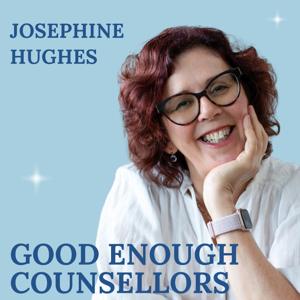


Why is it so hard to ask for help when we're quite happy to offer it?
In this rather vulnerable episode of the Good Enough Counsellors podcast, I'm sharing something I've been thinking about for a long time and have finally plucked up the courage to do.
It has been difficult to get to this point as it's brought up all sorts of feelings for me. These include whether I should be able to manage by myself, being willing to receive and to admit I need help.
But what if people want to help and how, by valuing independence, am I denying people the gift of support?
I'm also sharing a taster of something new I've been creating - a behind the scenes podcast. In it I take you behind the scenes of exhibiting at the BACP Private Practice Conference. I share something that can hold me back. "Perfectionism Paralysis" and how I get over it.
What if you don't need to feel completely ready before you do the thing that scares you?
In this episode:
Find out more about my Patreon HERE
You can also find me here:
The Good Enough Counsellors Facebook Group
Josephine Hughes on Facebook
Josephine Hughes on YouTube
My website: josephinehughes.com
Setting up in private practice? Download my free checklist HERE
Need ideas for how to get clients? Download my free handout 21 Ways for Counsellors to Attract New Clients HERE
Keywords: therapist self-doubt, therapist imposter syndrome, perfectionism, private practice confidence, therapist confidence, counsellor confidence, starting before you feel ready, good enough counsellors, therapist private practice, BACP Private Practice Conference, Patreon for therapists
The information contained in Good Enough Counsellors is provided for information purposes only. The contents of this podcast are not intended to amount to advice and you should not rely on any of the contents of this podcast. Professional advice should be obtained before taking or refraining from taking any action as a result of the contents of this podcast.
Josephine Hughes disclaims all liability and responsibility arising from any reliance placed on any of the contents of this podcast.
Have you ever sat down and worked out how much your private practice is costing you? Sometimes it's more than you realise and this can have an impact on whether it's a business that actually supports you.
Your session fees need to not only cover day to day costs such as supervision, but also allow for holidays, sickness and retirement.
In this second episode with psychotherapist and supervisor, Claire Ratcliffe, we discuss how to build a sustainable practice including how to attract clients.
In this episode:
The main message Claire would like you to take away is not "Charge what you're worth" but to remember your worth isn't determined by what you charge. It doesn't change if you charge £50 or £500. Instead, base your fees on what your practice, your health and your wellbeing need so that you can continue to keep doing the work.
And if Claire’s comments about letting people know who you are and what you have to offer have got you thinking about your own practice, this is exactly what we’ll be working on next in Therapy Growth Group.
From the week beginning 12th October, we’ll be spending four weeks looking at your niche: who you most want to help, what makes you unique and how you can communicate that so the right clients can find you.
If you’d like some support to work through this alongside other therapists, you can find out more about Therapy Growth Group HERE
If you'd like to find out more about Claire and her new supervision group aimed at relationship therapists, please visit her website HERE
Setting up in private practice? Download my free checklist HERE
Need ideas for how to get clients? Download my free handout 21 Ways for Counsellors to Attract New Clients HERE
You can also find me here:
The Good Enough Counsellors Facebook Group
Josephine Hughes on Facebook
Josephine Hughes on YouTube
My website: josephinehughes.com
Keywords: private practice counselling, therapist private practice, sustainable private practice, counselling fees, therapist fees, how much should therapists charge, setting counselling fees, raising counselling fees, money mindset for therapists, cost of private practice, private practice expenses, therapist burnout, attracting therapy clients, how to get counselling clients, marketing for therapists, therapist visibility, social media for therapists, TikTok for therapists, counselling marketing, building a therapy practice, growing a private practice, private practice income, counsellor private practice UK, psychotherapist private practice, Claire Ratcliffe, Josephine Hughes, Good Enough Counsellors
The information contained in Good Enough Counsellors is provided for information purposes only. The contents of this podcast are not intended to amount to advice and you should not rely on any of the contents of this podcast. Professional advice should be obtained before taking or refraining from taking any action as a result of the contents of this podcast.
Josephine Hughes disclaims all liability and responsibility arising from any reliance placed on any of the contents of this podcast.
Working with couples can feel very different from working with individual clients. There are two people in the room, two different perspectives and the added challenge of managing what happens between them.
In this episode of the Good Enough Counsellors podcast, I talk to integrative psychotherapist, couples therapist and clinical supervisor Claire Ratcliffe about how therapists can feel more confident working with couples.
Claire shares that she didn't always enjoy couples work. Despite completing couples therapy training, she initially felt out of her depth and eventually removed couples counselling from her profile altogether. It was only when she found an approach that suited her, alongside specialist training and supervision, that her experience began to change.
Today, couples work is something she loves.
We talk about what makes couples counselling so rewarding, as well as some of the challenges therapists can face when working with more than one client in the room and how to handle them.
Towards the end of our conversation, we return to something that made a huge difference to both Claire's experience and my own reflections on working with couples: supervision. Claire explains why specialist couples supervision matters and how learning alongside other therapists can help you develop your skills and feel less alone when the work feels challenging.
Claire is also developing a group supervision membership for couples and relationship therapists, with opportunities to learn through case discussion and shared experience. You can find out more about Claire and her supervision offer through the links below.
In this episode, we discuss:If you've ever received an enquiry from a couple and wondered whether you're really equipped to help them, I hope this conversation reassures you that feeling out of your depth doesn't necessarily mean couples work isn't for you. Sometimes it means you need more training, more support and the opportunity to learn alongside people who understand the particular challenges of the work.
About Claire Ratcliffe
Claire Ratcliffe is an integrative psychotherapist, couples therapist and clinical supervisor. She works extensively with relationships, trauma and psychosexual issues and is passionate about helping other therapists develop their confidence in couples work.
Claire also hosts the Healing Relationships: With Ourselves, Others & The World podcast and shares relationship education on TikTok.
You can find out more about Claire and her supervision on her website, HERE
Therapy Growth Group
If this episode has got you thinking about the support you'd like with your own private practice, you can also find details of Therapy Growth Group below.
From the week beginning 12 October, we'll be spending four weeks exploring your niche: who you most want to help, how you uniquely help them, why clients might choose you and how you can communicate that clearly to prospective clients.
Therapy Growth Group includes regular live calls where you can ask questions, get feedback and connect with other therapists building their private practices.
Find out more on Josephine's website, https://josephinehughes.com
You can also find me here:
The Good Enough Counsellors Facebook Group
Josephine Hughes on Facebook
Josephine Hughes on YouTube
My website: josephinehughes.com
Setting up in private practice? Download my free checklist HERE
Need ideas for how to get clients? Download my free handout 21 Ways for Counsellors to Attract New Clients HERE
Keywords: couples counselling, couples therapy, working with couples, couples counsellor, relationship therapy, relationship counselling, therapist confidence, couples therapy training, couples therapy supervision, relationship therapist, clinical supervision, counselling supervision, private practice therapist, couples therapy skills, trauma and relationships, childhood trauma and relationships, psychosexual therapy, sex and relationships, relationship conflict, working with relationship issues, counsellor private practice, psychotherapist private practice, Good Enough Counsellors, Claire Ratcliffe, Josephine Hughes
The information contained in Good Enough Counsellors is provided for information purposes only. The contents of this podcast are not intended to amount to advice and you should not rely on any of the contents of this podcast. Professional advice should be obtained before taking or refraining from taking any action as a result of the contents of this podcast.
Josephine Hughes disclaims all liability and responsibility arising from any reliance placed on any of the contents of this podcast.
It can be easy to wonder if there is any point posting on social media if hardly anyone likes it or no one comments.
But what if your social media is doing more work than you realise?
In this episode of the Good Enough Counsellors podcast, I share how having a presence on social media can help potential clients find you - even if they never actually read your posts.
I share my own experience of learning just how much Meta AI knew about me from my online presence: and why this is welcome from a marketing viewpoint. We're no longer only writing for humans because AI is increasingly using information from across the internet to understand who we are, what we do and who we're able to help.
You'll learn some simple ways to make it easier for AI to recommend you to clients and as this is my monthly social media episode, I also give you ideas for October.
In this episode:
Links & Resources mentioned in this episode:
I'm running an Onlinevents workshop, Private Practice: Who Do You Most Want to Help?, on 26 September, exploring niching and becoming clearer about the people you most want to work with. You can book more HERE
I'm also working on a new resource about how therapists can improve their digital presence so they're more likely to be found and recommended through AI search. Click HERE if you'd like to hear more when it's ready.
Nicola Blunden's episode Trusting What Clients Know appeared in September 2025 and explores epistemic justice.
And coming up on the podcast next week, Claire Ratcliffe joins me to talk about couples counselling, followed by a second episode looking at fees and creating a financially sustainable private practice.
October Social Media Ideas
This year's World Mental Health Day theme of listening to lived experience gives us a starting point for thinking about what we've learnt from the people we work with and whose voices we might want to amplify. I also look at some of October's awareness dates around neurodivergence, menopause, Black History Month and LGBTQ+ experiences.
There are ideas around change and transition as autumn arrives, failure and perfectionism, and some lighter opportunities for posts that simply help people get to know you.
October dates listed in this episode:
Setting up in private practice? Download my free checklist HERE
Need ideas for how to get clients? Download my free handout 21 Ways for Counsellors to Attract New Clients HERE
You can also find me here:
The Good Enough Counsellors Facebook Group
Josephine Hughes on Facebook
Josephine Hughes on YouTube
My website: josephinehughes.com
Keywords:
social media for therapists, therapist marketing, counselling private practice, getting counselling clients, AI search for therapists, social media marketing, therapist visibility, private practice marketing, social media content ideas, October social media ideas
The information contained in Good Enough Counsellors is provided for information purposes only. The contents of this podcast are not intended to amount to advice and you should not rely on any of the contents of this podcast. Professional advice should be obtained before taking or refraining from taking any action as a result of the contents of this podcast.
Josephine Hughes disclaims all liability and responsibility arising from any reliance placed on any of the contents of this podcast.
What happens when you realise a client has an eating disorder, but you're not an eating disorder specialist?
As therapists, we're taught not to work beyond our competence. But specialist eating disorder services are stretched, waiting lists can be long and sometimes there isn't anywhere else for a client to go.
So does referring on always have to be the answer?
In this episode of the Good Enough Counsellors podcast, I'm joined by counsellor, trainer and researcher Kel O'Neill to talk about why eating disorders aren't only an issue for specialist therapists.
Kel explains why eating disorders can be easy to miss, particularly when they aren't the reason someone originally comes to therapy. We talk about the influence of diet culture and weight loss medications, and why someone's weight doesn't necessarily tell us how unwell they are.
We also explore the difficult question of competence. How do you know whether you have enough knowledge to help? What role do supervision, training and multidisciplinary working play? And how can therapists think about risk without becoming so frightened of getting something wrong that they feel unable to help at all?
Kel also talks very movingly about her own lived experience and why a counsellor being willing to work with her made such an important difference to her life.
We discuss:
Kel O'Neill is a counsellor, trainer and researcher specialising in eating disorders. Alongside her private practice, she provides training and supervision for therapists and is the founder of VOXED, Voices of Experience in Eating Disorders, which brings together lived experience, clinical practice and different perspectives on eating disorder work.
Find out more about Kel via her website HERE and connect with her on Instagram HERE
Private Practice: Who Do You Most Want to Help?One of the things therapists often worry about is feeling they need to know everything about every possible client presentation.
Becoming clearer about the people you most want to help gives you the opportunity to develop your confidence and expertise in the areas that particularly interest you.
On Saturday 26 September, I'm running a live Onlinevents workshop, Private Practice: Who Do You Most Want to Help?
We'll be exploring how to identify your niche and become clearer about the work you most want to do.
The workshop is pay what you can, and you can book directly through Onlinevents HERE
Setting up in private practice? Download my free checklist HERE
Need ideas for how to get clients? Download my free handout 21 Ways for Counsellors to Attract New Clients HERE
You can also find me here:
The Good Enough Counsellors Facebook Group
Josephine Hughes on Facebook
Josephine Hughes on YouTube
My website: josephinehughes.com
Keywords: eating disorders, eating disorders counselling, eating disorder therapy, therapists and eating disorders, counsellors and eating disorders, working with eating disorders, eating disorder competence, therapist competence, eating disorder risk, eating disorder awareness, eating disorder training, private practice counselling, diet culture, body image, weight loss medications, GLP-1, therapist supervision, Good Enough Counsellors, Kel O'Neill
The information contained in Good Enough Counsellors is provided for information purposes only. The contents of this podcast are not intended to amount to advice and you should not rely on any of the contents of this podcast. Professional advice should be obtained before taking or refraining from taking any action as a result of the contents of this podcast.
Josephine Hughes disclaims all liability and responsibility arising from any reliance placed on any of the contents of this podcast.
Have you ever decided not to tell someone about your private practice because you've assumed they won't be interested?
Or perhaps hesitated because you think people won't be able to afford your fees?
As therapists we can often tell ourselves that people won't want to hear about our practice and will think we're being pushy or we're too expensive. But are those assumptions really about other people - or about protecting us from anticipated rejection and disappointment?
If we never tell people how we can help, we're taking away their opportunity to decide for themselves.
In this short episode, we explore:
Ready to take the next step?
If you'd like some practical support to become more visible and attract more of the clients you most want to help, I'd love to welcome you into Therapy Growth Group.
Our 12 Action Steps programme is beginning again soon, guiding you through three months of manageable, practical actions to help you grow your private practice with confidence and without becoming someone you're not.
You'll find all the details HERE
Setting up in private practice? Download my free checklist HERE
Need ideas for how to get clients? Download my free handout 21 Ways for Counsellors to Attract New Clients HERE
You can also find me here:
The Good Enough Counsellors Facebook Group
Josephine Hughes on Facebook
Josephine Hughes on YouTube
My website: josephinehughes.com
Keywords: therapist marketing, private practice, attracting therapy clients, counselling private practice, therapist confidence, therapy business, private practice marketing, counsellor marketing, therapist visibility, therapy clients
The information contained in Good Enough Counsellors is provided for information purposes only. The contents of this podcast are not intended to amount to advice and you should not rely on any of the contents of this podcast. Professional advice should be obtained before taking or refraining from taking any action as a result of the contents of this podcast.
Josephine Hughes disclaims all liability and responsibility arising from any reliance placed on any of the contents of this podcast.
Attracting therapy clients isn't just about having a great profile. Before someone books with you, they go through a series of decisions, and understanding that journey can completely change how you try to attract clients.
In this episode, I'm joined by website and marketing specialist Kat Love to explore the three stages every prospective client goes through:
Together, we explore why so many therapists spend time polishing the later stages while avoiding the visibility work that helps people discover them in the first place. We also discuss how to make your website and profile work harder, reduce barriers to getting in touch, and use language that speaks to clients rather than other therapists.
This episode was originally released as From Being Found to Being Booked, and I've chosen to share it again because this discussion is such an important foundation for finding clients .
In this episode we discuss:
Resources mentioned
If you'd like practical support with your therapist profile, identifying your strengths, improving your marketing and attracting more of the clients you most want to help, you'll find details of Therapy Growth Group HERE
Listen now: if you'd like to understand how clients move from discovering you to choosing you and finally booking that first appointment, this episode will give you a practical framework you can start using straight away.
Setting up in private practice? Download my free checklist HERE
Need ideas for how to get clients? Download my free handout 21 Ways for Counsellors to Attract New Clients HERE
You can also find me here:
The Good Enough Counsellors Facebook Group
Josephine Hughes on Facebook
Josephine Hughes on YouTube
My website: josephinehughes.com
Keywords: how clients choose a therapist, therapy marketing, marketing for therapists, therapist profile, therapist website, therapist visibility, attract therapy clients, therapy enquiries, therapist profile writing, private practice marketing, counselling private practice, therapist website copy, Good Enough Counsellors
The information contained in Good Enough Counsellors is provided for information purposes only. The contents of this podcast are not intended to amount to advice and you should not rely on any of the contents of this podcast. Professional advice should be obtained before taking or refraining from taking any action as a result of the contents of this podcast.
Josephine Hughes disclaims all liability and responsibility arising from any reliance placed on any of the contents of this podcast.
Have you ever caught yourself saying, "I'm probably just overthinking it"?
That's exactly what I said in a recent supervision session. My supervisor responded with a simple question:
"Are you overthinking - or are you diminishing your feelings?"
That question stayed with me.
As therapists, we're often deeply compassionate people. We want to be kind, fair and understanding. But sometimes our kindness towards other people comes at the expense of ourselves.
In this episode, I reflect on how easy it is to ignore our own needs because we're worried about disappointing someone else. Whether it's charging a cancellation fee, ending a session on time, saying no to a new client or making a difficult professional decision, our fear of disapproval can sometimes become louder than our own values.
I also explore why consistency matters, how resentment can grow when we don't honour our own boundaries, and why listening to ourselves is an important part of ethical, sustainable practice.
In this episode, we explore:
If you've ever struggled with saying no, worried about getting things wrong or found yourself putting everyone else's needs before your own, I hope this episode reminds you that your wellbeing matters too.
If you'd like support from a community of therapists who understand these challenges, Therapy Growth Group offers weekly live calls, practical marketing support and a welcoming place to think things through with others in private practice.
Setting up in private practice? Download my free checklist HERE
Need ideas for how to get clients? Download my free handout 21 Ways for Counsellors to Attract New Clients HERE
You can also find me here:
The Good Enough Counsellors Facebook Group
Josephine Hughes on Facebook
Josephine Hughes on YouTube
My website: josephinehughes.com
Keywords: therapists, counsellors, psychotherapy, private practice, therapist boundaries, people pleasing, self care, burnout prevention, compassion fatigue, professional boundaries, supervision, therapist wellbeing, values, cancellation policy, counselling podcast
The information contained in Good Enough Counsellors is provided for information purposes only. The contents of this podcast are not intended to amount to advice and you should not rely on any of the contents of this podcast. Professional advice should be obtained before taking or refraining from taking any action as a result of the contents of this podcast.
Josephine Hughes disclaims all liability and responsibility arising from any reliance placed on any of the contents of this podcast.
As a therapist, have you ever sat down to write a social media post and wondered what on earth to say? Or even, not started a social media page because you don't know what to do?
It's easy to get caught up in the mechanics of posting, in the same way as when we're training we get caught up in the mechanics of counselling techniques.
However, if you stand back from social media for a moment and focus on what people need, you often find it much easier to turn up as yourself.
So rather than seeing social media as somewhere you have to perform, you can start to see it as somewhere you can help.
If you're a therapist who struggles with the idea of using social media to reach prospective clients, this episode can help.
In this episode:
I also include ideas for social media posts for September 2026 with themes around courage, connection, creativity and balance. There's ideas for simple engagement prompts together with more educational content.
The following awareness days are mentioned:
If you're interested in finding out more about your niche, please check out my courses on my website, josephinehughes.com and you can find information about longer term support through my Therapy Growth Group HERE
Setting up in private practice? Download my free checklist HERE
Need ideas for how to get clients? Download my free handout 21 Ways for Counsellors to Attract New Clients HERE
You can also find me here:
The Good Enough Counsellors Facebook Group
Josephine Hughes on Facebook
Josephine Hughes on YouTube
My website: josephinehughes.com
Keywords: social media for therapists, therapist marketing, counselling private practice, private practice marketing, social media for counsellors, counselling marketing, therapist social media, attract therapy clients, how to get therapy clients, marketing for counsellors, therapist private practice, counselling business, therapist branding, social media content ideas, content ideas for therapists, private practice growth, Josephine Hughes, Good Enough Counsellors
The information contained in Good Enough Counsellors is provided for information purposes only. The contents of this podcast are not intended to amount to advice and you should not rely on any of the contents of this podcast. Professional advice should be obtained before taking or refraining from taking any action as a result of the contents of this podcast.
Josephine Hughes disclaims all liability and responsibility arising from any reliance placed on any of the contents of this podcast.
Starting private practice can feel daunting, especially if you're wondering whether you're experienced enough, whether clients will ever find you, or whether you're making the right decision.
In this episode, I talk to counsellor Katrina Johnson, who had been a therapist for 20 years before finally taking the leap into private practice. Despite her experience, she admits she was frightened to get started and worried she wasn't good enough.
Today, Katrina has a thriving private practice, a waiting list and works as a supervisor. In our conversation, she shares what helped her move beyond fear, how she gradually built her client base, and why taking small, consistent steps made all the difference.
Whether you're newly qualified, struggling to find agency work or simply wondering if now is the right time to start your own practice, Katrina's story is full of reassurance and practical encouragement.
In this episode we discuss:Katrina's story encourages us that you don't have to feel confident before you begin to build your private practice.
Episode originally appeared in February 2025
You can visit Katrina's website at kjcounselling.co.uk and her Facebook page is KJCounselling
And if you're interested in Therapy Growth Group, you can read more about it at josephinehughes.com
You can also find me here:
The Good Enough Counsellors Facebook Group
Josephine Hughes on Facebook
Josephine Hughes on YouTube
My website: josephinehughes.com
Setting up in private practice? Download my free checklist HERE
Need ideas for how to get clients? Download my free handout 21 Ways for Counsellors to Attract New Clients HERE
Keywords: private practice for counsellors, starting private practice, counsellor private practice, therapist private practice, counselling private practice, how to start private practice, how to get counselling clients, attract therapy clients, therapist marketing, counsellor marketing, therapist social media, counsellor social media, imposter syndrome counsellor, self doubt therapist, fear of private practice, therapist confidence, confidence in private practice, newly qualified counsellor, counselling career, Therapy Growth Group, Josephine Hughes, Katrina Johnson, Good Enough Counsellors, counselling business, UK counsellor
The information contained in Good Enough Counsellors is provided for information purposes only. The contents of this podcast are not intended to amount to advice and you should not rely on any of the contents of this podcast. Professional advice should be obtained before taking or refraining from taking any action as a result of the contents of this podcast.
Josephine Hughes disclaims all liability and responsibility arising from any reliance placed on any of the contents of this podcast.
From the publisher's feed
115 Listeners

8,502 Listeners

11,958 Listeners

919 Listeners

300 Listeners

5 Listeners

833 Listeners

1,122 Listeners

19,271 Listeners

312 Listeners

178 Listeners

79 Listeners

654 Listeners
580 Listeners