
Sign up to save your podcasts
Or



If you're familiar with my podcast, I'm sure you've heard other episodes with the acclaimed researcher and environmental physiologist, Dr. Stephen Cheung. Dr. Cheung is not only a well of knowledge on the topic of environmental physiology, but he is an avid cyclist himself. He is a professor at Brock University in the Department of Kinesiology. He also is an author of the textbook Advanced Environmental Physiology and the books: Cutting-Edge Cycling, and Cycling Science. You may have heard him on the show in Episode 93 talking about how to heat train or Episode 114 on how to train for altitude. He was on sabbatical from Brock University earlier this year in my hometown of Kelowna, BC and I was fortunate enough to pick his brain on all kinds of topics. In his spare time, he is the Sports Science & Training editor for www.pezcyclingnews.com. I'm excited about this episode because it involves something we have all experienced- wanting to slow down while exercising. There are several schools of thought and fascinating research about perception of effort, whether limits live in our mind or in our body, and how to even trick ourselves to go harder for longer. If you enjoy this episode, I highly recommend you check out my episode with Alex Hutchinson and his book Endure or my episode with researcher Dr. Walter Staiano. All of these episodes I've mentioned are in the show notes. It was fun to sit down with Dr. Cheung on this topic because the theory of what causes us to slow down is controversial and Dr. Cheung offers a pretty balanced view. He has also done a lot of research in his own lab by seeing how heat affects the body and also how motivational self-talk affects how soon someone slows down.
Topics Discussed in the PodcastResources
--------------
The Grow the Good Podcast is produced by Palm Tree Pod Co.
Gary Dudney has ran 70 100 mile running races...and he is 66 years old. His goal is to get to 100 100 milers. Gary is the author of the 2 books: The Tao of Running and The Mindful Runner where he writes about using mindfulness to combat common problems when tackling a big event: thinks like quitting, staying positive, getting through the dark moments, expectations and acceptance, and how to view the bad things as good things. He is a long time columnist at Ultrarunning Magazine. In this episode, we get into what it takes to have mental endurance.
Topics Discussed in the Podcast
Resources
Support the Show
If you would like to support the growth my show, I’d love your contribution on. Patreon. The current production of this free show is primarily supported out of my own pocket and a small portion is covered through the donations on Patreon. With my Patreon page, you can donate directly to the show which will help me cover the costs and help it grow! Even 4 bucks a month- the cost of one coffee per month helps a LOT! Thanks, I really appreciate your support!
Crowdfunding on Patreon – thank you!
Shop my products!
Leave a review or share on social media
Don’t forget to subscribe!Apple Podcasts
Stitcher
Google Play
Spotify
Thanks for listening!
--------------
The Grow the Good Podcast is produced by Palm Tree Pod Co.
This is an episode of Crush It Mondays. Each week, I’ll bring to you an inspiring message, habit, or contemplation to get your week off to a powerful start. In this week’s episode, I want to talk about a random and awesome thing that happened in the grocery store.
Listen Now
I was at the grocery store admiring all the summer produce. As a side note, I counted and there are about 10 types of fruit in my fridge right now- one of the perks of summer. As I was lost in my own thoughts, a guy came up to me and said, "Hey...Sonya?" It turns out he knew me from my racing and my online content. I'm always super humbled when this happens, so thank you to the guy that said hi- you made my day. He told me he was about to leave for Europe to take on a bikepacking race. He wanted to know if I had any advice for him. I wanted to give him something that I thought would be useful, but I kind of froze for a minute because I was caught a bit off guard! I loved it.
The first thing that came to my mind is advice I've given before and experienced many times. I told him that he shouldn't expect to feel good all the time. He should expect to feel like the quitting at times. I was worried it would come across as negative, but for the vast majority of people, even people who are winning a race, the thought of quitting because it's hard crosses your mind - especially when it's long! How many of us have asked ourselves, "why did I sign up for this?!" but then are happy when we finish and want to do it again? I remember a long time ago... like over a decade ago, my friend and former teammate Yuki Ikeda and I were talking after a race. He did so well and I remember he told me he wanted to quit so bad. That was the first time I realized that it wasn't just me. I really appreciated his honesty because if I thought about quitting, I'd harshly label myself as mentally weak. But being mentally strong is pressing on despite wanting to quit. Being mentally strong doesn't mean you don't ever feel doubt, misery, or frustration. It means you let those feelings in, accept them, and keep moving.
Now I'll take this for another turn. I told the guy that yes, expect to have dark moments, accept the feelings, and it's okay. However, he should expect to have extreme moments of elation, moments of raw emotion, moments where he would be overwhelmed with beauty or inspiration. That's what you sign up for when you are pushing yourself to the limit, especially for loooong races. It happens in short races too, but I think it's more pronounced the longer the event because you take yourself to a place of physical exhaustion and keep going for hours and in some cases, days or weeks. It truly shows you that thing the hard moments won't last forever if you keep going and that they will get better. You just have to be willing to go through the storm and come out the other side.
--------------
The Grow the Good Podcast is produced by Palm Tree Pod Co.
A common question I get emailed to me is what I eat on race day. Race nutrition is very individual - what works for one person may not work for another. In this episode, I sat down with GU Energy LabsNutrition & Performance Research Manager, Roxanne Vogel to help give you guys some guidelines on how to create your own personalized race nutrition plan. This applies to any endurance sport.
Topics Discussed in the Podcast
Resources
If you would like to support the growth my show, I’d love your contribution on. Patreon. The current production of this free show is primarily supported out of my own pocket and a small portion is covered through the donations on Patreon. With my Patreon page, you can donate directly to the show which will help me cover the costs and help it grow! Even 4 bucks a month- the cost of one coffee per month helps a LOT! Thanks, I really appreciate your support!
Crowdfunding on Patreon – thank you!
Shop my products!
Leave a review or share on social media
Don’t forget to subscribe!Apple Podcasts
Stitcher
Google Play
Spotify
Thanks for listening!
--------------
The Grow the Good Podcast is produced by Palm Tree Pod Co.
This is an episode of Crush It Mondays. Each week, I’ll bring to you an inspiring message, habit, or contemplation to get your week off to a powerful start. In this week’s episode, I want to talk about how our thoughts affect our emotions, and how it can alter the consequences of a situation.
Listen NowI was prepping for a new format of a speech that I just had the opportunity to give at the Inspired Your Ride event in Nampa, ID. I have my usual topics I love to discuss, but I came across the ABC Model in Cognitive Behavioral Psychology. I often think about and discuss the importance of being aware of emotions. It's hard sometimes... sometimes you feel disrespected and get angry, sometimes someone says something that makes you feel embarrassed. And maybe you say or do something that you wish you hadn't.
In this model, we are going to break down a situation into A,B,Cs.
Let's start with A.
A is the adversity that you are experiencing. It's something that happened to cause you stress, make you worry, or just cause an emotional response.
B is the belief about what happened. It could be why we think it happened, what we think will happen next or even a combination. It's our interpretation of the adversity or event. Often times, due to this belief, we will create limiting beliefs or negative self-talk.
C is the consequence of the belief. It is your behavior like acting out, excessive rumination, yelling at someone, feeling guilt or shame.
D is the disputation of the belief. Asking yourself- is the belief true? Can you change your irrational belief?
E is the New Effect of challenging and changing your belief.
Without considering this model, many of us may think that the adversity actually causes the behavior or consequence. The gist of it is that the adversity does not actually cause emotion, but our beliefs about that emotion is what causes the behavior.
The key to putting this to use is actually noting and even writing down when you've had a strong reaction or emotion to something. You can decode what causes you to be reactive and learn how to challenge your beliefs.
I'll start with a very basic example that applies to bike racing, and then I'll give a more inflammatory example.
Okay... so I did a 6 day race in Spain last year in February. The expectations everyone had was that it would be sunny and warm- a nice escape from winter. If you follow my instagram, you've probably seen a photo from this race. It was sunny for one or two days and then the rest of the race had torrential rain. So much so that they ended up canceling the later stages (which I actually found disappointing, but realized that safety for those not prepared is a real issue). So what happened? I wake up and it's cold and pouring rain. Adversity. Of course I would rather ride in nice weather.
So, here is one scenario:
A: it's cold and raining, and I have to race my bike.
B: in this case, the belief is rooted in what we think will happen next. I'm worried I'm going to be cold and miserable or it's going to be slippery and I'm going to crash.
C: I'm really grumpy and dreading the start. I start going down the rabbit hole of negativity telling myself I didn't come all the way to Spain to ride in the rain, it always rains on me when I try to go somewhere warm, I'm dreading how horrible it will be. My bike is going to get messed up. I really don't want to start. I shut down mentally and given up. I have already lost before I get to the start line. I probably perform poorly as a result.
Okay, so now let's challenge that belief. - our disputation: We can't change A.
D: It's raining... what else could this mean? I change my self-talk. It's going to be an adventure,
--------------
The Grow the Good Podcast is produced by Palm Tree Pod Co.
Steph Gaudreau's mission is to help women create bigger, bolder, fiercer lives — by building health from the inside out. From her incredibly powerful instagram posts of 200k followers to her best selling books, she creates meaningful content to help people change for the better.
Her new book, The Core 4 is coming out on July 30 and you can actually pre-order it on Amazon now! It cover 4 pillars: Eat nourishing foods, Strengthen your body Recharge your energy, and Get your mindset right. I personally enjoyed this book because it's very interactive with worksheets and even journal prompt. She is also the host Harder to Kill Radio.
Steph is well-versed in creating changes in life. Steph was a teacher for 12 years and created a successful food blog. She transitioned again and spend her time as a Nutritional Therapy Consultant, author, blogger, podcaster, and also is the host and founder of the Women's Strength Summit.
Topics Discussed in the Podcast
Links
If you would like to support the growth my show, I’d love your contribution on. Patreon. The current production of this free show is primarily supported out of my own pocket and a small portion is covered through the donations on Patreon. With my Patreon page, you can donate directly to the show which will help me cover the costs and help it grow! Even 4 bucks a month- the cost of one coffee per month helps a LOT! Thanks, I really appreciate your support!
Crowdfunding on Patreon – thank you!
Shop my products!
--------------
The Grow the Good Podcast is produced by Palm Tree Pod Co.
This is an episode of Crush It Mondays. Each week, I’ll bring to you an inspiring message, habit, or contemplation to get your week off to a powerful start. In this week’s episode, I want to talk about health.
Listen NowWhat comes to mind when you hear the word "health?" For me, the first things that come to mind are things like absence of illness, whether someone exercises, and the food that someone eats. When we say that someone that looks healthy, it usually means that look fit and maybe have healthy looking skin. But health goes far beyond exercise and the plate. It's something that we often forget. For example, you can look healthy and still have an eating disorder or mental illness. You can look healthy but maybe be suffering from burnout or you can even look healthy and have heart disease.
After reading Dan Buettner's work with National Geographic a few years ago in Blue Zones and Blue Zones of Happiness, it reshaped what health meant to me. If you haven't heard of the Blue Zones, the Blue Zones are places in the world where people live and prosper even at age 100, and have the highest concentration of centenarians. What contributes to this health span into old age?
Directly from his book, Dan Buettner suggests health and longevity includes:
I've translated Dan's work with the Blue Zones to my own life in these ways:
--------------
The Grow the Good Podcast is produced by Palm Tree Pod Co.
Today's guest is a fascinating best selling author: David Epstein. He is the author of two best selling books: The Sports Gene and his more recent book: Range, Why Generalists Triumph in a Specialized World. He is currently an investigative report at Pro Publica and was formerly a staff writer at Sports Illustrated. David's new book, Range makes a strong case that it is better to be a generalist rather than a specialist in both sports and life. I'm sure you've heard of the "cult of the head start" or Malcolm Gladwell's "10,000 hour" rule but David Epstein argues that you don't need it to be successful. We often assume that the greats in sports, music, and art started at a very young age and were singularly focused their entire lives. But in David's book, he shows us that the opposite is true and that being a generalist gives one a better chance to succeed than early specialization. In this thought-provoking episode, you'll learn why. And as a special treat today, my friend and previous podcast guest, Brad Stulberg is joining as my co-host. If you forgot, Brad is the co-author of Peak Performance and the Passion Paradox.
Topics Discussed in the PodcastResources
Support the Show
If you would like to support the growth my show, I’d love your contribution on. Patreon. The current production of this free show is primarily supported out of my own pocket and a small portion is covered through the donations on Patreon. With my Patreon page, you can donate directly to the show which will help me cover the costs and help it grow! Even 4 bucks a month- the cost of one coffee per month helps a LOT! Thanks, I really appreciate your support!
Crowdfunding on Patreon – thank you!
Shop my products!
Leave a review or share on social media
Don’t forget to subscribe!Apple Podcasts
--------------
The Grow the Good Podcast is produced by Palm Tree Pod Co.
This is an episode of Crush It Mondays. Each week, I’ll bring to you an inspiring message, habit, or contemplation to get your week off to a powerful start. In this week’s episode, I wanted to talk about numbers and data.
In the information and web-based age that we live in, numbers are used in so many ways. Hours of training, number of miles ridden, number of followers, number of likes, heart rate, power, HRV, number of emails left unanswered in a day, a race time, etc. I'm sure you can think of some ways that numbers are a part of your daily life. It can be really easy to fall into a trap or habit of assigning something as good or bad, as a success or failure based on a number. Numbers are useful tools to help us measure what we are doing so we can improve and are necessary, but the importance of them can be overemphasized. They can affect our happiness.
I've created a couple of categories to help you (and of course, me) keep some perspective with numbers. The elements are purpose, quality, and comparison.
The first is asking "does looking at this number this much help me fulfill my purpose or my reason for doing this? I'll give you a couple examples in my life. First is instagram. Many years ago, I gained a lot of followers relatively quickly but in the last couple of years, the growth of my instagram account has been very slow. This is a pretty common observation for most people. I also used to be really focused and even addicted to checking to see how many likes a photo received. Part of it was to see what my audience enjoyed so I could do more of it, but to be honest, some of it was purely driven by ego of "People like me" not "people like my picture" and looking for validation from others. When things with the platform started to shift and I was getting less followers and less likes on my photos a few years back, I felt bad about myself. Why didn't people like me as much as they used to? I realized some of it was out of my control, but I took a step back and asked myself truly WHY I am using social media. The answer came easily: it helped me contribute to my purpose of wanting to connect with people and be a mentor, a motivator, and get more people out on their bikes. I had to take a step back and remind myself that I wasn't doing this for likes, so I was going to stop checking them. I could post something meaningful that could potentially change someone's life and not get thousands of likes. And on the flip side, people post pictures that get thousands of likes, but aren't changing lives. Which one would I rather have? There is a difference between "influencer" and "influential" and no doubt, those venn diagram circles overlap. Each time I felt compelled to check how many followers I had lost or gained, or how many likes I had, I reminded myself that's not why I'm doing it. It took time to rebuild the habit, but I only actually look at the number of likes or followers once or twice a day now. I'm way more focused on answering DMs, responding to comments, and also using the platform for enjoyment and motivation myself.
The second element is quality, and this can be more related to things like number of hours worked, number of hours spent training, etc. Again, I think it is good to have a goal or a standard to which you want to hold yourself. However, it's realizing when it starts becoming an unhealthy or obsessive relationship. I would say that I probably struggle with this one more than social media followers! I'm going to use training hours in a week as an example. First, try to figure out why you are stuck on a number. For me, it's an identity or imposter issue- I feel like less of an athlete if i don't hit a certain number of hours in a week. I want to train 15 hours a week, but I honestly usually am around 12-13. Why do I want to hit an arbitrary number of 15? Because of comparison. It doesn't matter how many hours
--------------
The Grow the Good Podcast is produced by Palm Tree Pod Co.
Today's guest is the most impressive Dr. Dave Vago. I first found Dr. Vago in the Ten Percent Happier Meditation app that I use. In the app, there are several different meditation instructors and courses with educational videos before you get started. I found a course called "Meditation and the Brain" in the app and I was immediately drawn to it. I took a deeper look into Dr. Vago and I learned that he is a cognitive neuroscientist and is the research director for the Osher Center of Integrative Medicine at Vanderbuilt University Medical Center. He also maintains an appointment as a research associate in the Functional Neuroimaging Laboratory (FNL) at Harvard. If you're not impressed yet, he held the position of Senior Research Coordinator for the Mind & Life Institute and is currently a Mind and Life Fellow, supporting the Mind and Life mission by advising on strategy and programs. He's worked with John Cabot Zinn and even the Dalai Lama. Some of his work includes studying brain scans of meditators to determine enhanced areas of blood flow and activity.
His interest in meditation began in his early 20s. He went to a 10 day silent meditation retreat at the suggestion of his uncle. His interests in neuroscience and meditation crossed professionally after conducting a study showing that meditation- specifically learning how to regulate attention and emotion helped women with the chronic pain of fibromyalgia.
Topics Discussed in the Podcast
Resources
If you would like to support the growth my show, I’d love your contribution on. Patreon. The current production of this free show is primarily supported out of my own pocket and a small portion is covered through the donations on Patreon. With my Patreon page, you can donate directly to the show which will help me cover the costs and help it grow! Even 4 bucks a month- the cost of one coffee per month helps a LOT! Thanks, I really appreciate your
--------------
The Grow the Good Podcast is produced by Palm Tree Pod Co.
From the publisher's feed
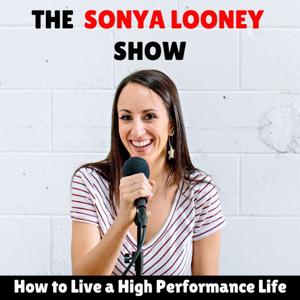
Grow the Good, formerly The Sonya Looney Show, is your guide to continual personal growth, meaningful connections, and positive impact in the world. Challenge the idea that you are broken…

11,739 Listeners

303 Listeners

3,457 Listeners

949 Listeners

8,325 Listeners

3,389 Listeners

4,049 Listeners

2,614 Listeners

7,922 Listeners

27,847 Listeners
2,321 Listeners
734 Listeners

28,984 Listeners

18,831 Listeners
8,452 Listeners