
Sign up to save your podcasts
Or



Send us Fan Mail
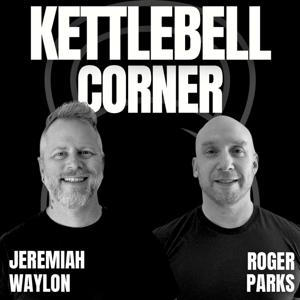
In this episode, Jeremiah Waylon and Roger Parks analyze kettlebell techniques, physics, and common misconceptions. They clarify how forces work in kettlebell swings, address questions about symmetry, and debunk myths about injury risks.
key topics
Kettlebell swing mechanics and force direction
The role of vertical and horizontal forces in kettlebell training
Addressing symmetry and injury concerns in kettlebell workouts
Chapters
00:00 Introduction to Kettlebell Corner
01:17 The Weight Discrepancy Dilemma
07:42 Analyzing Kettlebell Techniques
10:25 Understanding Force in Kettlebell Swings
18:45 Understanding Kettlebell Mechanics
21:52 The Role of Arm Position in Kettlebell Swings
25:31 Physics of Force and Energy in Kettlebell Training
29:39 The Importance of Cueing in Kettlebell Techniques
32:43 Debunking Myths in Kettlebell Training
Download the Bells kettlebell training app from the apple app store here: https://apps.apple.com/us/app/bells-by-iron-revival/id1554919084
Get Roger Parks’ book Kettlebell Essentials: Ballistics on kindle or paperback here:
https://a.co/d/3JmimHQ
Follow us on instagram https://www.instagram.com/theironrevival/?locale=no
Subscribe to our YouTube: https://youtube.com/@ironrevival?si=zhcY_GxBkz0D3GKw
Send us Fan Mail
In this episode of Kettlebell Corner coach Jeremiah Waylon dives into practical strategies for structuring kettlebell workouts using the wave method to optimize strength, endurance, and recovery. This episode breaks down how to apply deliberate variations in volume and intensity to achieve consistent progress without overcomplicating your training plan. An ideal approach for beginners and a refreshing change from decision fatigue for adults with full lives and decisions on a regular basis. Great for experienced kettlebell practitioners to change the pace between specific training programs.
Key topics
Timestamps
00:00 - Introduction to waving the load and its benefits
01:23 - The body's adaptation process and training principles
02:50 - Structuring weekly training: heavy, medium, light days
03:49 - Adjusting based on how you feel and recovery considerations
04:47 - Using percentages of max effort for training intensity
05:44 - Ballistic movements: managing volume, density, and recovery
06:44 - Practical examples of volume management with EMOMs and bell sizes
07:38 - Variations for different movement types and training styles
08:07 - The simplicity and effectiveness of basic skill mastery
09:05 - The value of focusing on fundamental skills for long-term progress
10:02 - The importance of sustainability and consistency
11:28 - Encouragement for patience and deliberate practice
12:51 - The versatility of kettlebells for full-body development
13:21 - Simplifying training for busy or decision-heavy lifestyles
14:51 - Upcoming events and ways to connect for coachingResources & Links
Contact us to participate in the SWING CLINIC on March 28th 1-3p.m. at Ionix in Woodland Hills (Los Angeles) $100 - email [email protected] or DM our Instagram https://www.instagram.com/theironrevival/
Note: For detailed movement examples and deeper training insights, check previous episodes and visit our social channels.
Download the Bells kettlebell training app from the apple app store here: https://apps.apple.com/us/app/bells-by-iron-revival/id1554919084
Get Roger Parks’ book Kettlebell Essentials: Ballistics on kindle or paperback here:
https://a.co/d/3JmimHQ
Follow us on instagram https://www.instagram.com/theironrevival/?locale=no
Subscribe to our YouTube: https://youtube.com/@ironrevival?si=zhcY_GxBkz0D3GKw
Send us Fan Mail
In this episode of Kettlebell Corner(from the Vault), Jeremiah Waylon and Roger Parks explore the mechanics behind effective squatting, emphasizing the importance of proper spinal engagement and body awareness. Whether you're a beginner or an experienced lifter, understanding how your body moves can drastically improve your technique and prevent injury.
Key Topics
Timestamps
00:00 - Introduction to squatting with your spine and why it matters
02:15 - The body’s movement patterns and neural wiring in lifting
03:15 - How the pelvis, hips, and thoracolumbar fascia influence squat mechanics
04:46 - Common compensations: arching the back and pushing hips forward
06:27 - Movement objectives: lifting tasks versus muscle isolation
07:25 - Coaching cues: focusing on hand position and feedback
08:24 - How to identify when you’re squatting with your spine engaging first
09:19 - The importance of visual feedback and video analysis
10:47 - Drills to feel the correct engagement: extension cues and light touches
12:44 - Basic physics: line of gravity and leveraging your body weight
14:02 - Using head and chest cues to balance the pelvis during squats
16:03 - Cueing techniques: looking down to facilitate spinal flexion and proper positioning
19:56 - Reinforcing patterns with isometric holds and movement pairing
22:29 - Closing thoughts on consistency and proper messaging in training
Remember: Improving your squat begins with awareness. Use these cues, drills, and principles to build a robust, injury-free movement pattern that leverages your entire body effectively. Consistency and proper feedback are key to progressing safely and efficiently.
Download the Bells kettlebell training app from the apple app store here: https://apps.apple.com/us/app/bells-by-iron-revival/id1554919084
Get Roger Parks’ book Kettlebell Essentials: Ballistics on kindle or paperback here:
https://a.co/d/3JmimHQ
Follow us on instagram https://www.instagram.com/theironrevival/?locale=no
Subscribe to our YouTube: https://youtube.com/@ironrevival?si=zhcY_GxBkz0D3GKw
Send us Fan Mail
In this episode of Kettlebell Corner, hosts Jeremiah Waylon and Roger Parks delve into various aspects of kettlebell training, focusing on how to design effective and safe training sessions, the importance of understanding the nervous system, and readiness for kettlebell workouts. They discuss the psychological strategies needed for achieving max presses and how to convince others of the benefits of kettlebell training. The conversation emphasizes the significance of preparation, movement patterns, and the mental aspects of training.
takeaways
Designing a training session requires a pre-flight checklist.
Understanding your mood and physical state is crucial before workouts.
Kettlebell readiness involves proper movement patterns, especially hip movement.
Convincing others to train with kettlebells requires understanding their motivations.
Kettlebells are versatile tools for strength, power, and conditioning.
Motivation is about finding reasons to do what you may not want to do.
Psychological preparation is key for achieving max lifts.
Repetition and exposure to weights build confidence and safety in lifting.
Breathing techniques can help manage nervous system responses during workouts.
Preparation and planning are essential for success in physical endeavors.
Chapters
00:00 Introduction to Kettlebell Corner
00:57 Designing Effective and Safe Training Sessions
05:40 Understanding the Nervous System and Readiness
13:00 Kettlebell Readiness and Movement Patterns
19:04 Convincing Others to Embrace Kettlebells
25:18 Psychological Strategies for Max Press Success
Download the Bells kettlebell training app from the apple app store here: https://apps.apple.com/us/app/bells-by-iron-revival/id1554919084
Get Roger Parks’ book Kettlebell Essentials: Ballistics on kindle or paperback here:
https://a.co/d/3JmimHQ
Follow us on instagram https://www.instagram.com/theironrevival/?locale=no
Subscribe to our YouTube: https://youtube.com/@ironrevival?si=zhcY_GxBkz0D3GKw
Send us Fan Mail
In this episode of Kettlebell Corner, hosts Jeremiah Waylon and Roger Parks dive into various aspects of kettlebell training, focusing on coaching techniques, understanding training plateaus, the importance of recovery, and adapting training methods as one ages. They answer listener questions, providing insights on how to effectively coach clients, navigate their development, and structure workouts for optimal results. The conversation emphasizes the need for specificity in training goals and the significance of recovery in achieving fitness objectives.
Chapters
00:00 Introduction to Kettlebell Corner
02:50 Addressing Training Plateaus
05:18 Understanding Coaching Techniques
11:00 Client Development and Movement Maturity
19:54 The Journey to Becoming a Better Coach
22:14 Encouraging Client Independence
24:24 Rethinking Recovery and Programming
27:52 The Myth of Muscle Confusion
32:01 The Importance of Recovery
33:19 Getting Back into Training: The 1-5-1 Method
Download the Bells kettlebell training app from the apple app store here: https://apps.apple.com/us/app/bells-by-iron-revival/id1554919084
Get Roger Parks’ book Kettlebell Essentials: Ballistics on kindle or paperback here:
https://a.co/d/3JmimHQ
Follow us on instagram https://www.instagram.com/theironrevival/?locale=no
Subscribe to our YouTube: https://youtube.com/@ironrevival?si=zhcY_GxBkz0D3GKw
Send us Fan Mail
In this episode of Kettlebell Corner, coach Jeremiah Waylon shares his personal journey with kettlebells, discussing the evolution of his training from hardstyle to kettlebell sport. He emphasizes the importance of coaching, personal development, the Iron Revival philosophy and principle based approach to kettlebell training. Jeremiah invites listeners to engage with the podcast by sharing their kettlebell skills for coaching and feedback, highlighting the community aspect of kettlebell training. So if you are looking to get free coaching feedback from the guys send your videos to [email protected] or submit via instagram @theironrevival and you might be featured as a student on this podcast/YouTube video.
Takeaways
Kettlebells can be tailored to individual needs and goals.
The journey of kettlebell training is personal and transformative.
Coaching and community support are vital in fitness.
Transitioning between training styles can enhance overall fitness.
Kettlebell sport offers a new challenge and perspective.
Patience and consistency are key in training.
The principles of kettlebell training can apply to various aspects of life.
Engaging with the community can lead to better learning outcomes.
Kettlebell training can improve strength and endurance simultaneously.
Personal experiences shape one's approach to fitness.
Download the Bells kettlebell training app from the apple app store here: https://apps.apple.com/us/app/bells-by-iron-revival/id1554919084
Get Roger Parks’ book Kettlebell Essentials: Ballistics on kindle or paperback here:
https://a.co/d/3JmimHQ
Follow us on instagram https://www.instagram.com/theironrevival/?locale=no
Subscribe to our YouTube: https://youtube.com/@ironrevival?si=zhcY_GxBkz0D3GKw
Send us Fan Mail
In this conversation, Jeremiah Waylon and Roger Parks delve into the intricacies of kettlebell training, particularly focusing on the getup exercise. They explore the concept of movement as a puzzle, emphasizing the importance of understanding the basics, minimizing distance for efficiency, and maintaining a strong base of support. The discussion highlights the role of torque, the significance of pausing to check positions, and the need for customization in movements. They also touch on the anatomy involved in the getup and the importance of learning through practice, ultimately advocating for a thoughtful and patient approach to mastering kettlebell techniques.
Chapters
00:00 Introduction to the Movement Puzzle
02:50 Understanding the Getup: Basics and Framework
05:24 Minimizing Distance for Efficiency
08:15 Base of Support and Balance
11:00 The Role of Torque in Movement
13:39 The Importance of Pausing and Checking
16:45 Customizing Your Getup
19:27 The Role of Anatomy in Movement
22:26 Learning Through Practice
25:16 Final Thoughts on Movement and Technique
Takeaways
Understanding the getup as a movement puzzle is crucial.
Minimizing distance can enhance efficiency in lifts.
A strong base of support is essential for balance.
Torque plays a significant role in lifting mechanics.
Pausing during movements allows for better assessment and adjustment.
Customization of the getup is necessary for individual needs.
Good technique should feel easy and natural.
Anatomy and physics are both important in movement.
Practice and patience are key to mastering kettlebell techniques.
Learning to move effectively can improve overall strength training.
Download the Bells kettlebell training app from the apple app store here: https://apps.apple.com/us/app/bells-by-iron-revival/id1554919084
Get Roger Parks’ book Kettlebell Essentials: Ballistics on kindle or paperback here:
https://a.co/d/3JmimHQ
Follow us on instagram https://www.instagram.com/theironrevival/?locale=no
Subscribe to our YouTube: https://youtube.com/@ironrevival?si=zhcY_GxBkz0D3GKw
Send us Fan Mail
In this episode, Coaches Jeremiah Waylon and Roger Parks explore the nuanced factors that indicate whether you're ready to advance your kettlebell training or movement practice. They emphasize understanding movement competency, context, efficiency, and signs from your body, providing practical insights to optimize progress safely and effectively.
Key Topics:
Timestamps: 00:00 - Introduction: The concept of proving movement competence before progression
02:05 - Clarifying movement competency and its subjective nature
03:43 - Context matters: goals, injury history, and training background
04:52 - Movement perfection is a myth; focus on functionality and outcomes
09:38 - Red flags: pain, imbalance, and cognitive overload
12:30 - Owning the movement: competence over perfection
13:12 - Pain vs. effort: When to hold back from progression
16:19 - Red lights for progression: pain, balance issues, and mental clarity
22:30 - Reducing red flags: patience and practicing with purpose
32:24 - Plateaus and stalls: recognizing adaptation limits and stimulus changes
36:35 - Signs of adaptation and efficiency: noticing your bad reps and flow
43:09 - Structuring progression: how to alter volume, intensity, and exercise variations
46:33 - Using objective data and subjective feelings: progress tracking tools
49:30 - Practical advice for coaches and trainees on pacing and mindset
Remember: Progression is personal and context-dependent. Use signs like consistency, efficiency, and body feedback to guide your next steps, and above all, practice patience for sustainable improvements.
Download the Bells kettlebell training app from the apple app store here: https://apps.apple.com/us/app/bells-by-iron-revival/id1554919084
Get Roger Parks’ book Kettlebell Essentials: Ballistics on kindle or paperback here:
https://a.co/d/3JmimHQ
Follow us on instagram https://www.instagram.com/theironrevival/?locale=no
Subscribe to our YouTube: https://youtube.com/@ironrevival?si=zhcY_GxBkz0D3GKw
Send us Fan Mail
In this episode of Kettlebell Corner, Jeremiah Waylon and Roger Parks discuss the essential factors to consider when setting fitness goals, particularly in the context of kettlebell training. They emphasize the importance of understanding one's lifestyle, movement competency, and the importance of strength and muscle mass. The conversation also touches on the significance of specialization in training, the concept of functional fitness, and the necessity of adapting goals over time to ensure continuous progress. Throughout the discussion, they provide insights into how kettlebells can serve as a versatile tool for achieving various fitness objectives.
Chapters
00:00 Setting the Stage for Kettlebell Goals
02:44 Understanding Lifestyle Factors in Goal Setting
07:03 The Intersection of Identity and Goals
11:43 Movement Competency: The Foundation of Training
23:13 Strength vs. Muscle: What Should We Prioritize?
29:24 The Importance of Specificity in Training
31:31 Functional Fitness vs. Simplicity
35:49 Understanding Functional Training
41:32 The Necessity of Changing Goals
49:53 Kettlebells as a Versatile Training Tool
Download the Bells kettlebell training app from the apple app store here: https://apps.apple.com/us/app/bells-by-iron-revival/id1554919084
Get Roger Parks’ book Kettlebell Essentials: Ballistics on kindle or paperback here:
https://a.co/d/3JmimHQ
Follow us on instagram https://www.instagram.com/theironrevival/?locale=no
Subscribe to our YouTube: https://youtube.com/@ironrevival?si=zhcY_GxBkz0D3GKw
Send us Fan Mail
In this episode of Kettlebell Corner, hosts Jeremiah Waylon and Roger Parks delve into the complexities of managing injuries and returning to training. They discuss the difference between pain and injury, the importance of mental outlook in recovery, and the role of proper rehabilitation. The conversation emphasizes the need for a gradual return to training, the significance of technique, and the necessity of listening to one's body. They share personal experiences and practical advice for navigating the challenges of injury management while maintaining a sustainable training regimen.
Chapters
00:00 Introduction to Kettlebell Corner and Injury Discussion
02:43 Understanding Pain vs. Injury
05:33 The Role of Mentality in Recovery
08:18 Navigating Medical Advice and Rehabilitation
11:15 The Importance of Complete Rehabilitation
13:49 Personal Experiences with Injury Management
16:30 Modifying Workouts During Recovery
19:27 Assessing Readiness to Return to Training
22:00 Tissue Tolerance and Gradual Progression
24:58 The Importance of Technique and Warm-Up
27:52 Using Regressions for Safe Training
30:14 Building Back Strength After Injury
32:58 Sustainability in Training and Avoiding Burnout
35:31 Final Thoughts on Injury Management and Training
Download the Bells kettlebell training app from the apple app store here: https://apps.apple.com/us/app/bells-by-iron-revival/id1554919084
Get Roger Parks’ book Kettlebell Essentials: Ballistics on kindle or paperback here:
https://a.co/d/3JmimHQ
Follow us on instagram https://www.instagram.com/theironrevival/?locale=no
Subscribe to our YouTube: https://youtube.com/@ironrevival?si=zhcY_GxBkz0D3GKw
From the publisher's feed
Kettlebell Corner — where strength meets theory. Join us for a deeper dive into all things kettlebell, from technique and training principles to the physics behind movement and the mindset…
Ranked by our users in the last 21 days

227,453 Listeners

14,264 Listeners
12,103 Listeners
452 Listeners

4,861 Listeners

7,934 Listeners

532 Listeners

28,977 Listeners

15,976 Listeners
28 Listeners

65 Listeners