
Sign up to save your podcasts
Or



Send us Fan Mail
In this episode, Jeremiah and Roger explore the concept of optimization in fitness and health, emphasizing that most people should focus on simple, consistent practices rather than chasing perfection. They discuss the pitfalls of overcomplicating routines, the importance of process over obsession, and how to find what works for you.
Chapters
00:00 Introduction and overview of the episode
01:17 What is optimization and why do people chase it?
02:43 Critique of popular fitness advice and experts
04:52 The importance of qualified voices in exercise
06:15 Playing with numbers and personal experimentation
07:28 How to determine if your workout is effective
09:36 Setting realistic goals and avoiding overreach
11:15 The value of process and incremental progress
13:05 The myth of the perfect protocol and realistic expectations
15:22 The dangers of obsession and extreme optimization
17:50 Balancing health, enjoyment, and moderation
19:34 The importance of foundational habits and low-hanging fruit
21:39 Personal stories of training and learning
24:12 Adapting goals and embracing the process
27:23 Practical workout strategies and flexibility
30:30 The role of consistency and enjoyment in long-term success
34:33 Climbing the tree of fitness with simple steps
37:32 The importance of self-awareness and personalized approach
39:50 Resources and advice for ongoing learning
42:17 Final thoughts: avoid laziness and seek genuine expertise
Download the Bells kettlebell training app from the apple app store here: https://apps.apple.com/us/app/bells-by-iron-revival/id1554919084
Get Roger Parks’ book Kettlebell Essentials: Ballistics on kindle or paperback here:
https://a.co/d/3JmimHQ
Follow us on instagram https://www.instagram.com/theironrevival/?locale=no
Subscribe to our YouTube: https://youtube.com/@ironrevival?si=zhcY_GxBkz0D3GKw
Send us Fan Mail
In this episode of Kettlebell Corner, hosts Jeremiah Waylon and Roger Parks delve into the intricacies of kettlebell swings, focusing on the importance of timing, the definition of ballistic lifts, and the distinction between two-beater and four-beater swings. They provide insights into proper swing techniques, the significance of height in swings, and practical coaching tips for improving kettlebell performance. The conversation emphasizes the need for a clear understanding of swing phases and encourages listeners to assess their own swing techniques.
Download the Bells kettlebell training app from the apple app store here: https://apps.apple.com/us/app/bells-by-iron-revival/id1554919084
Get Roger Parks’ book Kettlebell Essentials: Ballistics on kindle or paperback here:
https://a.co/d/3JmimHQ
Follow us on instagram https://www.instagram.com/theironrevival/?locale=no
Subscribe to our YouTube: https://youtube.com/@ironrevival?si=zhcY_GxBkz0D3GKw
Send us Fan Mail
Breathing for Readiness: Fixing the Mistakes That Limit Kettlebell Training
In this episode, Jeremiah Waylon and Roger Parks break down how breathing affects readiness, mobility, and overhead performance in kettlebell training. They focus on the most common breathing patterns they see, why both can create problems, and how to start retraining breath so the body can move and brace better.We discuss why the diaphragm matters, how poor breathing can create downstream issues in the neck, ribs, pelvis, and shoulders, and simple drills to improve breathing mechanics before adding load.
Chapter markers
00:00 - Why breathing matters for kettlebell readiness
00:49 - Breath-hold apps, Wim Hof, and why context matters
03:13 - The three phases of training: readiness, capacity, specialization
04:35 - How breathing fits into the readiness phase
06:30 - Why posture and body shape affect breathing mechanics
07:27 - The breathing loop that can worsen alignment
09:00 - What the diaphragm actually does
10:54 - The myth that the diaphragm pulls air in
13:29 - The two dysfunctional breathing patterns
15:00 - How neck and shoulder breathing changes rib cage position
17:07 - How poor breathing affects shoulders, balance, and overhead mobility
18:36 - Why belly breathing is not always a fix
20:31 - Why true diaphragm use should expand the rib cage in every direction
21:56 - Rib flare, anterior pelvic tilt, and the meat-in-a-bag analogy
23:52 - Why both bad patterns create shallow breathing
25:28 - The syringe analogy for how breathing creates space
27:34 - Why poor breathing limits movement, not just bracing
29:26 - A simple fix for mouth breathing with light dumbbells
30:24 - Mouth taping as an overnight training tool
32:18 - James Nestor’s Breathe and other breathing approaches
33:15 - Crocodile breathing and using the floor to reduce front expansion
35:11 - Why the exhale comes first
36:39 - Seated breathing and finding a neutral pelvis
37:36 - 360-degree expansion through the sides and back
39:18 - How to tell if you are not opposing the breath well
40:19 - Breathing into the pelvic floor and hip tension
41:16 - Recap of prone and seated drills
42:33 - Using chair feedback without over-bracing the back
43:20 - Light resistance for neck breathers
44:20 - Why these drills work in multiple positions
45:53 - Final takeaways and what to expect next
Download the Bells kettlebell training app from the apple app store here: https://apps.apple.com/us/app/bells-by-iron-revival/id1554919084
Get Roger Parks’ book Kettlebell Essentials: Ballistics on kindle or paperback here:
https://a.co/d/3JmimHQ
Follow us on instagram https://www.instagram.com/theironrevival/?locale=no
Subscribe to our YouTube: https://youtube.com/@ironrevival?si=zhcY_GxBkz0D3GKw
Send us Fan Mail
In this episode of Kettlebell Corner, hosts Jeremiah Waylon and Roger Parks delve into the intricacies of learning kettlebell skills. They discuss the importance of understanding the learning process, defining specific goals, and recognizing the physical capacity needed for effective training. The conversation emphasizes the essence of movements, simplifying complex skills, and the significance of actionable learning and coaching. The hosts encourage listeners to evaluate the information they consume and focus on principles that lead to effective training outcomes.
This episodes Bells App workout: https://theironrevival.com?a=share&u=2m1kBLWoFPOVsYdvJzcnfJxH2TN2&r=245aea40c1334582be88ba49dba9d30f&e=production
Download the Bells kettlebell training app from the apple app store here: https://apps.apple.com/us/app/bells-by-iron-revival/id1554919084
Get Roger Parks’ book Kettlebell Essentials: Ballistics on kindle or paperback here:
https://a.co/d/3JmimHQ
Follow us on instagram https://www.instagram.com/theironrevival/?locale=no
Subscribe to our YouTube: https://youtube.com/@ironrevival?si=zhcY_GxBkz0D3GKw
Send us Fan Mail
Embracing Stress Management and Cognitive Offloading in Kettlebell Training
Discover how modifying training approaches to account for life stress and cognitive load can enhance performance and recovery. This episode delves into practical strategies for coaches and kettlebell practioners to streamline workouts, improve technique, and manage stress—both mental and physical.
Try the FREE Bells App Workout: Wolf : https://theironrevival.com?a=share&u=2m1kBLWoFPOVsYdvJzcnfJxH2TN2&r=e8c27464a6504f819bea04178d0d3a0e&e=production
Key Topics
Timestamps
00:00 - Introduction to stress management in kettlebell training
00:38 - How stress impacts cognitive load and workout choices
01:13 - Using the Bells app to facilitate offloaded workouts
02:13 - The benefits of removing mental complexity during exhaustion
03:00 - Why program structure supports recovery and reduces fatigue
03:51 - Changing the client-coach relationship to lessen pressure
05:00 - Recognizing exhaustion through simple assessments and signs
06:00 - Motor learning phases and their influence on workout planning
07:26 - Practical examples: low-volume workouts and skill-focused sessions
08:50 - Deciding whether to follow a preset program or modify on the fly
11:34 - The importance of shifting paradigms in training relationships
13:16 - Understanding neurological and physiological impacts of learning new skills
14:49 - Assessing client readiness and signs of fatigue during sessions
17:07 - Binary assessment questions for real-time client evaluation
18:07 - Recognizing signs of fatigue through physical cues and responses
19:23 - Adjusting workload based on signs of energy and recovery states
21:28 - Incorporating light movement and skill work to warm up and prepare
23:15 - Viewing stress as a variable to manipulate rather than ignore
24:55 - Context-dependent training approaches for different individuals
26:52 - The value of simple, predefined workouts to reduce decision fatigue
27:47 - Low volume, technique-focused workouts as a strategy for progress
28:51 - The importance of flexibility and acknowledging individual differences
29:49 - Wrap-up: emphasizing stress management and personalized coaching insights
Download the Bells kettlebell training app from the apple app store here: https://apps.apple.com/us/app/bells-by-iron-revival/id1554919084
Get Roger Parks’ book Kettlebell Essentials: Ballistics on kindle or paperback here:
https://a.co/d/3JmimHQ
Follow us on instagram https://www.instagram.com/theironrevival/?locale=no
Subscribe to our YouTube: https://youtube.com/@ironrevival?si=zhcY_GxBkz0D3GKw
Send us Fan Mail
Join Jeremiah Waylon and Roger Parks as they explore the importance of context, flexibility, and curiosity in kettlebell training and life. This episode offers practical pro tips to enhance your training mindset and technique.
takeaways
Always consider context before making training decisions.
Be flexible with your goals to adapt to your current state.
Curiosity accelerates learning and reduces frustration.
Avoid negative self-talk and tantrums during training.
Focus on process and intention to improve technique.
Chapters
00:00 Introduction to Kettlebell Corner
01:01 The Importance of Context in Fitness
07:28 Setting Goals and Understanding Context
12:55 Flexibility in Goals and Training
18:28 The Importance of Proper Technique
22:18 Self-Criticism and Learning
27:50 Curiosity and Motivation in Training
Download the Bells kettlebell training app from the apple app store here: https://apps.apple.com/us/app/bells-by-iron-revival/id1554919084
Get Roger Parks’ book Kettlebell Essentials: Ballistics on kindle or paperback here:
https://a.co/d/3JmimHQ
Follow us on instagram https://www.instagram.com/theironrevival/?locale=no
Subscribe to our YouTube: https://youtube.com/@ironrevival?si=zhcY_GxBkz0D3GKw
Send us Fan Mail
In this episode, we explore effective strategies to break through pressing plateaus, emphasizing technical adjustments, recovery, and alternative training methods like deadlifts and kettlebell carries. Perfect for lifters in their 40s and beyond, aiming to optimize shoulder health and strength gains.
key topics
Press plateau solutions
Technical form adjustments
Recovery and deload strategies
Chapters
00:00 Introduction to Kettlebell Training
02:30 Breaking Through Press Plateaus
05:02 Assessing Mobility and Pain
07:41 The Importance of Technique
10:33 Understanding Recovery and Deloading
13:13 Alternative Strength Training Methods
16:07 Post-Activation Potentiation Explained
18:58 Final Thoughts and Encouragement
Download the Bells kettlebell training app from the apple app store here: https://apps.apple.com/us/app/bells-by-iron-revival/id1554919084
Get Roger Parks’ book Kettlebell Essentials: Ballistics on kindle or paperback here:
https://a.co/d/3JmimHQ
Follow us on instagram https://www.instagram.com/theironrevival/?locale=no
Subscribe to our YouTube: https://youtube.com/@ironrevival?si=zhcY_GxBkz0D3GKw
Send us Fan Mail
In this episode, Jeremiah and Roger explore the mechanics of kettlebell swings, emphasizing the importance of leg drive and the concept of the 'engine' in lifting. They use a dot and laser experiment to clarify how force is generated and transferred during lifts, providing practical insights for coaches and practitioners.
key topics
The concept of the 'engine' in kettlebell lifts
The dot and laser experiment to illustrate force transfer
The importance of leg drive in kettlebell swings, cleans, and snatches
Arm-to-body connection and force application
Sequential movement and force propagation in lifts
Chapters
00:00 Introduction to Kettlebell Concepts
02:33 Understanding the Engine of the Lift
05:27 The Dot Experiment: Visualizing Movement
08:09 Legs vs. Spine: The True Engine
10:50 Connecting the Arms: Efficiency in Movement
13:40 The Algorithm of Kettlebell Training
16:42 Common Mistakes and Solutions
19:12 Final Thoughts and Call to Action
Download the Bells kettlebell training app from the apple app store here: https://apps.apple.com/us/app/bells-by-iron-revival/id1554919084
Get Roger Parks’ book Kettlebell Essentials: Ballistics on kindle or paperback here:
https://a.co/d/3JmimHQ
Follow us on instagram https://www.instagram.com/theironrevival/?locale=no
Subscribe to our YouTube: https://youtube.com/@ironrevival?si=zhcY_GxBkz0D3GKw
Send us Fan Mail
This episode explores the impact of nutrition, specifically eating before kettlebell training, on workout performance and results. Jeremiah and Roger discuss energy systems, the effects of fasted training, and practical tips for optimizing performance.
Chapters
00:00 Introduction to kettlebell training and episode overview
01:04 Understanding energy systems and their relevance to training
03:44 The importance of nutrition in maximizing workout results
04:51 Mythbusting: Fasted training and fat burning
05:46 The ATP-PC energy system and its role in high-intensity efforts
08:00 Glycolytic system and its impact on muscle fatigue
09:48 The aerobic system and its influence on endurance training
11:15 Glycogen storage and its significance for training energy
14:14 Risks of gluconeogenesis and muscle breakdown
15:44 Training attributes: strength, endurance, power, and their energy demands
18:28 Timing of nutrition for power and explosive training
21:11 Practical advice: eating before workouts and common pitfalls
23:51 High-intensity interval training (HIIT) and energy considerations
28:16 Maximizing performance: the role of pre-workout nutrition
31:29 Common misconceptions about eating and workout performance
34:43 Post-workout nutrition and recovery strategies
35:55 Conclusion and key takeaways for kettlebell enthusiasts
Download the Bells kettlebell training app from the apple app store here: https://apps.apple.com/us/app/bells-by-iron-revival/id1554919084
Get Roger Parks’ book Kettlebell Essentials: Ballistics on kindle or paperback here:
https://a.co/d/3JmimHQ
Follow us on instagram https://www.instagram.com/theironrevival/?locale=no
Subscribe to our YouTube: https://youtube.com/@ironrevival?si=zhcY_GxBkz0D3GKw
Send us Fan Mail
In this episode, Jeremiah Waylon and Roger Parks analyze kettlebell techniques, physics, and common misconceptions. They clarify how forces work in kettlebell swings, address questions about symmetry, and debunk myths about injury risks.
key topics
Kettlebell swing mechanics and force direction
The role of vertical and horizontal forces in kettlebell training
Addressing symmetry and injury concerns in kettlebell workouts
Chapters
00:00 Introduction to Kettlebell Corner
01:17 The Weight Discrepancy Dilemma
07:42 Analyzing Kettlebell Techniques
10:25 Understanding Force in Kettlebell Swings
18:45 Understanding Kettlebell Mechanics
21:52 The Role of Arm Position in Kettlebell Swings
25:31 Physics of Force and Energy in Kettlebell Training
29:39 The Importance of Cueing in Kettlebell Techniques
32:43 Debunking Myths in Kettlebell Training
Download the Bells kettlebell training app from the apple app store here: https://apps.apple.com/us/app/bells-by-iron-revival/id1554919084
Get Roger Parks’ book Kettlebell Essentials: Ballistics on kindle or paperback here:
https://a.co/d/3JmimHQ
Follow us on instagram https://www.instagram.com/theironrevival/?locale=no
Subscribe to our YouTube: https://youtube.com/@ironrevival?si=zhcY_GxBkz0D3GKw
From the publisher's feed
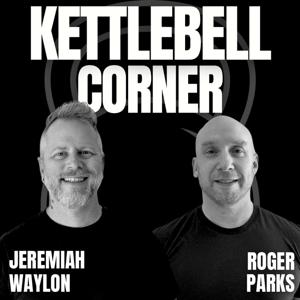
Kettlebell Corner — where strength meets theory. Join us for a deeper dive into all things kettlebell, from technique and training principles to the physics behind movement and the mindset…

227,584 Listeners

14,276 Listeners
12,103 Listeners
452 Listeners

4,866 Listeners

7,949 Listeners

527 Listeners

29,185 Listeners

15,937 Listeners
27 Listeners

65 Listeners