
Sign up to save your podcasts
Or

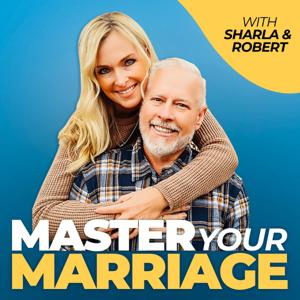


Ever notice how loss can drop a marriage into two wildly different time-zones? One spouse wants to talk it out while the other goes radio-silent. In this week’s episode of Master Your Marriage, we sit down with grief coach and children’s-book author Jennifer Morris to unpack how couples can stay yoked when death, empty nests, or any major life change rattles the compass. From Sharla’s raw reflections on losing her dad last weekend to Jennifer's story of losing her mother to suicide, we explore the complexities of grief within marriage.
You can connect with Jennifer through her website at https://loveconnectsus.com/ or via instagram at https://www.instagram.com/jennifer_s_morris/
Key TakeawaysGrief will visit every long-haul marriage; let it bind, not blind you. This week pick one toward-vision action—schedule a sunset walk, text your safe person, or try Jennifer’s 1-to-10 check-in. Remember: it's the small things done often! Until next Wednesday, keep turning toward each other.
Do you ever notice how some couples only sprint toward “saving the marriage” when the divorce papers are already drafted—while others seem to glide forward, energized by a shared dream? In this week’s episode of Master Your Marriage, we tackle the sneaky trap of away-from motivation (fixing things only when the fire alarm blares) versus the power of a toward vision that pulls you closer every day. From the cautionary tale of “Mark and Lisa” to a five-minute future-pacing meditation you can try today, you’ll discover why dodging pain keeps you on a hamster wheel—while chasing a vivid, magnetic dream propels your relationship into lasting joy.
Crisis may light a fire under you, but vision lights a fire within you. Choose one small, toward action this week—plan a stress-free check-in, script out that gratitude note, or replay the meditation until your thumb-and-finger “anchor” makes you smile on cue. Remember: it’s the small things—done often— that sculpt a masterpiece marriage. Until next week, keep steering toward the dream you truly want.
Do you ever slip into “I deserve better” mode and forget just how lucky you are to wake up next to your favorite human? In this episode of Master Your Marriage, we unpack the power of cherishing—the next-level upgrade from mere “appreciation.” Through real-life stories (yes, including the magic fridge on their camping trip) and the Gottmans’ 20-question fondness quiz, we reveal how entitlement quietly drains joy while gratitude super-charges connection. You’ll learn why naming seven things you adore about each other feels scarier than rattling off seven complaints—and how flipping that script can transform your relationship, stress levels, and overall happiness.
Key TakeawaysYour spouse doesn’t owe you a thing—and that’s the magic. Choose to notice the fresh towels, the stocked fridge, or the perfectly packed toolbox. Say it out loud, expect nothing back, and watch the temperature of your marriage rise. Here’s to cherishing, one heartfelt “thank you” at a time. Until next week, keep doing the small things—done often—that build a masterpiece marriage.
Do you ever feel alone, even in your marriage? In this powerful episode of Master Your Marriage, we explore why loneliness hits so hard and how your brain is wired for connection. Sharla and Robert dive into the science of the relational brain, challenging the “go it alone” mindset of individualism. From Ed Tronick’s “still face” experiment to James Coan’s Social Baseline Theory, we uncover how co-regulation—syncing with your partner’s nervous system—can transform your relationship. Through compelling stories, like a couple rediscovering connection amidst conflict, and the stark realities of isolation (from orphanages to solitary confinement), we reveal why connection isn’t just a want—it’s a survival need. Plus, we tackle the paradox: love can calm us, but it can also trigger us like nothing else. Tune in to learn how prioritizing your marriage can heal loneliness and build a healthier, happier life together.
Key TakeawaysExplore these resources to deepen your understanding of how we’re wired for connection:
Connection is your nervous system’s cry for survival. Your marriage can be a lighthouse, guiding you through loneliness and stress—but it takes work. Be curious about your partner. Stay open, even when it’s hard. That’s where the magic of co-regulation happens. Thanks for joining us on Master Your Marriage. Here’s to building a stronger, more connected relationship, one moment at a time.
In this powerful follow-up to our discussion on big “T” trauma, we dive deeper into how all trauma—big and small—shapes the automatic behaviors that can strain your marriage. From lying to stonewalling, these “stances” stem from your adaptive child, a part of you formed in childhood. Through heartfelt stories and practical steps, we explore how to identify these patterns, heal your inner child, and choose wiser responses to reclaim your relationship. Join Robert and Sharla for an honest, hope-filled conversation about breaking free from the past.
SummaryRelationships aren’t just about communication or date nights—the real work is growing beyond your automatic reactions. In this episode, we unpack how childhood trauma creates your relational “stance,” an instinctive response like fighting, fleeing, or fixing that shows up when stress hits. We share the story of Dan, whose evasiveness nearly cost him his marriage, and Jessica, whose stonewalling left her husband feeling disconnected. Drawing on insights from therapists like Terry Real and Pia Mellody, we explain how the “adaptive child” forms and how to spot it in yourself. Most importantly, we offer a compassionate, practical path to pause, reflect, and choose responses that prioritize love over survival. If you missed Part 1, go back and listen to our discussion on big “T” trauma—it sets the stage for this episode!
Key TakeawaysResources Mentioned:
Suggested Resources:
We’re here to support you in building a stronger, healthier marriage. If this episode resonated and you’d like help breaking free from old patterns, reach out!
This week, be kind to each other and put your partner first. Healing from trauma’s impact is a moment-to-moment practice, but it’s worth it for the love you’ll build. Remember, it’s the small things, done consistently, that create the biggest impact. Until next time, keep choosing love.
Ever wonder why you snap or shut down with the person you love most? In this powerful episode, hosts Robert and Sharla Snow kick off a multi-part series exploring how trauma—big or small—shapes our closest relationships. Through the lens of brain science and a moving client story, they unpack how unhealed wounds from the past can “hijack” your marriage, driving conflict or disconnection. Using Dr. Dan Siegel’s hand model of the brain, Terry Real’s wise adult vs. triggered self framework, and Pia Mellody’s concept of the adaptive child, they reveal why we “flip our lid” and how trauma fuels those moments. The episode centers on Ethan and Lilly, a couple whose 25-year marriage was transformed when Lilly faced her childhood trauma with courage. This is a story of healing, hope, and rediscovering the US in your relationship. Tune in to learn how to spot your own triggers and start bringing your wise adult self back to your marriage.
Key Takeaways
Dive Deeper: Resources Mentioned
Want to explore the concepts and tools from this episode? Here are the experts and resources we referenced to help you deepen your understanding of trauma and relationships:
1. Dr. Dan Siegel – The Hand Model of the Brain
2. Pia Mellody – The Adaptive Child
3. Terry Real – Wise Adult vs. Triggered Self
4. Time Line Therapy
- Time Line Therapy and the Basis of Personality by Tad James and Wyatt Woodsmall (1988)
5. Bessel van der Kolk – Trauma’s Physical Impact
- The Body Keeps the Score: Brain, Mind, and Body in the Healing of Trauma (2014)
6. The Gottman Institute – Negative Sentiment Override
Connect With Us
Website: https://www.masteryourmarriagepodcast.com/
Support the Show: Loved this episode? Leave us a 5-star review on Apple Podcasts or Spotify and share it with someone who might benefit. Your support helps us reach more couples seeking to master their marriage!
Coming Up Next
In our next episode, we’ll dive into small “t” trauma—the quieter, often overlooked wounds that still shape how you love, fight, or pull away. We’ll share another powerful story, plus practical tips to spot your adaptive child’s behaviors and bring your wise adult self back online. Don’t miss it!
Parting Words
Be kind to each other this week. Put each other first. Remember, it’s the small things, done often, that create the biggest impact. Until next time, keep mastering your marriage!
Sharla’s back after a month-long break, sharing a deeply personal story of recovering from decompression sickness caused by a scuba diving trip in the British Virgin Islands. Her rapid brain recovery, thanks to hyperbaric oxygen therapy, inspired this episode on neuroplasticity—the brain’s incredible ability to rewire itself. Joined by Robert, Sharla explores how the brain’s adaptability can transform your marriage, drawing on therapist Terry Real’s framework from his book Us. Learn how to make unconscious patterns conscious, harness emotional “recoil” moments, and act quickly to build new, healthier habits in your relationship. Packed with science, practical tips, and heartfelt insights, this episode will inspire you to tap into your brain’s resilience to become the best version of yourself for your partner.
What You’ll Learn:
- How Sharla’s cognitive recovery showcases the brain’s neuroplasticity.
- Terry Real’s two-step process for rapid change: making the implicit explicit and using emotional shock to rewire behaviors.
- The science of memory reconsolidation and why acting fast after an “aha” moment matters.
- Three practical steps to rewire harmful patterns in your marriage, with real-life examples from Sharla and Robert’s journey.
Try the episode’s tips: reflect on an automatic pattern in your marriage, have an honest talk with your partner, and practice a new behavior right away. Share your story or insights on Instagram @masteryourmarriage—we’ll repost our favorites! Loved this episode? Leave a 5-star review and share it with someone who’d benefit. Got topic ideas or feedback? Email us at [email protected].
References:
Want to dive deeper into neuroplasticity? Check out these resources:
- Books:
- Doidge, N. (2007). The Brain That Changes Itself. Penguin Books. Inspiring stories of how neuroplasticity transforms lives, perfect for understanding change in relationships.
- Hanson, R. (2013). Hardwiring Happiness. Harmony Books. Practical exercises to rewire your brain for positivity and stronger connections.
- Ecker, B., Ticic, R., & Hulley, L. (2012). Unlocking the Emotional Brain. Routledge. Explains how emotional insights drive rapid behavioral change.
- Siegel, D. J. (2012). The Developing Mind (2nd ed.). Guilford Press. Shows how relationships shape the brain for healthier dynamics.
- Scientific Papers:
- LeDoux, J. E., & Schiller, D. (2010). “The Human Amygdala and the Control of Fear.” Nature Reviews Neuroscience, 11(11), 761–769. Research on rewiring emotional memories through “recoil” moments.
- Nader, K., et al. (2000). “Fear Memories Require Protein Synthesis in the Amygdala for Reconsolidation After Retrieval.” Nature, 406(6797), 722–726. Study on the 4–6 hour window for memory change.
- Website:
- Coherence Therapy (coherencetherapy.org). Articles and videos on using emotional insights for lasting change, based on Bruce Ecker’s work.
Find these at your local library, bookstore, or online. Share what you learn with us on Instagram @masteryourmarriage!
In this episode of Master Your Marriage, hosts Sharla and Robert dive into the dynamics of power struggles in relationships and explore how accepting your partner's influence can transform your connection from "I" to "We." Discover why this skill is crucial for a happy, lasting relationship and learn practical steps to navigate disagreements with emotional intelligence.
Episode Highlights“Accepting your partner’s influence communicates that you care and respect them. It means you’re a team, and you’re in this together. You are a ‘WE,’ rather than an ‘I.’” – Robert Snow
Struggling with overwhelm, shutdown, or emotional reactivity in your relationship? Our new Window of Tolerance Worksheet helps you identify your triggers, recognize dysregulation, and develop strategies to regain balance so you can show up as your best self in your marriage.
Limited-Time Offer: Get it now for only $5 (regularly $19)!
📥 Instant Download HERE: https://stan.store/masteryourmarriage/p/window-of-tolerance-emotional-regulation-worksheet
"Why do we struggle to feel empathy?"
In this conversation, we delve into the complexities of empathy in relationships, particularly marriages. We explore why we may struggle to feel or express empathy toward our partners, the misconceptions that often surround empathy, and practical steps we can take to cultivate it. We emphasize the importance of being fully present, understanding each other’s feelings, and overcoming barriers that stand in the way of empathy. We highlight that empathy is essential for fostering intimacy and connection in our relationships.
Takeaways:
Next Steps:
💬 Follow us on IG: https://www.instagram.com/masteryourmarriage/?hl=en
Struggling with overwhelm, shutdown, or emotional reactivity in your relationship? Our new Window of Tolerance Worksheet helps you identify your triggers, recognize dysregulation, and develop strategies to regain balance so you can show up as your best self in your marriage.
Limited-Time Offer: Get it now for only $5 (regularly $19)!
📥 Instant Download HERE: https://stan.store/masteryourmarriage/p/window-of-tolerance-emotional-regulation-worksheet
"Are we actually allowing the healing to happen?"
In this episode of Master Your Marriage, we discuss the complexities of rebuilding trust after betrayal and the significant impact of unforgiveness on relationships. What are the emotional costs of holding onto past hurts? Learn about the transformative power of forgiveness. This is a process that can lead to personal peace and healthier relationships.
Through personal anecdotes and powerful stories, we illustrate how forgiveness can free individuals from the burdens of resentment and anger, ultimately leading to a more fulfilling life.
Takeaways
Next Steps:
💬 Follow us on IG: https://www.instagram.com/masteryourmarriage/?hl=en
From the publisher's feed
494 Listeners

7,217 Listeners
1,070 Listeners

21,048 Listeners
593 Listeners
981 Listeners

9,148 Listeners

3,140 Listeners
169 Listeners
163 Listeners

2,512 Listeners

1,677 Listeners

19,254 Listeners
279 Listeners

99 Listeners