
Sign up to save your podcasts
Or



Based on Podcast App listening data
You could be one metabolic bottleneck away from feeling amazing.
Mitome is the first at-home test that measures your cellular energy directly and gives you a personalized roadmap to optimize energy, slow aging, and protect against disease.
Find it at mito.me
This is not medical advice and is for educational purposes only.
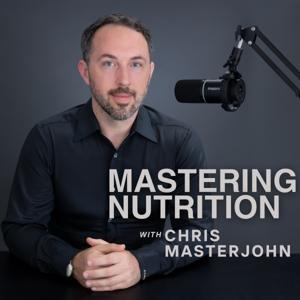
Chris Masterjohn, PhD, is the Founder and Scientific Director of the mitochondria test Mitome.
This is a clip from Joe Rogan Experience JRE 2420.
Watch the full interview here:
https://www.youtube.com/watch?v=QBn54YNnKD0
Chris Masterjohn, PhD, is the Founder and Scientific Director of the mitochondria test Mitome.
This is a clip from Joe Rogan Experience JRE 2420.
Watch the full interview here:
https://www.youtube.com/watch?v=QBn54YNnKD0
This is a clip from Joe Rogan Experience Episode 2420. You can watch the full interview here:
https://www.youtube.com/watch?v=QBn54YNnKD0
Mitochondria govern everything.
Watch this with the slides here:
https://www.youtube.com/watch?v=mED1_L3wZbc
Mitochondria convert your food to usable energy in the form of ATP, which is used to produce, maintain, repair, distribute, and organize everything in your body.
Abundant health right now, and preserving your health throughout the lifespan toward your longevity, all depends on your mitochondria.
In fact the best explanation for aging is that its a vicious cycle of declining mitochondrial function.
We should always be thinking of mitochondria first. SSRIs, acne treatments, and statins are given as examples. Targeting mitochondria without proper testing has its own set of problems.
This video covers the top things we should all be doing for our mitochondria and how to figure out our own mitochondria's unique needs.
This is not medical advice and is for educational purposes only.
1:20 Mitochondria govern everything because they convert food into usable energy
7:25 Mitochondrial dysfunction drives aging
10:43 Depression starts with your mitochondria
17:26 The problem with SSRIs
21:59 Acne should start with vitamin A, zinc, B5, and mitochondrial function
28:00 Cardiovascular disease starts with mitochondrial dysfunction
40:26 Statins are mitochondrial toxins
54:00 Targeting mitochondria without testing can be dangerous: three examples.
59:45 CoQ10: no one dose and no one supplement for everyone.
1:04:30 Methylene blue can make your mitochondria worse if you don't need it.
1:07:48 The power of mitochondrial testing: three examples
1:15:14 Mitochondrial biology
1:17:32 Your mitochondria are pointless if you don't have creatine
1:18:20 What Mitome is testing
1:20:42 What Mitome reports look like
1:21:57 Energetic bottlenecks are like traffic jams
1:25:01 Organic acid testing of mitochondrial function
1:26:53 Other mitochondrial tests
1:27:44 Five things everyone should do for their mitochondria right now.
1:40:48 We all have unique mitochondrial needs
Do You Have Hidden Mitochondrial Dysfunction?
Mitochondrial dysfunction is one of the earliest signs of aging and chronic disease—and most people don't know they have it. Mitome is the first at-home test that measures your cellular energy directly and gives you a personalized roadmap to optimize energy, slow aging, and protect against disease.
Find it at mito.me
Chris Masterjohn, PhD, Founder and Scientific Director of mito.me, explains why SSRI withdrawal is mitochondrial dysfunction and what to do about it.
This is not medical advice, diagnosis, or treatment.
29 million Americans and about 5-10% of the world's population are on SSRIs, which have become the first-line treatment of depression.
These can cause sexual dysfunction and emotional blunting in up to half of people, an unclear incidence of sleep disruption, and a rare risk of suicidality, self-harm, and new-onset psychosis.
On the other hand, 20-50% of people who go off experience SSRI discontinuation syndrome.
This can involve irritability, anxiety, mood problems, crying, dread, suicidal ideation, insomnia, nightmares, excessive dreaming, lethargy, fatigue, headache, tremor, sweating, anorexia, flu-like symptoms, nausea, vomiting, diarrhea, pain, numbness, tingling, feeling like something is crawling on the skin, electric shocks running through the brain or body, rushing noises, visual traces (seeing something persist when it is no longer there, or seeing moving objects leaving illusory streaks of light behind them, etc), dizziness, light-headedness, "brain zaps," vertigo, confusion, difficulty concentrating, amnesia, genital hypersensitivity, and premature ejaculation.
A closely related problem is post-SSRI sexual dysfunction (PSSD), which can cause total inability to feel the penis for males or for females the genitals and nipples, loss of sexual pleasure, weak orgasms, decreased libido, erectile dysfunction, and premature ejaculation. PSSD is often associated with general anhedonia, apathy, and poor mood.
In this video, Masterjohn maintains that the reason there are no good solutions to these problems is because we have completely misunderstood the role of serotonin and SSRIs.
Serotonin's role is to help mitochondria adapt to changing demands for oxygen-based energy production.
SSRIs enhance some of the mechanisms, and interfere with others. They enter the cell and stimulate independent mechanisms of mitochondrial stress adaptation, but in doing so they turn a cyclical and rhythmic pathway into a constantly stimulated one, creating mitochondrial dependence and making mitochondria vulnerable to new-onset dysfunction upon withdrawal. Once they make it to the mitochondria itself, the SSRIs act as mitochondrial toxins.
Scientific references for everything covered in the video can be found in this series:
https://chrismasterjohnphd.substack.com/p/prozac-is-a-performance-enhancing
At the bottom of each article is a link to the next one.
0:30 SSRI Side Effects
1:00 SSRI Discontinuation Syndrome and PSSD
11:33 The Problem With Primary Care Doctors and Psychiatrists
14:56 The Reason We Don't Have Good Solutions Is Because We Don't Understand the Problem
16:22 Prozac Is a Performance-Enhancing Drug
18:40 Depression and Altitude
19:36 The Truth About Serotonin
25:10 How Serotonin Helps Us Breathe
30:05 Hypoxia Explains Why Serotonin Is So Abundant In the Gut
33:55 Serotonin, Melatonin, and the Mitochondria
35:50 Serotonin and Light
39:25 Intermittent Hypobaric Hypoxia Training
42:56 SSRIs Are Whole-Body, Primarily Non-Brain, Non-Neuronal, Mitochondrial Drugs
44:00 SSRIs and Birth Defects
46:37 SSRIs Deplete Serotonin
48:50 SSRIs Distort the Sigma-1 Receptor From a Cyclical to a Constant Activation
51:10 Different SSRIs Promote Different Ratios of Mitophagy and Mitochondrial Biogenesis
54:00 Going Off SSRIs Causes New-Onset Mitochondrial Dysfunction
58:30 Slow and Hyperbolic Tapers
1:02:10 What to Do About SSRI Withdrawal Mitochondrial Dysfunction
Chris Masterjohn, PhD, is the Founder and Scientific Director of the mitochondrial test Mitome.
Do You Have Hidden Mitochondrial Dysfunction?
Mitochondrial dysfunction is one of the earliest signs of aging and chronic disease—and most people don't know they have it. Mitome is the first at-home test that measures your cellular energy directly and gives you a personalized roadmap to optimize energy, slow aging, and protect against disease.
Find it here at mito.me
For a long time, most people believed that when we exercise, our muscles make lactic acid, this acidifies the muscles, and the acidity contributes to contractile failure, fatigue, and delayed-onset muscle soreness. Some people still believe this.
You may have heard the argument against it from well-known figures like Andy Galpin, or, if you're deep into the science, you may have read the work of George Brooks.
In this lesson, we are going to cover the biochemistry of lactate production. We will see that we never make lactic acid, ever. We make lactate. Making lactate is fundamentally alkalinizing.
We will take a look at the presentation of glycolysis in the Berg and Lehninger biochemistry textbooks to see that, on the one hand, they give us everything we need to know to understand that the human body never makes lactic acid, but, on the other hand, they really do not equip us well to understand where acidity does comes from during exercise. This is because they do not consider acid-base balance important enough to completely present the proton balances of the chemical reactions.
Finally, we will cover what does cause muscular fatigue, take a look at the research on lactate supplements, and come to some conclusions about the best way to manage acidity during exercise to maximize performance.
This is part of a larger course on the biochemistry of how we derive energy from food and use it to fuel our wellness, performance, and longevity. Take the full course here:
https://chrismasterjohnphd.substack.com/p/masterclass-with-masterjohn-energy
To see the slides, watch this lesson on youtube:
https://www.youtube.com/watch?v=IrpbLllsSHQ
To obtain the written version with timestamped slides for better studying, see here:
https://chrismasterjohnphd.substack.com/p/how-lactate-alkalinizes-your-muscles
This lesson is free for one week. After that it will be reserved for Masterpass members. You can learn more about the Masterpass here:
https://chrismasterjohnphd.substack.com/about
You can subscribe to the Masterpass here:
https://chrismasterjohnphd.substack.com/subscribe
2:52 How textbooks present glycolysis
3:36 What is acidity?
4:32 The acidfying and alkalinizing phases of glycolysis
7:09 Glycolysis: A brief review
10:08 The Principles
29:33 The Reactions -- and Where the Textbooks Go Wrong
38:59 Human beings do not make lactic acid
42:13 Lactate transport is even more alkalinizing to muscle
47:44 Robert Robergs Fights an Uphill Battle in Clarifying the Sources of Acidity and the Alkalinizing Effect of Lactate
1:01:08 What causes fatigue?
1:05:15 Does CO2 contribute to acidity?
1:13:45 Where is Glycolysis Getting Backed Up?
1:23:10 Conclusiuons: What's realy going on with exercise-induced acidosis.
1:26:34 Lactate supplements
1:30:53 How to use this information in training for optimal performance.
Chris Masterjohn, PhD, is the Founder and Scientific Director of the mitochondrial test Mitome.
D-lactate is commonly stated to be exclusively a microbial metabolite.
This is found in assumptions within the medical literature for decades even when it was long-known to be false.
While D-lactate is indeed made by bacteria, D-lactate is also inarguably and irrefutably produced by human enzymes.
In this podcast, moreover, I will argue the following:
Microbial contribution to D-lactate in humans under normal circumstances is negligible.
I coin the term "the D-lactate shuttle" to describe a role for D-lactate that should eventually make its way into biochemistry textbooks alongside the malate-aspartate shuttle and the glycerol phosphate shuttle.
The D-lactate shuttle operates alongside these other shuttles to balance the priorities of conserving cytosolic NAD+, reducing cytosolic acidity, bypassing complex I, or generating ATP. It is uniquely useful as a shuttle when there is an absolute deficit of niacin or NAD(H).
D-lactate is an important contributor to gluconeogenesis that could account for up to 11% of it and rival an individual amino acid.
While D-lactate concentrations in human plasma are infinitesimal, when the downstream metabolism of D-lactate and L-lactate are blocked by genetic disorders, the concentrations of the two forms are similar in plasma. This contrasts wildly with the common claim that flux through D-lactate is "minuscule." Most likely D-lactate is produced in considerable quantities in liver and kidney but is rarely secreted into plasma because doing so would risk neurotoxicity.
D-lactate should be taken seriously for its potential role in Parkinson's and in neurological problems generally, for its role in diabetes, and for its extremely underappreciated roles in glycolysis, gluconeogenesis, and the respiratory chain.
Oxalate powerfully impairs D-lactate clearance, so D-lactate should be investigated as a potential link between oxalate and autism, and oxalate-lowering strategies should be seen as a way to improve D-lactate clearance and reduce its potential role in diabetes and neurological disorders.
See the sections on riboflavin, zinc manganese, and glutathione in Testing Nutritional Status: The Ultimate Cheat Sheet, as well as Does CoQ10 Deserve a Spot on Your Longevity Plan? and the How to Detox Manganese guide for managing the relevant nutrients.
Read the written version for live links and references: https://chrismasterjohnphd.substack.com/p/d-lactate-groundbreaking-research
Chris Masterjohn, PhD, is the Founder and Scientific Director of the mitochondria test Mitome.
In this podcast we cover elevated creatinine, insomnia, cramps constipation, water retention, hair loss, irritation and anger, lightheadedness during lifting, bloating, aggravation of restless leg syndrome, irritation of asthma, bloody noses, anxiety, headaches, heart palpitations, twitching, and fast or slow heartbeat.
The full podcast and article can be found here: https://chrismasterjohnphd.substack.com/p/handling-creatine-side-effects Chris Masterjohn, PhD, is the Founder and Scientific Director of the mitochondria test Mitome.From the publisher's feed
Ranked by our users in the last 21 days

768 Listeners

7,182 Listeners

4,976 Listeners
719 Listeners

1,703 Listeners

4,860 Listeners
3,418 Listeners

9,152 Listeners
1,779 Listeners
834 Listeners
506 Listeners
292 Listeners

29,205 Listeners

1,205 Listeners
3,128 Listeners