
Sign up to save your podcasts
Or

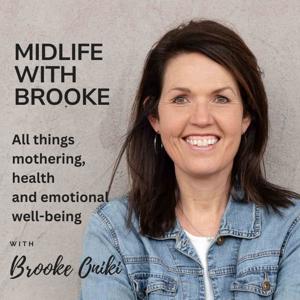


What if you only need to gather enough for today?
After attending the Restore Conference with my friend Kristen Rutter, I've been thinking about manna. In Exodus 16, the Lord provided bread from heaven for the Israelites, one day at a time. In this episode, I share what the rules of manna can teach us about inspiration, rest, and moving forward without knowing the outcome. I also share client stories of small daily choices that changed relationships, drop by drop.
Reflection questions
Where might manna be showing up in your life right now?
Is there an impression you've been sitting on that might be starting to spoil?
What's one small thing you could do today?
Join Brooke's Nervous System Regulation Class
Wednesday, October 7, from 12:00 to 2:00 PM Mountain Time, online. Learn what happens in your body when you feel dysregulated and how to bring yourself back to a calm, grounded place so you can respond in ways you feel good about. Come live or get the recording to keep forever. $25. Register at the link below. https://brookeoniki.com/emotional-regulation-workshop/
Share this episode with someone who'd love it, and sign up for my newsletter at brookeoniki.com for more coaching on your relationships with your adult kids, your husband, and yourself.
What if fear only exists in the future? When the thing we're afraid of actually shows up, it stops being a fear and becomes a problem to be solved. And you've solved every problem that has come your way so far.
In this episode, Brooke shares why our primitive brain keeps offering us "what ifs," and how our adult brain can step in, calm things down, and remind us that we'll figure it out. She walks through the story of Enoch in Moses 6 and 7, a young man who felt slow of speech and unliked, and who grew into someone whose words moved mountains. She also shares a client who started with a small tiling project and worked her way up to remodeling her whole living room, becoming a different person along the way.
In this episode:
A question to consider this week: What's one small thing you could try to move forward, even though it feels scary?
Join Brooke's Nervous System Regulation Class
Wednesday, October 7, from 12:00 to 2:00 PM Mountain Time, online. Learn what happens in your body when you feel dysregulated and how to bring yourself back to a calm, grounded place so you can respond in ways you feel good about. Come live or get the recording to keep forever. $25. Register at the link below. https://brookeoniki.com/emotional-regulation-workshop/
Share this episode with someone who'd love it, and sign up for my newsletter at brookeoniki.com for more coaching on your relationships with your adult kids, your husband, and yourself.
Today I'm talking about a topic I bring up with clients all the time: scarcity versus abundance. We live in a world that tells us there's not enough, not enough time, money, love, recognition. But I've found abundance everywhere I look, in a peach tree that keeps producing every year, in free YouTube tutorials, in the way my heart kept growing with each new baby.
I share three practices that have helped me live more abundantly: quit keeping score, love whoever comes, and believe there's enough love to go around. I also talk honestly about the times I still feel left out or hurt, and how I work through it.
Join me for a live online class on regulating your nervous system on Wednesday, October 7th, noon to 2pm MT. Recording available if you can't make it live. You can register at this link: https://brookeoniki.com/emotional-regulation-workshop/
Share this episode with someone who'd love it, and sign up for my newsletter at brookeoniki.com for more coaching on your relationships with your adult kids, your husband, and yourself.
In the episode, Lenee Fuelling shares the definition of ambiguous loss and many examples of how it shows up in our lives. She lays out her framework for holding ambiguous loss.
Connect with Lenee:
Instagram: leneefuel
Facebook: Lenee Fuelling
Learn More
Join my newsletter, book a free session, read the blog, get more free content at:
www.brookeoniki.comThis week Brooke steps away from teaching to just tell you about her week. A flashing school zone light that shouldn't have been on. A lost boy on the side of the road. A laugh-filled walk with a friend. A pickleball loss that still felt like a win. A chance conversation with a church service missionary. None of it dramatic, but Brooke makes the case that this is exactly where God shows up, if we're watching for it.
In this episode:
Join Brooke's class on regulating your nervous system, Thursday, September 10th at the South Jordan Community Center. $25. You can register here!
https://brookeoniki.com/emotional-regulation-workshop/
Today I'm talking with Camden Hainsworth, a certified ADHD coach who was diagnosed herself at 36, has children with ADHD, and has spent the last several years helping people understand and work with their ADHD brains instead of fighting them.
We talk about what ADHD actually is (it's a difference, not a deficiency), why the nervous system of someone with ADHD can feel like a wobbly skateboard heading downhill, and how that shows up in everyday stress. Camden shares her own diagnosis story, what it was like parenting through burnout before she understood her own brain, and how she coaches parents of grown children with ADHD who want to help without overstepping.
We also get into the difference between helping and enabling, what a repair conversation looks like after a blow up, and why autonomy matters so much for someone with an ADHD brain. Camden leaves us with a powerful reframe: ADHD is a disability, and when we understand it that way, we stop expecting someone to just try harder and start building real support around them.
If you parent, coach, or love someone with ADHD, whether they're seven or thirty seven, this conversation will give you language and tools you can use right away.
In this episode:
Connect with Camden:
Podcast: https://podcasts.apple.com/us/podcast/the-busy-brained-saint-podcast/id1647973464
Instagram: @kamden_adhd
Website: https://www.kamdenadhdcoaching.com/
Also mentioned in this episode:
Join us for my in person class on nervous system regulation, September 10th at the South Jordan Community Center. Link to register https://brookeoniki.com/emotional-regulation-workshop/
Let me know if you'd like a shorter version for social captions, or if you want me to pull a few standalone quote graphics from the conversation.
Five things I've learned working in the Utah State Prison:
Also mentioned:
Join Brooke for a live in person class on nervous system regulation, Thursday, September 10th at the South Jordan Community Center. $25. You can learn more about it and sign up here: https://brookeoniki.com/emotional-regulation-workshop/
The Mother-in-Law Series: When It's Hard
This is the last episode in my five part series on being a mother-in-law. If you've listened to the other four and felt a wince here or there, this one is for you. Even if things have been hard for a long time, it isn't too late to change.
We can't change our daughter-in-law or son-in-law. The only thing we can really work on is ourselves. Here are five places to start.
1. Process your own emotions. Disappointment and hurt don't go away just because we push them aside. Sit with the feeling, journal about it, pray about it. Let yourself actually feel it so it can move through you instead of getting stuck.
2. Revisit the story you're telling yourself. Our brain looks for evidence to prove whatever we already believe. If the story is "we never recovered," our brain will keep finding proof of that. We get to ask if that's still the story we want to tell.
3. Work on emotional regulation. Staying in a regulated nervous system lets us respond with curiosity instead of reacting out of hurt or fear. This is what allows us to stay consistent and warm even when a relationship feels hard.
4. Take an honest look in the mirror. Not to beat ourselves up, but to notice patterns we might not see otherwise. Are we easy to be around? Are we curious about her life?
5. Decide how you want to handle it. Some things we choose to let go of. Some are worth talking through, either directly or with a coach or neutral party first. Either way, check your motives. Are you trying to win, or trying to connect?
Mentioned in this episode:
Episode 6, "When the Story Hurts, Start With the Facts"
Joseph Grenny's quote, Unprocessed emotions don't go away, they go to the basement and lift weights."
Announcements:
Local class on nervous system regulation, Thursday, September 10th, 7 to 9pm in South Jordan, Utah. $25. You can register at https://buy.stripe.com/5kQeVd7wsfZC4wXdYm2kw0M
Retreat in Alta, September 17th through 19th. Brooke is the keynote speaker. $250. Email [email protected] for details.
Share this episode with someone who'd love it, and sign up for my newsletter at brookeoniki.com for more coaching on your relationships with your adult kids, your husband, and yourself.
The Mother-in-Law Series: New Traditions
Welcome to week four of the Mother-in-Law Series. If you haven't caught the earlier episodes, go back and start with weddings. And if you're new here, one of the women I interviewed said something I keep coming back to: joining a family is like moving to another country. You don't know the customs, the language, or the traditions. So we get to decide, will we be the friendly local, or border control?
This week is about new traditions, and why welcoming someone in means more than folding her into the way things have always been done.
In this episode:
My question for you this week: what tradition might you need to bend to be more accommodating, and what new one could you start?
Next week is the final episode in this series, and it's for anyone whose relationship already feels hard. If that's you, don't miss it.
Share this episode with someone who'd love it, and sign up for my newsletter at brookeoniki.com for more coaching on your relationships with your adult kids, your husband, and yourself.
Midlife with Brooke, Episode 3 of 5
We are back for week three of the mother-in-law series. We started with weddings, then talked about being the fun aunt instead of another mother. This week is all about service, the kind that actually helps and the kind that (even with the best intentions) can create distance instead of connection.
As I was preparing for this episode I interviewed women in their late 20s to early 30s about their mother-in-law relationships, and their stories shaped everything we talk about today. One line has stuck with me through this whole series: joining a new family is like moving to another country. As the mother-in-law we get to decide if we are the friendly local who helps someone acclimate, or border control.
In this episodeOne size doesn't fit all. My mom used to come over and immediately start doing dishes and laundry, asking me where everything went, and my anxiety would spike every time. My sisters loved that same instinct in her. Same mom, same desire to serve, completely different reactions. Help is not received as intended. It is received as it is interpreted.
Be mindful about your reasons for helping. I share a story about a client whose daughter in law kept a messy house. She would clean every time she visited, only to come back to a mess again. Eventually we realized the real question was not "how do I get her to keep it clean," it was "am I serving her, or am I trying to make her into someone more comfortable for me."
Believe them. If she tells you she does not need help in the kitchen, believe her. If your kids ask you to scale back on Christmas gifts, believe them too. I talk about my own tendency to overbuy and why that usually comes from scarcity, not love.
Tell the truth back. Believing them goes both directions. I share a recent moment with my son, where being honest about what would actually help me (instead of just saying yes to watching my granddaughter) built more trust, not less.
Do some quiet noticing. Filling up a gas tank. Washing the suitcase full of dirty clothes before the grandkids go home. A text that says "you're doing such a great job." These small, unrequested things often land more than the grand gestures.
Honor her boundaries, even the ones that do not make sense to you. I tell the story of a friend who babysits her grandkids full time and gets a long list of rules from her daughter. Her response: if you want a daycare provider, hire one, but I am the grandma, and sometimes we are going to have ice cream for breakfast. Boundaries take honesty on both sides, and they take a regulated nervous system to talk through well.
A question to sit withWhat is one thing I could quietly notice this month to support my daughter in law?
RecapJoin my newsletter at www.brookeoniki.com/sign-up/
From the publisher's feed

5,661 Listeners

10,698 Listeners

1,510 Listeners

673 Listeners

1,724 Listeners

6,464 Listeners

414 Listeners
1,059 Listeners

3,684 Listeners

7,527 Listeners
10,743 Listeners

1,566 Listeners

421 Listeners

730 Listeners

2,215 Listeners