
Sign up to save your podcasts
Or

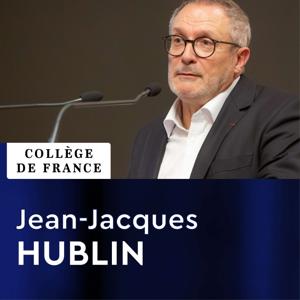


Jean-Jacques Hublin
Chaire Paléoanthropologie
Collège de France
Année 2026-2027
Insights into the Development, Evolution, and Diseases of the Human Neocortex
Conférence - Arnold Kriegstein: Developing a Cell-Based Therapy for Medically-Intractable Epilepsy
Arnold Kriegstein
Professeur de neurologie, université de Californie, San Francisco
Résumé
We have constructed a single-cell multiomic atlas of the human neocortex across development, revealing molecular and cellular dynamics in cell composition, spatial organization, intercellular signaling, gene regulation, and lineage potential. The atlas identifies novel progenitor lineages and offers a transcription-factor coded roadmap for deriving specific neural cell types from pluripotent stem cells. These developmental insights have enabled the generation of inhibitory interneurons from pluripotent stem cells that are now being tested in patients with medically resistant temporal lobe epilepsy. Encouraging clinical results have prompted plans for a pivotal trial that could ultimately establish a novel cell-based therapy for epilepsy.
Jean-Jacques Hublin
Chaire Paléoanthropologie
Collège de France
Année 2026-2027
Insights into the Development, Evolution, and Diseases of the Human Neocortex
Conférence - Arnold Kriegstein: Genomic Insights into Cortical Expansion and Language Function
Arnold Kriegstein
Professeur de neurologie, université de Californie, San Francisco
Résumé
Language is a defining human trait, yet the developmental specializations of language-associated cortex remain poorly understood. The neuroanatomic infrastructure underlying language comprises a network of cortical and subcortical regions among which Broca's area, is of central prominence. We define molecular, cellular, and cytoarchitectonic features distinguishing Broca's area. We identify area- and stage-specific cell populations, together with an early cadherin-based molecular code that may guide circuit assembly and we find selective vulnerability of somatostatin interneurons to neurodevelopmental disorders. Finally, evolutionary analyses highights genomic specializations underlying linguistic abilities accumulated over millions of years following the divergence of human and chimpanzee lineages.
Jean-Jacques Hublin
Chaire Paléoanthropologie
Collège de France
Année 2026-2027
Insights into the Development, Evolution, and Diseases of the Human Neocortex
Conférence - Arnold Kriegstein: The Origin of Cortical Interneurons in Human Brain Development
Arnold Kriegstein
Professeur de neurologie, université de Californie, San Francisco
Résumé
Evolutionary expansion of the human forebrain required increased production of inhibitory, GABAergic neurons by the ganglionic eminences, yet the mechanisms remain unclear. Using multiome sequencing, spatial transcriptomics, live imaging, electron microscopy and organoid models, we identify diverse progenitors including outer radial glia-like cells. The primate medial ganglionic eminence exhibits distinctive cytoarchitecture with progenitors surrounding interconnected doublecortin-enriched nests (DENs) including newborn neurons. A PCDH19-dependent adhesion code contributes to DENs formation, while progenitor-restricted PCDH19 expression tracks with the presence of DENs across species. Thus, expanded progenitor diversity and specialized tissue architecture represent coordinated developmental innovations supporting increased inhibitory neuron production in primates.
Jean-Jacques Hublin
Chaire Paléoanthropologie
Collège de France
Année 2026-2027
Insights into the Development, Evolution, and Diseases of the Human Neocortex
Conférence - Arnold Kriegstein: Genomic Insights into Human Brain Development, Evolution, and Disease
Arnold Kriegstein
Professeur de neurologie, université de Californie, San Francisco
Résumé
The development of the human neocortex is highly dynamic, involving complex cellular trajectories controlled by gene regulation. We collected paired single-nucleus chromatin accessibility and transcriptome data from multiple regions and age groups of the developing human neocortex. In addition, spatial transcriptomic analysis was utilized to reveal cellular niches and cell-cell communication. These datasets revealed molecular and cellular dynamics in cell composition, spatial organization, intercellular signaling, gene regulation, lineage potential, and disease susceptibility. The atlas identifies novel progenitor lineages, provides insights into glioblastoma and neuropsychiatric disorders, and offers a roadmap for deriving specific neural cell types from pluripotent stem cells.
Jean-Jacques Hublin
Chaire Paléoanthropologie
Collège de France
Année 2025-2026
Colloque : Du Paléolithique moyen au Paléolithique supérieur : la transition en question
Du Paléolithique moyen au Paléolithique supérieur : la transition en question
Colloque - Edwige Pons-Branchu & Hélène Valladas : Du Paléolithique moyen au Paléolithique supérieur : la transition en question
Edwige Pons-Branchu & Hélène Valladas
Jean-Jacques Hublin
Chaire Paléoanthropologie
Collège de France
Année 2025-2026
Colloque : Du Paléolithique moyen au Paléolithique supérieur : la transition en question
Du Paléolithique moyen au Paléolithique supérieur : la transition en question
Colloque - Solange Rigaud : Du Paléolithique moyen au Paléolithique supérieur : la transition en question
Solange Rigaud
Jean-Jacques Hublin
Chaire Paléoanthropologie
Collège de France
Année 2025-2026
Colloque : Du Paléolithique moyen au Paléolithique supérieur : la transition en question
Du Paléolithique moyen au Paléolithique supérieur : la transition en question
Colloque - Juliette Henrion : Du Paléolithique moyen au Paléolithique supérieur : la transition en question
Juliette Henrion
Jean-Jacques Hublin
Chaire Paléoanthropologie
Collège de France
Année 2025-2026
Colloque : Du Paléolithique moyen au Paléolithique supérieur : la transition en question
Du Paléolithique moyen au Paléolithique supérieur : la transition en question
Colloque - Marie Soressi : Du Paléolithique moyen au Paléolithique supérieur : la transition en question
Marie Soressi
Jean-Jacques Hublin
Chaire Paléoanthropologie
Collège de France
Année 2025-2026
Colloque : Du Paléolithique moyen au Paléolithique supérieur : la transition en question
Du Paléolithique moyen au Paléolithique supérieur : la transition en question
Colloque - Arev Pelin Sümer : Du Paléolithique moyen au Paléolithique supérieur : la transition en question
Arev Pelin Sümer
Jean-Jacques Hublin
Chaire Paléoanthropologie
Collège de France
Année 2025-2026
Colloque : Du Paléolithique moyen au Paléolithique supérieur : la transition en question
Du Paléolithique moyen au Paléolithique supérieur : la transition en question
Colloque - Nicolas Zwyns : Du Paléolithique moyen au Paléolithique supérieur : la transition en question
Nicolas Zwyns
From the publisher's feed
Jean-Jacques Hublin est paléoanthropologue, auteur de nombreux travaux sur l'évolution des néandertaliens et sur les origines africaines des hommes modernes.
Il a joué un rôle pionnier…
Après une carrière de chercheur au Centre national de recherche scientifique, Jean-Jacques Hublin à été nommé professeur à l'université de Bordeaux 1 (1999). Il est depuis 2004 professeur à l'Institut Max Planck d'Anthropologie Evolutionnaire de Leipzig (Allemagne) où il a créé le Département d'Évolution humaine. Il a enseigné à l'Université de Californie à Berkeley (1992), à l'Université d'Harvard (1997) et à l'Université de Stanford (1999 et 2011). Depuis 2010, il dispense régulièrement des cours à l'Université de Leiden (Pays-Bas). En 2011, il a été choisi pour être le premier Président de la Société européenne pour l'étude de l'évolution humaine (ESHE) nouvellement fondée.

121 Listeners
22 Listeners

0 Listeners

1 Listeners
5 Listeners

0 Listeners
80 Listeners
1 Listeners

83 Listeners
66 Listeners

94 Listeners

62 Listeners

37 Listeners
75 Listeners
0 Listeners
0 Listeners

21 Listeners

35 Listeners

17 Listeners

0 Listeners
0 Listeners

16 Listeners

11 Listeners

1 Listeners

0 Listeners
3 Listeners
0 Listeners

0 Listeners
0 Listeners
0 Listeners
0 Listeners
0 Listeners
0 Listeners
0 Listeners