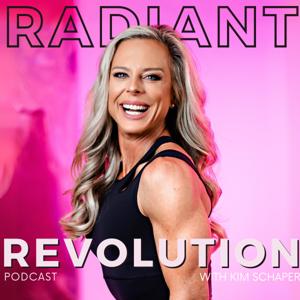
Radiant Revolution

Radiant Revolution

By Kim SchaperHealth & Fitness
Download on the App Store

Radiant Revolution episodes

  • Your Hot Flashes Are Gone. So Why Is Your Belly Bigger?

    Your hot flashes are improving. You’re finally sleeping better. Your hormones seem to be getting back on track. So why hasn’t your belly changed?


    If you’re in your 40s or 50s, taking hormone replacement therapy (HRT), and wondering why your body still feels different, this episode is for you.


    In this episode of Radiant Revolution, Kim breaks down one of the biggest misconceptions about HRT and midlife metabolism: feeling better hormonally and changing your body composition are two different things.


    Kim explains how fluctuating estrogen levels during perimenopause can influence where your body stores fat, why the number on the scale doesn’t tell the whole story, and why HRT isn’t necessarily the missing piece in your fat-loss journey.


    She also explores the difference between belly fat and bloating, the roles of insulin, cortisol, estrogen, and thyroid health, and why adding more supplements, cutting more calories, or increasing your cardio isn’t always the answer.


    Because sometimes the solution isn’t another hormone adjustment. It’s understanding the bigger picture and knowing where to focus your efforts.


    What You’ll Learn

    • Why HRT can improve menopausal symptoms without automatically changing body composition
    • How estrogen fluctuations during perimenopause can influence abdominal fat distribution
    • Why your body can look different even when the number on the scale hasn’t changed
    • The difference between belly fat, bloating, and digestive discomfort
    • How insulin resistance may relate to metabolic health and abdominal fat
    • Why cortisol isn’t automatically responsible for every stubborn belly or weight plateau
    • How thyroid symptoms can overlap with perimenopause and other health concerns
    • Why strength training, adequate nutrition, and recovery matter for maintaining muscle
    • How Kim’s ICET framework helps organize the bigger picture of midlife metabolic health
    • Why changing multiple things at once can make it harder to understand what’s actually working
    • Ready to stop guessing and start getting personalized support?
    • For Black Friday, Kim is offering an additional month of coaching plus special bonuses when you join Metabolic Mastery.


    Improving how you feel and improving body composition are separate goals that can support one another.


    Before assuming your hormones are the problem, consider the bigger picture: your training, nutrition, sleep, recovery, digestion, medical history, and overall metabolic health.


    The goal isn’t to work harder and harder. It’s to understand what your body needs and where your efforts will make the greatest difference.


    Black Friday: Metabolic Mastery Special Offer
    Metabolic Mastery brings together personalized coaching, nutrition, training, and a closer look at your metabolic health to help you build a plan around your individual needs.


    DM Kim the word RESET on Instagram or visit the link in her bio to learn more and book a free optimization call.


    Connect With Kim

    • Instagram @⁠⁠⁠⁠⁠⁠⁠⁠⁠⁠⁠⁠⁠⁠⁠⁠⁠⁠⁠⁠⁠⁠⁠⁠⁠⁠⁠⁠⁠kim.schaper⁠⁠⁠⁠⁠⁠⁠⁠⁠⁠⁠⁠⁠⁠⁠⁠⁠⁠⁠⁠⁠⁠⁠⁠⁠⁠⁠⁠⁠
    • Website: ⁠⁠⁠⁠⁠⁠⁠⁠⁠⁠⁠⁠⁠⁠⁠⁠⁠⁠⁠⁠⁠⁠⁠⁠⁠⁠⁠⁠⁠⁠⁠⁠⁠⁠⁠⁠⁠⁠⁠⁠⁠⁠⁠⁠⁠⁠⁠⁠⁠⁠⁠⁠⁠⁠www.m3metabolicmethod.com⁠


    Share this episode with a woman who’s on HRT, feeling better, but still wondering why her body hasn’t changed

    19 min
  • Why We Self-Sabotage: Emotional Eating, Stress & Breaking Unhealthy Patterns with Dr. Kyrstin


    Ever find yourself reaching for food when you’re stressed, scrolling endlessly when you’re overwhelmed, or staying stuck in a situation you know isn’t good for you?


    What if those behaviours aren’t simply about a lack of willpower, but something deeper?


    In this episode of Radiant Revolution, Kim sits down with Dr. Kyrstin Lokkesmoe, PhD in Counseling, licensed professional counselor, and founder of Dr. Kyrstin Coaching, for an honest conversation about the psychology behind our habits, emotional responses, and resistance to change.


    They explore why stress can drive emotional eating and other coping behaviours, how the brain’s reward system influences our decisions, and why awareness alone doesn’t always lead to meaningful change.


    The conversation also dives into the unique pressures high-achieving women face, the importance of vulnerability and boundaries, and how to recognize unhealthy patterns in personal and professional relationships.


    Because understanding why you do what you do is often the first step toward making a different choice.


    What You’ll Learn

    • Why emotional eating, doomscrolling, and other coping behaviours can become automatic responses to stress
    • How dopamine and the brain’s reward system influence habits and cravings
    • Why awareness doesn’t always translate into behaviour change
    • How fear, vulnerability, and the need for control can keep us stuck in familiar patterns
    • Why high-achieving women may struggle to ask for help or admit they’re overwhelmed
    • The importance of emotional support, healthy boundaries, and vulnerability in leadership
    • How to recognize manipulation, deflection, and double standards in unhealthy relationships
    • Why confusing relationship dynamics can be difficult to identify and leave
    • How self-awareness, compassion, and professional support can help you begin breaking patterns that no longer serve you


    Connect With Dr. Kyristin

    • Instagram @dr_krystin_coaching
    • Website: www.drkyrstincoaching.com


    Connect With Kim

    • Instagram @⁠⁠⁠⁠⁠⁠⁠⁠⁠⁠⁠⁠⁠⁠⁠⁠⁠⁠⁠⁠⁠⁠⁠⁠⁠⁠⁠⁠kim.schaper⁠⁠⁠⁠⁠⁠⁠⁠⁠⁠⁠⁠⁠⁠⁠⁠⁠⁠⁠⁠⁠⁠⁠⁠⁠⁠⁠⁠
    • Website: ⁠⁠⁠⁠⁠⁠⁠⁠⁠⁠⁠⁠⁠⁠⁠⁠⁠⁠⁠⁠⁠⁠⁠⁠⁠⁠⁠⁠⁠⁠⁠⁠⁠⁠⁠⁠⁠⁠⁠⁠⁠⁠⁠⁠⁠⁠⁠⁠⁠⁠⁠⁠⁠www.m3metabolicmethod.com⁠
    44 min
  • Should You Do More Cardio or More Strength Training If You’re in Your Mid-40s With 20+ Pounds to Lose?

    If you’re in your 40s with 20 pounds to lose, should you be doing more cardio or lifting more weights?


    In this episode, Kim breaks down one of the most common questions women ask about fat loss in midlife and explains why the answer isn’t as simple as choosing one over the other. While cardio absolutely has a place, strength training becomes increasingly important for preserving muscle, improving body composition, and supporting the body you actually want to build.


    Kim also explains why doing more isn’t always better, how recovery and your total stress load affect your training, and what to consider when you’re exercising consistently but your body still isn’t responding.


    The goal isn’t to destroy your body trying to burn more calories. It’s to train strategically enough that your body can actually adapt.


    What You’ll Learn

    • Why the fat-loss strategy that worked in your 20s may not work the same way in your 40s
    • The different roles cardio and strength training play in a midlife exercise plan
    • Why preserving muscle matters when your goal is fat loss
    • How much strength training and cardio Kim recommends as a general starting point
    • Why more exercise doesn’t automatically equal more fat loss
    • How stress, sleep, under-eating, and recovery can affect your ability to handle training
    • Why HIIT doesn’t have to disappear after 40
    • How to create a sustainable calorie deficit without starving yourself
    • Why your fitness tracker’s calorie burn shouldn’t determine your workouts
    • When it may be time to look beyond exercise at insulin, cortisol, estrogen, and thyroid


    A Simple Midlife Training Framework

    Think priority and purpose, not cardio versus strength.


    Prioritize progressive strength training to support muscle and body composition. Use cardio to build cardiovascular fitness and support overall health. Keep daily movement consistent, eat adequate protein, create an appropriate calorie deficit, and give your body enough recovery to adapt.


    You don’t have to destroy your body to change your body.


    Connect With Kim

    • Instagram @⁠⁠⁠⁠⁠⁠⁠⁠⁠⁠⁠⁠⁠⁠⁠⁠⁠⁠⁠⁠⁠⁠⁠⁠⁠⁠⁠kim.schaper⁠⁠⁠⁠⁠⁠⁠⁠⁠⁠⁠⁠⁠⁠⁠⁠⁠⁠⁠⁠⁠⁠⁠⁠⁠⁠⁠
    • Website: ⁠⁠⁠⁠⁠⁠⁠⁠⁠⁠⁠⁠⁠⁠⁠⁠⁠⁠⁠⁠⁠⁠⁠⁠⁠⁠⁠⁠⁠⁠⁠⁠⁠⁠⁠⁠⁠⁠⁠⁠⁠⁠⁠⁠⁠⁠⁠⁠⁠⁠⁠⁠www.m3metabolicmethod.com⁠


    20 min
  • Why Fat Loss Is Harder Than Just Knowing What to Eat with Dr. Mikki Williden

    What if the hardest part of fat loss isn’t knowing what to eat, but learning how to change the patterns you’ve spent decades building?


    In this episode, Kim sits down with Dr. Mikki Williden, PhD and registered nutritionist, for an honest conversation about what sustainable fat loss actually requires. They unpack why having more information isn’t always the answer, why dieting can feel uncomfortable, and how small wins can help build the confidence needed for lasting change.


    Dr. Williden also shares her perspective on hunger, GLP-1 medications, protein, appetite regulation, and why women may need to stop focusing solely on how they want to look and start considering how they want to live.


    Because lasting change isn’t just about losing weight. It’s about becoming someone who can maintain the habits, mindset, and lifestyle that support the life you actually want.


    What You’ll Learn

    • Why knowing what to do doesn’t automatically make behaviour change easy
    • How small wins can build confidence and create momentum
    • Why Mikki views GLP-1 medications as one potential tool in the toolbox
    • What hunger actually feels like and why every hunger signal isn’t necessarily an emergency
    • How meal structure and blood sugar can influence appetite and cravings
    • Why protein at breakfast may help with satiety and cravings later in the day
    • The role accountability and coaching can play in sustainable change
    • Why successful long-term weight loss often involves an identity shift
    • The difference between chasing a goal weight and fueling the life you want to live


    Connect With Dr. Mikki Williden

    • Instagram: @mikkiwilliden
    • Website: mikkiwilliden.com
    • Podcast: Mikkipedia


    Connect With Kim

    • Instagram @⁠⁠⁠⁠⁠⁠⁠⁠⁠⁠⁠⁠⁠⁠⁠⁠⁠⁠⁠⁠⁠⁠⁠⁠⁠⁠⁠kim.schaper⁠⁠⁠⁠⁠⁠⁠⁠⁠⁠⁠⁠⁠⁠⁠⁠⁠⁠⁠⁠⁠⁠⁠⁠⁠⁠⁠
    • Website: ⁠⁠⁠⁠⁠⁠⁠⁠⁠⁠⁠⁠⁠⁠⁠⁠⁠⁠⁠⁠⁠⁠⁠⁠⁠⁠⁠⁠⁠⁠⁠⁠⁠⁠⁠⁠⁠⁠⁠⁠⁠⁠⁠⁠⁠⁠⁠⁠⁠⁠⁠⁠www.m3metabolicmethod.com⁠
    42 min
  • The ICET Method Part 4: Your Thyroid Is “Normal”... So Why Do You Still Feel Off?

    You’re exhausted. You’re cold when everyone else is comfortable. Your hair is thinning, digestion feels sluggish, the weight won’t move, and your brain feels foggy. You finally get your thyroid tested only to hear: “Everything looks normal.”


    So what happens when the labs say you’re fine, but you still don’t feel like yourself?


    In the final episode of Kim’s ICET Method series, she dives into the T: Thyroid. Kim breaks down what TSH actually measures, the roles of T4 and T3, why thyroid symptoms can overlap with other changes happening during midlife, and why one lab value may not always tell the entire story.
    Most importantly, Kim brings all four parts of ICET together to show why insulin, cortisol, estrogen, and thyroid shouldn’t be treated like four separate problems. Similar symptoms can have very different underlying factors, which is why understanding the bigger picture matters when creating a plan that actually fits the individual woman.


    What You’ll Learn

    • What TSH actually measures and why it’s an important part of thyroid testing
    • The difference between TSH, T4, and T3
    • Why symptoms like fatigue, weight gain, constipation, hair changes, and feeling cold aren’t automatically caused by your thyroid
    • Why thyroid symptoms can overlap with menopause, stress, poor sleep, underfueling, medications, and other health factors
    • What to consider if you’re taking thyroid medication but still experiencing symptoms
    • Why chasing individual symptoms can leave you feeling more confused
    • How insulin, cortisol, estrogen, and thyroid fit together within the complete ICET Method
    • Why two women with the same weight gain may need completely different approaches


    Metabolic Mastery
    If you feel like you’ve tried everything but your body still isn’t responding the way it used to, Kim created Metabolic Mastery to help women in perimenopause, menopause, and postmenopause put the pieces together.
    Rather than another generic meal plan or workout program, Metabolic Mastery looks at your symptoms, history, nutrition, training, sleep, stress, recovery, hormone picture, and, when appropriate, comprehensive lab work to build a more individualized strategy.
    Apply for Metabolic Mastery HERE


    Connect With Kim

    • Instagram @⁠⁠⁠⁠⁠⁠⁠⁠⁠⁠⁠⁠⁠⁠⁠⁠⁠⁠⁠⁠⁠⁠⁠⁠⁠⁠kim.schaper⁠⁠⁠⁠⁠⁠⁠⁠⁠⁠⁠⁠⁠⁠⁠⁠⁠⁠⁠⁠⁠⁠⁠⁠⁠⁠
    • Website: ⁠⁠⁠⁠⁠⁠⁠⁠⁠⁠⁠⁠⁠⁠⁠⁠⁠⁠⁠⁠⁠⁠⁠⁠⁠⁠⁠⁠⁠⁠⁠⁠⁠⁠⁠⁠⁠⁠⁠⁠⁠⁠⁠⁠⁠⁠⁠⁠⁠⁠⁠www.m3metabolicmethod.com⁠
    16 min
  • The ICET Method Part 3: Why HRT Isn’t Fixing Your Weight Gain

    HRT helped your hot flashes. You’re sleeping better. Your mood feels more stable. You finally feel more like yourself again... so why hasn’t the weight changed?


    In Part 3 of Kim’s ICET Method series, we’re diving into the E: Estrogen and one of the biggest misconceptions surrounding hormone replacement therapy in midlife.


    Kim explains why HRT can be an incredibly valuable tool for managing menopausal symptoms without being a weight-loss treatment. She breaks down what happens to estrogen throughout perimenopause and menopause, why body composition and fat distribution can change during this transition, and why simply increasing estrogen isn’t necessarily the answer to stubborn weight gain.


    Through a client case study, Kim also shares why nutrition, muscle mass, insulin sensitivity, strength training, sleep, recovery, thyroid health, and your overall metabolic environment still matter, even when HRT is working exactly as intended.


    What You’ll Learn

    • Why HRT can improve menopausal symptoms without necessarily changing your weight
    • How estrogen changes throughout perimenopause and menopause
    • Why menopause affects more than just your reproductive hormones
    • What can contribute to increased abdominal fat during the menopause transition
    • Why one estrogen lab result doesn’t always tell the whole story
    • How muscle mass, insulin sensitivity, sleep, nutrition, and recovery fit into the estrogen conversation
    • Why cutting more calories and adding more cardio may not be the answer
    • How to think about HRT as one tool within a much bigger metabolic picture


    The ICET Method
    Kim’s ICET Method looks at four interconnected systems:
    I: Insulin
    C: Cortisol
    E: Estrogen
    T: Thyroid


    The goal isn’t to play hormonal whack-a-mole by addressing one number or symptom at a time. It’s to zoom out and understand what the entire system may be telling you.
    And in Part 4, Kim is tackling the final piece: thyroid, including what TSH actually tells you, the roles of T4 and T3, thyroid symptoms, and why being told your thyroid is “normal” may not answer every question you have about how you feel.


    Connect With Kim

    • Metabolic Mastery Application
    • Instagram @⁠⁠⁠⁠⁠⁠⁠⁠⁠⁠⁠⁠⁠⁠⁠⁠⁠⁠⁠⁠⁠⁠⁠⁠⁠⁠kim.schaper⁠⁠⁠⁠⁠⁠⁠⁠⁠⁠⁠⁠⁠⁠⁠⁠⁠⁠⁠⁠⁠⁠⁠⁠⁠⁠
    • Website: ⁠⁠⁠⁠⁠⁠⁠⁠⁠⁠⁠⁠⁠⁠⁠⁠⁠⁠⁠⁠⁠⁠⁠⁠⁠⁠⁠⁠⁠⁠⁠⁠⁠⁠⁠⁠⁠⁠⁠⁠⁠⁠⁠⁠⁠⁠⁠⁠⁠⁠⁠www.m3metabolicmethod.com⁠
    22 min
  • ICE-T PART 2: CORTISOL: Why Doing More Is Making Your Body Respond Less
  • You’re eating well. You’re exercising. You’re trying to stay disciplined. So why does your body still feel stressed, puffy, exhausted, or resistant to change?
    In Part 2 of Kim’s ICET Method series, we’re moving from insulin to the C: cortisol. Kim breaks down why stress isn’t just about feeling overwhelmed and how your body can experience stress from things you may actually consider “healthy,” including intense training, underfueling, poor recovery, and constantly pushing yourself to do more.
    When your body is being asked to handle more than it can recover from, cortisol can become another piece of the metabolic puzzle. Kim explains why adding another workout or cutting more food may actually be the opposite of what your body needs and why understanding your total stress load is so important during perimenopause and menopause.
    What You’ll Learn
    • Why cortisol is about more than simply “feeling stressed”
    • How exercise, underfueling, and everyday life can all contribute to your total stress load
    • Why your body doesn’t necessarily distinguish between workout stress and life stress
    • How elevated cortisol can show up through changes in sleep, energy, inflammation, water retention, and weight
    • Why doing more isn’t always better, especially in midlife
    • How cortisol can interact with insulin and thyroid function
    • Why recovery and adequate fuel are part of the metabolic conversation
    • Why looking at your cortisol rhythm can provide a bigger picture than simply blaming everything on stress

  • The ICET Method
    Kim’s ICET Method looks at four interconnected systems:
    I: Insulin
    C: Cortisol
    E: Estrogen
    T: Thyroid
    Rather than treating each symptom or hormone in isolation, the framework looks at how these systems influence one another and why addressing the bigger picture matters.


  • Free Masterclass
    Kim’s free masterclass, Why You’re Still Gaining Weight After 40, Even on HRT, goes deeper into why HRT alone isn’t a weight-loss tool and explores the role of insulin, inflammation, gut health, liver function, and the metabolic environment.
    DM Kim the word CLASS on Instagram for access.


    Want to explore the full ICET framework?

    DM QUIZ to receive Kim’s free 2-minute hormone assessment and see which area may be contributing most to your symptoms.


    Connect With Kim

    • Instagram @⁠⁠⁠⁠⁠⁠⁠⁠⁠⁠⁠⁠⁠⁠⁠⁠⁠⁠⁠⁠⁠⁠⁠⁠⁠⁠kim.schaper⁠⁠⁠⁠⁠⁠⁠⁠⁠⁠⁠⁠⁠⁠⁠⁠⁠⁠⁠⁠⁠⁠⁠⁠⁠⁠
    • Website: ⁠⁠⁠⁠⁠⁠⁠⁠⁠⁠⁠⁠⁠⁠⁠⁠⁠⁠⁠⁠⁠⁠⁠⁠⁠⁠⁠⁠⁠⁠⁠⁠⁠⁠⁠⁠⁠⁠⁠⁠⁠⁠⁠⁠⁠⁠⁠⁠⁠⁠⁠www.m3metabolicmethod.com⁠
    23 min
  • ICE-T Part 1: INSULIN- Your Blood Sugar Is “normal” So Why Are You Gaining Weight?

    What if the reason you’re struggling with stubborn belly fat, cravings, brain fog, and weight gain isn’t that you need to eat less or exercise more?


    In this episode of The Radiant Revolution, Kim kicks off a four-part series breaking down her ICET Method: insulin, cortisol, estrogen, and thyroid. She explains why these systems shouldn’t be viewed in isolation and why understanding how they interact can provide a clearer picture of what may be happening in your body during perimenopause and menopause.


    Part one starts with insulin. Through a client case study, Kim explains the difference between blood sugar and fasting insulin, why standard labs may not reveal the whole picture, and how changes in estrogen and chronic stress can influence insulin sensitivity in midlife.


    This episode is all about looking beyond individual symptoms and understanding the bigger hormonal and metabolic picture.


    What You’ll Learn

    • What Kim’s ICET Method stands for and why the order matters
    • Why blood sugar and fasting insulin are not the same measurement
    • How insulin resistance can develop even when blood sugar appears normal
    • Why declining estrogen can affect insulin sensitivity in midlife
    • How cortisol and chronic stress can influence glucose and insulin
    • Why HRT alone isn’t designed to address every factor involved in weight management
    • Why Kim believes addressing upstream metabolic factors matters before focusing on downstream symptoms
    • Why You’re Still Gaining Weight After 40, Even on HRT


    Kim is hosting her free masterclass: CLICK HERE TO JOIN
    Inside the training, Kim dives deeper into why HRT alone may not address weight concerns and explores the role of insulin, inflammation, gut health, liver function, and the broader metabolic environment.


    DM Kim the word CLASS on Instagram to receive the masterclass details.


    You can also DM QUIZ to receive Kim’s free 2-minute hormone assessment and explore which areas of the ICET Method may be most relevant to your symptoms.

    Connect With Kim

    • Instagram @⁠⁠⁠⁠⁠⁠⁠⁠⁠⁠⁠⁠⁠⁠⁠⁠⁠⁠⁠⁠⁠⁠⁠⁠kim.schaper⁠⁠⁠⁠⁠⁠⁠⁠⁠⁠⁠⁠⁠⁠⁠⁠⁠⁠⁠⁠⁠⁠⁠⁠
    • Website: ⁠⁠⁠⁠⁠⁠⁠⁠⁠⁠⁠⁠⁠⁠⁠⁠⁠⁠⁠⁠⁠⁠⁠⁠⁠⁠⁠⁠⁠⁠⁠⁠⁠⁠⁠⁠⁠⁠⁠⁠⁠⁠⁠⁠⁠⁠⁠⁠⁠www.m3metabolicmethod.com⁠


    21 min
  • What happens when you’re lifting consistently, eating high protein, cutting calories, trying HRT, and even experimenting with a GLP, but the scale still refuses to move?

    In this episode of The Radiant Revolution, Kim breaks down the story of a 45-year-old woman who gained 20 pounds despite feeling like she was doing everything “right.” Kim walks through her I.C.E.T. framework: insulin, cortisol, estrogen, and thyroid, and explains how these systems can interact with nutrition, training, stress, and hormone therapy.


    The biggest takeaway? Sometimes pushing harder, eating less, and exercising more isn’t the answer. Understanding the bigger picture can help uncover what may be contributing to stubborn weight, puffiness, and feeling stuck.


    What You’ll Learn

    • Why eating less and exercising more may not always lead to better results
    • How cortisol, estrogen, insulin, and thyroid function can interact
    • Why “normal” lab results may not tell the whole story
    • How underfueling and overtraining can add additional stress to the body
    • Why looking at the full picture matters when weight refuses to budge


    Free Functional Labs Guide
    Want to better understand the labs Kim uses to look at the bigger metabolic and hormonal picture?


    DM Kim the word LABS on Instagram to receive her free guide covering the functional labs she recommends exploring.
    Kim also shares how Metabolic Mastery brings together functional testing and a multidisciplinary team to create a more personalized approach for women who are tired of trying to piece everything together on their own.


    Connect With Kim

    • Instagram @⁠⁠⁠⁠⁠⁠⁠⁠⁠⁠⁠⁠⁠⁠⁠⁠⁠⁠⁠⁠⁠⁠kim.schaper⁠⁠⁠⁠⁠⁠⁠⁠⁠⁠⁠⁠⁠⁠⁠⁠⁠⁠⁠⁠⁠⁠
    • Website: ⁠⁠⁠⁠⁠⁠⁠⁠⁠⁠⁠⁠⁠⁠⁠⁠⁠⁠⁠⁠⁠⁠⁠⁠⁠⁠⁠⁠⁠⁠⁠⁠⁠⁠⁠⁠⁠⁠⁠⁠⁠⁠⁠⁠⁠⁠⁠www.m3metabolicmethod.com
    22 min
  • When Success Starts to Feel Like Burnout with Crystal Johnson

    What happens when the business you built for freedom starts taking over your life?


    In this episode of Radiant Revolution, Kim sits down with Meta and growth strategist Crystal Johnson for an honest conversation about burnout, boundaries, self-trust, and what it really means to build a business that supports the life you actually want.


    Crystal shares her own experience of realizing she had essentially recreated a 9-to-5 at home, constantly checking Slack, answering clients on weekends, putting work before her own needs, and slowly losing sight of why she started her business in the first place.


    Together, Kim and Crystal unpack the pressure high-achieving women feel to constantly grow, scale, achieve more, and look outside themselves for the “right” answer. They also discuss the changing online coaching industry, the rise of AI, why human connection still matters, and the importance of building success around your own values rather than someone else’s definition of it.


    What You’ll Learn

    • How burnout can show up before you completely crash
    • Why boundaries can actually create better relationships with clients
    • How constantly outsourcing decisions can weaken your self-trust
    • Why misalignment may be contributing to burnout
    • The pressure to constantly scale and move the goalpost in business
    • Why a validated offer and working funnel matter before scaling with paid ads
    • How AI is changing business while making genuine human connection even more valuable


    Connect with Crystal
    Crystal Johnson is a Meta and growth strategist specializing in paid advertising and launch strategy. Through CJ and Co-Creative, she offers done-for-you Meta and TikTok ads management, VIP ad strategy support, and strategy intensives for business owners who want to explore or scale paid advertising.


    Instagram: @CJandcoCreative


    Connect With Kim

    • Instagram @⁠⁠⁠⁠⁠⁠⁠⁠⁠⁠⁠⁠⁠⁠⁠⁠⁠⁠⁠⁠⁠kim.schaper⁠⁠⁠⁠⁠⁠⁠⁠⁠⁠⁠⁠⁠⁠⁠⁠⁠⁠⁠⁠⁠
    • Website: ⁠⁠⁠⁠⁠⁠⁠⁠⁠⁠⁠⁠⁠⁠⁠⁠⁠⁠⁠⁠⁠⁠⁠⁠⁠⁠⁠⁠⁠⁠⁠⁠⁠⁠⁠⁠⁠⁠⁠⁠⁠⁠⁠⁠⁠⁠www.m3metabolicmethod.com
    35 min

About Radiant Revolution

From the publisher's feed

Welcome to "Radiant Revolution," the podcast dedicated to helping women understand the honest truth around optimal hormonal and metabolic balance.

More shows like Radiant Revolution

On Health for Women by Aviva Romm

On Health for Women

1,357 Listeners

Energized with Dr. Mariza by Dr. Mariza Snyder

Energized with Dr. Mariza

983 Listeners

The Genius Life by Max Lugavere

The Genius Life

4,864 Listeners

The Jordan Syatt Podcast by Jordan Syatt

The Jordan Syatt Podcast

3,792 Listeners

Health By Heather Hirsch by Heather Hirsch MD

Health By Heather Hirsch

227 Listeners

The Hormone Solution | Menopause, Perimenopause, & Women's Midlife Health by Karen Martel: Certified Hormone Specialist

The Hormone Solution | Menopause, Perimenopause, & Women's Midlife Health

335 Listeners

Mind Over Macros by Mike Millner

Mind Over Macros

1,130 Listeners

Habits and Hustle by Jen Cohen

Habits and Hustle

810 Listeners

EmPowered Radio by Emma Montgomery

EmPowered Radio

814 Listeners

LiftingLindsay's More Than Fitness by LiftingLindsay

LiftingLindsay's More Than Fitness

348 Listeners

The Mel Robbins Podcast by Mel Robbins

The Mel Robbins Podcast

18,874 Listeners

The Dr. Gabrielle Lyon Show by Dr. Gabrielle Lyon

The Dr. Gabrielle Lyon Show

1,222 Listeners

The Metabolism and Menopause Podcast by Stephanie Crassweller

The Metabolism and Menopause Podcast

221 Listeners

Perimenopause Simplified by Claudia Petrilli

Perimenopause Simplified

54 Listeners

Gyno Girl Presents: Sex, Drugs & Hormones by Dr. Sameena Rahman

Gyno Girl Presents: Sex, Drugs & Hormones

34 Listeners