
Sign up to save your podcasts
Or

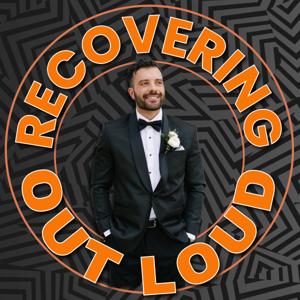


Ten honest lessons from another sober summer — victimhood, relapse, isolation, service, and faith.
Summer's over and I'm back to school for my counseling diploma, so this one is a reflection on getting another summer under my belt sober. If you made it through sober — congratulations, I'm proud of you. And if you didn't, I'm proud of you for being here and trying to do better. Coming back from a slip is the hardest thing I've ever done.
These are ten things I've journaled and thought about over the last few months working a recovery program. They're not clinical advice — just one person's lived experience, out loud:
Recovery is simple — not easy. And if no one's told you today: I love you.
My real problem was never the drugs or alcohol. It was King Baby — the toddler ego running my life.
In 2015, in treatment at Hazelden, I read a little pamphlet by Tom Cunningham called King Baby. It rewired how I saw my whole problem. It made me realize I wasn't a victim — I was the problem. Not the drugs, not the alcohol. Those were symptoms. The disease underneath is perception: being stuck inside myself, unable to get out of my own head.
This episode is my walk through that idea. We all start as King Baby — the infant at the center of the universe, every need met instantly. Most people grow out of it. Some of us never shed it, and the infant ego spends a lifetime trying to get that warmth back. Enter drugs and alcohol: the thing that made me feel like the center of the universe again — until it stopped working.
I get honest about the "sheriff of the universe" in me (the one who's right, you're wrong, and everyone in traffic is breaking Anthony's law), the masks we wear so the real self can't get rejected, and why King Baby can't tolerate calm — how we rock the boat and manufacture chaos to hide a shrinking sense of worth. Then the way out: surrender (putting down a job I was never qualified for), humility, letting the community love me until I could love myself, and choosing — every day — whether King Baby or the program gets the mic.
This is lived experience, not medical advice. I'm not a doctor or a clinician. I'm an alcoholic and addict in recovery. King Baby's still in there. He just doesn't drive the bus anymore.
Would you rather be right, or free? I want to be free.
FIND THE PAMPHLET HERE
Nobody warns you sobriety can make anxiety louder, not quieter — here's why, and what actually helps.
When you put down the drink or the drug, the anxiety you were medicating doesn't vanish. It gets uncovered. In this solo episode I talk about the 2 a.m. racing heart, the tight chest before a phone call, the dread with no evidence — and why the further I get from a substance, the louder my brain can get.
Anxiety and substance use feed each other, and I break down the two directions that takes: the anxiety that came first and got "solved" by a drink, and the rebound anxiety the substance itself manufactures. We get into why early recovery spikes anxiety (post-acute withdrawal — the second wave nobody warns you about), the anxiety–relapse loop that keeps so many of us stuck, and how avoidance quietly wears respectable clothes: skipped meetings, isolation, and yes, workaholism.
Then the part this show exists for — the solutions. Five tools, strongest-evidence-first: thought work (CBT), breathwork, movement, sleep, and connection — plus an honest word about medication. This is lived experience and peer perspective, not medical advice. I'm not a doctor or a clinician. I'm an alcoholic and addict in recovery, sharing what's worked for me.
Anxiety was never the enemy. It's information from a nervous system built to outrun bears, now stuck managing a group text. You can feel it and be okay. It peaks, and it comes down — every time.
Willpower won't keep you sober — it's a battery, and it drains. In this solo episode of Recovering Out Loud, Anthony makes the case that year one isn't about white-knuckling, it's about building: constructing the routines and habits that do the heavy lifting so recovery isn't a decision you have to remake at your weakest moment.
He starts by killing a myth — the "21 days to a habit" idea has been debunked since the 1960s. The research that actually holds up found a median of 66 days for a behavior to become automatic, with a wide range (roughly 18 to 254 days), and exercise-type habits taking longer. What matters more than the number: consistency beats intensity, and one missed day doesn't break a habit — it's the consecutive misses that do. As Anthony puts it, you don't relapse because you skipped one meeting; you relapse because you skipped it again and again.
Then he walks through the keystone habits that make everything else easier: structuring your day around the danger hours (your old use times), protecting sleep as a genuine relapse driver, moving your body, getting into community, eating regularly (with HALT — hungry, angry, lonely, tired — as a daily craving gut-check), and a daily emotional check-in to name feelings before they drive a relapse. Running through all of it is the one keystone that holds the rest together: connection. Reach out on a good day so reaching out on a bad day is already wired in.
This is lived experience, not clinical advice — but the science is real. Anthony references the meta-analytic evidence for exercise in substance use disorders, the large review of 12-step and mutual-help involvement, and James Clear's Atomic Habits on removing obstacles to make good habits easier and bad ones harder.
This week's one thing: Pick one small habit. Anchor it to something you already do. Do it imperfectly. Recovery isn't for those who need it or want it — it's for those who do it.
Recovering Out Loud is produced by ROL Productions. Anthony shares as a person in long-term recovery — peer to peer, lived experience only, never as a clinician or expert.
Perfectionism isn't a personality quirk — it's a documented relapse risk, and it doesn't switch off just because you got sober. In this solo episode of Recovering Out Loud, Anthony unpacks how the same engine that drove the using — the need to be liked, to fit in, to perform, to be "the funny guy" — quietly follows us into recovery and sets up the next slip.
We get into the difference researchers draw between perfectionistic strivings (high personal standards, which can be healthy) and perfectionistic concerns (fear of mistakes, dread of judgment, self-worth on the line) — and why the second one is the one that hurts you. Anthony walks through the abstinence violation effect: how it isn't the slip that relapses you, it's the shame spiral about the slip. He shares his own story of not even recognizing he was in a relapse — telling his story in a 12-step room while still in it — and the all-or-nothing "might as well burn it all down" thinking that turns one bad moment into a full return to use.
This is lived experience, not clinical advice. But the tools Anthony names are evidence-based: catching all-or-nothing thoughts (a CBT move), self-compassion (backed by meta-analysis and RCTs showing it weakens maladaptive perfectionism), and deliberately doing one recovery thing imperfectly on purpose — the "B-minus" practice that teaches your brain you can fall short and survive it.
If you've ever skipped the meeting because you couldn't do it right, quit the journal after one missed day, or worn the "I've got it together" mask while quietly drowning — this one's for you. Recovery doesn't ask you to be perfect. It asks you to be honest.
This week's one thing: Do one recovery thing imperfectly, on purpose. Notice that you survive it.
Recovering Out Loud is produced by ROL Productions. Anthony shares as a person in long-term recovery — peer to peer, lived experience only, never as a clinician or expert.
Why the pain, not why the addiction? An honest, peer look at the trauma model of recovery.
This week it's a solo one. I sit with two thinkers who reshaped how we talk about addiction — Gabor Maté (In the Realm of Hungry Ghosts) and Bessel van der Kolk (The Body Keeps the Score) — and I try to do the thing recovery content usually skips: take what's genuinely useful, and stay honest about where it gets oversold.
Maté's line — the question isn't why the addiction, it's why the pain — did more to pull shame out of addiction than almost anything this century. It reframes you from a bad person into a hurt person, and for a lot of us that's the first door out of self-hatred. Van der Kolk adds that trauma doesn't just live in your memory, it lives in the body and nervous system — which is why cravings and relapse aren't a simple willpower problem.
I also get personal about what trauma actually is (it's not only the "big" events — it's how your body stored what happened), a grade-four moment I still carry, and the long work of forgiving myself, including after a relapse that cost me what I thought was seven and a half years.
Then the other side. Critics like Stanton Peele and Nick Haslam point out that most people with addiction weren't traumatized as children, and most people who were traumatized don't become addicted — trauma raises risk, it doesn't write destiny. Richard McNally argues some of the science gets stated more strongly than the evidence supports. The danger for us in recovery: "my trauma made me this way" can flip from liberating to a life sentence. The honest frame — your pain is real, and you're still not sentenced by it. Understanding why you hurt is a starting line, not a verdict.
Two questions I leave you with: – Does understanding my pain free me, or give me a place to hide? – My pain is real, and I'm still responsible for ______.
Recovering Out Loud is peer-to-peer lived experience, not medical or clinical advice. If you're struggling, please reach out to a professional or a trusted person in your life.
Surrender sounded like giving up — until it became the thing that finally let me stop losing.
For years I thought surrender meant waving the white flag: defeat, quitting, rolling over. My ego hated it. This solo episode is me trying to do what nobody did for me early on — actually explain what surrender is, what it isn't, and how you practice it on an ordinary Tuesday.
I get into the difference between compliance and surrender — a distinction the psychiatrist Dr. Harry Tiebout drew back in the 1950s. Compliance is going through the motions while privately keeping a date in your head for when you'll go back. Surrender is the internal shift where you stop reserving that exit. I was compliant through all three of my rehabs before I ever actually surrendered — and from the outside, the two look identical. Only you know the difference.
I talk about my third time in treatment, the moment I handed over my drugs and said I'm done; why real surrender tends to show up right when the ego runs out of moves; and why it's never one-and-done. It's a state you keep returning to — in traffic, in a resentment, in a craving, in the things about my own health I can't control right now. I share the metaphor a therapist gave me: treat your anxiety, fear, and depression like guests knocking at the door. You can board it up, or you can invite them in for coffee and watch them leave on their own.
And the paradox at the center of all of it: the more I surrender, the more freedom, peace, and quiet I actually get.
If you're white-knuckling right now, here's the honest starting point — compliance counts. It gets you in the door. Surrender can come later.
Recovery is simple. It's just not easy.
Working the steps gets you sober. Living the principles keeps you there. All 12 — and why they hold.
My mentor asks me one question: "How are you living today, Anthony?" It's easy to be a star in the rooms — shake hands, smile, say everything's great. But the magic is in the other 99% of life: the traffic, the argument, the boring Wednesday afternoon. Step 12 says to practice these principles in all our affairs, and this episode is about what that actually looks like day to day.
Addiction ran on dishonesty, isolation, and being the center of my own universe. Recovery didn't work because I white-knuckled that old system harder — it worked because I started running a new one. That's what the principles are. And they keep you sober almost mechanically: you can't be honest, connected, of service, and paying attention, and also be quietly walking toward a relapse. Those two things can't run at the same time.
I walk all twelve — what each one is, what it costs, and why living it keeps you from picking up. Take what works, leave the rest. There's no official list of these; this is the version I've lived with.
Ten things I thought were normal until I got sober — supply math, pre-gaming, the morning panic. I'm not a doctor. I'm just a guy who did all ten of these, and didn't realize nobody else was living like this until I put it down.
In this solo episode I walk through the behaviours that quietly separate problem drinking from normal drinking — the stuff we laugh about in the rooms because we all thought we were the only one. If you're sitting with the question "am I an alcoholic or not," this one's for you. I can't answer that for you. Nobody can. But maybe hearing your own life described back to you helps you decide.
The 10:
and more...
A bit of my story is in here too: in recovery since 2015, a relapse around seven and a half years, and one and a half years sober again today. Grateful to be alive, grateful to be sober.
None of this made me a bad person. It made me a person with a thing. And every one of these stopped the day I stopped.
If you're new, or you've been here a while and needed the reminder — thank you for listening. Follow the show if you haven't; it's the best (and free-est) way to support it.
The wins nobody claps for are the ones that built your recovery. Here are the hidden ones.
We throw parties for the first sober birthday and the first sober holiday. But nobody warns you about the first sober funeral, the first sober breakup, the first heartbreak you walk through with nothing to numb it. In this solo episode I share the opportunities that hid inside the hard parts of getting sober — the ones I almost missed because I was looking at them the wrong way.
This one is a perspective shift. Addiction, for me, was a disease of perception — being stuck in my own view and unable to see another angle. Recovery keeps handing me a different lens. So I walk through the moments most of us overlook:
— The quiet window after an urge passes. Cravings work like waves: they build, peak, and fade, usually faster than you'd think, if you don't feed them. The magic isn't the wave passing — it's the proof you bank when it does. "I survived that without using." That's a rep.
— Boredom as data, not danger. Boredom is one of the most reliable relapse triggers there is. But it's a signal, not a threat — it's pointing at a gap. When you read it instead of running from it, it tells you what you actually need.
— Resentment as a mirror. The people who get under my skin are usually holding up a mirror I don't want to look in. Every name on the resentment list is a pointer at a fear or a want of mine in disguise. It turns a hit list into a treasure map.
— The 2 a.m. scroll as a check-in. The scroll isn't the problem — it's a symptom. Instead of piling on shame, I use it as my body raising its hand: what am I actually avoiding right now?
— The hours you get back. Active addiction was a full-time job. Recovery didn't just remove the substance — it handed me back the clock. That reclaimed time is terrifying and it's the single biggest hidden opportunity there is. Don't just fill it so you don't drink. Build a life you don't want to escape from.
A note before you listen: this is for the everyday hard feelings — the cravings, the resentments, the 4 p.m. dread. It is not a substitute for real help in a crisis. Some waves need a lifeguard, not a surfboard. Riding it out and reaching out are both strength — the work is knowing which one the moment calls for.
From the publisher's feed
1,704 Listeners

21,054 Listeners

12,706 Listeners
2,014 Listeners

111,809 Listeners
2,548 Listeners

69,492 Listeners

46,884 Listeners
108 Listeners

10,711 Listeners

19,061 Listeners
618 Listeners

8,803 Listeners

1,804 Listeners