
Sign up to save your podcasts
Or

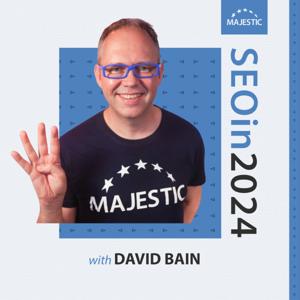


Travis Tallent shares with David Bain that knowing where your audience's demand starts makes your SEO demand capture 10X stronger.
Talking points include:
When you say 10x stronger, what do you mean by that?
How do you know where your audience's demand starts?
What tools do you use to determine this?
How do you know how to meet that demand?
How do you know that this demand will convert to web traffic?
How do you measure success?
In general, what are some most effective demand generators for different types of businesses at the moment?
Read the full transcript of Travis's interview at https://majestic.com/seo-in-2025/additional-insights/travis-tallent
Given the importance of understanding your users, you’re probably wondering where you can learn what they want. Michael MacMillan from MacMillan Search believes sales conversations are the place to look.
Michael says: “Avoid ultra-competitive topics with limited intent by mining sales conversations for bottom-of-funnel content.”
What are examples of ultra-competitive topics?
“Project management is a big one. Right now, monday.com ranks for ‘project management’, but there’s mixed intent around that query. There are people looking to become project managers and people trying to understand what project management is, and they’ve got a strong position there."
Read the full transcript of Crystal's interview at https://majestic.com/seo-in-2025/michael-macmillan
Sarah suggested you look into cognitive biases, and Garrett Sussman from iPullRank is here to help you do just that. Learn how these biases impact the way users behave to give you an edge over the competition.
Garrett says: “Understand the role of cognitive biases in SEO. Our brains play a lot of tricks on us. When people are searching for things, we can be deceived by the shortcuts that our brains take. These cognitive biases influence the type of information that we’re seeking, and SEOs need to pay attention to them.
We all bring context into our searches: how our day’s going, our jobs, what we like, our families, etc. That influences the type of information that we’re looking for. There are hundreds of cognitive biases, and they influence the way that we search, the queries we put in, the results that we see from Google, and the results that we ultimately choose."
To really get to know your users, you need to get inside their heads. Sarah Pokorná Presch from Dragon Metrics tells you how to use the psychology of your customers to your advantage.
Sarah says: “Start using psychology to stay ahead in the SERPs.
The reason why I say that is because, if you don’t have any content, you’re not going to rank. If you don’t have any user experience, you’re not going to get any conversions. If you don’t have any CRO, you’re not going to get any conversions."
Read the full transcript of Sarah's interview at https://majestic.com/seo-in-2025/sarah-presch
As Jake touched on, getting to know your users is also about knowing what journeys they are on. Christopher Hofman from HofmanSEO encourages you to map out those journeys and meet them on the road.
Christopher says: “I work with B2B customers, so my focus is on them succeeding with SEO. In B2B, customer journeys are very long, with lots of touchpoints and lots of influences.
I recommend that you map out the customer journeys for your desired prospects. That way, you will really understand the importance of SEO because a lot of those touchpoints are going through organic traffic today."
Read the full transcript of Christopher's interview at https://majestic.com/seo-in-2025/christopher-hofman
Ramona Joita shares with David Bain the importance of focusing on Omnichannel SEO.
Talking points include:
What is Omnichannel SEO?
What impact is AI having on this?
You mentioned that it's becoming increasingly crucial to understand that exclusively aiming for the number one ranking on Google is not sufficient - what should the additional aims be?
How do you own more of the search space?
How do you measure the impact of this?
How do you incorporate this into a strategy?
Who else should be responsible for this?
How do you keep an eye on other future trends?
Read the full transcript of Ramona's interview at https://majestic.com/seo-in-2025/additional-insights/ramona-joita
While Becky helped you prepare for the future, Jake Gauntley from KINESSO UK is keen to make sure that the users themselves don’t get lost along the way.
Jake says: “Don’t lose sight of the people that you are actually trying to reach through SEO.
As things like AI become ever-present in our lives and working plans, you should be tapping into the human side of search. It’s going to be even more important that you’re connecting with the users who are searching for your brand or visiting your website.”
Read the full transcript of Jake's interview at https://majestic.com/seo-in-2025/jake-gauntley
Becky Simms from Reflect Digital has advice on how to be ahead of the game so that you’re ready for the new ways that users interact in a world of omnipresent AI.
Becky says: “With the ramping up of AI, we need to start thinking about how behaviour is going to change.
We’re seeing a lot of search engines integrating it into how the algorithm works and the results that they’re showing, and we want to think about how behaviour will change."
Read the full transcript of Becky's interview at https://majestic.com/seo-in-2025/becky-simms
Despite the expanding plethora of information available to us, it seems to be harder than ever to know what users are thinking. Mark Williams-Cook from Candour reminds you that intent is always changing.
Mark says: “You should be monitoring search intent shift. Be aware of when what users want, and what they mean when they use a search term, changes over time – and adapt accordingly.”
How do you find out what users want?
“That’s the million-dollar question. Intent shift happens in several different ways. Some are ways that people are already aware of, and others are harder to recognise because they are happening in the background."
Read the full transcript of Mark's interview at https://majestic.com/seo-in-2025/mark-williams-cook
Getting a little more specific, Aleyda Solis from Orainti encourages you to turn your attention towards the long tail keywords to keep up with changing user behaviour.
Aleyda says: “Target and focus more on answering the long tail queries of your users.
We are going to see a much bigger and more important impact from those as a consequence of the AI overviews and personalised AI results that we expect to have in the not-too-distant future.
Read the full transcript of Aleyda's interview at https://majestic.com/seo-in-2025/aleyda-solis
From the publisher's feed
1,448 Listeners

1,580 Listeners

113 Listeners

1,256 Listeners

53 Listeners

4,458 Listeners

8,527 Listeners

2,647 Listeners
210 Listeners
358 Listeners

1,448 Listeners

93 Listeners

3 Listeners

681 Listeners

38 Listeners