
Sign up to save your podcasts
Or

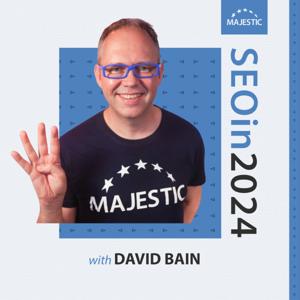


Krzysztof Marzec emphasises the alignment between organic search and paid search – and the useful additional data that one can provide the other.
Krzysztof says: “Use your data from Google Ads to improve SEO, and use data from SEO to improve your Google Ads campaigns.
Also, mix it and blend it with AI, because now we have AI to improve it all.”
If you're not actively using Google Ads, is it worthwhile having a small campaign up and running simply to use as data to power your SEO?
“Yes. If you are not using Google Ads, you are losing a lot of data, and you are also losing clients.
When you are generating organic traffic to your website, you should fight for a conversion rate. Using remarketing in Google or Meta Ads can improve your conversion rate because you simply have more attention from your users after they leave your website.
We also see that, in long-term projects, when you are fighting for keywords in organic, you are losing the potential of getting new clients when you could use Google Ads to run for the same keywords and the same targets, and then gather some data.
When you run a Google Ad campaign, you can check the Quality Score, the CTR, and whether it's a good ad, and you can check your landing page. You can learn whether your SEO campaign might fail, or it might be much harder to gain traction, visibility, and a high position in SERPs because there's something off with one of these parameters.
With Google Ads, you can test your ideas. In SEO, you only have one landing page. It's extremely hard to do A/B testing on the same website because you want to use everything for the user base, and you don't want to risk anything. In Google Ads, it's very simple.
Dan Taylor feels that SEOs aren’t taking full advantage of the data that they already have.
Dan says: “Start understanding your analytics platforms a lot better, and start leveraging them – not just for attribution and ROI, but to look at your organic strategies and the second-order effects of what those strategies are bringing to the business.”
Have SEOs focussed less on analytics since the release of GA4?
“We didn’t put our heads in the sand, but it is a very different model. We'd grown accustomed to something. We'd grown used to reporting, and then bringing in user events and other event types really mixed that up.
A lot of opportunity was lost in terms of what could be set up with the analytics models itself, and it gave us greater scope. We probably did want to divert attention to data analysts and away from SEO in the actual setup of it, because it was like relearning a completely new skill.
Realistically, you don't always get paid for analytics; it's seen as a given in terms of using those platforms, reporting, and understanding the data. It's a heavy investment into a skill set that you don't necessarily get a direct return on.”
Marco Giordano highlights that the most successful SEOs will take data from multiple sources – not just traditional SEO platforms.
Marco says: “Use multiple data sources, not just SEO data, to make decisions.”
What's the difference between the alternative data sources and the typical data sources for SEO?
“Most of the time, people use Search Console, which is our default option for several reasons. For one, it's the only first-party tool that contains Google queries, which is the dominant search engine. People also rely on crawl data from tools like Screaming Frog and Sitebulb, or they scrape websites themselves. There are other third-party tools as well, like Majestic, Semrush, Ahrefs, etc. That’s the traditional suite.
Some people have a decent knowledge of GA4, which is used for other data and tracking conversions, events, and what happens inside the website – which is not strictly SEO, of course.
However, there are data sources other than GA4 that are also super important and can help you. For example, in your CMS (Content Management System), you can get metadata about your articles and pages that can be useful. For example, the classification of a page or even the tags or categories you assign to a given page.
Also, your CRM. If you're doing B2B, you can’t exactly connect your SEO data, like queries, but it gives you the opportunity to better understand how your website contributes to your leads, because there are connections with Salesforce and HubSpot, if you're using GA4.”
Of course, what happened in the past isn’t necessarily an indication of what might be likely to happen in the future. Folashade Uba shares that we should stop reacting and start predicting.
Folashade says: “The best and most successful strategy will be to shift from reactive SEO to proactive SEO.”
What would be an example of reactive SEO compared to proactive SEO?
“Reactive SEO is when you're reacting to trends, reacting to your competitors' moves, reacting to keyword spikes, and reacting to every Google algorithm change.
Proactive SEO is when you're intentionally shaping what the search could be, what the feature could be, and using predictive analysis and behavioural forecasting.”
Sophie Brannon shares the importance of not focusing solely on the new shiny thing and that the fundamentals will always matter most. Talking points include: How do you know what should be fundamental? How often should you revisit this? What is holistic marketing? Why is this key to SEO? How do you measure success? How would you summarise the fundamentals of SEO in 2026? How often should you review what the fundamentals are?
Kyle Rushton McGregor provides us with a timely reminder to know your numbers, while all the changes happen around us.
Kyle says: “SEO is changing, and you need to know your numbers more than ever.”
How is it changing, and how do you go about knowing your numbers?
“SEO is changing in a variety of different ways, but most importantly, we've got the rise of AI and large language models, and the traffic that's coming from that. Consent is much more pertinent than it used to be (quite rightly so), and we also have Apple’s much more stringent tracking preventions.
That all means that you need to understand your numbers: where your traffic is coming from, and what that means in terms of actions and insights. You need to know that to a greater degree than ever before, and you need to take your reporting away from talking about sessions and users and start talking about the things that matter: leads, e-commerce numbers, and all the things that a typical boss would be concerned about.
All these different changes mean that you need to be a lot more focussed on the numbers that are occurring and how you can use those numbers to drive actions and make a difference for your clients and your business.”
Julia-Carolin Zeng shares some of the key areas that you should be continually monitoring in order to know what to adjust.
Julia says: “Monitoring, testing, and adjusting.
The search landscape will keep on changing. What we've seen so far in 2025 is nothing yet.”
How is the search landscape continuing to change?
“Right now, the buzzword in SEO is the ‘great decoupling’, where we see impressions going up and clicks going down. I see it more as a democratisation of the search landscape, with new players in the field now.
Google is suddenly getting a lot of competition because people don’t just perform their searches on Google or Bing anymore, as they did historically. There are now all these LLMs out there like ChatGPT, Perplexity, Claude, etc. Google has expanded the AI overviews. They've rolled out AI Mode. I've also suddenly seen quite a significant amount of traffic from Yahoo for some of my clients. We don't yet know where that's coming from. Then there's still DuckDuckGo and Ecosia out there.
However, ChatGPT seems to have become the big competitor to Google, even though the actions and searches that are performed in those places aren't exactly equivalent. We've seen a democratisation there, because Google is not the default for everything related to search anymore.”
Yordan Dimitrov shares that you need to accept constant change in the world of SEO. Just because something works well today doesn’t mean that you shouldn’t be trying to improve it for tomorrow.
Yordan says: “Embrace change and test relentlessly.”
Is there any type of change that we're most likely to have to embrace?
“In the last 12 months, there has been so much change within the SEO industry, from AI Mode to AI overviews, dramatically changing how people discover content and brands. We've moved way past the 10 blue links, and people are shifting towards AI-driven answers, zero-click results, and new discovery platforms.
To succeed, you need to put yourself into the customer's shoes and explore ways of accessing the tools that are coming up in order to do better testing.
It also means putting yourself into your customer’s journey and thinking, ‘Does my brand appear in those AI-powered results? Is my content being cited? How does the format change, and what do I need to do to make sure that I remain visible?’”
One of the keys to continually enhancing your SEO performance is to keep on testing, shares Andrew Cock-Starkey.
Andrew says: “Test, test, test.
Test a lot. Test lots of different things. Do some testing.
How do you know what to test?
“You don't want to test everything. What I normally advise is testing what your customers use, or what your target customers use.
I used to work with a company where the boss would come and say, ‘This doesn't work, the website looks awful on my computer,’ but we couldn't work out what was going on. We were testing all these things, checking in different browsers, and checking on different devices. Eventually, I went into their office, and they were using an extremely old version of Internet Explorer (not even Edge), and they had the magnification set to 150%.
Laura Iancu talks about Inclusive language & LLMs and shares why what we feed AI matters. Talking points include: - How LLMs mirrors and multiplies human language - Setting up the core idea: the inputs we give AI systems shape the outputs they produce - How bias enters the system - Frame inclusive language not as “political correctness” but as data quality and system integrity; - End with a brief talk about being an ally to humanity, and how you don't need to relate to other groups to show empathy in your language.
From the publisher's feed
1,448 Listeners

1,580 Listeners

113 Listeners

1,256 Listeners
53 Listeners

4,461 Listeners

8,535 Listeners
2,650 Listeners
211 Listeners
358 Listeners

1,450 Listeners

93 Listeners
3 Listeners

678 Listeners

38 Listeners