Struggle Care

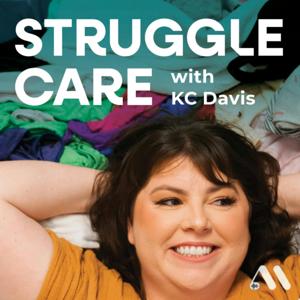
Struggle Care

Download on the App Store
  • Favorites

    246

    Followers

  • Typical duration

    36 min

    per episode

Based on Podcast App listening data

Struggle Care episodes

  • 16: Decluttering Sentimental Items

    Clutter is something we all have to deal with at times. The biggest problem with clutter is not the item itself, but it’s in the emotional attachment we feel. This episode comes in response to a recent question I received: “Do you have any advice for going through boxes of stuff I’m emotionally attached to?” Let’s take a closer look at this important part in your functional space journey.


    Show Highlights:

    • The only reason to declutter
    • How to identify what you can do with items you don’t plan to keep
    • Why your decluttering goals are important–and may differ from someone else’s
    • The steps to decluttering by categories:
    • Is it broken, expired, incomplete, or unusable?
    • What do I want to keep?
    • When it comes to keeping or getting rid of items, which is more important to me–the freedom of having it gone or the security in knowing it’s there?
    • For sentimental items:
    • Will this person know I’ve gotten rid of this item?
    • If I get rid of this item, will I feel guilty momentarily or for a long time?
    • Is the guilt I feel for getting rid of this item heavier than the weight I feel from having it around?
    • Why you have to honor your emotional context while aiming for functionalism
    • When you might need extra support in decluttering
    • Why it’s better to keep sentimental items out of joy–not guilt
    • Workable solutions for excessive sentimental items
    • What I’ve learned about getting rid of clothes

    • Resources:

       Connect with KC: TikTok, Instagram, and Website (Click the “Hygiene” tab under “Resources” for more information about teeth brushing!)

      Get KC’s book, How to Keep House While Drowning

      Learn more about your ad choices. Visit podcastchoices.com/adchoices

      19 min
    • 15: When Brushing Your Teeth is Hard with Dr. Taylor McFarland DDS

      Dental hygiene is a Struggle Care issue that elicits very strong feelings, as evidenced by the number of responses I receive to any social media post on this topic. Why do so many people feel strongly about brushing their teeth? Let’s talk about it with today’s guest!

      Taylor McFarland is a pediatric dentist, wife, and mother who creates content on social media about dental care. She and I follow each other on TikTok, and I knew she was the perfect person to help us dive into the problem of why brushing teeth is a big Struggle Care topic for many people. 

      Show Highlights:

      • How Dr. Taylor, as a pediatric dentist, came to the unique viewpoint of understanding why mental health issues cause people to struggle with teeth brushing
      • Why everyone who experiences this struggle thinks they are THE ONLY ONE
      • Helpful tips on how to find a dentist who will most likely be more understanding
      • Why it helps to be honest about your specific barriers to brushing
      • The purpose behind brushing—and why it’s OK to skip the toothpaste!
      • How to “pick the pain” that will increase your functioning
      • The purpose of toothpaste–(Fluoride is the key!)
      • Why sodium lauryl sulfate is usually the ingredient that bothers most people who have toothpaste sensitivity
      • Dr. Taylor’s tips for people bothered by toothpaste, and toothbrush bristles
      • How apps can make brushing more tolerable, especially with electric toothbrushes
      • Why it sometimes helps to brush your teeth in a different place, like in the shower or the kitchen
      • Why charcoal toothpaste is NOT the best option for daily use

      • Resources:

        Connect with Dr. Taylor: TikTok, Instagram, and Website

         Connect with KC: TikTok, Instagram, and Website (Click the “Hygiene” tab under “Resources” for more information about teeth brushing!)

        Get KC’s book, How to Keep House While Drowning

        Learn more about your ad choices. Visit podcastchoices.com/adchoices

        45 min
      • 14: Weaponized Incompetence with Dr. Lesley Cook

        Today’s topic is weaponized incompetence. If you aren’t familiar with the term, stay tuned and learn more with us. I’m thrilled to be joined again by Dr. Lesley Cook, who is a psychologist and good friend. She lives in Virginia and works mostly with neurodivergent kids, adolescents, and adults. Join us for the conversation!


        Show Highlights:

        • An explanation of “weaponized incompetence” and what it means
        • How weaponized incompetence applies to the division of household labor 
        • The key to analyzing weaponized incompetence: Why is it happening?
        • Why this is a tricky topic, especially for those who are neurodivergent and feel challenged
        • Why dignity should be preserved in these conversations with a partner
        • Why it’s OK to set boundaries even if someone is unintentionally hurting you
        • Ways to solve problems without shame or blame
        • The difference in functional barriers and weaponized incompetence
        • How to talk through solutions and support for a partner
        • How “maternal gatekeeping” plays into the dynamic
        • Why couples need to have conversations about care tasks, household chores, and childcare BEFORE they have kids
        • Why there is a difference between weaponized incompetence and learned helplessness
        • Dr. Lesley’s tips: “Approach your partner in good faith, open up the conversation, and ask for collaboration in finding something that works better for BOTH partners.”
        • Why the question should be, “Is exploitation happening?”
        • Why you can’t go on appearances regarding a division of labor
        • How to begin the approach with a partner or child: “This isn’t working for me; how can we figure this out together?”

        • Resources:

          Connect with Dr. Lesley: TikTok and Instagram

          Connect with KC: TikTok and Instagram

          Get KC’s book, How to Keep House While Drowning

          Helpful resources mentioned in this episode:

           How Not to Hate Your Husband After Kids by Jancee Dunn

           Fair Play by Eve Rodsky 

               The Sensory Child Gets Organized by Carolyn Dalgliesh

               Ready for Take-Off by Theresa E. Laurie Maitland and Patricia O. Quinn

                           A Radical Guide for Women with ADHD by Sari Solden, Michelle Frank, and Ellen Littman

          Learn more about your ad choices. Visit podcastchoices.com/adchoices

          1 hr 3 min
        • 13: Q&A: Building Routines for Self-help Rejects

          Today’s episode is a Q & A, so chill out while you listen, and take the time to do something kind for yourself, whatever that may be. I’ve been asked for advice about habits and discipline for neurodivergent people, which may be difficult for neurotypical people to understand. My message is that you are not broken if you haven’t yet found what works best for your brain. Let’s talk about it.


          Show Highlights:

          • Why we need to begin with an explanation of the terms neurodivergent and neurotypical
          • Why it is very common for self-help motivation to fall short for neurodivergent people
          • How a neurodivergent person approaches routines and habits in different ways
          • Why I (as an ADHD person) am motivated by pleasure, projects, pressure/panic, patterns
          • Why it’s OK to realize that morning routines don’t work best for you
          • Why there is a difference between routine and rhythm/pattern
          • How I work around my house in patterns–not routines that are time-bound
          • How patterns can help circumvent “executive dysfunction” (Want to know more? Check out Episode 1 with Dr. Lesley Cook at www.strugglecare.com.)
          • What to look out for when your care tasks always require “pushing a boulder up a hill” energy
          • How I can make myself more “disciplined” when I have structure
          • Why you are NOT a self-help reject if you haven’t found what works best for you

          • Resources:

            Connect with KC: TikTok and Instagram

            Get KC’s book, How to Keep House While Drowning

            Learn more about your ad choices. Visit podcastchoices.com/adchoices

            19 min
          • 12: When Parenting is Hard with MommaCusses

            Parenting has its moments. Some are good, some are bad, some fill you with heart-melting fuzziness, and some make you ask, “What in the world was I thinking?” We all have visions of our parenting ideal, but real life gives us way too many opportunities to turn into the kind of mom we don’t even recognize. To sum it up, parenting is hard! If you are that parent who needs encouragement today, join us for today’s episode–and I welcome you to join us even if you are not a parent. You might learn something valuable, too!

            I’m joined by Momma Cusses, aka Gwenna Laithland. She got her start as a writer at the age of 18 and soon branched out into content marketing and has worked with museums, professional sports teams, accounting firms, and universities to help refine their content. She started Momma Cusses in 2020 in hopes of normalizing modern motherhood and giving moms a place to connect and feel less alone.

            Show Highlights:

            • Gwenna’s story: her history of parenting in reactive mode as a young mom who came out of an abusive relationship–and the realization that hit her about what she was doing to her daughter
            • Why there is not a magic answer or therapy tool for those reactive parenting moments when you lose your mind
            • The difference in responsive vs. reactive parenting
            • Gwenna’s advice about handling endless questions from your kids
            • How our past personal issues determine the behaviors that send us into “Reactive Parent Mode”
            • Why gentle parenting is NOT about how you parent but about how you regulate yourself
            • Why “gentle childing” should NOT be what you want for your child
            • How to do “offline work” with your child when emotions are not elevated
            • How to gain a new perspective on parenting under stress
            • Why there is immense value in a parent who can say, “I’m sorry” 
            • Why we should stop demonizing screen time and teach our 21st-century kids to use devices responsibly
            • Why it’s healthy to realize that you do not have to accept every “invitation” from your child
            • How to find the “middle ground” when you are reparenting yourself while parenting your child

            • Resources:

              Connect with Momma Cusses: Website, YouTube, Instagram, TikTok, and Facebook (Look for Gwenna’s book coming in Fall, 2023!)

              Connect with KC: TikTok and Instagram

              Get KC's Book, How to Keep House While Drowning

              Learn more about your ad choices. Visit podcastchoices.com/adchoices

              47 min
            • 11: Q&A: How to Study (When No One Taught You)

               I’m joined today by Dr. Lesley Cook as we tackle some listener questions around various topics. Come and join us now!

              Show Highlights:

              • Tips for someone with no energy due to chronic illness: take care of the basics, conserve your energy, and use whatever hacks work for you
              • Tips for someone who struggles to cook dinner every night: switch things up, identify your mountain, and realize that a bowl of cereal for dinner is OK!
              • Tips for how to study when no one ever taught you: experience the information in different ways, make a memory game, and share the information back and forth with a study partner 
              • How to study when you don’t know what’s important to study
              • How to use accommodations that are available to you
              • How to ask a teacher or professor for study help
              • How to take notes and encode the information in meaningful ways
              • How fidget toys, drawing, and doodling can help you listen and learn

              • Resources:

                Connect with KC: TikTok and Instagram

                Get KC's Book, How to Keep House While Drowning

                Learn more about your ad choices. Visit podcastchoices.com/adchoices

                33 min
              • 10: You Can't Save the Rainforest if You're Depressed with Imani Barbarin

                I’m excited to introduce you to today’s guest. Imani Barbarin is a disability rights and inclusion activist and speaker who uses her platform for conversations around the disability community. I’ve followed her for a while on TikTok and appreciate the way she expresses her opinions and helps educate the rest of us. Come join us now!


                Show Highlights:

                • How Imani explored and discovered her passion for advocacy for disability and inclusion rights
                • How climate change and disability are linked
                • Why environmental ableism is a real thing
                • How people have become victims of their non-nuanced thinking, only wanting to be on the “right” side
                • Why the COVID pandemic has become a “mass-disabling” event, especially regarding mental health
                • Examples of ways in which the environmental movement has left those with disabilities behind
                • Why society has a general disdain for disabled people and believes that they don’t (or won’t) contribute to society
                • How the luxury of abled people trumps the necessity of the disabled
                • What the function of capitalism is on disabled bodies
                • How disabled people are used as pawns in the pro-choice/pro-life debate
                • Why there is inherent racism in the pro-life movement
                • What laziness is and is not

                • Resources:

                  Connect with Imani: Website and Instagram

                  Resources mentioned: https://www.sinsinvalid.org, https://disasterstrategies.org, https://www.americanprogress.org 

                  Connect with KC: TikTok and Instagram

                  Get KC's Book, How to Keep House While Drowning

                  Learn more about your ad choices. Visit podcastchoices.com/adchoices

                  51 min
                • 09: Q&A: A Traumatically Clean House

                  I have the perfect person to answer a question about “trauma cleaning” as a result of being raised by a parent who was emotionally and verbally abusive about keeping a clean house. This question came from Maria, a TikTok follower, and I’m jumping into this topic in today’s episode with my guest, Amanda Dodson. Join us!


                  Show Highlights:

                  • Why this is a common feeling for many people when they sense barriers around care tasks
                  • A good first step: Try to separate the behavioral home care task from the interpersonal problem with the parent
                  • Why you have to decide how YOU want your home to be for your own comfort and safety–not how your parent would want it to be
                  • Why it’s important to have compassion for yourself and awareness of what you need in your space to function well
                  • How to identify what you need from your space and use a triage approach to get there
                  • How to have your environment and emotions “meet” at a halfway point
                  • How to take small steps toward organizing that work for you and your family

                  • Connect with KC: TikTok and Instagram

                    Get KC's Book, How to Keep House While Drowning

                    Learn more about your ad choices. Visit podcastchoices.com/adchoices

                    17 min
                  • 08: When Creators Collide, Part II with Kate Leggett

                    If you joined us for Episode 7, you heard the beginning of my series with Kate. If not, you can listen to Part 1 on the Restoring Relationships Podcast. Kate and I met because of our differing viewpoints as we interacted through TikTok videos. We have since taken the time for discussion, proving that disagreements, conflicts, and drama are part of normal life that should be approached with mutual respect and understanding. 


                    I’m continuing the conversation with Kate Leggett, a student in her final semester of graduate school to be a Marriage and Family Therapist. Kate uses her TikTok channel to help restore   relationships. Even though our relationship didn’t begin well, we are making strides in communicating with respect and understanding around disagreements and conflicts. The ability to gain a fresh perspective and engage with another person in the face of disagreement is an important topic in today’s world! Listen in and be the “fly on the wall” as we model real-life conflict, relationships, and reconciliation. Join us for a closer look!


                    Show Highlights:

                    • Why KC’s initial reaction to Kate was aggravation
                    • The idea behind KC’s context: “How people treat you when they are angry is more revealing than how they treat you when they are happy.”
                    • The idea behind Kate’s context: “Anger isn’t necessarily the issue, but the lack of repair after the anger is the issue.”
                    • What our backgrounds and upbringings teach us about anger, hurt, abuse, relationships, and our worthiness
                    • Why it’s different trying to communicate to the masses, like online, rather than on a one-to-one basis in a relationship
                    • What Kate wishes she had done differently in her initial exchange with KC
                    • Why we should be able to expect creators, especially those with expertise, to be accountable for their words
                    • Why it’s tricky to make mental health content on social media
                    • Why therapy content can’t replace in-person therapy
                    • Thoughts on relationship boundaries, “gray areas,” and why “people are not disposable”
                    • The difference in “Setting boundaries” vs. “Being boundaried”

                    • Resources:

                      Connect with Kate: Website, TikTok, Podcast

                      Connect with KC: TikTok and Instagram

                      Get KC's Book, How to Keep House While Drowning

                      Learn more about your ad choices. Visit podcastchoices.com/adchoices

                      40 min
                    • 07: Teaser: When Creators Collide

                      I’m offering up an appetizer–because today’s show is a teaser for an upcoming two-part episode. Disagreements, conflicts, and drama are part of normal life, but there CAN be mutual respect and understanding at the same time. 

                      I’m talking with Kate Leggett, a student in her final semester of graduate school to be a Marriage and Family Therapist. Kate uses her TikTok channel to help restore relationships, and we became aware of each other because of a video exchange on TikTok. Our relationship certainly didn’t begin well, but we are making strides in communicating with respect and understanding around disagreements and conflicts. Come along as we model real-life conflict, relationships, and reconciliation. Join us for a closer look!

                      Show Highlights:

                      • How Kate felt the need to fill in the gray area in relationships around boundaries and toxic relationships
                      • How online interactions can be transactional, personal, and very different with someone with whom you have a prior relationship
                      • A look at the TikTok videos that started the interaction between Kate and KC–and the thoughts behind the comments
                      • How people hold conflict in different and vulnerable ways
                      • How KC and Kate made space for deeper conversations around their conflict
                      • The difficulties around communication and conflict in the social media space
                      • An overview of Kate’s podcast, RR The Podcast, which you can find on YouTube and Spotify (Part 1 of Kate and KC’s conversation is up now!)
                      • Kate’s perspective on the much-used phrase, “You teach people how to treat you.”
                      • How to listen to the rest of our “respectful drama”
                      • Resources:

                        Connect with Kate: Website, TikTok, Podcast

                        Connect with KC: TikTok and Instagram

                        Get KC's Book, How to Keep House While Drowning

                        Learn more about your ad choices. Visit podcastchoices.com/adchoices

                        27 min

                      About Struggle Care

                      From the publisher's feed

                      A podcast about self-care by a host that hates the term self-care. Therapist KC Davis, author of the book How to Keep House While Drowning talks about mental health, care tasks, and more.

                      Best of Struggle Care

                      Ranked by our users in the last 21 days

                      More shows like Struggle Care

                      ADHD Experts Podcast by ADDitude

                      ADHD Experts Podcast

                      1,329 Listeners

                      Dana K White: A Slob Comes Clean by Dana K. White: A Slob Comes Clean

                      Dana K White: A Slob Comes Clean

                      2,481 Listeners

                      Edit Your Life | Simplify + Declutter Your Home, Time, and Mental Space by Christine Koh

                      Edit Your Life | Simplify + Declutter Your Home, Time, and Mental Space

                      514 Listeners

                      Clutterbug - Real-Life Hacks and Tips to Declutter, Organize and Clean your Home Fast by Clutterbug

                      Clutterbug - Real-Life Hacks and Tips to Declutter, Organize and Clean your Home Fast

                      2,085 Listeners

                      Full-Tilt Parenting: Strategies, Insights, and Connection for Parents Raising Neurodivergent Children by Debbie Reber

                      Full-Tilt Parenting: Strategies, Insights, and Connection for Parents Raising Neurodivergent Children

                      963 Listeners

                      What Fresh Hell: Parenting, Relationships, and Making Life Better, with Two Funny Moms by Margaret Ables and Amy Wilson

                      What Fresh Hell: Parenting, Relationships, and Making Life Better, with Two Funny Moms

                      1,011 Listeners

                      ADHD for Smart Ass Women with Tracy Otsuka by Tracy Otsuka

                      ADHD for Smart Ass Women with Tracy Otsuka

                      31 Listeners

                      I Have ADHD Podcast by Kristen Carder

                      I Have ADHD Podcast

                      2,870 Listeners

                      Feminist Survival Project by Emily Nagoski and Amelia Nagoski

                      Feminist Survival Project

                      362 Listeners

                      Maintenance Phase by Aubrey Gordon & Michael Hobbes

                      Maintenance Phase

                      16,839 Listeners

                      Good Inside with Dr. Becky by Good Inside

                      Good Inside with Dr. Becky

                      4,511 Listeners

                      We Can Do Hard Things by Treat Media and Glennon Doyle

                      We Can Do Hard Things

                      41,371 Listeners

                      The Burnt Toast Podcast by Virginia Sole-Smith & Corinne Fay

                      The Burnt Toast Podcast

                      421 Listeners

                      Sorry, I Missed This: The Everything Guide to ADHD and Relationships with Cate Osborn by Cate Osborn, Understood.org

                      Sorry, I Missed This: The Everything Guide to ADHD and Relationships with Cate Osborn

                      55 Listeners