Struggle Care

Struggle Care

Download on the App Store
  • Favorites

    246

    Followers

  • Typical duration

    36 min

    per episode

Based on Podcast App listening data

Struggle Care episodes

  • 26: How to Find a Good Therapist

    If you’ve thought about finding a counselor or therapist, you know it can seem overwhelming. Remember that those first few sessions are essentially a time for YOU to interview the therapist to see if there are good vibes and a good fit for you. Don’t be intimidated by the process! I’m breaking it down with tips and advice about finding the right therapist for you. Join me for this episode!


    Show Highlights:

    • The basics: What is the difference between therapy and counseling?
    • A breakdown of different providers and what they do: psychiatrist, psychologist, therapists, and counselors
    • How to find a provider–with and without insurance (Visit my Shop at www.strugglecare.com to download my FREE pdf file, Finding a Therapist.)
    • How to contact a provider when you’ve chosen one and what to say (Hint: It matters whether your private insurance is a PPO or HMO.)
    • What to ask during the first phone call about scheduling constraints, experience with your specific issue, typical sessions, etc.
    • Why it is OK to go into the first session with questions of your own
    • What you should communicate to the provider during the first session
    • How to ask the provider about their supervision, cancellation policies, emergencies sessions or phone calls
    • How to tell the provider that they aren’t a good fit for you
    • Probing questions you can ask to determine any biases/prejudices your provider might have around religion, spirituality, interventions, faith, LGBTQ people, gender identity, sexuality, psychiatric medications
    • How to figure out the therapist qualities that matter most to you 
    • Safety resources in the US (See Resources below for details.)

    • Resources:


      If you are in a domestic violence situation and need safety now, call the 24-hour hotline 1-800-799-7233.


      If you are under 18 and need help, safety, counseling, or services, text “Safe” with your address, city, and state to 44357.


      The Rape, Abuse, and Incest National Network (RAINN) is America’s largest anti-sexual violence organization. If you’ve been assaulted and need help, call their hotline at 1-800-656-HOPE. 


       Lifeline Suicide Help can be reached at 1-800-273-8255. They provide 24-hour free and confidential support to people in distress who need crisis resources.


      The Trevor Project is a chat, text, and phone support line for LGBTQ youth in crisis. They provide peer programs and resources. Reach them at www.thetrevorproject.com. 


      NEXT Distro is an online and email-based harm reduction service designed to reduce the opioid overdose death rate, prevent injection-related disease transmission, and improve the lives of those who use drugs. Find them at www.nextdistro.org. 


      Never Use Alone can be reached if you choose to use drugs alone. Their operator will stay on the line with you while you use and notify emergency services if you stop responding. Find them at www.neverusealone.com and 800-484-3731. 


      Connect with KC:


       Connect with KC: TikTok, Instagram, and Website (Find the FREE pdf, Finding a Good Therapist, under the “Shop” tab.)


      Get KC’s book, How to Keep House While Drowning

      Learn more about your ad choices. Visit podcastchoices.com/adchoices

      26 min
    • 25: Low Energy Self Care with Amanda Dodson

      We are focusing on one particular aspect of self-care today with therapist and professional organizer Amanda Dodson of Nesting Your Life. I love learning more about how these two roles intersect in helping people with real-life problems. Join us to learn more from Amanda!

      Show Highlights:

      • Why Amanda became interested in “low-energy care of self”
      • Why it is difficult to accept that you aren’t physically, mentally, and emotionally capable of doing the things you want to do
      • How Amanda explains the “Spoon Theory” of energy
      • An explanation of diminished energy and the blame and frustration that come with it
      • Why resources for self-care should think outside the box regarding the unseen rules we live by
      • Why budgeting your energy differently requires a sort of “mourning” the death of your able-bodied self as life changes occur
      • How societal messages about dealing with low-energy cater to the well people
      • Why neurodivergent people tend to have off-balance eating habits
      • How Amanda helps her clients aim for regular eating routines to be in touch with their hunger and fullness cues
      • Where to start if your home is not functional (Just take the first step!)
      • How sensory issues factor into low-energy self-care—and how to address them 
      • Why motivation pairing can be a real game-changer in making undesirable tasks more tolerable
      • Why Amanda sees it as an important part of her work to help men become more involved in the care of their homes

      •  Resources:

        Connect with Amanda Dodson: TikTok and Website

        Connect with KC: TikTok, Instagram, and Website 

        Get KC’s book, How to Keep House While Drowning

        Learn more about your ad choices. Visit podcastchoices.com/adchoices

        42 min
      • 24: Collaboration: Mental Note & Struggle Care

        Today’s episode is a conversation in which Ellie Pike, host of the Mental Note podcast (this episode first aired on 2/27/23), and I discuss my adult ADHD diagnosis and the workarounds I’ve learned to get things done and function in my life. Join us!


        Show Highlights:

        • KC’s background as a messy person whose life changed dramatically when her two children were born
        • How KC had to learn how to keep a functional home in a totally new phase of life
        • How an ADHD diagnosis as a young mother made sense of her whole life
        • Why KC’s ADHD diagnosis was “missed” during childhood and youth because she didn’t “fit the mold”
        • Why ADHD is NOT simply the inability to pay attention
        • How success in school changed for KC during college when most of the work was to be done outside of class
        • How ADHD affects what is going on in the brain, regardless of external behavior that may appear normal
        • What KC has put in place to help her finish necessary tasks, even when they don’t interest her
        • The difference between motivation and task initiation–and why we treat them differently
        • How ADHD medication changed everything for KC
        • Why late-diagnosed adults with ADHD usually hit some kind of barrier, event, or transition that brings everything to a crisis point
        • The connection between KC’s depressive episodes and isolation, under-stimulation, and boredom
        • KC’s advice for listeners about creating systems that work WITH your brain: “Do a little, and do it as a person that deserves to function.”
        • Why KC’s message is that “care tasks are morally neutral” and have nothing to do with someone being a worthwhile human being

        •  Resources:

          Connect with Ellie Pike and find out more about the Eating Recovery Center and Mood and Anxiety Center: www.mentalnotepodcast.com  

          Connect with KC: TikTok, Instagram, and Website 

          Get KC’s book, How to Keep House While Drowning

          Learn more about your ad choices. Visit podcastchoices.com/adchoices

          41 min
        • 23: The Color of Care Tasks with Danita Platt

          I’m excited to have Danita Platt on the show today. I didn’t know anyone of color in the field of care tasks until I met her. Her content resonates with me and my views around care tasks, so I hope you’ll enjoy hearing more from Danita!

          Show Highlights:

          • Who Danita is and how she became an expert on gentle care tasks
          • How our society over the last two generations has moralized care tasks and tied them to the worth of a woman
          • Why we need to rethink our views about care tasks and “being a good woman” that go back to the founding of the US, historically speaking
          • How the concept of “invisible labor” has carried over from colonial days even to today
          • How many white people were able to live the lives they did because of the cheap, exploitable labor of Black women
          • How the Great Migration happened to move many Black families to northern cities from the South
          • How the shift happened to push Black (and white) women to work industrial jobs while men were away during the war
          • How the push is recurring for 1950s homemaking to be viewed as the superior role for women
          • What we DON’T talk about in the fulfilling life of a homemaker
          • How Danita chooses to honor the Black women who had to wash clothes, clean house, and cook meals under duress–with no freedom or choice of their own
          • What Danita would say to women who want to live more joyfully in their homes and experience more freedom and quality of life

          •  Resources:

            Connect with Danita: TikTok and Instagram

            Mentioned in this episode: Sisters in Hate: American Women on the Front Lines of White Nationalism

            Connect with KC: TikTok, Instagram, and Website 

            Get KC’s book, How to Keep House While Drowning

            Learn more about your ad choices. Visit podcastchoices.com/adchoices

            43 min
          • 22: Moral Perfectionsim

            I’ve never been a perfectionist. I’ve never cared if my bed is made or my handwriting is neat or if a picture on the wall is hanging perfectly. I’m not bothered by things being a little “out of place.” So imagine my surprise to discover that my whole life is run by perfectionism–a different kind of perfectionism. That’s today’s topic on the show. Join me to find out more!


            Show Highlights:

            • How an 18-month-stint as a teenager in a long-term rehab facility turned me into a moral perfectionist
            • How a militaristic 12-step program and an evangelical church forced me to examine every daily decision for pure, altruistic motives
            • How this type of perfectionism told me that I had to be “good enough” to be loved and accepted
            • How even self-improvement is approached differently with moral perfectionism
            • Why it’s impossible to live with moral perfectionism
            • The first step toward change: recognizing that I am a moral perfectionist who is trying to earn my worth through altruism and unselfishness
            • Why you are not alone if you feel like a moral perfectionist
            • An excerpt from my book, How to Keep House While Drowning, chapter 3

            •  Resources:

              Connect with KC: TikTok, Instagram, and Website 

              Get KC’s book, How to Keep House While Drowning

              Learn more about your ad choices. Visit podcastchoices.com/adchoices

              16 min
            • 21: Wait. Am I in a Cult? with Chris Wilson

              Today’s discussion is about high-control groups. If you aren’t familiar with this phrase, think of it as the clinical term for a cult, and most of us are familiar with that word. Let’s talk about it with my guest, Chris Wilson, who has spent many years studying this topic. She has a Bachelor’s degree in Sociology, a Master’s in Religion, and is working on a Master’s in Industrial and Organizational Psychology. Join us to learn more from Chris!


              Show Highlights:

              • Why a high-control group is usually toxic, with the abuse of power and control that induces trauma in people
              • How Chris witnessed abuse and experienced trauma in her religious upbringing–and became passionately determined to help others
              • KC’s story of teenage drug addiction, rehab, and exposure to high-control groups
              • How a recovery group that helps a person can also be a high-control group
              • What makes a group a high-control group
              • They use control tactics and don’t teach coping mechanisms.
              • They prioritize predatory collectivism.
              • Why not all religions with strict rules and regulations are high-control groups
              • How high-control groups function with behavior control and punishment
              • How high-control group tactics can show up in the toxic workplace
              • How high-control groups implement information control and use thought-stopping cliches to stop people from evaluating what is happening to them
              • How high-control groups remove a person’s ability and opportunity to make all decisions about even the most mundane things in daily life
              • Tips from Chris and KC for joining a group and being aware:
              • Balance your passion with rationality.
              • Connect with others in the group and ask specifically about the “downsides” of the group.
              • Beware if the group touts themselves as the ONLY ONE doing things right.
              • Beware if the group leader claims to be clairvoyant, infallible, or claims to know you better than you know yourself.

              •  Resources:

                Connect with KC: TikTok, Instagram, and Website 

                Get KC’s book, How to Keep House While Drowning

                Learn more about your ad choices. Visit podcastchoices.com/adchoices

                53 min
              • 20: Disingenuous Communication: the Ace of Spades with Heidi Smith

                Games people play: we’ve all been guilty at one time or another, whether intentionally or not. I’m referring to the disingenuous forms of communication we use in daily life. There are various reasons why we alter our communication in certain situations, and it’s usually because we want something from another person. I’m joined by Heidi Smith, LPC, and one of my best friends, who just happens to be my former supervisor when I was learning to be a therapist. Let’s dive deep into games, manipulation, boundaries, and relationships. Join us for the conversation around this fascinating topic!


                Show Highlights:

                • Is it disingenuous communication, manipulation, or something in-between?
                • Why attention-seeking behavior might really be connection-seeking behavior
                • The “games” people play: The trump card, (the “Ace of Spades”), is the issue, trauma, circumstance, or affliction that someone believes gives them carte blanche to never have to change and to always be accommodated by others.
                • Examples: ADHD, PTSD, a serious illness
                • Some people learn the script to say that excuses them from accountability, like “I’m working on it.”
                • Even with their objectionable behaviors, people deserve and want to be loved and accepted. 
                • Why, in our relationships, we have to be well and not allow others’ behaviors that damage us
                • How different people have different tolerance levels for discomfort in relationships
                • The most powerful, insidious trump card: “If you do/don’t do _______, I will kill myself.”

                •  Resources:

                  Connect with KC: TikTok, Instagram, and Website 

                  Get KC’s book, How to Keep House While Drowning

                  Learn more about your ad choices. Visit podcastchoices.com/adchoices

                  34 min
                • 19: How to Clean Everything with Ann Russell

                  Today I’m joined by one of my favorite TikTok creators, Ann Russell. She has 1.9 million followers and is the author of How to Clean Everything: A Practical, Down to Earth Guide for Anyone Who Doesn’t Know Where to Start. 

                  Show Highlights:

                  • Why we all deserve to feel safe in our homes and unjudged on standards that we don’t deem important
                  • How Ann has come to know how to clean everything
                  • Why every cleaning task follows the same process: “Find the solvent that dissolves the stain without damaging the surface.”
                  • How Ann creates a safe space for people to ask their cleaning questions without shame
                  • Why much of our care/cleaning task knowledge is bound up in the romanticization of our identity
                  • How Ann approached housekeeping tasks at home when her four children were young
                  • How Ann responds when her career as a professional cleaner is belittled
                  • Why basic cleaning tasks shouldn’t cost a lot of money or take a lot of time
                  • How consumption and capitalism impact how we feel about our homes
                  • Why keeping a perfect home doesn’t protect you from bad things in life or bring success and happiness
                  • How “Cleanliness is next to godliness” has been used as a big stick against certain groups of people
                  • Why people grow up thinking they are “bad people” when they cannot keep house 
                  • How to tackle old crayon marks off walls
                  •  Resources:

                    Connect with Ann Russell: TikTok

                     Connect with KC: TikTok, Instagram, and Website 

                    Get KC’s book, How to Keep House While Drowning

                    Learn more about your ad choices. Visit podcastchoices.com/adchoices

                    46 min
                  • 18: Q&A: Housekeepers and Messy Boyfriends

                    Today’s episode is a Q & A. While you listen, I invite you to relax and unwind or use the time to care for yourself gently in whichever way you prefer. 

                    I received questions from a working neurodivergent mom struggling to maintain a functional space, grappling with whether or not she should hire a housekeeper, and from someone living with a messy boyfriend with ADHD, looking for a way to establish a cleaning routine without creating resentment.

                    I share some strategies to help people with ADHD become more functional and explain that struggling to keep your home clean and tidy has nothing to do with your character, work ethic, or who you are as an individual. Let’s get into it! 

                    Show highlights:

                    • Is it beneficial or detrimental to hire a housekeeper if you’re working full-time and struggling with ADHD, RSD, anxiety, and major depression?
                    • Why paying someone to keep your home clean does not make you a failure.
                    • How taking a different perspective can make asking for help much less distressing.
                    • How can you establish a cleaning routine without resentment when your partner has ADHD and often forgets his promises to clean up?
                    • What happens in the brain when someone has ADHD?
                    • What is working memory?
                    • Why is it sometimes hard for people with ADHD to complete one-off under-stimulating tasks?
                    • How task-bundling and ritualization helped me (someone with ADHD) become more functional.
                    • How isolating the bottleneck, or the step in a task they dread most, can help people with ADHD become more functional.

                    • Links and resources:

                      Connect with KC: TikTok, Instagram, and Website 

                      Get KC’s book, How to Keep House While Drowning

                      Get KC’s decluttering workbook when you sign up for her newsletter 

                      Learn more about your ad choices. Visit podcastchoices.com/adchoices

                      22 min
                    • 17: Table Bedrooms and Other Rule-Breaking Room Ideas with Julie Lause

                      Julie Lause, AKA the Bossy Mom, joins me today! She and I met and became friends on TikTok.

                      Most new parents face the pressure of trying to make sense of things and figuring out how to get everything done. When Julie had her daughter, she was a school principal three years into a school turnaround project. Yet she still managed to keep her home organized by setting up systems. The Bossy House project started because she had friends who were bosses at their jobs, but things at home were a mess. So they needed help. 

                      Julie is a Co-founder and Chief of Schools of a small charter school organization in New Orleans. She does the Bossy House project on the side to help families put systems in place at home. Let’s dive into how she does that!

                      Show highlights:

                      • How the Bossy House started.
                      • The conflicting feelings Julie had after becoming a mom.
                      • How Julie’s daughter’s “table bedroom” came about.
                      • How the pandemic inspired many of those who took Julie’s Be the Boss of Your Home course re-imagine their homes in the wackiest of ways!
                      • The life-changing benefits of customizing your home in any way you choose!
                      • What keeps most people from making creative and functional changes to their houses?
                      • What you need to consider when re-imagining your house.
                      • How Julie helps moms develop the courage and confidence they need to create a personal area in the home that allows them to feel calm and happy.
                      • How Julie deals with people who have anxiety around clutter and clearing up.
                      • Why I believe that anxiety disorders are underdiagnosed in women.

                      • Links and resources:

                        Connect with Julie: TikTok (@The Bossy House) and website

                        Send in your email to get Julie’s free workshop on setting up and customizing your command center at your house.


                        Connect with KC: TikTok, Instagram, and Website 

                        Get KC’s book, How to Keep House While Drowning

                        Get KC’s decluttering workbook when you sign up for her newsletter 

                        Learn more about your ad choices. Visit podcastchoices.com/adchoices

                        46 min

                      About Struggle Care

                      From the publisher's feed

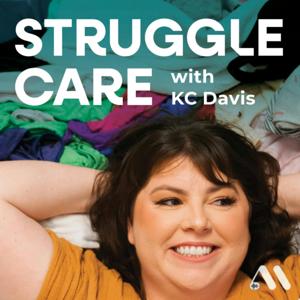
                      A podcast about self-care by a host that hates the term self-care. Therapist KC Davis, author of the book How to Keep House While Drowning talks about mental health, care tasks, and more.

                      Best of Struggle Care

                      Ranked by our users in the last 21 days

                      More shows like Struggle Care

                      ADHD Experts Podcast by ADDitude

                      ADHD Experts Podcast

                      1,329 Listeners

                      Dana K White: A Slob Comes Clean by Dana K. White: A Slob Comes Clean

                      Dana K White: A Slob Comes Clean

                      2,481 Listeners

                      Edit Your Life | Simplify + Declutter Your Home, Time, and Mental Space by Christine Koh

                      Edit Your Life | Simplify + Declutter Your Home, Time, and Mental Space

                      514 Listeners

                      Clutterbug - Real-Life Hacks and Tips to Declutter, Organize and Clean your Home Fast by Clutterbug

                      Clutterbug - Real-Life Hacks and Tips to Declutter, Organize and Clean your Home Fast

                      2,085 Listeners

                      Full-Tilt Parenting: Strategies, Insights, and Connection for Parents Raising Neurodivergent Children by Debbie Reber

                      Full-Tilt Parenting: Strategies, Insights, and Connection for Parents Raising Neurodivergent Children

                      963 Listeners

                      What Fresh Hell: Parenting, Relationships, and Making Life Better, with Two Funny Moms by Margaret Ables and Amy Wilson

                      What Fresh Hell: Parenting, Relationships, and Making Life Better, with Two Funny Moms

                      1,011 Listeners

                      ADHD for Smart Ass Women with Tracy Otsuka by Tracy Otsuka

                      ADHD for Smart Ass Women with Tracy Otsuka

                      31 Listeners

                      I Have ADHD Podcast by Kristen Carder

                      I Have ADHD Podcast

                      2,870 Listeners

                      Feminist Survival Project by Emily Nagoski and Amelia Nagoski

                      Feminist Survival Project

                      362 Listeners

                      Maintenance Phase by Aubrey Gordon & Michael Hobbes

                      Maintenance Phase

                      16,839 Listeners

                      Good Inside with Dr. Becky by Good Inside

                      Good Inside with Dr. Becky

                      4,511 Listeners

                      We Can Do Hard Things by Treat Media and Glennon Doyle

                      We Can Do Hard Things

                      41,371 Listeners

                      The Burnt Toast Podcast by Virginia Sole-Smith & Corinne Fay

                      The Burnt Toast Podcast

                      421 Listeners

                      Sorry, I Missed This: The Everything Guide to ADHD and Relationships with Cate Osborn by Cate Osborn, Understood.org

                      Sorry, I Missed This: The Everything Guide to ADHD and Relationships with Cate Osborn

                      55 Listeners