
Sign up to save your podcasts
Or

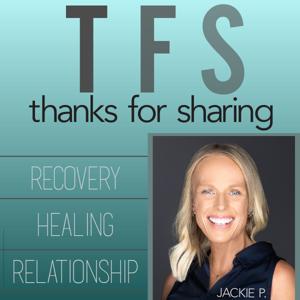


The Questions Underneath Our Relationships: Someone can tell you they love you, and you can still wonder whether you matter to them.
Underneath many of our reactions in relationships are questions we may never say out loud:
Are you there for me?
We begin learning the answers in childhood. But those questions keep getting answered in our adult relationships, in the moments when we struggle, reach for someone, or let ourselves be seen.
In this episode of Thanks for Sharing, I share two very different experiences with my dad and my husband, Jeff, and explore why words can mean so much less without a pattern of showing up behind them.
We also talk about what happens to these questions after betrayal, why reassurance may not feel reassuring, and how everyday moments of honesty, responsiveness, and repair can begin to rebuild security.
Mattering goes deeper than being useful, competent, or the person who holds everything together. It includes being cared for when you don’t have it all together.
What’s an ordinary moment that helped you feel you mattered to someone?
Have a question or something you’d like me to talk about in a future episode?
You can call the show and leave a voicemail or send me an email — I love hearing from you, and your feedback helps shape these conversations.
https://thanksforsharingpodcast.my.canva.site/thanks-for-sharing-links
#ThanksForSharingPodcast #Attachment #EmotionalIntimacy #BetrayalTrauma #CouplesRepair
For this episode, Rachel and I tried something different. We borrowed the format—and the questions—from NPR's Wild Card with Rachel Martin: choose a card without knowing the question, answer it, and see where the conversation goes. Full credit to Rachel Martin and the NPR team for creating a format I love.
And it took us places neither of us would have planned.
We talked about the first time Rachel remembers being struck by beauty. The ways we get in our own way. Self-doubt, shame, and my own realization that self-blame can keep showing up at deeper levels—even after years of knowing it's there.
We talked about getting older, perimenopause, the strange realization that you can reach an age you once thought sounded old and still feel very much like yourself. And eventually, a card asked: How often do you think about death?
That took us into grief, changing beliefs, legacy, and Rachel's reflection that she doesn't want the possibility of another life—or an afterlife—to become a reason not to fully live this one.
We weren't trying to teach a lesson or make a point. We just let the questions take us somewhere.
And maybe that's part of what makes a good question so powerful: sometimes the questions we wouldn't think to ask give us access to parts of ourselves—and each other—that don't come up in our usual conversations.
Have a question or something you’d like me to talk about in a future episode?
You can call the show and leave a voicemail or send me an email — I love hearing from you, and your feedback helps shape these conversations.
https://thanksforsharingpodcast.my.canva.site/thanks-for-sharing-links
A client said that to me a few weeks ago — she was leaving a job she had chosen to leave, and she couldn't stop rehearsing every grievance, every frustration, every way the place had failed her.
She wasn't actually angry. She was trying to make the grief feel like certainty, because certainty is more comfortable than grief.
This episode is about what happens in transitions — even the ones we chose, even the ones we wanted. Why we fight at airports. Why couples who just returned from a vacation they saved for find themselves arguing about laundry and boarding passes. Why someone might make an ending messier than it needed to be. Why the flight home can be one of the most predictable vulnerability points in a recovery plan.
The concept at the center of all of it: liminal space. The threshold. The in-between. The period where the old structure has loosened and the new one hasn't yet taken hold.
It's not empty. It's one of the most psychologically active places we can be. And when we don't know how to tolerate it, we tend to do things in it that we later have to account for.
New episode out now. Link in bio.
Have a question or something you’d like me to talk about in a future episode?
You can call the show and leave a voicemail or send me an email — I love hearing from you, and your feedback helps shape these conversations.
https://thanksforsharingpodcast.my.canva.site/thanks-for-sharing-links
#therapy #psychologypodcast #transitions #lifechange #liminalspace #mentalhealth #selfawareness #relationships #emotionalhealth #solopodcast
We can know where a pattern came from. We can explain our childhood. We can recognize our attachment strategies. We can even know that something that happened to us wasn’t our fault.
And still respond as though the old story is true.
One of the things I love about therapy is watching the moment when something moves from “I understand this” to “I know this differently now.”
That’s part of why I enjoyed this conversation with Monte and Mechelle of Rupture Ever After. We’ve spent years together in the therapy room, which means this wasn’t simply an interview about my ideas as a therapist. They could talk about what it was actually like to be on the receiving end of the work—and sometimes what they experienced wasn’t exactly what I remembered.
I think there’s something important in that, too.
Therapy happens in relationship. So does healing.
This week I’m sharing our conversation here on Thanks for Sharing as Rupture Ever After begins its second season.
Have a question or something you’d like me to talk about in a future episode?
You can call the show and leave a voicemail or send me an email — I love hearing from you, and your feedback helps shape these conversations.
https://thanksforsharingpodcast.my.canva.site/thanks-for-sharing-links
We all have blind spots—not because we lack self-awareness, but because there are things we simply can’t see from where we’re standing. And sometimes the people who know us well can see patterns we’ve normalized, adapted to, or never recognized in ourselves.
In this episode of Thanks for Sharing, I revisit the Johari Window and connect it to validation, accepting influence, family roles, the adaptive self, and why feedback can hurt without necessarily being wrong.
Because accepting influence isn’t saying, “You’re right about me.”
It’s saying, “You may have information I don’t have. I’m willing to look.”
For a deeper introduction to the Johari Window itself, go back to Episode 135.
Have a question or something you’d like me to talk about in a future episode?
You can call the show and leave a voicemail or send me an email — I love hearing from you, and your feedback helps shape these conversations.
https://thanksforsharingpodcast.my.canva.site/thanks-for-sharing-links
#JohariWindow #SelfAwareness #Relationships #AcceptingInfluence #Validation #PersonalGrowth #Therapy #ThanksForSharingPodcast
Some losses don’t come with a funeral.
Sometimes we’re grieving what didn’t happen—the nurturing we didn’t receive, the childhood there wasn’t room to have, or the adults who couldn’t be adults.
We can build something different now. But healing doesn’t erase the impact of the wound, and making meaning from suffering doesn’t mean the suffering was necessary.
Sometimes grief says, That mattered.
And sometimes it asks, Can you play now?
This week on Thanks for Sharing, we’re talking about living not after grief, but alongside it.
Have a question or something you’d like me to talk about in a future episode?
You can call the show and leave a voicemail or send me an email — I love hearing from you, and your feedback helps shape these conversations.
https://thanksforsharingpodcast.my.canva.site/thanks-for-sharing-links
#Grief #DisenfranchisedGrief #TraumaRecovery #Attachment #ThanksForSharingPodcast
In this episode, we explore three relational skills that often get confused:
Validation says, “If I am you—with your history, family of origin, and the meaning this held for you—I understand how you got there.”
Agreement says, “I reached essentially the same conclusion.”
Accepting influence says, “Because you matter to me, what you shared is allowed to affect my understanding or what I do next.”
We also talk about epistemic humility: trusting what we know without assuming we know everything. We may be wrong. We may have forgotten something. We may not have communicated as clearly as we thought. If we haven’t asked for another perspective, we can’t assume there isn’t one.
Drawing from John Gottman’s work, we look at why men in heterosexual relationships may be less likely to recognize when they are resisting their partner’s influence—especially when their own perspective begins as “right” and she has to prove it wrong.
And we name an important limit: good relational skills can become harmful in relationships without safety, accountability, and mutuality.
You don’t have to abandon what you see to become capable of seeing more.
Listen to the full episode of Thanks for Sharing.
Have a question or something you’d like me to talk about in a future episode?
https://thanksforsharingpodcast.my.canva.site/thanks-for-sharing-links
#Validation #AcceptingInfluence #CouplesTherapy #Relationships #EpistemicHumility #GottmanMethod #RelationshipSkills #ThanksForSharingPodcast
For a lot of people, those are surprisingly difficult questions to answer.
Sometimes we genuinely don't know. Sometimes we know, but we've learned to keep parts of ourselves private. Sometimes we've gotten very good at figuring out what's practical, reasonable, available, or best for everyone else before we consider what we actually want.
And sometimes "be grateful" quietly became "don't want more."
In this episode of Thanks for Sharing, I'm talking about how we can become wantless and needless—and the different ways that can show up.
We talk about needs versus wants, gratitude, entitlement, vulnerability, the unshared self, and why knowing what you want doesn't mean you expect to get it.
Because our wants aren't just about getting things.
They're often clues to who we are.
When You Don’t Know What You Want: Becoming Wantless and Needless
Have a question or something you’d like me to talk about in a future episode?
You can call the show and leave a voicemail or send me an email — I love hearing from you, and your feedback helps shape these conversations.
https://thanksforsharingpodcast.my.canva.site/thanks-for-sharing-links
#ThanksForSharingPodcast #SelfAbandonment #SelfAwareness #EmotionalHealth #Relationships #Healing
In this episode, I talk about the difference between self-abandonment (the pattern) and self-betrayal (the moment-by-moment choice that builds it) — and why understanding that difference matters more than most people realize.
We get into:
This isn't about always speaking up. It's about knowing the difference between a real choice and an old belief making the decision for you.
New episode is live — link in bio.
Have a question or something you’d like me to talk about in a future episode?
You can call the show and leave a voicemail or send me an email — I love hearing from you, and your feedback helps shape these conversations.
https://thanksforsharingpodcast.my.canva.site/thanks-for-sharing-links
#selfabandonment #selfbetrayal #therapy #mentalhealth #relationships #differentiation #authenticity #innerchild #podcastepisode #healingjourney
In this episode, I talk about the difference between adaptation and development, why the traits that got labeled as problems in childhood (stubborn, dramatic, bossy, shy) were often never the problem at all. They just hadn't matured yet.
We go deep: reparenting, the functional adult, why insight alone doesn't change us, and why healing was never about becoming someone new, but about continuing to grow into who you already were.
New episode is live
link in bio
https://healingpathsrecovery.com/wp-content/uploads/2026/07/Helping-the-Authentic-Self-Mature.pdf
Have a question or something you’d like me to talk about in a future episode?
You can call the show and leave a voicemail or send me an email — I love hearing from you, and your feedback helps shape these conversations.
https://thanksforsharingpodcast.my.canva.site/thanks-for-sharing-links
#therapy #reparenting #authenticself #innerchildwork #mentalhealthawareness #healingjourney #familytherapy #podcastepisode
From the publisher's feed

2,587 Listeners

661 Listeners

204 Listeners
354 Listeners
96 Listeners

14 Listeners
286 Listeners
20 Listeners