
Sign up to save your podcasts
Or



Based on Podcast App listening data
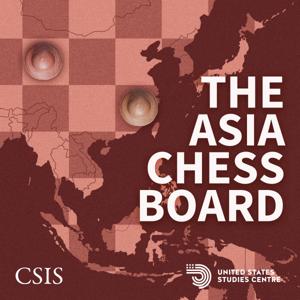
This week, Mike is celebrating 70 years of U.S.-Australia relations with Peter Jennings, executive director of the Australian Strategic Policy Institute. The two discuss the history and evolution of the ANZUS treaty and how alliance dynamics play out in both Washington and Canberra. They also contemplate the future of the alliance, including deepened U.S.-Australia security cooperation, the role of New Zealand in the alliance, Australian military capabilities, and trilateral cooperation with Japan.
This week, Mike is back in the studio with Heino Klinck, former Deputy Assistant Secretary of Defense for East Asia, to unpack the Free and Open Indo-Pacific Strategy and how it relates to U.S. allies and partners. Heino and Mike begin by exploring Chinese strategy towards the U.S. alliance network in Asia. They then discuss how U.S. allies and partners like Japan, South Korea, Taiwan, and Australia should think about their roles, missions, and capabilities in response to Chinese aggressive behavior in the region.
This week, Mike sits down with Raden Mohammad Marty Muliana Natalegawa, former Foreign Minister of Indonesia, to explore current U.S.-Indonesia relations and U.S. foreign policy towards Southeast Asia. The two discuss Marty's time in government, and how the bilateral relationship should deal with issues like Myanmar, Covid-19, Chinese assertiveness, and climate change. Mike and Marty also talk about the importance of collaboration on democracy support in the region, and touch on the current situation in Afghanistan.
This week, Mike is joined by Ambassador James Moriarty, chairman of the American Institute in Taiwan, to discuss his perspectives on political and security dynamics in the Taiwan Strait. Ambassador Moriarty considers how U.S. policy towards Taiwan has changed over his professional career, and examines Beijing’s intentions towards Taiwan. Finally, Mike and Ambassador Moriarty debate what Washington, Taipei, Tokyo and others need to do to maintain stability in the Taiwan Strait, emphasizing the need for increased deterrence and defense in depth.
This week, Mike sits down with Bonny Lin, senior fellow for Asian security and the new director of the China Power Project at CSIS, to talk about one of the hottest topics on the Chessboard: the Taiwan Strait. Bonny and Mike assess if China and Taiwan are truly on the brink of war and dive into China's overall strategy towards Taiwan, including gray zone coercion and disinformation campaigns. They also discuss what U.S. commitment to Taiwan's security means for the region, and how U.S. allies in Asia and Europe fit into U.S. and Chinese strategic planning regarding the Taiwan Strait.
This week, Mike sits down with Amitav Acharya, UNESCO Chair in Transnational Challenges and Governance and Distinguished Professor at American University, to unpack Amitav’s new book, ASEAN and Regional Order: Revisiting Security Community in Southeast Asia. Amitav and Mike assess the current state of ASEAN, its durability, and the meaning of ASEAN centrality. They also discuss the role of the QUAD, the impact of U.S.-China competition on Southeast Asia, and how the U.S. can improve its engagement with Southeast Asia.
This week, Mike is joined by Darshana Baruah, associate fellow with the South Asia Program at the Carnegie Endowment for International Peace, to discuss the strategic significance of the Indian Ocean to the United States and our allies and partners in the region. Darshana provides historical context for the new focus on the Indo-Pacific, and dives into the politics of the Indian Ocean region. Mike and Darshana also tackle the rise of Chinese influence and how the Indian Ocean fits in with U.S.-China strategic competition. Overall, the two agree that there needs to be more focus in the United States on building a presence in the Indian Ocean, and in dealing with the Indian Ocean as a whole, rather than dividing it into geographical silos.
This week, Mike is joined by Mike O’Hanlon, senior fellow and director of research in foreign policy at the Brookings Institution, to discuss his new book, “The Art of War in an Age of Peace,” and how his new vision for U.S. grand strategy relates to the Asia-Pacific. The two begin by defining what “resolute restraint” means for U.S. Asia policy, especially regarding the rise of China, as they explore issue areas like the South China Sea. O’Hanlon makes a distinction between restraint and retrenchment, and argues for prioritizing existing commitments in Asia to our treaty allies, rather than creating new security obligations.
This week, Mike is joined by Eva Pejsova, Senior Japan Fellow at the Centre for Security, Diplomacy and Strategy (CSDS) at Vrije Universiteit Brussel (VUB), and Luis Simon, Director of the CSDS at the Brussels School of Governance and Director of the Brussels Office of the Elcano Royal Institute, to discuss how the Indo-Pacific factors into European foreign policy and strategic thinking. Eva and Luis analyze the recently released "EU strategy for cooperation in the Indo-Pacific," as well as the individual strategies of France, Germany, and the Netherlands, and argue that Europe cannot address the rise of China without considering the geopolitics of the Indo-Pacific region. The three then dive deeper into potential cooperation between the EU, U.S., and other partners in the region like Japan, Australia, and India.
This week, Mike is joined by Elizabeth Economy, senior fellow at Stanford University's Hoover Institution and senior fellow for China Studies at the Council on Foreign Relations, to explore the evolution of Xi Jinping’s leadership and China’s current foreign policy strategy. Liz argues that there is continuity between Xi’s strategy and that of his predecessors, but Xi’s vision of reforming the global governance system and his increased risk tolerance are new phenomena. As Liz and Mike unravel China’s foreign policy and its relationship with Russia, they ask if the United States could have predicted the rise of Xi Jinping and if the United States should change course in its strategy towards China.
From the publisher's feed
Ranked by our users in the last 21 days
251 Listeners

601 Listeners
1,069 Listeners
315 Listeners
143 Listeners
603 Listeners
206 Listeners
764 Listeners
717 Listeners
2 Listeners
288 Listeners
153 Listeners
423 Listeners

6 Listeners
85 Listeners
17 Listeners
403 Listeners
1 Listeners
141 Listeners

22 Listeners
25 Listeners
4 Listeners

472 Listeners
2 Listeners

5 Listeners
266 Listeners
47 Listeners
157 Listeners

0 Listeners
3 Listeners
13 Listeners
9 Listeners
4 Listeners

0 Listeners