
Sign up to save your podcasts
Or



Based on Podcast App listening data
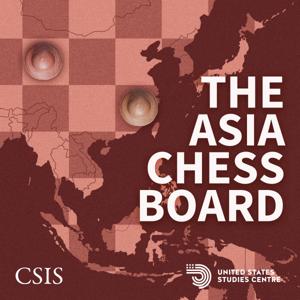
This week, Mike is joined by Ashley Tellis, Tata Chair for Strategic Affairs and senior fellow at the Carnegie Endowment for International Peace, to re-evaluate U.S. China strategy and determine what makes a successful theory of victory. The two start by going back in time to when Ashley was working on the rise of China in the 90s, when he argued that China’s rise was not a fluke and would impact Asia dramatically in the future. Given that competition is inevitable, the United States must maintain multipolarity in Asia, create constraints on Chinese action in the region, and work with likeminded allies and partners like Japan and India. How can the United States integrate India and the QUAD into its strategy? What does success look like in five years, ten years, and beyond?
This week Mike is joined by Mireya Solis, director of the Center for East Asia Policy Studies, Philip Knight Chair in Japan Studies, and a senior fellow in the Foreign Policy program at Brookings, to discuss the regional trade architecture of the Asia-Pacific. The two start off by analyzing the geopolitical significance of RCEP and CPTPP, and what the lack of U.S. participation in both trade agreements means for U.S. trade strategy under the Biden Administration. Mireya also dives deeper into Japan’s economic strategy in Asia, and argues that Japanese leadership in the region is likely to continue given its status as the third largest economy in the world, its role as a rule-maker in the region, and its ability to fill the U.S. vacuum. How have the Asia-Pacific countries stitched the region together over the past few years, and what can the U.S. do to improve its credibility in the region?
This week, Mike is joined by Asia and human rights expert Ellen Bork, contributing editor at American Purpose, to discuss the geopolitics of Tibet and what it means for the Asia Chessboard. The two begin by discussing Tibet’s strategic significance in the region, including the influence of Tibetan Buddhism and China’s strategic approach to its “core interests.” Bork also dives deeper into Tibet’s relationships with its neighbors, like India, and the transnational impact of the next reincarnation of the Dalai Lama. How should the U.S. factor Tibet into its Asia Strategy? How can the U.S. and its allies stand up to China when it comes to human rights abuses in Tibet?
This week Mike is joined by Bruce Stokes, fellow at the German Marshall Fund, to discuss U.S. public attitudes about the world, and how the world sees the U.S. leadership role abroad, especially after January 6th. Stokes differentiates between public opinion about the United States, faith in the U.S. public, and faith in U.S ideas about democracy. How does waning U.S. soft power impact our strategy in Asia? How can the incoming administration implement a “Foreign Policy for the Middle Class” while dealing with trade and security issues in Asia?
This week, Mike is joined by David Shambaugh, the Gaston Sigur Professor of Asian Studies at George Washington University, to discuss his new book, “Where Great Powers Meet: America and China in Southeast Asia.” The two start with a discussion about how U.S.-China relations have gotten to their lowest point since normalization, and how Southeast Asia has become an open field for competition. Perception matters, but Shambaugh argues that it has become out of touch with reality. Is China’s inevitable rise in the region a false narrative? Why is U.S. engagement in Southeast Asia underappreciated, and how can we increase U.S. diplomatic efforts in the region?
This week, Mike is joined by Ganbat Chuluunkhuu, Managing Director at RVJ Capital, as they journey to the middle of the chessboard to discuss Mongolia’s role in the Asia-Pacific region. Ganbat dives into Mongolia’s history of strategic culture, starting with the legacy of Genghis Khan, and outlines the intricacies of Mongolia’s relationships with China, Russia, and “third neighbors” like the United States. As the only democracy in Central Eurasia, Mongolia has becoming increasingly important for U.S. grand strategy and Mongolian sovereignty rests on the balance between China, Russia, and its third neighbors.
This week, Mike is joined by Tom Wright, director of the Center on the United States and Europe and a senior fellow in the Project on International Order and Strategy at the Brookings Institution, to discuss how domestic politics impacts U.S. grand strategy. The two go into detail about how both Democrats and Republicans currently view U.S. strategy in Asia, and where both parties converge and diverge when it comes to the “China Challenge.” Now that there will be a transfer of power in the White House, what does the recent 2020 U.S. election tell us about the U.S. role in the world, and in Asia specifically?
This week, Mike is joined by his CSIS colleagues Jude Blanchette, Bonnie Glaser, and Scott Kennedy, to discuss their recently-launched project, “Mapping the Future of U.S. China Policy.” For this project, CSIS surveyed the American public and thought leaders in the United States, Asia, and Europe to map perspectives on China policy. The discussion centers around the project’s five main takeaways on issues surrounding national security, economics and trade, and human rights. The results point to possible contours of an enduring strategy around international coalition building on the China challenge.
This week, Mike is joined by Chris Capozzola, Professor of History at the Massachusetts Institute of Technology, to discuss his new book on the history of U.S.-Philippines relations, Bound by War. The two discuss the importance of history for informing grand strategy, and what lessons we can learn from the 1900s, which Dr. Capozzola argues is the "original" Asian century. Dr. Capozzola starts with the strategic significance of the United States and the Philippines to one another, highlighting the geographic location of the Philippines. He goes on to explain the binational history between the two countries and how they have shaped one another. What are the strengths and weaknesses within the relationship, and how can understanding history help the United States build a platform for more strategic dialogue with the Philippines moving forward?
This week, Mike is joined by the Ranking Member of the Senate Armed Services Committee, Senator Jack Reed (D-RI) to discuss the role of Congress in decision-making on U.S. national security policy in the Asia-Pacific. In their discussion, they look at strategic competition with China and the importance of working jointly with allies and partners, especially through exercising together. They also highlight the Pacific Deterrence Initiative, a bipartisan initiative introduced by Senator Reed in the National Defense Authorization Act for Fiscal Year 2021. How can the U.S. increase its deterrence in the region? What can Congress do to signal our commitments to our allies and partners?
From the publisher's feed
Ranked by our users in the last 21 days
251 Listeners

601 Listeners
1,069 Listeners
315 Listeners
143 Listeners
603 Listeners
206 Listeners
764 Listeners
717 Listeners
2 Listeners
288 Listeners

153 Listeners
423 Listeners

6 Listeners

85 Listeners
17 Listeners
403 Listeners
1 Listeners
141 Listeners

22 Listeners
25 Listeners
4 Listeners

472 Listeners
2 Listeners

5 Listeners
266 Listeners
47 Listeners
157 Listeners

0 Listeners
3 Listeners
13 Listeners
9 Listeners
4 Listeners

0 Listeners