
Sign up to save your podcasts
Or



Based on Podcast App listening data
If your class fell apart this week and September felt fine, you're not doing anything wrong - this is the week it always happens. Novelty wears off around week four or five, students start testing the real limits, and it feels like everything you built collapsed. But the spike isn't failure. It's the predictable next phase, and it's information about where the gaps are.
In this episode, I walk through what to do instead of starting over: expecting the spike so you don't take it personally, reteaching your routines instead of scrapping them, fixing the one time of day where behavior slips most, refreshing stale reinforcement, and holding steady. Don't restart - reteach. The teachers who hold steady through October have the calmest rooms in December.
----------------------------------------------
Interested in our Year-Long Curriculum Access Subscription? Learn more about it here: https://theautismhelper.com/tah-curriculum-access/
Join the waitlist for our Professional Development Membership: https://shop.theautismhelper.com/pages/membership-waitlist
Want more information about The Autism Helper Courses? Visit: https://theautismhelper.com/courses/
Looking for a specific product or resource? Find it in our new Autism Helper Store! https://shop.theautismhelper.com/
Or visit The Autism Helper store on TpT: https://www.teacherspayteachers.com/Store/The-Autism-Helper
Stay up to date on all things Autism Helper by downloading our new, FREE app! Available on both the App Store: https://apps.apple.com/us/app/the-autism-helper/id1557724340 & Google Play: https://play.google.com/store/apps/details?id=com.mightybell.theautismhelper&hl=en_US&gl=US
Get all updates from The Autism Helper Podcast by clicking subscribe above. Head over to theautismhelper.com for more info. Follow us on Facebook, Instagram, TikTok, and Pinterest @theautismhelper.
In this episode, we're talking about prompt fading and why the start of the school year is the perfect time to plan for it. Those first weeks are naturally full of support, but the prompts we add in August can quietly become the prompts students depend on all year. We'll do a quick refresher on the prompt hierarchy and share five practical steps to take this month: picking priority routines, finding baselines, writing a simple fade plan, getting your whole team using the same prompt language, and building in wait time. We'll also cover the common pitfalls that stall progress, like hovering and repeated verbal prompts. You'll leave with one small challenge to start building independence this week.
----------------------------------------------
Interested in our Year-Long Curriculum Access Subscription? Learn more about it here: https://theautismhelper.com/tah-curriculum-access/
Join the waitlist for our Professional Development Membership: https://shop.theautismhelper.com/pages/membership-waitlist
Want more information about The Autism Helper Courses? Visit: https://theautismhelper.com/courses/
Looking for a specific product or resource? Find it in our new Autism Helper Store! https://shop.theautismhelper.com/
Or visit The Autism Helper store on TpT: https://www.teacherspayteachers.com/Store/The-Autism-Helper
Stay up to date on all things Autism Helper by downloading our new, FREE app! Available on both the App Store: https://apps.apple.com/us/app/the-autism-helper/id1557724340 & Google Play: https://play.google.com/store/apps/details?id=com.mightybell.theautismhelper&hl=en_US&gl=US
Get all updates from The Autism Helper Podcast by clicking subscribe above. Head over to theautismhelper.com for more info. Follow us on Facebook, Instagram, TikTok, and Pinterest @theautismhelper.
Sometimes the off-task behavior, the wandering, the "he just won't listen" moment isn't defiance at all - it's confusion. When a direction is unclear, students don't know what we expect, so they fill the gap with something else, and we read that as a behavior problem. Before long, we're in a power struggle over a direction the student never understood. The fix usually isn't a bigger consequence - it's a clearer direction.
In this episode, I break down how to give verbal directions that are clear, concrete, and focused on what to do instead of what not to do: waiting until you have a student's attention, keeping directions positive and specific, not stacking too many at once, avoiding phrasing directions as questions when the task isn't optional, repeating purposefully instead of rewording, giving real wait time, and offering a quick "why" to earn buy-in.
Before your next consequence, ask yourself: was that direction clear, positive, singular - and did I give it time to land? Sometimes the most powerful thing we can change isn't the student. It's the sentence.
----------------------------------------------
Interested in our Year-Long Curriculum Access Subscription? Learn more about it here: https://theautismhelper.com/tah-curriculum-access/
Join the waitlist for our Professional Development Membership: https://shop.theautismhelper.com/pages/membership-waitlist
Want more information about The Autism Helper Courses? Visit: https://theautismhelper.com/courses/
Looking for a specific product or resource? Find it in our new Autism Helper Store! https://shop.theautismhelper.com/
Or visit The Autism Helper store on TpT: https://www.teacherspayteachers.com/Store/The-Autism-Helper
Stay up to date on all things Autism Helper by downloading our new, FREE app! Available on both the App Store: https://apps.apple.com/us/app/the-autism-helper/id1557724340 & Google Play: https://play.google.com/store/apps/details?id=com.mightybell.theautismhelper&hl=en_US&gl=US
Get all updates from The Autism Helper Podcast by clicking subscribe above. Head over to theautismhelper.com for more info. Follow us on Facebook, Instagram, TikTok, and Pinterest @theautismhelper.
When is the last time your data actually changed a decision you made? In this episode, we're getting honest about the difference between data collection and data use - and how compliance culture has turned one of our most important tools into busywork. We talk about what meaningful data systems look like, why collecting less is often more effective, and how to build a practice where data actually drives instruction instead of just filling binders.
Cooper, Heron & Heward (2020). Applied behavior analysis (3rd ed.). Pearson.
Stecker et al. (2005). Using curriculum-based measurement to improve student achievement. Psychology in the Schools.
Come join the conversation! Find us on Instagram at @theautismhelper and TikTok at @theautismhelper - drop your hot take in the comments and let us know where you land on this one.
----------------------------------------------
Interested in our Year-Long Curriculum Access Subscription? Learn more about it here: https://theautismhelper.com/tah-curriculum-access/
Join the waitlist for our Professional Development Membership: https://shop.theautismhelper.com/pages/membership-waitlist
Want more information about The Autism Helper Courses? Visit: https://theautismhelper.com/courses/
Looking for a specific product or resource? Find it in our new Autism Helper Store! https://shop.theautismhelper.com/
Or visit The Autism Helper store on TpT: https://www.teacherspayteachers.com/Store/The-Autism-Helper
Stay up to date on all things Autism Helper by downloading our new, FREE app! Available on both the App Store: https://apps.apple.com/us/app/the-autism-helper/id1557724340 & Google Play: https://play.google.com/store/apps/details?id=com.mightybell.theautismhelper&hl=en_US&gl=US
Get all updates from The Autism Helper Podcast by clicking subscribe above. Head over to theautismhelper.com for more info. Follow us on Facebook, Instagram, TikTok, and Pinterest @theautismhelper.
Name a student who crushed your social skills curriculum and still eats alone at lunch. In this episode, we're asking why - and the answer has a lot to do with how we're delivering instruction. We talk about why social skills taught in isolation rarely transfer, the important difference between a social skills deficit and a social performance deficit, and what peer-mediated and naturalistic approaches actually look like when done well.
Bellini et al. (2007). A meta-analysis of school-based social skills interventions for children with autism spectrum disorders. Remedial and Special Education.
Koenig et al. (2010). Promoting social skills. In Zager (Ed.), Autism spectrum disorders.
Come join the conversation! Find us on Instagram at @theautismhelper and TikTok at @theautismhelper - drop your hot take in the comments and let us know where you land on this one.
----------------------------------------------
Interested in our Year-Long Curriculum Access Subscription? Learn more about it here: https://theautismhelper.com/tah-curriculum-access/
Join the waitlist for our Professional Development Membership: https://shop.theautismhelper.com/pages/membership-waitlist
Want more information about The Autism Helper Courses? Visit: https://theautismhelper.com/courses/
Looking for a specific product or resource? Find it in our new Autism Helper Store! https://shop.theautismhelper.com/
Or visit The Autism Helper store on TpT: https://www.teacherspayteachers.com/Store/The-Autism-Helper
Stay up to date on all things Autism Helper by downloading our new, FREE app! Available on both the App Store: https://apps.apple.com/us/app/the-autism-helper/id1557724340 & Google Play: https://play.google.com/store/apps/details?id=com.mightybell.theautismhelper&hl=en_US&gl=US
Get all updates from The Autism Helper Podcast by clicking subscribe above. Head over to theautismhelper.com for more info. Follow us on Facebook, Instagram, TikTok, and Pinterest @theautismhelper.
We have calm-down kits for our students, co-regulation protocols, and zones of regulation posters on the wall. But nobody talks about what happens when the teacher is the dysregulated one. In this episode, we get into the neuroscience of why you cannot co-regulate from a flooded nervous system, why special ed teachers are especially at risk, and practical strategies for regulating yourself in the middle of a really hard classroom moment.
Porges, S.W. (2011). The polyvagal theory. W.W. Norton & Company.
Herman et al. (2021). Teacher emotion regulation and student behavior outcomes. Journal of School Psychology.
Come join the conversation! Find us on Instagram at @theautismhelper and TikTok at @theautismhelper - drop your hot take in the comments and let us know where you land on this one.
----------------------------------------------
Interested in our Year-Long Curriculum Access Subscription? Learn more about it here: https://theautismhelper.com/tah-curriculum-access/
Join the waitlist for our Professional Development Membership: https://shop.theautismhelper.com/pages/membership-waitlist
Want more information about The Autism Helper Courses? Visit: https://theautismhelper.com/courses/
Looking for a specific product or resource? Find it in our new Autism Helper Store! https://shop.theautismhelper.com/
Or visit The Autism Helper store on TpT: https://www.teacherspayteachers.com/Store/The-Autism-Helper
Stay up to date on all things Autism Helper by downloading our new, FREE app! Available on both the App Store: https://apps.apple.com/us/app/the-autism-helper/id1557724340 & Google Play: https://play.google.com/store/apps/details?id=com.mightybell.theautismhelper&hl=en_US&gl=US
Get all updates from The Autism Helper Podcast by clicking subscribe above. Head over to theautismhelper.com for more info. Follow us on Facebook, Instagram, TikTok, and Pinterest @theautismhelper.
What happens to behavior in your classroom when you forget the reinforcers? If the answer is 'everything falls apart' - that tells you something important about your system. In this episode, we're talking about the difference between reinforcement and bribery, how well-intentioned reward systems create dependency, and what it looks like to build toward natural reinforcers so students aren't permanently tethered to a token board or prize box.
Deci, Koestner & Ryan (1999). A meta-analytic review of experiments examining the effects of extrinsic rewards. Psychological Bulletin.
Cooper, Heron & Heward (2020). Applied behavior analysis (3rd ed.). Pearson.
Come join the conversation! Find us on Instagram at @theautismhelper and TikTok at @theautismhelper - drop your hot take in the comments and let us know where you land on this one.
----------------------------------------------
Interested in our Year-Long Curriculum Access Subscription? Learn more about it here: https://theautismhelper.com/tah-curriculum-access/
Join the waitlist for our Professional Development Membership: https://shop.theautismhelper.com/pages/membership-waitlist
Want more information about The Autism Helper Courses? Visit: https://theautismhelper.com/courses/
Looking for a specific product or resource? Find it in our new Autism Helper Store! https://shop.theautismhelper.com/
Or visit The Autism Helper store on TpT: https://www.teacherspayteachers.com/Store/The-Autism-Helper
Stay up to date on all things Autism Helper by downloading our new, FREE app! Available on both the App Store: https://apps.apple.com/us/app/the-autism-helper/id1557724340 & Google Play: https://play.google.com/store/apps/details?id=com.mightybell.theautismhelper&hl=en_US&gl=US
Get all updates from The Autism Helper Podcast by clicking subscribe above. Head over to theautismhelper.com for more info. Follow us on Facebook, Instagram, TikTok, and Pinterest @theautismhelper.
If a student can label colors at your table but not point to one at snack - did they really learn colors? Generalization is the actual destination of all our instruction, and most of us plan for skill acquisition and call it done. In this episode, we talk about what generalization actually means, why we skip it, and simple ways to build it into your teaching without starting from scratch.
Stokes & Baer (1977). An implicit technology of generalization. Journal of Applied Behavior Analysis.
Horner et al. (1988). The role of response efficiency in the reduction of problem behaviors. Journal of the Association for Persons with Severe Handicaps.
Come join the conversation! Find us on Instagram at @theautismhelper and TikTok at @theautismhelper - drop your hot take in the comments and let us know where you land on this one.
----------------------------------------------
Interested in our Year-Long Curriculum Access Subscription? Learn more about it here: https://theautismhelper.com/tah-curriculum-access/
Join the waitlist for our Professional Development Membership: https://shop.theautismhelper.com/pages/membership-waitlist
Want more information about The Autism Helper Courses? Visit: https://theautismhelper.com/courses/
Looking for a specific product or resource? Find it in our new Autism Helper Store! https://shop.theautismhelper.com/
Or visit The Autism Helper store on TpT: https://www.teacherspayteachers.com/Store/The-Autism-Helper
Stay up to date on all things Autism Helper by downloading our new, FREE app! Available on both the App Store: https://apps.apple.com/us/app/the-autism-helper/id1557724340 & Google Play: https://play.google.com/store/apps/details?id=com.mightybell.theautismhelper&hl=en_US&gl=US
Get all updates from The Autism Helper Podcast by clicking subscribe above. Head over to theautismhelper.com for more info. Follow us on Facebook, Instagram, TikTok, and Pinterest @theautismhelper.
Most paras spend their days doing proximity support - hovering at a student's elbow - and research is pretty clear that this actually works against independence and peer connection. But here's the thing: it's not the para's fault. In this episode, we talk about why paras default to hovering, what a well-utilized para actually looks like, and practical ways to redistribute support so your whole classroom benefits - not just one student.
Giangreco et al. (1997). You're welcome: Problematic paraprofessional supports in inclusive schools. Journal of Special Education.
Giangreco, M.F. (2010). Utilization of teacher assistants in inclusive schools. Intellectual and Developmental Disabilities.
Come join the conversation! Find us on Instagram at @theautismhelper and TikTok at @theautismhelper - drop your hot take in the comments and let us know where you land on this one.
----------------------------------------------
Interested in our Year-Long Curriculum Access Subscription? Learn more about it here: https://theautismhelper.com/tah-curriculum-access/
Join the waitlist for our Professional Development Membership: https://shop.theautismhelper.com/pages/membership-waitlist
Want more information about The Autism Helper Courses? Visit: https://theautismhelper.com/courses/
Looking for a specific product or resource? Find it in our new Autism Helper Store! https://shop.theautismhelper.com/
Or visit The Autism Helper store on TpT: https://www.teacherspayteachers.com/Store/The-Autism-Helper
Stay up to date on all things Autism Helper by downloading our new, FREE app! Available on both the App Store: https://apps.apple.com/us/app/the-autism-helper/id1557724340 & Google Play: https://play.google.com/store/apps/details?id=com.mightybell.theautismhelper&hl=en_US&gl=US
Get all updates from The Autism Helper Podcast by clicking subscribe above. Head over to theautismhelper.com for more info. Follow us on Facebook, Instagram, TikTok, and Pinterest @theautismhelper.
If your student hit every IEP goal this year but still can't ask for help, order food, or navigate a transition independently - did the goals do their job? In this episode, we're getting into the compliance trap in IEP writing, why teachers write goals they know students can hit, and what truly functional and ambitious goal-writing actually looks like. This one is for anyone who's ever felt like their IEP goals were more about paperwork than progress.
Ruble et al. (2010). Examination of IEP goals for children with autism. Focus on Autism and Other Developmental Disabilities.
Kurth & Mastergeorge (2010). Academic and cognitive profiles of students with autism. Education and Training in Autism and Developmental Disabilities.
Come join the conversation! Find us on Instagram at @theautismhelper and TikTok at @theautismhelper - drop your hot take in the comments and let us know where you land on this one.
----------------------------------------------
Interested in our Year-Long Curriculum Access Subscription? Learn more about it here: https://theautismhelper.com/tah-curriculum-access/
Join the waitlist for our Professional Development Membership: https://shop.theautismhelper.com/pages/membership-waitlist
Want more information about The Autism Helper Courses? Visit: https://theautismhelper.com/courses/
Looking for a specific product or resource? Find it in our new Autism Helper Store! https://shop.theautismhelper.com/
Or visit The Autism Helper store on TpT: https://www.teacherspayteachers.com/Store/The-Autism-Helper
Stay up to date on all things Autism Helper by downloading our new, FREE app! Available on both the App Store: https://apps.apple.com/us/app/the-autism-helper/id1557724340 & Google Play: https://play.google.com/store/apps/details?id=com.mightybell.theautismhelper&hl=en_US&gl=US
Get all updates from The Autism Helper Podcast by clicking subscribe above. Head over to theautismhelper.com for more info. Follow us on Facebook, Instagram, TikTok, and Pinterest @theautismhelper.
From the publisher's feed
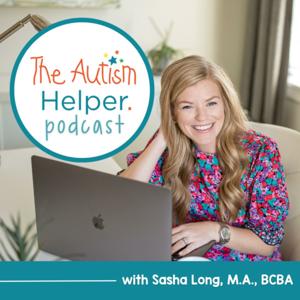
Welcome to The Autism Helper Podcast, where we explore different strategies to improve the lives of individuals with autism.
Ranked by our users in the last 21 days

4,586 Listeners

963 Listeners
626 Listeners

12,073 Listeners

6,436 Listeners
418 Listeners

2,071 Listeners

3,383 Listeners
437 Listeners
1,324 Listeners

1,904 Listeners
644 Listeners
422 Listeners
41,388 Listeners
120 Listeners