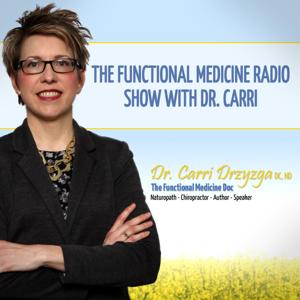
The Functional Medicine Radio Show With Dr. Carri

The Functional Medicine Radio Show With Dr. Carri

By The Functional Medicine Radio Show With Dr. CarriAlternative Health
Download on the App Store

The Functional Medicine Radio Show With Dr. Carri episodes

  • Mindfulness with Ora Nadrich

    In this episode of The Functional Medicine Radio Show, Dr. Carri’s special guest Ora Nadrich explains mindfulness.

    Ora Nadrich is a certified Life Coach and certified Mindfulness Meditation teacher as well as the author of the groundbreaking book, “Says Who? How One Simple Question Can Change the Way You Think Forever.” Ora’s rare combination of insight, intuition, compassion and charisma has made her one of the most effective and sought-after life coaches in Los Angeles.

    Main Questions Asked about Mindfulness:
    • What is mindfulness and what does that mean to you?
    • How do we learn mindfulness?
    • What’s the difference between mindfulness and meditation?
    • Is mindfulness like a muscle – the more we exercise it, the better we get at it?
    • As we get better at practicing mindfulness, what are the benefits that we’re going to see from that?
    • What does mindfulness feel like? How do we know that we’re there?
    • Key Points made about Mindfulness by Ora:
      • I think things like mindfulness and meditation sometimes can sound complicated to people, when in fact, the essence of mindfulness is actually rather simple. For me, it is being present. That is the simplest definition of mindfulness: being present.
      • Mindfulness is an inherent quality that each and every one of us has. It’s there. We just don’t always use it.
      • Mindfulness goes into all the areas of our lives. Mindfulness goes into eating, it goes into communication, it goes into listening, it goes into how we taste our food.
      • You bring present moment awareness into your meditation, and without getting too complex about it, you also bring your meditation out into the world.
      • By being present, you are more aware. And when you’re more aware, you’re aware of the thoughts that you’re thinking, whether they be negative or positive.
      • The work of mindfulness and/or meditation is really to help us discipline our mind. Same with the Says Who? method; to discipline your mind, not to readily accept negative thoughts, but to work with your mind so that you can cultivate and curate, is a word I like to use more, positive thoughts. It’s being more selective of our thinking mind. That takes discipline.
      • People have very high expectations of, “Well, I have to be an expert at mindfulness immediately, and I have to be the type of meditator that doesn’t have any thoughts going through my mind.” Well, that’s not realistic, and that’s actually really harsh. It is counterproductive and counterintuitive to the very thing that you want to accomplish, and that is to learn something, show up for it, and just be willing to try.
      • The path of awareness, the path of awakening, the path of being more mindful really asks us to be more gentle with ourselves in the process.
      • These are the moments of our lives. We’re not going to get this moment again. If we counted all the moments that we basically waste, it’s shocking how much time we waste needlessly. So I think it conserves our energy, our time, our lifespan, if you will. It calms us down, it helps us really be who we are in the moment, because we learn to accept who we are in the moment.
      • I would say begin now. Say, “I’m ready to have a relationship with mindfulness, starting now, and I’m ready to be present now, and I’m going to show up for my life now.” And start from this moment onward. I’m excited. I mean, it excites me to get people connected to their mindfulness ability. It’s there. Just go for it.
      • Resources Mentioned about Mindfulness:

        Book – Says Who? How One Simple Question Can Change the Way You Think Forever

        Ora’s website

        The Staying in Bed Meditation

        Book – Reclaim Your Energy and Feel Normal Again

        Thank you for listening! If you enjoyed this podcast, please subscribe and leave a 5-star rating and review on iTunes!


        The post Mindfulness with Ora Nadrich appeared first on The Functional Medicine Radio Show With Dr. Carri.

        33 min
      • Toxic Substances at Home and What You Can Do About Them with Dr. Robert Brown

        In this episode of The Functional Medicine Radio Show, Dr. Carri’s special guest Dr. Rob Brown explains the effects of hidden toxic substances in our homes.

        Dr. Robert Brown has been a practicing radiologist for the past twenty-five years. Throughout his career, he has witnessed first-hand the adverse effects of toxins on human health. He gained a broadened perspective on well-being whilst volunteering his medical expertise in Tanzania, teaching medical imaging to local doctors in the early 2000s. He received his M.D. from The University of Miami and completed his residency training in diagnostic radiology at The Western Pennsylvania Hospital. Dr. Brown completed a musculoskeletal radiology fellowship at University of California San Diego, during which time he authored several research papers subsequently published in peer reviewed publications. He is the author of Toxic Home/Conscious Home: A Mindful Approach to Wellness at Home.

        Main Questions Asked about hidden toxic substances:
        • What inspired you to write this book?
        • What hidden toxic substances are in our home?
        • What is the best source of water to get in our homes?
        • How can we make our air cleaner in our homes?
        • Is there a way to measure toxic microparticulates in our homes?
        • How many plants do we want every room?
        • Can you tell us about processed foods and food prep and food packaging?
        • How should we clean our homes?
        • What about what we use on our bodies?
        • Can you talk about sounds, electromagnetic fields (EMFs), light, and feng shui?
        •  

          Key Points made by Dr. Brown about hidden toxic substances:
          • People are getting more and more chronic diseases at younger ages. I truly believe that a lot of these are preventable with little changes in lifestyle and modifications in the way that we keep our homes in particular.
          • My book dissects the home into three different categories. The first is food, air, and water. The second is the conveniences that we’ve created for ourselves, and the third is energy and spirit.
          • Air pollution in the home comes from toxic particulates in our air and we have volatile organic compounds that are emitted from all kinds of building materials and adhesives and paints and lacquers and is worse during the winter months.
          • The water in plastic bottles usually comes from either somebody’s ground water or a municipal water supply in some other town. But not only that, the water in those bottles is being infiltrated by the plastic that the bottle is made of.
          • The best method for giving yourself clean water at home is to have a high-quality gravity drip system.
          • We have two types of air pollution we need to be concerned about. The first is microparticulates and the second is volatile organic building materials.
          • According to research, house plants actually absorb volatile organic compounds and they use them for food. So, they can trap these gases and use them and in doing so, clean the air.
          • There are so many things on the market that are dangerous for us, like packaging materials and plastic, and are causing all kinds of chronic diseases that people are not aware about.
          • Plastics have these toxic chemicals that can disrupt our endocrine system. So, I strongly recommend people use glass containers.
          • There are new food packages where they’ve replaced the air and they’ve put in a nitrogen gas to keep things lasting even longer.
          • Around ten years ago they discovered the microbiome. Before then, they thought, “Oh, we need to sterilize everything. It’d be ideal if we could live in an environment that was as sterile as a hospital operating suite.” But we now know that that’s not true at all. In fact, people that live in those types of environments are less healthy – they have more allergies, and more sensitivities than people who live in a farm, for example.
          • It’s important not to kill off that microbiome with your cleaning products. My recommendation is to use cleaning products that are edible.
          • The personal care products industry is very poorly regulated. The idea of using things on your body that are perhaps edible is definitely a way to go.
          • My book was really designed to give people a holistic perspective on their environment. Many people really believe that if they can’t see it or touch it, it’s not real. We know that’s not true because we can hear sound even though we can’t see it, yet these things have an effect on our body.
          • Sound and music is very interesting. Our bodies resonate to different frequencies. We have our own frequencies.
          • Music and rhythms cause a process of entrainment. For example, if you start to slow your breath, your heart rate will slow. The same thing happens with music. If you put on a slow song, your body processes will slow down. If you put on a fast, upbeat song, your body processes will speed up.
          • We’ve created a world of artificial light and we don’t really realize how it’s affected our health and our well-being.
          • The secretion of melatonin in many people in the wintertime is insufficient.
          • EMFs cause heat, which can have its own sequelae (consequences) in the body.
          • The final chapter in the book is on the power of the mind and meditation. I do want the listeners to know that ultimately, it all comes down to your perception, your awareness, your knowledge, and making conscious choices.
          • Resources Mentioned for hidden toxic substances:

            Environmental Working Group

            Book – Toxic Home/Conscious Home: A Mindful Approach to Wellness at Home

            Dr. Brown’s website

            Book – Reclaim Your Energy and Feel Normal Again

            Thank you for listening! If you enjoyed this podcast, please subscribe and leave a 5 star rating and review on iTunes!

            The post Toxic Substances at Home and What You Can Do About Them with Dr. Robert Brown appeared first on The Functional Medicine Radio Show With Dr. Carri.

            34 min
          • Mitochondria: The Key to Health and Longevity with Warren Cargal

            In this episode of The Functional Medicine Radio Show, Dr. Carri’s special guest Warren Cargal explains mitochondria and why they are the key to health and longevity.

            Warren Cargal is a licensed acupuncturist, herbalist, and clinic director at Acupuncture Atlanta, and has practiced Chinese medicine for over 20 years.

            Warren’s interest is in the integration of classical Chinese medicine with modern scientific study and evidence-based protocols. He recognized three fundamental factors that drive aging and the age-related diseases of diabetes, cardiovascular disease, and neuro-degenerative diseases like dementia and Parkinson’s.

            He is the author of, Your Mitochondria: Key to Health and Longevity, which presents approaches for correcting these three factors to reverse age-related diseases.

            Main Questions Asked about mitochondria and health:
            • What are the mitochondria? What do they do for us?
            • How are mitochondria a fundamentally huge part of people’s health issues?
            • Why are sleep and fasting important for mitochondrial health?
            • What can we do to make our mitochondria healthier, and prevent these age-related diseases like heart disease, and diabetes and neuro-degenerative diseases?
            • What are the signs and symptoms of probable mitochondrial dysfunction?
            • What role does DNA play?
            • Key Points made by Warren about mitochondria and health:
              • The mitochondria produce energy at the cellular level for our bodies. They’re little organelles, which means small bodies, that exist within each of our cells.
              • Most people’s view of energy is the food that I eat, and it goes through the digestion and broken down into nutrients, and after that, things kind of drop off. But what happens is those nutrients are used by the mitochondria to drive all these cellular functions within the body, which there are millions of them going on. So fundamentally without the mitochondria, you and I wouldn’t be around.
              • There’s about four basic things you need to know about the mitochondria, and you can use those four things today. This really drives the energy production.
              • If you’re really interested in health and longevity, then you’re fundamentally making changes. When I say “fat”, mitochondria are not particular. Whether it’s avocados, whether it’s olive oil, whether it’s fish oils, whether it’s oils from animals. Fat is fat to these cells.
              • Sleeping is fundamental if you really want to have good cognitive health throughout your life.
              • It turns out the lymphatic system actually goes into the brain. And its sole function, how it works, is when you’re sleeping, it removes debris. Debris is one of the precursors for neuro-degeneration, i.e., Alzheimer’s disease and Parkinson’s disease.
              • If you’ve been sitting all day, your mitochondria, this electron transport system, is backed up and it’s full of electrons which are bleeding out into the environment around there and creating inflammatory responses so you move to drive the electron transport chain and to clear it out and to create new mitochondria.
              • If someone with age-related issues like cardiovascular problems or is showing early signs of dementia are giveaways of mitochondrial dysfunction as are eye disease and early wrinkling of the skin.
              • I like that imagery and strengthening the lung function is really important but a lot of the tonic herbs or yin herbs, as we would call them, are discussed in the book and how you can use them to strengthen, and if you’re dealing with chronic conditions, how you can use those herbs to strengthen those conditions.
              • The four things that we talked about, start them today. Start breathing. Get off your desk and start moving around a little bit. Eat a little bit less food and add a lot more fat to it.
              • Resources Mentioned for mitochondria and health:

                Book – Your Mitochondria: Key to Health and Longevity

                Warren’s website

                Book – Reclaim Your Energy and Feel Normal Again

                Thank you for listening! If you enjoyed this podcast, please subscribe and leave a 5-star rating and review on iTunes!


                The post Mitochondria: The Key to Health and Longevity with Warren Cargal appeared first on The Functional Medicine Radio Show With Dr. Carri.

                29 min
              • Cellphones, Screen Time & Your Health with Catherine Price

                In this episode of The Functional Medicine Radio Show, Dr. Carri’s special guest Catherine Price explains the effects of cell phones and other new technologies on health, e.g., screen time.

                Catherine Price is an award-winning journalist and best-selling author of How to Break Up With Your Phone: The 30-Day Plan to Take Back Your Life. Her work has been featured in The Best American Science Writing, The New York Times, Popular Science, The Washington Post Magazine and The LA Times. Her previous book was Vitamania: How Vitamins Revolutionized the Way We Think About Food.

                Screen time – Main Questions Asked:
                • Why is it important for us to re-evaluate our relationship with our phones?
                • Do the manufacturers make us addicted to these things?
                • What are the effects of all of this screen time on our brain?
                • Can you talk about “digital dementia”?
                • What about using GPS?
                • What are better ways to use our phones and tablets?
                • How effective is your program?
                • Screen time – Key Points made by Catherine:
                  • We’re slowly beginning to become more aware that there might be downsides to the time that we’re spending on our phones. They’re not just neutral or fun technologies.
                  • We’re talking about constant connectivity via devices. Researchers have a word for this, it’s Wireless-Enabled Mobile Devices (WMD). Right now, phones, tablets, and laptops are the most obvious examples of this, but there going to be more of them in the future.
                  • The average person’s screen time is 3 hours and 57 minutes a day. So almost four hours, which is a sixth of your life.
                  • If you start thinking about the business models and incentives behind phones and apps, then a lot of this becomes much easier to understand.
                  • Apps, in particular, are designed to keep us on them for as long as possible and therefore use a lot of elements that are also common in things like slot machines and devices that are designed to be addictive.
                  • The bigger concern is what all this screen time that we’re spending, what this four hours a day is doing to our brains. I think that’s something that should concern people because our brains are incredibly plastic, meaning they’re constantly changing.
                  • When you spend four hours a day doing anything, you’re going to get pretty good at doing whatever that thing is but when we’re on our phones, we’re not really pursuing any one particular thing. It is a very, very intensely focused state of distraction.
                  • Digital dementia is a catch-all term for some of these effects that all this screen time is having on us. One of those effects is that it impacts our ability to stay focused.
                  • If you’re spending lots of time doing any one particular thing, you’re causing changes in the circuitry and the physical structure of your brain in ways that will increase one skill, not necessarily a good one, and it might be at the expense of something else.
                  • There’s been interesting work done in children by psychiatrists, where some kids who have been diagnosed with ADHD or have tendencies along that line, are greatly improved, if not the symptoms entirely alleviated by doing a fast from screens.
                  • Taking screen time back from your phone so you can spend that time and attention on something else that brings you more meaning and joy.
                  • If you actually start to pay attention to what you’re doing in the moment and how it makes you feel, and whether or not it’s something you want to be doing, it becomes a lot easier to change.
                  • It sounds ridiculous to say that we should prescribe ten minutes of reading a day to help people’s brains, but I actually do think that that is a good place to start and that it actually can have effects, because I’ve certainly seen that happen for myself.
                  • Screen time – Resources Mentioned:

                    App – Moment

                    App – Quality Time

                    Book – The Life Changing Magic of Tidying Up

                    Book – Vitamania: Our Obsessive Quest For Nutritional Perfection

                    Book – How to Break Up With Your Phone: The 30-Day Plan to Take Back Your Life

                    Catherine’s website

                    Book – Reclaim Your Energy and Feel Normal Again

                    Thank you for listening! If you enjoyed this podcast, please subscribe and leave a 5 star rating and review on iTunes!


                    The post Cellphones, Screen Time & Your Health with Catherine Price appeared first on The Functional Medicine Radio Show With Dr. Carri.

                    33 min
                  • Neuro Inflammation in Chronic Pain and Fatigue with Dr. Jarred Younger

                    In this episode of The Functional Medicine Radio Show, Dr. Carri’s special guest Dr. Jarred Younger explains neuro inflammation and how it contributes to chronic pain and chronic fatigue.

                    Jarred Younger obtained his PhD in Experimental Psychophysiology at the University of Tennessee. He then completed postdoctoral fellowships in pain medicine and neuroimaging at Arizona State University and Stanford University before joining the faculty at Stanford in 2009. In 2014, he transferred to the University of Alabama at Birmingham, where he currently directs the [Neuro]-inflammation, Pain and Fatigue Laboratory. His lab uses neuroimaging, immune monitoring, and clinical trial techniques to develop new diagnostic tests and treatments for pain and fatigue disorders.

                    Main Questions Asked about Neuroinflammation:
                    • What is it?
                    • Why do you believe it is responsible for chronic pain and fatigue?
                    • What are the common symptoms?
                    • What are microglia and how do they impact neuroinflammation?
                    • How do we diagnose it?
                    • What medications or supplements can help dampen neuroinflammation?
                    • What can we do today to help reduce it?
                    • Key Points made by Dr. Younger about Neuroinflammation:
                      • Every time we have a really severe infection, such as the flu, there’s a neuroinflammatory component to that.
                      • Symptoms include: pain; fatigue; cognitive disruption or foggy brain; depressed mood; lack of motivation; and anhedonia (lack of pleasure).
                      • Most of the patients have this neuroinflammatory element to their disease and that maybe that’s what’s making them feel fatigued and feel pain but the question is what’s causing that neuroinflammation to begin with? That varies tremendously from person to person.
                      • Things that can trigger neuroinflammation include: mold exposures; virus or bacteria that’s hiding in the body; imbalance in the gut microbiome; medications that activate the central immune system.
                      • We may be able to target the neuroinflammation and suppress that but what would be ideal would be to find the original trigger in the first place and then you may actually have a cure.
                      • The microglia cells are really the culprit. When you’re feeling overall pain and you’re feeling fatigue, it’s probably something to do with the microglia.
                      • Microglia are immune cells in the brain And they are responsible for protecting the brain from everything. Bacterial, viral, from cancers, from cell death. They have to clean up the debris; they have to clean up synapses. They do everything.
                      • In a lot of these chronic pain and chronic fatigue conditions, the individual’s microglia are in this kind of angry, hypersensitive state
                      • If there’s an imbalance in the types of bacteria that’s in the gut, it can very easily set up a local inflammatory condition and then if that process persists for too long, those elements of inflammation, including lipopolysaccharides and other things, can leak outside the gut.
                      • We know that gum inflammation can become heart inflammation so there’s a spread there. You may have inflammation in your knee and if that’s not taken care, that may gradually migrate and it can eventually penetrate the blood brain barrier and become a neuroinflammatory condition.
                      • It’s really, really important not to let peripheral neuroinflammatory things or gut inflammatory things to persist for too long because, over time, they can spread kind of like a wildfire and become harder to treat later on.
                      • One of the major purposes of my lab is to develop brain imaging techniques that will allow physicians and clinicians to diagnose neuroinflammation.
                      • Low-dose naltrexone was never designed to treat neuroinflammation but we know through many, many, many studies that it does go to the microglia and push them back to their normal state, their anti-inflammatory state.
                      • Low-dose naltrexone works really well for fibromyalgia.
                      • Several supplements have shown promise in reducing inflammation: Curcumin, Stinging Nettle, Resveratrol, Luteolin, Quercetin.
                      • As absolutely horrible and devastating as a neuroinflammatory condition can be as much as we look in the brain we can find no evidence that anything is being destroyed: the neurons look intact, the synapses look intact. We do not see that there is long lasting damage.
                      • Once we get a handle on suppressing the neuroinflammation, there’s a very good chance that these people who’ve been suffering for years can go back to feeling normal.
                      • Resources Mentioned for Neuroinflammation:

                        Dr. Younger on Youtube

                        Dr. Younger’s facebook page

                        Book – Reclaim Your Energy and Feel Normal Again

                        Thank you for listening! If you enjoyed this podcast, please subscribe and leave a 5 star rating and review on iTunes!

                        The post Neuro Inflammation in Chronic Pain and Fatigue with Dr. Jarred Younger appeared first on The Functional Medicine Radio Show With Dr. Carri.

                        31 min
                      • Gut Health = Healthier You with Dr. Michael Ruscio

                        In this episode of The Functional Medicine Radio Show, Dr. Carri’s special guest Dr. Michael Ruscio explains the importance of a gut health for a healthier you.

                        Dr. Ruscio gives smart, busy people suffering from symptoms like daily bloating, constant fatigue, and unexplained weight gain simple steps to start living a healthy, enjoyable life again – no matter how long you’ve been suffering for.

                        Specializing in autoimmune, thyroid, and digestive disorders, Dr. Ruscio has spoken at The SIBO Symposium Summit, Paleo FX, Ancestral Health Symposium, Sean Croxton’s Digestion Sessions, as well as many other international conferences and top health podcasts.

                        Main Questions Asked about Gut Health:
                        • What’s the main focus of your book?
                        • How is your book different from the other digestive health books out there?
                        • Can you briefly talk about hydrochloric acid and gluten?
                        • Can you explain the gut-brain connection?
                        • What about the gut-sleep connection?
                        • Can you explain the gut-hormone connection?
                        • What about the gut-metabolism connection?
                        • Key Points made by Dr. Ruscio about Gut Health:
                          • I wanted to write a book that would be a complete manual for the user to apply the litany of different options they have toward improving their digestive health.
                          • Our ultimate goal would be to make someone feel empowered and resilient, not fearful and reliant. And that was my chief goal.
                          • I’m starting to use the term ‘gluten restriction’ more than I am ‘gluten elimination’ or ‘gluten free’. I think that deliberate language is important, because I’ve seen a number of patients who have been indoctrinated into eating as if they had Celiac disease when they don’t have Celiac disease, and they also never quantified they have any discernible negative reaction to gluten.
                          • Where the dietary restriction of gluten poses a more innocuous problem that hasn’t been appreciated is the psycho-social stress that it produces.
                          • Regarding hydrochloric acid there’s an over reliance or an overzealous tend to recommendation hydrochloric acid supplementation in natural medicine. And juxtaposed along with that, there is an over recommendation of acid suppressing medication in conventional medicine. The truth lies somewhere kind of in the middle.
                          • When I had some digestive issues myself the most prominent symptom was brain fog, or just a feeling of the inability to think, the inability to articulate words, word searching, you’re looking for a word but you can’t find it. That sort of thing. And it was very much food reactive in my case.
                          • When things are, for lack of a better term, not happy in the gut, you can have an over release of histamine, which can cause this inflammatory immune reaction that can lead to brain fog, fatigue, insomnia, an impaired sneeze of well-being, anxiety. And excitingly, there’s definitely this very interesting gut-brain connection.
                          • We know that at least some preliminary but interesting evidence shows that the treatment of some digestive imbalances, most namely H. pylori, can lead to an improvement in thyroid autoimmunity.
                          • By improving someone’s gut health, we have seen someone need up to 50 percent reduction of thyroid medication, while at the same time, they were feeling vastly better.
                          • It’s overlooked that an inflammation in the gut can cause insomnia. In fact, in Healthy Gut, Healthy You, there’s a great diagram that shows all these different factors that are gut-related, how they can lead to impairments in sleep.
                          • Inflammation that occurs in the gut, and that inflammation seems to impair the production of melatonin, much of which occurs in the gut. And melatonin is both needed for a healthy gut, due to its antioxidant activities, but it also helps you to sleep.
                          • The area where I’ve seen the most promising improvements in symptoms has been with female hormone imbalances, able to be remedied by improving one’s digestive health.
                          • The gut has both estrogen and progesterone receptors. And part of the reason why women see their digestion change as they go through their cycle, and things like pain or altered bowel function occur, is because the female hormones do affect function in the bowels.
                          • The skin is a reflection of the gut.
                          • The degree to which your digestion is imbalanced, there’s a chance that that digestive imbalance may be negatively contributing to your metabolism.
                          • You can have symptoms that are non-digestive in nature, like fatigue, or brain fog, or insomnia, or joint pain, that’s being caused by a digestive problem. Even if you don’t have digestive symptoms.
                          • Before you go exploring things like adrenal fatigue, and hypothyroid, or metal detox, or Lyme, my recommendation would be to start with the digestive tract.
                          • Resources Mentioned for Gut Health:

                            Podcast Interview – Treatment for Thyroid Autoimmunity with Dr. Michael Ruscio

                            Podcast Interview – Gut Health and Digestive Health with Dr. Michael Ruscio

                            Book – Healthy Gut, Healthy You: The Personalized Plan to Transform Your Health from the Inside Out

                            Dr. Ruscio’s website

                            Book – Reclaim Your Energy and Feel Normal Again

                            Thank you for listening! If you enjoyed this podcast, please subscribe and leave a 5-star rating and review on iTunes!


                            The post Gut Health = Healthier You with Dr. Michael Ruscio appeared first on The Functional Medicine Radio Show With Dr. Carri.

                            31 min
                          • Brain Plasticity for Better Brain Health with Dr. Michael Merzenich

                            In this episode of The Functional Medicine Radio Show, Dr. Carri’s special guest Dr. Michael Merzenich explains brain plasticity to improve brain health.

                            Dr. Michael Merzenich, PhD, is one of the scientists responsible for our current understanding of brain plasticity–the notion that the brain can change itself at any age. For nearly five decades, he and his colleagues have conducted seminal research defining the functional organization of the auditory and somatosensory nervous systems. Research on cortical plasticity conducted in his laboratory has greatly contributed to our current understanding of the phenomenology of brain plasticity across the human lifetime. Dr. Merzenich has received numerous prestigious awards and prizes for his research and holds nearly 100 patents for his work. He is a member of both the National Academy of Sciences and the Institute of Medicine. In 2016, Dr. Merzenich was awarded one of the world’s top neuroscience prizes, the Kavli Prize, for his achievements in the field of brain plasticity.

                            Main Questions Asked about Brain Plasticity:
                            • What is brain plasticity?
                            • Can you talk about the importance of feeding the brain properly and physical fitness for both body and the brain?
                            • How is BrainHQ different from some of the other online brain training programs?
                            • What does the research say about the benefits of brain plasticity?
                            • Can you explain the benefit of challenging your brain in different ways?
                            • Key Points made by Dr. Merzenich about Brain Plasticity:
                              • The brain changes physically and functionally as you use it. It changes its wiring as you improve any ability or as you acquire any new ability. And those wiring changes, you could say that remodeling, really accounts for the origin of that ability or that improvement of ability, but it’s more than that because it’s not just changing its wiring. When you engage it, it’s also changing in a whole series of other physical ways that relate to your health.
                              • No matter what your situation, your brain gives you the great ability to be better or stronger, more capable tomorrow as compared to today, and significantly more capable a week from now or a month from now.
                              • You are in fact a work in progress. Wherever you are in this point of life, you are actually continually adapting, continually changing, hopefully growing.
                              • Your brain is plastic. You can do something about it. Get busy and work hard and try to work at driving yourself in an improving direction because you can improve your situation potentially a lot.
                              • BrainHQ engages the machine in ways that change the brain to improve its general powers.
                              • It’s always challenging. If it’s not challenging, nothing changes in your brain when you engage it. The brain is smart enough to know, in a sense, that it’s only going to change when it matters to it. It’s only going to change when you could say things are serious.
                              • With 5 or 10 or 15 or 20 hours of engagement in Brain HQ across the period of days, almost everyone will perceive positive changes occurring in their operational abilities in their life. And those changes are cumulative across time. It could make a major difference in your life and very substantially contribute to assuring that your brain is in a healthy state going forward.
                              • I like to compare my performance with the performance of the average 30 or 40 year old. I’m 75. So I like to compare myself with the performance abilities of a brain of a younger person. And as long as I keep myself there, I’m pretty confident that I’m in a substantially neurologically secure position. And over time, with effort, I’ve found that I can keep myself there.
                              • Research has proven that individuals over age 65 using the Double Decision program in BrainHQ ended up reducing driver caused traffic accidents by fifty percent. That’s pretty significant.
                              • The most important finding of these studies is that if people did this training for ten hours, and then a year later they trained for another two to four hours, and then two years later they trained for another two to four hours and now we look out seven years later and we find that in those individuals, the occurrence of the onset of dementia, of Alzheimer’s disease, was cut in half.
                              • Maybe we can manage brain health more routinely in ways that can keep people safe more or less indefinitely. That’s our dream. So what we’re now trying to do is we’re trying to tell people, “Calibrate. Act when necessary. Continue to calibrate. Continue to check yourself and to try to keep your brain operational on a level in which your performance is like the performance of a much younger person. Try to keep yourself there.”
                              • Now people think about physical fitness in terms of sort of physical actions in your brain. But think about the brain is controlling your actions. And any engagement in which you’re elaborating them, in which you’re continually changing them or challenging yourself to use the controlling powers of the brain, you could say, to enable you to do new things with your body, that’s all exercising your brain as well as your body.
                              • Don’t think about yourself as being a simply a performer in life. Think about you as being a learner in life. Think about you as elaborating those skills.
                              • Our primary focus has been on helping people that are beginning to struggle, or in various ways, because of their neurological psychiatric misfortune, are really struggling. But, it’s also been used in high performance as you say. We’ve trained policeman, we’ve trained athletes, we’ve trained a variety of people that have high demands in performance, including people that are at the top of their game. So, great English soccer star that just won The World Cup award as the outstanding player is using Brain HQ.
                              • The important thing to understand Carri, for people to understand, is that everyone is improvable. It really doesn’t matter where your platform of performance is. You could be better, stronger, more capable at whatever is important to you, next week, next year, a lot. If you engage your brain and drive it, you could say, in a continuously strengthening and improving direction.
                              • There are things that a person can do that will drive their brain in a negative direction in their everyday life or how they engage their brain. But, of course, in a constructed program like Brain HQ, that cannot occur.
                              • Everyone should be taking advantage of the fact that they have this great gift. I mean, it’s a fabulous thing. You know, your plastic brain is the basis of the genesis of the person you are.
                              • People should understand that their brain is begging for exercise just like their body and you need to exercise it on some level directly. You need to use it in ways that strengthen it. And they should understand that that exercise changes it physically. It’s not just a mental organ. It’s a physical organ. It’s an organ in your body that is subject to being unhealthy, just like your body. If you don’t exercise, it will be unhealthy.
                              • Resources Mentioned for Brain Plasticity:

                                Book – Soft-Wired: How the New Science of Brain Plasticity Can Change Your Life

                                Podcast Interview – Alzheimer’s Prevention and Treatment with Dr. Dale Bredesen

                                Podcast Interview – Bacteria and Brain Health with Dr. David Perlmutter

                                Dr. Merzenich’s website

                                BrainHQ

                                Book – Reclaim Your Energy and Feel Normal Again

                                Thank you for listening! If you enjoyed this podcast, please subscribe and leave a 5 star rating and review on iTunes!

                                The post Brain Plasticity for Better Brain Health with Dr. Michael Merzenich appeared first on The Functional Medicine Radio Show With Dr. Carri.

                                37 min
                              • Mushroom Supplements with Jeff Chilton

                                In this episode of The Functional Medicine Radio Show, Dr. Carri’s special guest Jeff Chilton explains how to buy mushroom supplements, along with the benefits of medicinal mushrooms.

                                Jeff Chilton studied ethno-mycology at the University of Washington in the late sixties.  A founding member of the World Society for Mushroom Biology and Mushroom Products and a Member of the International Society for Mushroom Science, Mr. Chilton’s company was the first to offer a complete line of Certified Organic mushroom extracts to the US nutritional supplement industry. Nammex extracts are used by many supplement companies and are noted for their high quality based on scientific analysis of the active compounds.

                                Main Questions Asked about Mushroom Supplements:
                                • Mushrooms are not like typical plants. What makes them different?
                                • Can you talk about the nutritional value of mushrooms?
                                • Can you talk about the benefits from taking mushrooms – mushrooms we get at our grocery store versus medicinal mushrooms?
                                • How can we learn more about which mushrooms to take for a particular condition?
                                • Can you tell us about the white paper you published about medicinal mushrooms?
                                • What should I be looking for on the label when buying medicinal mushrooms?
                                • Key Points made by Jeff about Mushroom Supplements:
                                  • Without mushrooms, we would be deep in all of the leaves and branches and all the rest of that organic litter that’s out there. So they’re decomposing and helping us out.
                                  • Mushrooms are a fantastic food. They’ve got a good amount of protein for a vegetable, it could be anywhere from 20% to 40% protein. They’ve got a high level of very quality carbohydrates and they’re also really high in fiber. Mushrooms feed our microbiome.
                                  • They taste wonderful and I encourage all your listeners, try mushrooms if you haven’t eaten them already. They’re a delicious and wonderful food that also will act as a medicine.
                                  • Beta-glucan is found in the cell walls of mushrooms – all mushrooms have a certain amount of those beta-glucans. But what happens is that the beta-glucan has very distinctive architecture and each mushroom will have a little bit different architecture.
                                  • When we consume them, they are going to sit in the background. They’re what’s called a host defense potentiator. So they’re something that if we need some help immunologically, they will activate. If we don’t, they’ll still kind of sit there, but they’re there and they can help us and since they’re what are considered to be an adaptogen.
                                  • When I think about health, I think about it in terms of balance. What has become out of balance? What is it that is harming us in that sense?
                                  • If someone has liver difficulties, you’d want to be taking reishi because it helps with purifying the blood.
                                  • Lion’s mane has been used traditionally for dementia.
                                  • Some scientists are just looking for some compound that ultimately they can refine into a drug and that’s a world away from what we’re talking here which is consuming mushrooms as a food and/or taking a mushroom extract as a nutritional supplement. You have to be very careful when you’re looking at the research.
                                  • There’s a world of difference between this mycelium and the actual mushroom. Mushrooms produce a lot of compounds that the mycelium does not produce. The mycelium’s purpose out there is to amass nutrients and then put up this mushroom.
                                  • There is an iodine test that can be done at home to tell if your mushroom supplement is good or not.
                                  • When you hear some company talking about full spectrum, that’s another sign that this is a product that they want to claim has mushroom in it, but it really doesn’t. There weren’t any mushrooms because it was just this myceliated grain and that’s what they were showing right there, even though they make claims about full spectrum and call their products mushrooms and it’s just a bait and switch is all it is. It’s just a true bait and switch.
                                  • Resources Mentioned for Mushroom Supplements:

                                    Jeff’s website

                                    Purchase medicinal mushrooms

                                    Book – Reclaim Your Energy and Feel Normal Again

                                    Thank you for listening! If you enjoyed this podcast, please subscribe and leave a 5-star rating and review on iTunes!

                                    The post Mushroom Supplements with Jeff Chilton appeared first on The Functional Medicine Radio Show With Dr. Carri.

                                    53 min
                                  • Improve Memory & Fix Your Brain with Dr. Tom O’Bryan

                                    In this episode of The Functional Medicine Radio Show, Dr. Carri’s special guest Dr. Tom O’Bryan explains how to improve memory and fix your brain.

                                    Dr. Tom O’Bryan is a world expert on gluten and considered the ‘Sherlock Holmes’ for treating chronic disease and metabolic disorders from a Functional Medicine Perspective. He holds adjunct Faculty positions with the Institute for Functional Medicine and the National University of Health Sciences. He is the visionary behind “The Gluten Summit – A Grain of Truth” and the documentary “Betrayal: The Autoimmune Disease Solution They’re Not Telling You”.

                                    He wrote the book, “The Autoimmune Fix”, which outlines the step-by-step development of degenerative diseases and gives us the tools to identify our disease (or dis-ease) process years before the symptoms are obvious. His latest book is “You Can Fix Your Brain: Just 1 Hour a Week to the Best Memory, Productivity, and Sleep You’ve Ever Had”.

                                    Main Questions Asked to Improve Memory & Fix Your Brain:
                                    • Can you quickly touch on your last book “The Autoimmune Fix” and “Betrayal” series?
                                    • Can you explain to our listeners about brain inflammation, why it’s bad and what the warning signs are?
                                    • What are some of the reasons to be hopeful if someone has an autoimmune disease?
                                    • What is the blood brain barrier? Why is it important?
                                    • Can you talk about the blood-brain barrier testing?
                                    • Key Points made by Dr. Tom O’Bryan to Improve Memory & Fix Your Brain:
                                      • We’ve grown up in a culture that tells us, “When you have a symptom, take a pill and forget about it”.
                                      • When you watch Betrayal, you understand what it’s going to take to put a lid on the autoimmune that you’ve got and to stop its progression and many times, reverse it.
                                      • Children born today are going to get diagnosed with disease at earlier ages and die at an earlier age than the age their parents die at. That’s never happened before, but it’s happening now. That’s how bad it is.
                                      • We need to change our direction and that’s what “Betrayal” was about and ‘The Autoimmune Fix’ was about this mechanism. And our new book, ‘You Can Fix Your Brain’, is specific on brain function, and how to improve memory and brain health.
                                      • Different brain dysfunction symptoms, such as brain fog, problems focusing, migraines, to name a few, occur through one primary mechanism – inflammation. The brain’s cells are on fire.
                                      • There’s only one disease I’ve ever seen that is not a disease of inflammation in the brain and that comes from having severe salt deficiencies. But every other condition that I’ve read about is inflammation in the brain.
                                      • If you think of inflammation as fire, the cells are on fire, then the obvious thing is to learn how to stop throwing gasoline on the fire. It’s that simple.
                                      • We now know that it is possible, extremely difficult but possible, to arrest and reverse Alzheimer’s. There’s hundreds of cases of this now published. Dr. Dale Bredesen’s book “The End of Alzheimer’s” came out last year, it’s a really good book.
                                      • Improve memory: Don’t get coffee to-go in the cups with the plastic lids on them because the heat from the steam goes up and condenses on the other side of the lid, drips back down into the coffee full of bisphenol A.
                                      • It’s the accumulation of all of these little exposures day after week after month after year that eventually accumulates causing the inflammation and the damage that causes the brain dysfunction you eventually get.
                                      • Now every one of us has four different immune systems in our body. You have an immune system in your gut, that’s the largest one because that’s where we’re exposed to the most stuff that we have to be protected against is from the food that we eat. You have an immune system in your bloodstream. We know our doctors check that, that’s the white blood cells and all the different types of white blood cells and antibodies. You have an immune system in your liver, that’s a very separate immune system. And, you have an immune system in the brain that’s very separate.
                                      • Here’s another example. There’s a very toxic chemical called benzene that is a neurotoxin, a brain poison.
                                      • It’s the benzene from pumping gas this morning and the flame retardant chemicals from sleeping for seven, eight hours underneath this stuff and the mold that you’re breathing in your house and the dairy that you’re eating because casein causes tears in the cheese cloth of your brain.
                                      • Many, many times it’s these simple little things that you don’t think about to improve memory, and doctors don’t think about, and that’s what the book “You Can Fix Your Brain” is all about, is understanding these basic concepts of how we’re throwing gasoline on the fire causing the brain dysfunction that we’re experiencing.
                                      • Improve memory by allocating one hour every week to read my book and re-read or watch Betrayal or read something else, listen to another podcast such as this one. In six months, you’ve got this down. You’ve implemented a lot of base hits and you notice, “Oh, my brain’s working so much better than it was eight months ago.”
                                      • Your brain has this cheese cloth around it. It’s called the blood brain barrier and it only lets really, really small molecules that are in the bloodstream go from the blood into the brain. It doesn’t let bigger molecules get through into the brain like proteins and things like that.
                                      • The Neural Zoomer test is an extremely accurate test that looks for inflammation in your brain and tests for leaky blood-brain-barrier.
                                      • Resources Mentioned to Improve Memory & Fix Your Brain:

                                        Book – You Can Fix Your Brain: Just 1 Hour a Week to the Best Memory, Productivity, and Sleep You’ve Ever Had

                                        Book – The Autoimmune Fix: How to Stop the Hidden Autoimmune Damage That Keeps You Sick, Fat, and Tired Before It Turns Into Disease

                                        Book – The End of Alzheimer’s: The First Program to Prevent and Reverse Cognitive Decline

                                        Video series – Betrayal: The Autoimmune Disease Solution They’re Not Telling You

                                        Podcast Interview – Alzheimer’s Prevention and Treatment with Dr. Dale Bredesen

                                        Podcast Interview – The Autoimmune Fix with Dr. Tom O’Bryan

                                        Dr. Tom O’Bryan’s website

                                        Neural Zoomer Test

                                        Book – Reclaim Your Energy and Feel Normal Again

                                        Thank you for listening! If you enjoyed this podcast, please subscribe and leave a 5-star rating and review on iTunes!

                                        The post Improve Memory & Fix Your Brain with Dr. Tom O’Bryan appeared first on The Functional Medicine Radio Show With Dr. Carri.

                                        45 min
                                      • Brain on Fire: Mold Toxicity with Dr. Jill Carnahan

                                        In this episode of The Functional Medicine Radio Show, Dr. Carri’s special guest Dr. Jill Carnahan explains ‘brain on fire’ – mold toxicity and its effect on brain health.

                                        Dr. Jill Carnahan completed her residency at the University of Illinois Program in Family Medicine and medical degree from Loyola University School of Medicine in Chicago. She is dually board-certified in Family Medicine (ABFM) and Integrative Holistic Medicine (ABIHM). Dr. Jill is also certified in Functional Medicine through the Institute of Functional Medicine.

                                        Dr. Jill is a 17-year survivor of breast cancer and Crohn’s disease and is passionate about teaching patients how to “live well” and thrive in the midst of a complex and chronic illness. She is also committed to teaching other physicians how to address underlying cause of illness rather than just treating symptoms through the principles of functional medicine.

                                        Main Questions Asked about Brain on Fire & Mold Toxicity:
                                        • What’s the difference between what is normal and what is not normal when it comes to brain health?
                                        • How do we know if we’ve got ‘brain on fire’ or been exposed to mold or a water-damaged building?
                                        • Can you talk about the test for mold?
                                        • Are there any red flags that I might be suffering from mold toxins?
                                        • Key Points made by Dr. Jill about Brain on Fire & Mold Toxicity:
                                          • We really should be pretty sharp and on it. Our cognitive abilities shouldn’t dramatically decline over a year’s period of time, for example. One thing that’s important in Alzheimer’s and dementia, and then also in this illness ‘brain on fire’, is genetics.
                                          • One thing that’s a clue to me if someone in their 40s and 50s is having significant sudden decline in cognition, that’s not a normal process. That’s not normal even for Alzheimer’s disease.
                                          • Super common symptoms of ‘brain on fire’ are foggy brain, word finding, difficulty with concentration, memory, calculations. The gut can be affected. Often patients will have heartburn. They’ll have gas or bloating or diarrhea/constipation, abnormal bowel function. The lungs and sinuses, because it’s an airborne toxin in some cases. There’s actually a whole slew of toxins in water-damaged buildings.
                                          • One of things I find that’s a big clue for ‘brain on fire’ is their history. I’ll say, “When did you feel well? When did you last feel well?”
                                          • When we talk about biotoxins, it is just a way to describe bio, meaning living, toxins or things that come from living sources. That would include mold, ticks, or things that carry babesia, bartonella, borrelia, and all of those kinds of infections. Other types of biotoxins that could also cause a similar presentation as mold would be singulatara, some kinds of toxins from blue-green algae, and some of the toxins in the fish like grouper, snapper.
                                          • The number one thing when you’re dealing with this illness is exposure. You really can’t make a huge dent in their treatment or their recovery from ‘brain on fire’ unless you get them in a safe environment. That’s the hard thing. Honestly, that’s 80% of the treatment.
                                          • History is huge. There’s very often I make a pretty presumed diagnosis based on a really good history. I will always back it up with the science, with the lab testing. I never jump to conclusions, but a history alone can give you a pretty good idea if this person is having a mold exposure.
                                          • A great test is the MycoTox test.
                                          • Other tools than lab tests are used such as screening and visual contrast testing.
                                          • There is an organization called the International Society for Environmentally Acquired Illness. I highly recommended it for people who are interested in or treating mold-related illness. This is where the next generation of education and papers and research is going to come from.
                                          • So often, the immune system is overloaded by this exposure, whatever it is. The body just can’t keep up and becomes ill because of it. I think environmental toxic load, in general, is the biggest next epidemic that we need to know about.
                                          • Often, when people are not getting better according to my protocol, which I know should probably work, I’m like, what else?
                                          • If you make major changes in your health, you should see changes within three to six months. If you’re doing the diet, if you’re getting good sleep, if you’re taking your supplements. If you’re doing all of this stuff you’re supposed to be doing, you should see changes within three to six months. If you don’t, there’s something that’s being missed. It could be mold. It could be toxins.
                                          • Resources Mentioned for Brain on Fire & Mold Toxicity:

                                            Interview – What You Should Know About Gut Microbiome with Dr. Jill Carnahan

                                            Interview – Alzheimer’s Prevention and Treatment with Dr. Dale Bredesen

                                            The International Society for Environmentally Acquired Illness

                                            Dr. Jill’s Free Mold Guide: I’ve Been Exposed to Mold – Now What?

                                            Dr. Jill’s website

                                            The Shoemaker Protocol

                                            The Bredesen Protocol

                                            Book – Reclaim Your Energy and Feel Normal Again

                                            Thank you for listening! If you enjoyed this podcast, please subscribe and leave a 5-star rating and review on iTunes!


                                            The post Brain on Fire: Mold Toxicity with Dr. Jill Carnahan appeared first on The Functional Medicine Radio Show With Dr. Carri.

                                            31 min

                                          About The Functional Medicine Radio Show With Dr. Carri

                                          From the publisher's feed

                                          Naturopath - Chiropractor - Author - Speaker

                                          More shows like The Functional Medicine Radio Show With Dr. Carri

                                          Dr. Ruscio Radio, DC: Health, Nutrition and Functional Healthcare by Dr. Michael Ruscio, DC

                                          Dr. Ruscio Radio, DC: Health, Nutrition and Functional Healthcare

                                          767 Listeners

                                          Myers Detox Podcast by Dr. Wendy Myers

                                          Myers Detox Podcast

                                          369 Listeners

                                          The Cabral Concept by Dr. Stephen Cabral

                                          The Cabral Concept

                                          1,856 Listeners

                                          The Human Upgrade: Biohacking for Longevity & Performance by Dave Asprey

                                          The Human Upgrade: Biohacking for Longevity & Performance

                                          7,175 Listeners

                                          The Jesse Chappus Show by Jesse Chappus

                                          The Jesse Chappus Show

                                          1,521 Listeners

                                          Learn True Health with Ashley James by Ashley James

                                          Learn True Health with Ashley James

                                          1,314 Listeners

                                          Dr. Berg’s Healthy Keto and Intermittent Fasting Podcast by Dr. Eric Berg DC

                                          Dr. Berg’s Healthy Keto and Intermittent Fasting Podcast

                                          1,697 Listeners

                                          The Genius Life by Max Lugavere

                                          The Genius Life

                                          4,868 Listeners

                                          The Dr. Hyman Show by Dr. Mark Hyman

                                          The Dr. Hyman Show

                                          9,156 Listeners

                                          DR. GUNDRY PODCAST: GUT HEALTH, WEIGHT LOSS, AND NUTRITION by PodcastOne

                                          DR. GUNDRY PODCAST: GUT HEALTH, WEIGHT LOSS, AND NUTRITION

                                          1,810 Listeners

                                          Ancient Health Podcast by Ancient Health Podcast

                                          Ancient Health Podcast

                                          1,780 Listeners

                                          Dr. Jockers Functional Nutrition by Dr. Jockers

                                          Dr. Jockers Functional Nutrition

                                          841 Listeners

                                          The Thyroid (and Hormone) Fixer Podcast: Thyropause, Menopause, Metabolism and How to Fix It by Dr. Amie Hornaman

                                          The Thyroid (and Hormone) Fixer Podcast: Thyropause, Menopause, Metabolism and How to Fix It

                                          508 Listeners

                                          The Root Cause Medicine Podcast by Rupa Health

                                          The Root Cause Medicine Podcast

                                          563 Listeners

                                          The Dr. Josh Axe Show by Dr. Josh Axe

                                          The Dr. Josh Axe Show

                                          1,412 Listeners