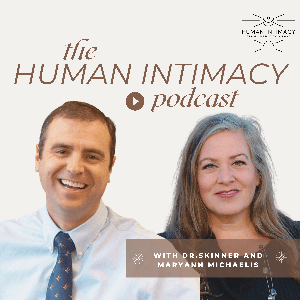
The Human Intimacy Podcast

The Human Intimacy Podcast

Download on the App Store

The Human Intimacy Podcast episodes

  • Emotional Safety After Betrayal: Understanding Emotions, Trauma, and Relationship Healing (Episode 119)
    Emotional Safety After Betrayal: Understanding Emotions, Trauma, and Relationship Healing
    Podcast Summary

    In this episode of the Human Intimacy Podcast, Dr. Kevin Skinner and MaryAnn Michaelis explore the connection between emotional safety, betrayal trauma, emotional regulation, and relationship healing after infidelity or sexual betrayal.

    Many individuals struggling with betrayal trauma, anxiety, emotional disconnection, or relationship conflict often suppress their true emotions by saying “I’m fine” while internally feeling overwhelmed, hurt, angry, anxious, or emotionally exhausted. In this conversation, Dr. Skinner and MaryAnn discuss why emotional honesty and emotional congruency are essential for rebuilding trust, emotional intimacy, and healthy communication in relationships.

    The episode examines how shame, emotional shutdown, avoidance, and trauma responses interfere with connection and healing. Listeners will also learn about emotional contagion, nervous system regulation, co-regulation, and the importance of creating emotionally safe relationships where both partners can openly express their feelings without fear of judgment, defensiveness, or rejection.

    Topics discussed include:

    • Betrayal trauma recovery

    • Healing after infidelity

    • Emotional regulation in relationships

    • Relationship communication skills

    • Emotional safety and trust rebuilding

    • PTSD symptoms after betrayal

    • Emotional disconnection in marriage

    • Co-regulation and nervous system healing

    • Shame and emotional shutdown

    • Understanding contradictory emotions after betrayal

    • Emotional intelligence and self-awareness

    • How unresolved emotions impact intimacy and connection

      Whether you are recovering from betrayal trauma, struggling with emotional intimacy, or trying to strengthen communication in your relationship, this episode provides practical insights into understanding emotions, rebuilding trust, and creating deeper human connection.

      Resources Mentioned in This Episode
      • Emotional Intelligence by Daniel Goleman

        A foundational book on emotional awareness, emotional regulation, empathy, and developing healthier relationship skills.

      • The Choice by Edith Eger

        Discusses emotional healing, resilience, trauma recovery, and understanding core emotional experiences.

      • The work of Brené Brown

        Especially her research on vulnerability, shame, emotional connection, and authentic relationships.

      • Stephen Porges and Polyvagal Theory

        Understanding nervous system regulation, emotional safety, co-regulation, and trauma responses in relationships.

      • Thich Nhat Hanh

        Referenced for his teachings on deep listening, mindfulness, emotional presence, and compassionate communication.

      • Al Siebert

        Concepts on resiliency, emotional flexibility, and the “both/and” approach to emotional experiences.

      • The Intimacy Repair Method (IRM) Course

        A structured framework designed to help couples heal from betrayal trauma, rebuild emotional safety, improve communication, and strengthen intimacy.

      • Human Intimacy Resources and Courses

        Human Intimacy

        Additional Resources for Betrayal Trauma & Relationship Healing
        • Attached by Amir Levine and Rachel Heller

          Understanding attachment styles, emotional needs, and relationship dynamics.

        • The Body Keeps the Score by Bessel van der Kolk

          A leading resource on trauma, nervous system responses, emotional regulation, and healing.

        • Hold Me Tight by Sue Johnson

          A guide to emotional bonding, attachment, and strengthening relationships after emotional injuries.

        • Addo Therapy & Recovery Resources

          Therapy, betrayal trauma recovery support, couples counseling, anxiety treatment, mindfulness resources, and emotional healing support.

          37 min
        • Sex After Betrayal: Navigating Sexuality, Safety, and Connection (Episode #118)
          Sex After Betrayal: Navigating Sexuality, Safety, and Connection

          In this episode of the Human Intimacy Podcast, Dr. Kevin Skinner and Marianne Michaelis explore one of the most confusing and emotionally charged topics couples face after betrayal: sexuality after discovery. Why do some couples stop having sex entirely while others become more sexual after betrayal? What does it mean if a betrayed partner still desires intimacy? And how do couples navigate sexuality in ways that are emotionally safe and healthy?

          Together, they discuss the impact betrayal has on sexual desire, emotional bonding, pornography, hypersexuality, shame, and the confusion many individuals feel surrounding intimacy after discovery. The conversation introduces the concept of “sexual self-mastery” and emphasizes the importance of awareness, communication, emotional safety, and intentionality in rebuilding intimacy. This episode offers compassionate guidance for individuals and couples trying to better understand their sexuality, emotions, and relationship dynamics during recovery and healing.

          Resources Mentioned
          • The Betrayal Bond by Patrick Carnes

          • Sensate-focused therapy concepts

          • Sexual self-mastery

          • Emotional regulation and communication skills

          • Pornography and relational intimacy research

          • HumanIntimacy.com

            34 min
          • Why Can’t I Stop Thinking About the Affair? Understanding Rumination, Triggers, and Healing After Betrayal (Episode #117)
            Why Can’t I Stop Thinking About the Affair? Understanding Rumination, Triggers, and Healing After Betrayal

            In this important episode of the Human Intimacy Podcast, Dr. Kevin Skinner and MaryAnn Michaelis explore one of the most common and painful questions after betrayal: “Why can’t I stop thinking about it?”

            Together, they unpack the neuroscience and emotional reality behind rumination, intrusive thoughts, PTSD responses, triggers, and nervous system dysregulation after sexual betrayal and affairs. The conversation helps both betrayed and betraying partners understand why the mind and body struggle to “move on,” even when logic says the relationship may be improving.

            Dr. Skinner and MaryAnn discuss how betrayal disrupts safety, attachment, and reality itself, often leaving the betrayed partner feeling emotionally flooded, hypervigilant, and stuck in repetitive thoughts. They also explain how healing requires more than simply stopping behaviors—it involves nervous system regulation, emotional attunement, compassion, consistency, and deeper relational repair.

            Listeners will also learn practical tools for responding to triggers, including grounding exercises, journaling, movement-based trauma release, self-attunement, parts work, emotional regulation, and therapeutic approaches such as EMDR and ART.

            This episode offers hope, validation, and practical guidance for anyone struggling with intrusive thoughts after betrayal trauma.

            Key Topics Covered
            • Why betrayed partners experience rumination and intrusive thoughts

            • PTSD and betrayal trauma responses

            • The difference between logical understanding and nervous system safety

            • Why triggers continue even after behavior stops

            • Emotional flooding and nervous system dysregulation

            • How betraying partners can respond in healing ways

            • Self-compassion and trauma recovery

            • Tools for emotional regulation and trauma release

            • Parts work and self-attunement

            • EMDR, ART, and trauma-informed healing approaches

            • Recovery capital and building support systems

              Resources Mentioned
              • The Body Keeps the Score by Bessel van der Kolk

              • Brené Brown – research on exhaustion and uncertainty

              • Jill Bolte Taylor – emotional processing concepts

              • Calming the Emotional Storm by Sheri Van Dijk

              • EMDR Therapy (Eye Movement Desensitization and Reprocessing)

              • ART (Accelerated Resolution Therapy)

              • Polyvagal Theory by Stephen Porges

              • Internal Parts Work / Self-Attunement Approaches

              • Recovery Capital framework

              • Human Intimacy Podcast episode on Empathy vs. Compassion

                Upcoming Course
                Intimacy Repair Method (IRM) — 12 Week Course

                Join Dr. Kevin Skinner and MaryAnn Michaelis for the upcoming Intimacy Repair Method (IRM) course beginning May 7th.

                The course is designed to help couples heal from betrayal trauma through a structured process focused on:

                • Safety

                • Emotional regulation

                • Accountability

                • How to measure and create relational repair

                • Compassion

                • Rebuilding intimacy

                  Learn More & Register:

                  The Intimacy Repair Method (12-Week Online Course)


                  35 min
                • Crucial Moments: How Couples Can Navigate Triggers Without Destroying Connection (Episode #116)
                  Crucial Moments: How Couples Can Navigate Triggers Without Destroying Connection
                  Episode Overview

                  What happens when a trigger hits in your relationship—and everything escalates?

                  In this episode of the Human Intimacy Podcast, Dr. Kevin Skinner and MaryAnn Michaelis break down what they call “crucial moments”—those intense emotional experiences where couples either move toward healing or fall back into painful patterns.

                  If you’ve ever found yourself stuck in the same argument, feeling unheard, or overwhelmed by emotional reactions, this episode will help you understand why those patterns happen—and how to change them.

                  Why Triggers Feel So Overwhelming

                  When a trigger hits, your brain shifts into survival mode. The amygdala activates, your nervous system becomes dysregulated, and your ability to communicate effectively drops.

                  This is why:

                  • Conversations escalate quickly

                  • You repeat the same arguments

                  • You feel misunderstood or dismissed

                  • Your partner becomes defensive or shuts down

                    Key Insight:

                    You cannot create connection when your body is in a fight-or-flight state.

                    The Missing Step in Relationship Repair

                    Most couples try to fix the relationship while they’re emotionally flooded.

                    Dr. Skinner emphasizes a critical principle:

                    Stabilize yourself first. Then engage your partner.

                    Without emotional regulation, even the best communication tools won’t work.

                    Common Mistakes Couples Make During Conflict

                    Many couples unknowingly reinforce disconnection during triggers. Watch for these patterns:

                    1. Marathon Conversations

                    Trying to resolve everything in one conversation while both partners are overwhelmed

                    2. Defensiveness Disguised as Empathy

                    Statements like:

                    • “I didn’t mean to hurt you”

                    • “I’m sorry you feel that way”

                      These often feel minimizing instead of supportive

                      3. Relying Only on Your Partner for Regulation

                      Expecting your partner to calm you down when they may also be triggered

                      4. Repeating the Same Cycle

                      Having the same argument over and over without new tools or awareness

                      How to Respond in Triggered Moments (What Actually Works)
                      1. Pause and Regulate

                      Before responding, ask yourself:

                      • Am I emotionally stable right now?

                      • Is my body calm enough to have this conversation?

                        If not, step away and regulate first.

                        2. Use Outside Support

                        Sometimes your partner is not the right person in that moment to help you regulate.

                        Consider:

                        • A trusted friend

                        • A support group

                        • A mentor or sponsor

                          This can help you return to the conversation with clarity.

                          3. Shift from Reactivity to Curiosity

                          Instead of reacting, try:

                          • “Help me understand what you’re experiencing”

                          • “Tell me more about what you’re feeling”

                            This lowers defensiveness and builds connection.

                            4. Take Responsibility for Your Emotional Response

                            Your emotions are valid—but how you express them matters.

                            Healthy communication includes:

                            • Emotional honesty

                            • Self-awareness

                            • Respectful expression

                              Understanding the Power Struggle in Relationships

                              After betrayal or disconnection, couples often fall into power imbalances:

                              • One partner holds information or control

                              • The other feels uncertain, hurt, or reactive

                                True healing requires moving away from:

                                • “One-up / one-down” dynamics

                                  And toward:

                                  • Mutual honesty, vulnerability, and accountability

                                    Why Some Couples Stay Stuck for Years

                                    If you feel like you’re not making progress, it’s often due to:

                                    • Incomplete or staggered disclosure

                                    • Lack of emotional regulation skills

                                    • Repeating patterns without addressing root issues

                                    • Avoiding deeper vulnerability

                                      Key Insight:

                                      Without new skills, the same patterns will continue—no matter how much you talk.

                                      A Better Way Forward

                                      Healing doesn’t come from saying more—it comes from learning how to show up differently.

                                      That includes:

                                      • Regulating your nervous system

                                      • Communicating with clarity and compassion

                                      • Practicing new patterns consistently

                                      • Building emotional safety over time

                                        Key Takeaways
                                        • You cannot be relational when you are emotionally dysregulated

                                        • Personal stabilization is the foundation of relationship repair

                                        • Triggers require skillful responses, not reactive ones

                                        • Both partners play a role in creating change

                                        • Progress comes from practice, not just insight

                                          Resources Mentioned in This Episode
                                          • Intimacy Repair Method (IRM) Course

                                          • Emotional Regulation & Nervous System Awareness

                                          • Structured Disclosure Process

                                          • Role Play Practice for Communication Skills

                                            Call to Action

                                            If your relationship feels stuck in repetitive conflict, you don’t have to keep guessing.

                                            The Intimacy Repair Method Course provides a step-by-step process to help couples:

                                            • Rebuild trust

                                            • Improve communication

                                            • Create lasting emotional connection

                                              📩 Have questions or topics you’d like us to cover?


                                              34 min
                                            • How Do You Know You’re Making Progress After Betrayal? Understanding Safety, Awareness, and Real Change (Episode #115)

                                              How Do You Know You’re Making Progress After Betrayal? Understanding Safety, Awareness, and Real Change

                                              In this episode of The Human Intimacy Podcast, Dr. Kevin Skinner and MaryAnn explore one of the most common—and emotionally loaded—questions couples ask after betrayal: *“How do we know if we’re actually making progress?”*

                                              Healing doesn’t follow a straight line. Many couples feel stuck in a painful cycle of “two steps forward, three steps back,” leaving them wondering if anything is truly changing. Dr. Skinner and MaryAnn break down what real progress looks like—not through checklists or surface behaviors, but through a deeper, more meaningful shift: **perceived relational safety**.

                                              They discuss how the body plays a central role in detecting safety through what is often called a “gut feeling,” drawing on concepts like neuroception from Stephen Porges. Listeners will learn why healing requires more than logical reassurance—and why the nervous system must begin to *feel* safe before true connection can return.

                                              Through a powerful role-play, they demonstrate the difference between reactive, defensive conversations and regulated, productive ones. This real-life example highlights how self-awareness, emotional regulation, and vulnerability can transform conflict into connection.

                                              They also address:

                                              1. Why some betrayed partners struggle to trust even when their partner is “doing everything right”
                                              2. The impact of shock versus gradual awareness in discovery
                                              3. How deception can distort one’s internal sense of safety
                                              4. Why stabilization must come before meaningful repair
                                              5. How consistency—not perfection—builds trust over time
                                              6. Ultimately, progress is not measured by the absence of conflict, but by how couples navigate it. When both partners develop awareness of their internal experiences and learn to communicate those experiences safely, healing becomes not only possible—but measurable.

                                                If you’ve ever questioned whether your relationship is moving forward, this episode offers clarity, validation, and a roadmap for what real progress actually looks like.

                                                Key Resources & Mentions

                                                The Intimacy Repair Method (IRM)

                                                  A structured approach to healing after betrayal, focusing on safety, stabilization, and rebuilding connection.

                                                Perceived Relational Safety Scale (PRSS)

                                                  A practical assessment tool to help individuals and couples measure how safe they feel in the relationship and track progress over time.

                                                Polyvagal Theory & Neuroception – Polyvagal Theory

                                                  Developed by Stephen Porges, this framework explains how the nervous system detects safety or threat and influences connection and emotional regulation.

                                                HumanIntimacy.com


                                                  Access courses, assessments, and resources to support healing and relationship repair.

                                                12-Week Intimacy Repair Course


                                                A guided program with role-plays, assessments, and step-by-step instruction to help couples rebuild trust and connection.

                                                ---

                                                Key Takeaway

                                                Progress isn’t about doing everything perfectly—it’s about creating consistent, safe, and honest interactions where both partners can begin to feel, not just think, that change is happening.

                                                36 min
                                              7. Introducing the Intimacy Repair Method: A New Path to Healing, Connection, and Lasting Change (Episode #114)
                                                Introducing the Intimacy Repair Method: A New Path to Healing, Connection, and Lasting Change

                                                What if the reason your relationship feels stuck isn’t a lack of effort—but a lack of a clear model for connection?

                                                In this episode of the Human Intimacy Podcast, Dr. Kevin Skinner (LMFT-S) and MaryAnne Michaelis, LCSW introduce the Intimacy Repair Method (IRM)—a comprehensive, research-informed framework designed to help individuals and couples rebuild trust, improve communication, and create deeper emotional connection.

                                                Drawing from decades of clinical experience and integrating leading models like Gottman Method, Emotionally Focused Therapy (EFT), and Polyvagal Theory, Dr. Skinner explains why most people were never taught how to build healthy relationships—and how that gap continues to impact us today.

                                                You’ll learn:

                                                • Why most people rate their relationship models growing up below a 5 out of 10

                                                • The foundational role of safety in all meaningful connection

                                                • How generational patterns shape communication, conflict, and intimacy

                                                • The phases of the Intimacy Repair Method, including assessment, stabilization, and relational repair

                                                • Why understanding your nervous system responses is key to transforming conflict

                                                • How personalized assessments can guide real, measurable change in your relationship

                                                  Whether you’ve experienced betrayal, feel disconnected, or simply want a stronger relationship, this episode offers a clear roadmap forward.

                                                  Resources Mentioned
                                                  Core Resources
                                                  • Human Intimacy Website (Course + Registration):

                                                    https://www.humanintimacy.com

                                                  • Upcoming Course:

                                                    Intimacy Repair Method – 12-Week Live Webinar Experience

                                                    • Start Date: May 7, 2026

                                                    • Includes:

                                                      • Personalized relationship assessments

                                                      • Weekly live Q&A sessions

                                                      • Role-play practice scenarios

                                                      • Ongoing access to recordings and materials

                                                        Key Concepts & Models Referenced
                                                        • Intimacy Repair Method (IRM) – A structured pathway for relational healing and growth

                                                        • Perceived Relational Safety – Feeling emotionally safe, open, and secure in your relationship

                                                        • Polyvagal Theory – Understanding how your nervous system drives connection, conflict, and safety

                                                        • Gottman Method – Research-based insights on communication and conflict patterns

                                                        • Emotionally Focused Therapy (EFT) – Attachment-based approach to strengthening emotional bonds

                                                        • Zeigarnik Effect – How unresolved issues keep relationships stuck

                                                        • Differentiation – Developing a strong sense of self while staying connected in relationships

                                                          Assessments Mentioned
                                                          • Self-Assessment (Individual Awareness)

                                                          • “Test Your Relationship” Assessment

                                                            • Provides up to 90 pages of personalized feedback

                                                            • Identifies strengths, breakdowns, and actionable next steps

                                                              Key Takeaway

                                                              Most people aren’t failing in relationships because they don’t care—they’re struggling because they were never shown how to succeed. The Intimacy Repair Method offers a clear, structured way to learn what works—and finally create the connection you’ve been looking for.


                                                              35 min
                                                            • Hope After Betrayal: Is Healing Your Relationship Still Possible? (Episode #113)
                                                              Hope After Betrayal: Is Healing Your Relationship Still Possible?

                                                              After betrayal, many couples quietly wonder: Is there any real hope for us?

                                                              In this powerful episode, Dr. Kevin Skinner and MaryAnn Michaelis explore what hope actually looks like in the aftermath of sexual betrayal—and why so many people struggle to find it.

                                                              Drawing from decades of clinical experience, they discuss the reality behind discouraging statistics, the isolation many betrayed partners feel, and why healing often requires more than just good intentions. They introduce a critical shift: hope is not built through words alone, but through new patterns, emotional regulation, and learning how to stay present in the hardest moments.

                                                              You’ll also hear:

                                                              • Why many couples stay stuck in repeating emotional “loops”

                                                              • How shame and defensiveness block true repair

                                                              • The danger of trying to heal in isolation—or relying on the wrong sources

                                                              • What actually creates change: principles, skills, and consistent application

                                                              • Why healing is possible—even if the relationship doesn’t survive

                                                                Whether you’re fighting for your relationship or trying to rebuild your life after it, this episode offers a grounded, honest message:

                                                                👉 Hope is real—but it’s built through learning, practice, and connection.

                                                                32 min
                                                              • The Courage to Heal: Facing Pain, Shame, and Change Together (Episode #112)
                                                                The Courage to Heal: Facing Pain, Shame, and Change Together
                                                                Episode Summary

                                                                In this episode of the Human Intimacy Podcast, Dr. Kevin Skinner and Marianne Michaelis explore the many forms of courage required in the healing process—both individually and as a couple.

                                                                Courage is not just about staying in a relationship after betrayal. It’s about facing pain, telling the truth, asking for help, and being willing to see yourself clearly. It’s the courage to slow down when emotions are overwhelming, to remain present in difficult conversations, and to confront shame rather than avoid it.

                                                                Dr. Skinner and Marianne highlight how healing is not just emotional—it is deeply biological. When individuals feel shame or fear, their nervous system becomes activated, making it difficult to stay grounded and connected. True courage, then, is learning how to regulate those internal responses so that meaningful repair can happen.

                                                                Through powerful metaphors—including riding through dark tunnels, wearing the wrong “lens,” and learning to ride a backwards bike—they illustrate how healing requires patience, intentionality, and repeated effort. Change often feels unnatural at first, but with practice, new patterns can emerge.

                                                                Ultimately, this episode invites listeners to reflect on one essential question:

                                                                Where do I need courage right now?

                                                                Healing is not about perfection—it’s about continuing forward, even when the path is unclear.


                                                                Key Takeaways
                                                                • Healing from betrayal requires multiple forms of courage—not just endurance, but self-awareness and vulnerability

                                                                • Shame is both emotional and physiological; regulation must come before meaningful connection

                                                                • Slowing down is sometimes more courageous than pushing forward

                                                                • Change feels unnatural at first—like using your non-dominant hand or riding a backwards bike

                                                                • Progress happens through repetition, curiosity, and compassionate self-reflection

                                                                • Each person’s pace is different—comparison can disrupt healing

                                                                  Resources & References
                                                                  Human Intimacy Resources
                                                                  • Human Intimacy Website (Courses & Conference Access):

                                                                    https://www.humanintimacy.com

                                                                  • 2026 Human Intimacy Conference (Recordings Available):

                                                                    Available under “Courses” after creating a free account

                                                                  • Contact for Questions:

                                                                    Concepts & Influences Mentioned
                                                                    • Intimacy Repair Method (IRM) – Dr. Kevin Skinner

                                                                    • Polyvagal Theory – Dr. Stephen Porges

                                                                    • Shame & Vulnerability Research – Brené Brown

                                                                    • Interpersonal Neurobiology – Dr. Dan Siegel

                                                                    • EMDR & Trauma Processing Models

                                                                      Suggested Viewing
                                                                      • The Backwards Brain Bicycle (Learning & Change):

                                                                        A powerful illustration of how difficult it is to rewire learned patterns

                                                                        Reflection Questions for Listeners
                                                                        • Where in my life do I need courage right now?

                                                                        • What am I avoiding because it feels uncomfortable or overwhelming?

                                                                        • When I feel triggered or flooded, how do I typically respond?

                                                                        • What would it look like to slow down instead of react?

                                                                        • Where have I already demonstrated courage in my healing journey?

                                                                          28 min
                                                                        • Understanding Your Pain: How Childhood Experiences Shape Your Life and Relationships (Episode #111)
                                                                          Understanding Your Pain:
                                                                          How Childhood Experiences Shape Your Life and Relationships
                                                                          Episode Summary

                                                                          In this deeply honest and meaningful conversation, Dr. Kevin Skinner and MaryAnn Michaels explore one of the most important—and often avoided—topics in healing: personal pain.

                                                                          Whether that pain feels overwhelming and present, or buried and difficult to access, it plays a powerful role in shaping how we think, feel, and connect with others. In this episode, we examine how early life experiences—especially Adverse Childhood Experiences (ACEs)—can influence emotional health, physical well-being, and relationship patterns later in life.

                                                                          Dr. Skinner shares both clinical insights and personal experiences to illustrate how unresolved pain can remain stored in the body for years, quietly influencing behavior and perception. Together, we discuss why some experiences are difficult to recall, how trauma impacts the brain and nervous system, and why having a safe, supportive environment is essential for healing.

                                                                          This episode also offers hope. Through the concept of Benevolent Childhood Experiences (BCEs), we explore how even one positive, supportive relationship can shift outcomes and foster resilience. Healing is possible—and it often begins with awareness, compassion, and a willingness to gently explore your story.

                                                                          If you’ve ever felt stuck, overwhelmed, or unsure why certain patterns keep repeating, this episode is an invitation to better understand yourself—and to take the next step toward healing.

                                                                          🔗 Resources Mentioned
                                                                          • Adverse Childhood Experiences (ACEs) Assessment

                                                                            A 10-item framework for understanding early life adversity and its long-term impact.

                                                                          • Benevolent Childhood Experiences (BCEs)

                                                                            A complementary framework highlighting the protective power of positive early relationships.

                                                                          • The Deepest Well by Nadine Burke Harris

                                                                            Explores how childhood adversity impacts lifelong health and how healing is possible.

                                                                          • The Body Keeps the Score by Bessel van der Kolk

                                                                            A foundational resource on how trauma is stored in the body and approaches to healing.

                                                                          • Trauma-Informed Modalities Mentioned

                                                                            • EMDR (Eye Movement Desensitization and Reprocessing)

                                                                            • Somatic-based approaches to trauma recovery

                                                                              Continue the Conversation

                                                                              If this topic resonates with you, we invite you to explore more through the Human Intimacy community:

                                                                              • Watch sessions from our recent conference:

                                                                                Human Intimacy Conference (Past Event Highlights & Resources)

                                                                              • Learn more about courses, assessments, and tools for healing and connection:

                                                                                HumanIntimacy.com

                                                                                💬 Closing Invitation

                                                                                Your story matters.

                                                                                And while it may feel difficult to look at the past, understanding your experiences can become one of the most powerful steps toward freedom, healing, and deeper connection.

                                                                                If you feel overwhelmed, we encourage you to seek support from a qualified professional. You don’t have to do this work alone.

                                                                                32 min
                                                                              • Grieving the Unseen Loss: Understanding Grief After Betrayal (Episode #110)
                                                                                Grieving the Unseen Loss:
                                                                                Understanding Grief After Betrayal
                                                                                Summary

                                                                                In this episode of the Human Intimacy Podcast, Dr. Kevin Skinner and MaryAnn Michaelis reflect on the powerful insights emerging from the 2026 Human Intimacy Conference, with a particular focus on grief following sexual betrayal. While much of the field has emphasized trauma and post-traumatic stress, this conversation highlights a critical gap: the profound and often unaddressed grief experienced by both betrayed and betraying partners.

                                                                                Drawing from early data on the Grief After Betrayal Impact Scale, MaryAnn shares a striking finding—the most significant loss reported is not just the relationship, but the loss of self, including identity, trust in oneself, and a coherent sense of reality. The discussion explores how betrayal creates a “collapsed self,” alters one’s perception of a partner, and leads to ongoing grief that can persist for decades.

                                                                                The episode introduces emerging frameworks for understanding betrayal-related grief, including stages of emotional shock, internal conflict, withdrawal, rage, and eventual reclamation. Dr. Skinner and Marianne emphasize that grief is not a single event but a long-term process, often unfolding over years as individuals grieve not only what happened, but what could have been.

                                                                                A key theme is the importance of giving grief a voice in safe relationships. Healing is accelerated when individuals are witnessed, validated, and supported—whether by a partner, therapist, or trusted connection. Without this, grief often becomes prolonged and isolating.

                                                                                The conversation also raises important clinical and societal implications, including the need for better training, expanded research, and more effective support systems—particularly in faith communities, where many individuals report feeling misunderstood or unsupported.

                                                                                Ultimately, this episode reframes betrayal recovery by integrating grief as a central component of healing, calling for a more compassionate, relational, and research-informed approach to addressing the deep emotional losses that accompany betrayal.

                                                                                Click here to take the Grief After Betrayal Impact Scale

                                                                                References

                                                                                (Note: These are foundational and aligned with concepts discussed in the episode—ideal for podcast notes and future academic integration.)

                                                                                1. Jennifer J. Freyd (1996). Betrayal Trauma: The Logic of Forgetting Childhood Abuse. Harvard University Press.

                                                                                2. Judith Herman (1992). Trauma and Recovery. Basic Books.

                                                                                3. Susan Anderson (2010). The Journey from Abandonment to Healing. Berkley Books.

                                                                                4. Elisabeth Kübler-Ross & Kessler, D. (2005). On Grief and Grieving. Scribner.

                                                                                5. William Worden (2009). Grief Counseling and Grief Therapy. Springer Publishing.

                                                                                6. Bessel van der Kolk (2014). The Body Keeps the Score. Viking.

                                                                                7. Stephen W. Porges (2011). The Polyvagal Theory. Norton.

                                                                                8. John Bowlby (1980). Attachment and Loss: Vol. 3 – Loss. Basic Books.

                                                                                9. Pauline Boss (1999). Ambiguous Loss. Harvard University Press.

                                                                                10. Kenneth J. Doka (1989). Disenfranchised Grief. Lexington Books.


                                                                                  31 min

                                                                                About The Human Intimacy Podcast

                                                                                From the publisher's feed

                                                                                Intimacy is a fundamental human experience that goes far beyond romantic relationships. Join us as we dive into the deep and multifaceted layers of human connection, exploring everything from…

                                                                                More shows like The Human Intimacy Podcast

                                                                                For The Love With Jen Hatmaker Podcast by Jen Hatmaker

                                                                                For The Love With Jen Hatmaker Podcast

                                                                                6,435 Listeners

                                                                                From Crisis to Connection - with Geoff & Jody Steurer by Geoff & Jody Steurer

                                                                                From Crisis to Connection - with Geoff & Jody Steurer

                                                                                204 Listeners

                                                                                Helping Couples Heal Podcast by Marnie Breecker

                                                                                Helping Couples Heal Podcast

                                                                                450 Listeners

                                                                                followHIM by Hank Smith & John Bytheway

                                                                                followHIM

                                                                                10,743 Listeners

                                                                                Choose To Be with Choose Recovery Services; Betrayal Trauma Healing by Choose Recovery Services - Alana Gordon and Amie Woolsey

                                                                                Choose To Be with Choose Recovery Services; Betrayal Trauma Healing

                                                                                97 Listeners

                                                                                A Slight Change of Plans by Pushkin Industries

                                                                                A Slight Change of Plans

                                                                                2,049 Listeners

                                                                                Conversations on Sex, Addiction, and Relationships by Timzi9

                                                                                Conversations on Sex, Addiction, and Relationships

                                                                                14 Listeners

                                                                                The Mel Robbins Podcast by Mel Robbins

                                                                                The Mel Robbins Podcast

                                                                                19,270 Listeners

                                                                                Lights On with Carl Lentz by B-Side

                                                                                Lights On with Carl Lentz

                                                                                768 Listeners

                                                                                The Lizzy Jensen Show by Lizzy Jensen

                                                                                The Lizzy Jensen Show

                                                                                188 Listeners

                                                                                Beyond the Facade with Choose Recovery Services and Blueprint Institute by Luke Gordon with Choose Recovery Services and Blueprint Institute

                                                                                Beyond the Facade with Choose Recovery Services and Blueprint Institute

                                                                                11 Listeners

                                                                                Ask the Unfaithful by James & Sam

                                                                                Ask the Unfaithful

                                                                                21 Listeners

                                                                                Sam's Healing Podcast by Samuel

                                                                                Sam's Healing Podcast

                                                                                16 Listeners

                                                                                Office Hours with Arthur Brooks by Arthur Brooks

                                                                                Office Hours with Arthur Brooks

                                                                                388 Listeners