
Sign up to save your podcasts
Or

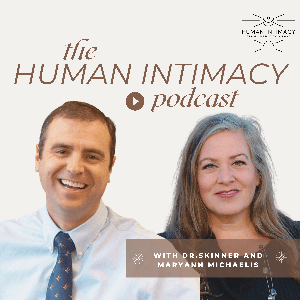


In Episode #99 of the Human Intimacy Podcast, Dr. Kevin Skinner and MaryAnn Michaelis celebrate their 99th episode by sharing nine powerful practices couples can use to strengthen connection, deepen trust, and build meaningful intimacy. Each principle is grounded in years of clinical experience, neuroscience, and relationship research—while remaining practical and accessible for real-life relationships.
Together they explore why emotional safety is the foundation of all connection, the importance of ownership over blame, and how consistent attunement builds emotional closeness. They emphasize spending intentional time together, rebuilding trust through small daily actions, learning to emotionally regulate before communicating, and facing—not avoiding—conflict. They also highlight how positive relational interactions nurture bonding and why dreaming and planning for the future together creates shared hope and purpose.
Listeners are encouraged to start small, picking one area to work on, knowing that meaningful relationships are built one intentional step at a time.
These concepts draw from established research and recognized thought leaders in relationships, trauma, emotional regulation, and neurobiology:
Polyvagal Theory & Safety
Emotional Attunement & Attachment
Trust and Relationship Repair
Ownership vs. Blame / Emotional Responsibility
Conflict Resolution & The Zeigarnik Effect
Hope & Future Orientation
Trauma, Safety & Human Connection
If you’re ready to go deeper in strengthening your relationship, we invite you to join us at the Human Intimacy 2nd Annual Conference.
https://humanintimacy.zohobackstage.com/HumanIntimacy2ndAnnualConference#/
Online Supplemental Course: (It’s Free)
The Human Intimacy Companion Course
In this heartfelt Human Intimacy Podcast episode, Dr. Kevin Skinner and MaryAnn Michaelis explore the powerful impact of truly being present in the lives of the people we love. During a season filled with busyness, distraction, and endless to-do lists, they invite listeners to slow down and consider the deeper message presence communicates: You matter. I see you. I care.
Through meaningful personal stories—celebrations, graduations, family milestones, healing conversations, and everyday moments—Kevin and MaryAnn reflect on how presence fosters connection, emotional safety, belonging, and joy. They also discuss how curiosity, vulnerability, emotional attunement, and reducing distraction can transform relationships, reduce loneliness, and nurture human intimacy.
Listeners are encouraged to offer the gift of presence intentionally this season: celebrate others’ wins, sit with them in pain, express appreciation, forgive where needed, and take time to let people feel seen and “felt.” Because when we show up, we don’t just fill space—we change hearts, regulate nervous systems, strengthen bonds, and remind each other we are not alone.
Human Intimacy Conference — March 13–14, 2026
Human Intimacy Courses & Online Programs
Referenced Concepts / Recommended Reading
Dan Siegel — Feeling Felt & Interpersonal Neurobiology
Irving Yalom — Presence and relational connection
Research on loneliness as a public health concern and the power of human connection
In this episode of the Human Intimacy Podcast, Dr. Kevin Skinner and licensed clinical social worker Marianne Michaelis explore the powerful—and often invisible—stories we tell ourselves about who we are and how others see us. Even when people share the same experience, their interpretations can be radically different, shaped by past wounds, shame, fear, and unmet needs.
Through clinical examples, personal stories, and everyday moments of misunderstanding, they unpack how the brain naturally fills in gaps to create meaning—and how those meanings can quietly dictate our emotions, reactions, and relationships. The conversation highlights common shame-based narratives such as “I’m too much,” “I’m not enough,”or “I don’t matter,” and how these stories become internalized as truth over time.
Dr. Skinner and Marianne emphasize the importance of awareness, fact-checking, emotional ownership, and curiosity—both toward ourselves and others. Healing begins when we slow down, speak our stories in safe places, challenge old assumptions, and allow compassion to replace judgment. The episode closes with an invitation to approach others—and ourselves—with deeper curiosity, asking not “What’s wrong?” but “What’s the story?”
Skinner, K. – Treating Trauma from Sexual Betrayal
Tutu, D. & Tutu, M. – The Book of Forgiveness
Brown, B. – I Thought It Was Just Me (But It Isn’t)
Siegel, D. – Mindsight
Human Intimacy Podcast – Episode on Emotional Ownership
Journaling as a tool for emotional processing and self-reflection
Concepts referenced:
Shame narratives
Emotional ownership
Fact-checking internal stories
Fight-or-flight responses and meaning-making
Compassion vs. judgment
In this timely episode, Dr. Kevin Skinner and MaryAnn Michaelis explore one of the most essential—and most avoided—skills in relationships: emotional ownership. As the holiday season intensifies stress, loneliness, old family wounds, and relational tension, the ability to understand and take responsibility for our internal world becomes even more vital.
Together, they break down what emotional ownership looks like and what it does not look like. Using real-life examples, including a vulnerable story from Dr. Skinner, the conversation highlights how quickly couples slip into blame, shame spirals, and reactive “hot” responses. MaryAnn emphasizes the role of tone, kindness, and Gottman’s concept of positive sentiment override, while Dr. Skinner demonstrates how owning one’s emotional experience opens the door to connection rather than conflict.
Listeners will learn:
Why people often don’t know what they feel—and why that’s okay
How holiday dynamics intensify emotional triggers
The difference between owning an emotion and shifting responsibility
How tone and delivery change everything in difficult conversations
How shame, avoidance, and catastrophizing block intimacy
Why slowing down your internal experience leads to deeper connection
How emotional ownership becomes the foundation of relational safety, trust, and maturity
The episode ends with practical guidance on taking responsibility for your own emotions, choosing kindness, and knowing when deeper therapeutic work is needed. Dr. Skinner and MaryAnn invite listeners to reflect honestly on their emotional patterns and make conscious choices that lead to healthier, more intimate relationships.
Desmond Tutu & Mpho Tutu — The Book of Forgiving
John Gottman — Research on Bids for Connection & Positive Sentiment Override
Dr. Kevin Skinner — Treating Trauma from Sexual Betrayal
Emotional Ownership vs. Emotional Shifting
Tone & Delivery in Conflict
Fight–Flight–Freeze–Fawn Responses
Shame Spirals
Betrayal Trauma Responses & Trigger Cycles
Individual Therapy
Couples Therapy
2nd Annual Human Intimacy Conference 2026
https://www.humanintimacy.com/podcast
https://www.humanintimacy.com
In this powerful episode of the Human Intimacy Podcast, Dr. Kevin Skinner and MaryAnn Michaelis, LCSW, explore the essential connection between trauma, physiology, and healing through a somatic lens. Drawing on the work of Peter Levine, Bessel van der Kolk, Deb Dana, and polyvagal theory, they highlight how trauma is not only a psychological experience but a physical one stored in the muscles, nervous system, and internal energy of the body.
Dr. Skinner and MaryAnn discuss why individuals—especially betrayed partners—often disconnect from their bodies after chronic stress, betrayal trauma, or overwhelming life experiences. They examine how fight, flight, and freeze responses affect the nervous system, how chronic cortisol disrupts mood and metabolism, and why many trauma survivors struggle to sense or interpret their own physiological cues.
Through stories, research, and lived experiences, the hosts illustrate how the body keeps the score and how healing requires learning to listen to internal sensations rather than pushing them aside. They offer practical tools such as somatic tracking, Peter Levine’s completion techniques, trauma-informed yoga, breathing exercises that access the vagus nerve, and movement-based approaches for releasing stored energy.
The episode includes a guided somatic check-in where listeners rate their tension level and are invited into a simple three-minute breathing practice designed to lower physiological arousal. Dr. Skinner and MaryAnn also normalize the experience of increased anxiety during quiet moments and suggest alternative vagus nerve–based exercises and sound-based practices (like the “vu” exhale) to support regulation.
They close by emphasizing self-compassion, intentionality, and noticing “glimmers” of safety as signs that the body is returning to calm. Listeners are also invited to deepen their healing journey by attending the 2nd Annual Human Intimacy Conference, where leading experts will share tools for recovering from sexual betrayal, infidelity, and building deeper, safer relationships.
Peter A. Levine, PhD
Bessel van der Kolk, MD
Stephen W. Porges, PhD
Deb Dana, LCSW
Trauma-Informed Yoga
Somatic Experiencing (SE)
Vagus Nerve Stimulation / “Basic Exercise” (Polyvagal-based)
Breathwork for parasympathetic activation
Sound-based regulation (e.g., “vu” exhale with hand on abdomen)
Movement-based release (running in place, shaking, kicking safely, dancing)
Grounding and body-scan exercises
HumanIntimacy.com – Articles, courses, and assessments on betrayal trauma, recovery, and deeper connection.
2nd Annual Human Intimacy Conference – Coupon Code: 50%off —A live event featuring leading experts (including Dr. Kevin Skinner and colleagues) focused on healing from sexual betrayal and infidelity, rebuilding safety and trust, and creating deeper, more connected relationships.
Human Intimacy Intensives – Including betrayal trauma intensives and couples intensives that incorporate trauma-informed yoga and somatic work.
In this Thanksgiving-week episode of the Human Intimacy Podcast, Dr. Kevin Skinner and MaryAnn Michaelis explore the healing power of gratitude—both in everyday life and in relationships. What begins as a simple conversation about what they’re grateful for quickly deepens into an exploration of why certain people, moments, and memories hold meaning. Drawing on the work of Dr. Martin Seligman, Dr. Skinner emphasizes that identifying the “why” behind our gratitude—not just naming the object of it—creates a more emotionally rich and neurologically uplifting experience.
MaryAnn highlights the reality that family can be both a source of deep gratitude and profound pain. For those who lack supportive family relationships, they offer practical ways to find gratitude in mentors, ancestors, teachers, or meaningful communities—the “tribes” we discover along the way. Together, they reflect on how gratitude acts as a natural antidepressant, shifting our emotional state, reducing stress, increasing joy, and strengthening attachment bonds.
Listeners are invited to slow down, reflect on the people who have shaped them, and express gratitude in intentional, meaningful ways—especially during the holiday season. Dr. Skinner closes with a heartfelt message of appreciation for listeners, along with a reminder that practicing gratitude is one of the most powerful tools for healing, connection, and resilience.
Martin Seligman – Flourish; research on gratitude, positive psychology, and well-being
Brené Brown – The Gifts of Imperfection, Daring Greatly (concepts of shame, worthiness, and connection)
Thich Nhat Hanh – Teachings on connection, compassion, and human interdependence
John Gottman, PhD – Research on positive sentiment override and gratitude in relationships
Robert Emmons, PhD – Leading researcher on gratitude as a psychological tool
Stephen Porges, PhD – Polyvagal Theory (connection, co-regulation, and emotional safety)
Gratitude journaling
The “why” exercise from Martin Seligman
Gratitude as a natural antidepressant
Finding your tribe / community-based support
Intergenerational resources (ancestral resilience)
Write down what you are grateful for and why it matters
Gratitude lists (daily or weekly)
Expressing gratitude directly to loved ones
Identifying people from past or present who modeled love, stability, or compassion
Using gratitude to shift emotional states and reduce anxiety or depression
Human Intimacy Conference 2026 (Coupon Code: Black-Friday discount mentioned in episode)
HumanIntimacy.com for courses, podcasts, and healing resources
Upcoming episodes focused on healing, connection, and relationship resilience
Seeing Your Blind Spots:
Why We Make the Choices We Do
In this powerful and reflective episode of the Human Intimacy Podcast, Dr. Kevin Skinner and MaryAnn Michaelis explore why people make choices that go against their values—especially in the aftermath of trauma, betrayal, and emotional flooding. Drawing from clinical experience, Internal Family Systems (IFS) language, trauma reenactment, arousal templates, and the science of human behavior, they unpack the subconscious forces that drive unwanted patterns.
The discussion highlights how “firefighter” parts act impulsively to stop emotional pain, why unresolved trauma often leads to repeated relational patterns, and how blind spots develop from both early experiences and generational learning. Dr. Skinner and MaryAnn explore how shame, fear, secrecy, and lack of boundaries contribute to destructive behaviors—whether as the betrayed or the betrayer.
The heart of this episode centers on building self-awareness, humility, and character development through honest reflection. Listeners are invited to pause, examine the choices they’re making, recognize patterns that no longer serve them, and take courageous steps toward change. Whether you’re working through betrayal trauma, navigating recovery, or wanting to become a better version of yourself, this conversation offers insight, compassion, and a path forward.
RISE: Hope and Healing After Sexual Betrayal
Reclaim: Healing from Pornography and Rebuilding Your Life
Internal Family Systems (IFS) – Richard Schwartz
Trauma Reenactment Concepts – Judith Herman, Bessel van der Kolk
Arousal Template Research – Dr. Kevin Skinner
Character Development Approach – Inspired by Benjamin Franklin’s virtues
Human Intimacy Podcast Archive
HumanIntimacy.com – Articles, assessments, and healing tools
Second Annual Human Intimacy Conference – March 13–14, 2026 (registration link in show notes)
The Cost of Judgment:
Seeing Ourselves and Others Through Compassion
Summary:
Dr. Skinner and MaryAnn emphasize that judgment often arises when we lack understanding of a person’s story. By shifting from judgment to curiosity—asking “What happened to you?” instead of “What’s wrong with you?”—we open space for empathy and healing. They also explore how self-judgment impacts individuals, especially betrayed partners who internalize blame, and how learning to suspend judgment fosters emotional freedom and connection.
The discussion integrates insights from Byron Katie’s “The Work” and Dr. Bruce Perry & Oprah Winfrey’s “What Happened to You?”, encouraging listeners to question their assumptions and replace self-condemnation with self-compassion. The episode closes with a reflective invitation: identify a situation or person you’ve judged, and ask, “What’s the story behind this thought, emotion, or behavior?”
Resources Mentioned:
The Work by Byron Katie — Four powerful questions to challenge judgments and distorted beliefs.
What Happened to You? Conversations on Trauma, Resilience, and Healing by Dr. Bruce D. Perry & Oprah Winfrey — Exploring how understanding personal stories transforms compassion and connection.
The Betrayal Bond by Dr. Patrick Carnes — Understanding trauma bonds and how early experiences shape adult patterns and self-judgment.
Compassionate Accountability: A Field Guide to Building Connection and Trust by Dr. Nate Regier — For learning how to balance accountability with empathy.
HumanIntimacy.com — Explore upcoming courses and events, including Rise: Hope and Healing from Sexual Betrayal, Reclaim: Healing from Pornography and Rebuilding Your Life, and the Human Intimacy Conference (March 13–14, 2026).
Summary:
The conversation delves into why emotional self-awareness is the foundation of resilient relationships, how couples can “fight well,” and what it means to create safety before deeper connection can occur. They reference experts such as Dr. Al Siebert, Dr. Dan Siegel, Dr. Stephen Porges, and Dr. Martin Seligman, offering insights into the neurobiology of resilience and the relational skills that sustain connection through adversity.
Listeners will walk away with practical strategies to strengthen their emotional core, improve communication, and cultivate hope—even in seasons of deep pain or uncertainty.
Key Takeaways:
Resiliency begins with emotional regulation and self-awareness.
Adaptability and flexibility are learned skills that sustain connection.
Safety is the foundation for relational repair after trauma.
Emotional intelligence helps us stay curious and connected rather than reactive.
Hope is a neurological process—and a critical part of healing together.
Resources Mentioned:
The Survivor Personality – Dr. Al Siebert
The Body Keeps the Score – Dr. Bessel van der Kolk
Polyvagal Theory – Dr. Stephen Porges
The Whole-Brain Child & Mindsight – Dr. Dan Siegel
Emotional Intelligence – Dr. Daniel Goleman
The Hope Circuit – Dr. Martin Seligman
Treating Sexual Addiction: A Compassionate Approach – Dr. Kevin Skinner
HumanIntimacy.com – Courses: Companionship Course, Rise: Hope and Healing from Sexual Betrayal, and Reclaim: Healing from Pornography
In this powerful episode, Dr. Kevin Skinner and MaryAnn Michaelis explore one of the most important — and misunderstood — aspects of healing after betrayal: emotional experience and expression.
Many of us have been conditioned to suppress emotions, especially those that feel scary, overwhelming, or “unacceptable” — such as anger, fear, grief, or shame. Often, our logic steps in and says, “You shouldn’t feel that,”creating an internal shut-down that prevents emotional processing and healing.
Drawing on neuroscience, attachment theory, and therapeutic insights, Dr. Skinner and MaryAnn discuss:
Why we feel before we think — and what that means for trauma responses
The cultural discomfort with strong emotions and how this affects relationships
How betrayal trauma conditions many partners to distrust their internal emotional cues
The science of tears — and how crying releases different emotional chemicals
Jill Bolte Taylor’s “Brain Huddle” — an integrated approach to emotional awareness
How emotional safety enables true relational intimacy
Why our job is not to fix emotions, but to be with the person experiencing them
What prevents couples from sharing emotions — and how to rebuild that trust
Listeners are invited to approach their inner world with curiosity instead of judgment, give themselves permission to feel, and begin courageous conversations about how emotions are shared within their relationship.
Ask your partner (or journal independently if the conversation does not feel safe yet):
“When I share emotion with you, what is it like for you?”
“When you share emotion with me, here’s what it’s like for me…”
The goal isn't to fix — but to begin understanding, witnessing, and honoring each other’s emotional worlds.
Books & Theoretical Models
Goleman, D. (1995). Emotional Intelligence. Bantam Books.
Johnson, S. (2019). Attachment Theory in Practice: Emotionally Focused Therapy (EFT) with Individuals, Couples, and Families. Guilford Press.
Taylor, J. B. (2021). Whole Brain Living: The Anatomy of Choice and the Four Characters That Drive Our Life.Hay House.
LeDoux, J. (1996). The Emotional Brain: The Mysterious Underpinnings of Emotional Life. Simon & Schuster.
van der Kolk, B. (2014). The Body Keeps the Score. Penguin Books.
Neuroscience Articles
LeDoux, J. (2000). Emotion circuits in the brain. Annual Review of Neuroscience, 23, 155–184.
Trimble, M. R., & Pryce, C. R. (2022). Biology of tears and emotional expression. CNS Neuroscience & Therapeutics, 28(12), 1779–1789.
Related Human Intimacy Resources
Rise: Hope & Healing from Sexual Betrayal Podcast
Reclaim Podcast
The free Human Intimacy Companionship Course (includes worksheets for episodes 80–90)
From the publisher's feed

6,435 Listeners
204 Listeners

450 Listeners
10,743 Listeners
97 Listeners
2,049 Listeners

14 Listeners

19,270 Listeners
768 Listeners

188 Listeners
11 Listeners

21 Listeners
16 Listeners

388 Listeners