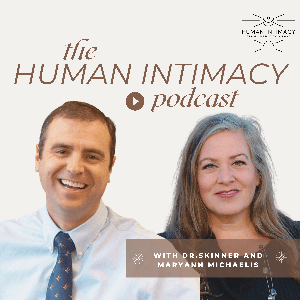
The Human Intimacy Podcast

The Human Intimacy Podcast

Download on the App Store

The Human Intimacy Podcast episodes

  • It Didn’t Start With You: Breaking Generational Patterns and Healing the Past (Episode #79)


    It Didn’t Start With You:

    Breaking Generational Patterns

    and Healing the Past

    Summary:

    In this episode of the Human Intimacy Podcast, Dr. Kevin Skinner and MaryAnn Michaelis explore the powerful concept of generational patterns and how our family history shapes our lives. Drawing on insights from Mark Wolynn’s book It Didn’t Start With You, they discuss the science of epigenetics, the influence of cellular memories, and how unresolved trauma, behaviors, and strengths can be passed down for generations. Through personal stories and client experiences, they show how mapping a genogram can reveal inherited patterns in health, relationships, addictions, and emotional responses. Most importantly, they share practical ways to break unhealthy cycles, embrace healthy habits, and become the “chain breaker” for future generations.

    Listeners will come away with tools for self-discovery, compassion toward their family history, and actionable steps to transform inherited patterns into a healthier legacy.

    Suggested Resources:

    • Book: It Didn’t Start With You: How Inherited Family Trauma Shapes Who We Are and How to End the Cycle – Mark Wolynn

    • Book: The Body Keeps the Score – Dr. Bessel van der Kolk

    • Website: FamilySearch.org – Free tool for building family trees and discovering ancestral stories

    • Article: “What is Epigenetics?” – CDC resource

    • Tool: Genogram templates (available through many therapy and family mapping resources)

    • Practice: Daily mindfulness or meditation for emotional regulation

    • Exercise: Create your own genogram noting health history, relationships, addictions, and major life events across at least three generations

      37 min
    • Rebuilding Us: Turning Conflict into Connection (Episode #78)

      Rebuilding Us: Turning Conflict into Connection

      Podcast Summary:

      In this episode of the Human Intimacy Podcast, Dr. Kevin Skinner and MaryAnn Michaelis dive deep into the essential relationship cycle of rupture, repair, responsibility, and rebuilding. Drawing from their personal experiences and clinical work, they explore how every relationship inevitably encounters conflict—not because something is wrong, but because two different people are sharing life together.

      Dr. Skinner and MaryAnn emphasize that conflict is often not about the surface issue (like toothpaste or hair gel), but rather unmet expectations, unspoken needs, and internal narratives we build over time. Using real-life stories and examples, they explore how couples can move beyond blame and defensiveness by embracing self-awareness, honest communication, and compassion—for themselves and each other.

      The episode also introduces the powerful concept of the “we problem,” encouraging couples to see relational issues as shared challenges rather than individual failures. Through intentional communication, ownership of feelings, and regular expressions of gratitude, couples can strengthen their bond and build a relationship that thrives—even after betrayal or rupture.

      Whether you’re newly married or have been together for decades, this episode is filled with practical wisdom and hopefor anyone who wants deeper, healthier, more resilient intimacy.

      Key Concepts Covered:

      • Rupture is inevitable, but repair is a learned skill.

      • What we fight about is often not the real issue—it’s unmet expectations or a need to feel heard and valued.

      • True intimacy requires vulnerability, humility, and responsibility.

      • “I” statements are powerful tools for conflict resolution.

      • Shifting from a “you vs. me” to a “we” mindset transforms how couples face challenges.

      • Emotional honesty means recognizing your own triggers before projecting onto your partner.

      • Gratitude and daily appreciation can reignite positive connection.

      • Healing after betrayal demands both partners do their inner work while also working on the relationship.

        Recommended Resources Mentioned:

        1. Books:

          • The Seven Principles for Making Marriage Work by Dr. John Gottman (Four Horsemen of the Apocalypse framework)

          • Never Split the Difference by Chris Voss (Empathy in high-stakes communication)

          • Facing the Shadow by Dr. Patrick Carnes (betrayal and relationship recovery)

          • Courses & Tools:

            • HumanIntimacy.com — Online course: How to Communicate When You Don’t Know What to Say (Dr. Kevin Skinner)

            • Reclaim: Healing from Betrayal and Rebuilding Your Life – Podcast and course

            • Therapeutic Concepts Referenced:

              • Gottman’s Four Horsemen: Criticism, Contempt, Defensiveness, Stonewalling

              • Positive and Negative Sentiment Override (Dr. John Gottman)

              • “We problems” vs. individual blame

              • Emotional regulation and co-regulation

              • Self-awareness before communication

                Reflection Questions for Listeners:

                1. What’s a recurring conflict in your relationship that might be about something deeper than the surface issue?

                2. How do you typically respond when you feel misunderstood—and what might a more self-aware response look like?

                3. What are three things your partner has done this week that you could show appreciation for?

                  40 min
                4. Finding the Why: The Courage to Understand Betrayal (Episode #77)

                  Finding the Why:

                  The Courage to Understand Betrayal

                  When betrayal strikes, one of the first—and most painful—questions we ask is: Why?

                  Why did they do this?
                  Why am I reacting this way?
                  Why does it still hurt?

                  In this weeks episode of the Human Intimacy Podcast, Dr. Kevin Skinner and MaryAnn Michaelis explore the emotional terrain beneath the question “Why?”—from both sides of betrayal. Whether you're the partner who was betrayed or the one who acted out, this conversation invites you to pause, look inward, and begin to understand the deeper patterns, pain, and unmet needs that often lie beneath surface behaviors.

                  This episode is about more than answers. It’s about reclaiming clarity, self-awareness, and hope. It’s about finding the courage to ask honest questions—and the grace to explore them without judgment.

                  Key Points from the Episode:
                  • The “Why” Is Often Complex:

                    There's rarely a single reason behind betrayal. Stress, disconnection, childhood trauma, and emotional avoidance often intersect.

                  • Understanding ≠ Justifying:

                    Explaining why something happened isn't about excusing it—it's about owning the story with honesty and accountability.

                  • Betrayed Partners Need to Know Why:

                    Many betrayed partners seek the “why” not to forgive, but to feel safe—so it doesn’t happen again.

                  • Anger as a Messenger:

                    Anger often masks deeper emotions like fear, grief, or feeling unlovable. Recognizing this helps both partners move toward healing.

                  • The Power of Insight:

                    Recovery deepens when individuals identify their emotional triggers, patterns, and the moments they cross internal boundaries.

                  • The “Five Whys” Technique:

                    Asking “Why?” five times in a row helps uncover the root belief or fear behind a reaction or behavior.

                  • The Body Remembers:

                    Emotional memories can be stored somatically. Sometimes the why is felt before it's fully understood cognitively.

                  • Self-Compassion Matters:

                    Whether you’re uncovering your own “why” or hearing your partner’s, approach the process with curiosity—not judgment.

                    Tools & Resources Mentioned:
                    • Journaling Prompts for Insight:

                      • “What was I feeling right before I acted out or shut down?”

                      • “What does this experience say about me—and is that really true?”

                      • “What need was I trying to meet?”

                      • The 5 Whys Exercise (inspired by Toyota problem-solving method)

                      • Morning Pages – from The Artist’s Way by Julia Cameron

                        A daily writing practice to uncover unconscious thoughts and patterns.

                      • Books Referenced:

                        • The Body Keeps the Score by Dr. Bessel van der Kolk

                        • The Power of Habit by Charles Duhigg

                        • Willpower by Dr. Roy Baumeister

                        • Mindsight by Dr. Daniel Siegel

                          Takeaway Message:

                          Understanding your why—whether you’re the one healing from betrayal or the one seeking to make things right—is an act of courage. It’s not about blame. It’s about seeing clearly, feeling deeply, and choosing to heal with intention.

                          For more information about Dr. Kevin Skinner and MaryAnn’s work please visit HumanIntimacy.com


                          41 min
                        • The Healing Power of Honesty: Trauma, Truth, and Relationship Repair (Episode #76)

                          The Healing Power of Honesty:

                          Trauma, Truth, and Relationship Repair

                          Episode Summary:

                          In this episode of The Human Intimacy Podcast, Dr. Kevin Skinner and MaryAnn Michaelis take a deep dive into the role of honesty in trauma recovery and relational healing. The conversation begins with MaryAnn recounting a personal traumatic experience of being held at gunpoint and how it changed her sense of safety and interaction with the world. Together, they explore how honesty with ourselves and others helps reprocess trauma, fosters emotional congruence, and sets the foundation for mental and relational well-being.

                          The discussion expands to topics such as the danger of minimizing experiences, the impact of secrets in relationships, the importance of safe disclosure, and the difference between radical honesty and emotionally responsible honesty. They address the nuances of when, how, and why to tell the truth—whether in moments of betrayal or in everyday interactions. Drawing from clinical experience and research, the hosts emphasize that honesty isn’t just about facts—it’s a healing process that reconnects us to ourselves and to those we love.

                          Key Themes Covered:

                          • Trauma and the importance of finding safety after harm

                          • Emotional congruence and the danger of self-deception

                          • How dishonesty (even subtle) erodes trust and mental health

                          • The role of disclosure in healing betrayal trauma

                          • How to be honest without overwhelming or harming others

                          • The neuroscience of honesty and emotional regulation

                          • Rupture and repair as foundations for resilient relationships

                          • Balancing rigorous honesty with emotional responsibility

                            Resources Mentioned:

                            1. Quote by David Viscott:

                              “If you lived honestly, your life would heal itself.”

                            2. Book: Facing Codependence by Pia Mellody

                              • Explores how early life experiences shape adult behavior and emotional health.

                              • Book: Dopamine Nation by Dr. Anna Lembke

                                • Highlights how honesty activates the prefrontal cortex, aiding in emotional regulation and reducing compulsive behavior.

                                • 12-Step Traditions:

                                  • Emphasis on "rigorous honesty" and the adage “We are as sick as our secrets.”

                                  • Peggy Vaughan’s Research on Disclosure:

                                    • Found that 86% of couples who openly talk about the details of betrayal stay together, compared to 55% who do not.

                                    • Clinical concept: Rupture and Repair

                                      • Healthy relationships aren't free of conflict; they thrive through honest repair.

                                      • Therapeutic concept: Congruence (from Carl Rogers)

                                        • Healing begins when our internal experience aligns with our external expression.

                                        • Story from Patrick Carnes:

                                          • A family laughing about a traumatic event illustrates the confusion caused by cognitive dissonance and emotional invalidation.

                                            Call to Action:

                                            Take a moment to reflect:

                                            • Where might you be avoiding honesty with yourself or someone close to you?

                                            • Are there unspoken truths or emotions that need a safe space to be acknowledged?

                                            • Consider journaling or speaking with a trusted person or therapist about your experience.

                                              Being honest doesn’t mean being harsh—it means being real. And in that reality, healing begins.

                                              48 min
                                            • Facing Fear: What’s Holding You Back from Healing and Connection? (Episode #75)

                                              Facing Fear:

                                              What’s Holding You Back from Healing and Connection?

                                              Episode Summary:

                                              In this episode of The Human Intimacy Podcast, Dr. Kevin Skinner and MaryAnn discuss a powerful and universal emotion—fear—and how it shapes our decisions, relationships, and personal growth. From the fear of being seen, rejected, or betrayed, to the fear of facing consequences or being alone, fear often acts as both a protector and a prison.

                                              Dr. Skinner opens with a personal story from his teenage years rogueing potatoes—a vivid metaphor for rooting out danger before it spreads. Together, he and MaryAnn explore how fear manifests physiologically through the autonomic nervous system, how it can become embedded through trauma or cultural messaging, and how it often drives behavior unconsciously.

                                              The episode dives into:

                                              • How fear shows up in relationships after betrayal

                                              • Why deception, gaslighting, and shame are often rooted in fear

                                              • How childhood and intergenerational fear shape our worldview

                                              • The difference between healthy fear and chronic fear

                                              • The importance of boundaries as a path to safety and freedom

                                              • A practical process for confronting fear: Find it, Face it, Flip it

                                              • The value of fear as a gift that invites curiosity and awareness

                                                Listeners are encouraged to reflect on their own fears, identify where they might be living in survival mode, and consider what conversations or choices fear might be preventing them from having.

                                                Resources Mentioned:
                                                • Polyvagal Theory – Dr. Stephen Porges: Understanding how the autonomic nervous system influences our sense of safety and connection.

                                                • Internal Family Systems (IFS) – Dr. Richard Schwartz: Fear as a protector part within us that seeks to avoid pain or danger.

                                                • Emotionally Focused Therapy (EFT) – Dr. Sue Johnson: How anxiety and fear impact attachment bonds and communication.

                                                • Survivor’s Club by Ben Sherwood – A book on resilience and how people survive traumatic events like plane crashes.

                                                • Recovery Capital Framework – Key elements for long-term recovery from addiction and compulsive behaviors.

                                                • 12-Step Groups – The value of community, accountability, and confronting fear in healing from addiction or betrayal.

                                                • Trauma-Informed Therapy – When fear is rooted in unresolved trauma, professional support can be vital for recovery.

                                                  49 min
                                                • The Mask and the Mirror: Seeing Yourself Clearly After Betrayal (Episode #74)

                                                  The Mask and the Mirror:

                                                  Seeing Yourself Clearly After Betrayal

                                                  In this raw and revealing conversation, Dr. Kevin Skinner and MaryAnn Michaels explore what happens when betrayal, addiction, secrecy, or early trauma fracture your sense of identity. Whether you’re a betrayed partner or someone who has acted out, this episode is an invitation to step out from behind the mask and face the mirror—to look honestly and compassionately at who you are, how you’ve been shaped, and who you’re becoming.

                                                  Together, Dr. Skinner and MaryAnn unpack how false identities are built from shame, secrecy, survival roles, or social expectations—and how reclaiming your identity starts by connecting with your core worth. They explore how trauma disrupts identity formation, why authenticity is essential for intimacy, and how rediscovering your core self is key to lasting healing.

                                                  You’ll hear personal stories, including a moment of vulnerability from MaryAnn about holding a sign that read “Porn hurt me,” and reflections on what it means to be seen, valued, and known—without hiding.

                                                  Whether you feel lost in who you’ve become or you’re just beginning to rediscover who you really are, this episode is a guidepost to help you move forward with clarity, courage, and compassion.

                                                  Topics Covered:
                                                  • Identity loss after secrecy, betrayal, or compulsive behaviors

                                                  • How early trauma and sexual exposure can disrupt self-identity

                                                  • The difference between false self and authentic self

                                                  • Why intimacy requires honesty and congruence

                                                  • Coupleship identity before and after betrayal

                                                  • Core beliefs like “I’m not enough” and their influence on behavior

                                                  • The role of neuroplasticity in healing identity (Joe Dispenza)

                                                  • Internal Family Systems (IFS) and the concept of core self

                                                  • The challenge of letting go of survival-based roles or secondary gains

                                                  • How to begin reclaiming and rewriting your identity

                                                  • A practical reflection exercise to uncover who you are today

                                                    Resources Mentioned:
                                                    1. Joe Dispenza – On autopilot living and the science of change

                                                      • Quote referenced: “90 to 95% of what we do is on autopilot.”

                                                      • Key concept: neuroplasticity and habit stacking in identity transformation

                                                      • Brené Brown – On shame, secrecy, and vulnerability

                                                        • Quote: “Shame thrives in secrecy, silence, and judgment.”

                                                        • Internal Family Systems (IFS) – Exploring the parts of self

                                                          • Discussion of “core self” vs. protective parts shaped by trauma

                                                          • Barna Research (2016) – On changing cultural attitudes toward pornography

                                                            • Mentioned study: Teens reported it was more morally wrong to not recycle than to watch porn

                                                            • Patrick Carnes, Don’t Call It Love

                                                              • Cited research on identity shifts post-recovery

                                                              • Key insight: Sober individuals often look back on their past selves with disdain due to identity incongruence

                                                                Reflection Assignment:

                                                                Title: "The Mask and the Mirror"

                                                                1. Draw or describe two masks:

                                                                  • The mask you show the world

                                                                  • The mask you wear internally

                                                                  • If you’re spiritually inclined, consider a third:

                                                                    • How does your Higher Power see you?

                                                                    • Journal Prompt:

                                                                      • Who am I without secrecy or shame?

                                                                      • What is one belief I’ve carried about myself that no longer serves me?

                                                                      • If I fully embraced my worth, how would I see myself differently?

                                                                      • Bonus Question:

                                                                        • How did betrayal or secrecy shift my identity—and how do I want to reclaim it?

                                                                        • To learn more about healing and recovery, please visit www.humanintimacy.com
                                                                        • 38 min
                                                                        • Turning Pain into Purpose: A Journey of Post-Traumatic Growth (Episode #73)

                                                                          In this powerful and emotionally rich episode of the Human Intimacy Podcast, Dr. Kevin Skinner and MaryAnn Michaelis shift the focus from trauma to transformation. While past episodes have explored the symptoms of post-traumatic stress following betrayal, this conversation is all about post-traumatic growth—the process of finding meaning, strength, and purpose through adversity.

                                                                          MaryAnn shares her personal journey from betrayal and pain to advocacy and healing, culminating in a major Supreme Court ruling protecting children online—an experience that represents a full-circle moment in her growth process. The discussion weaves in key psychological theories, including Viktor Frankl’s Man’s Search for Meaning, the Post-Traumatic Growth Inventory, and Carol Dweck’s Growth Mindset, all while grounding the conversation in the realities of lived experience.

                                                                          Listeners will be inspired to see their own hardships not as dead ends but as turning points—opportunities to grow, to give back, and to reclaim a sense of self and connection.

                                                                          Resources Mentioned in This Episode:
                                                                          • Post-Traumatic Growth Inventory

                                                                            Developed by Richard Tedeschi & Lawrence Calhoun to measure personal growth following trauma.
                                                                            Learn more

                                                                          • Man’s Search for Meaning by Viktor Frankl

                                                                            A classic on finding purpose through suffering, based on Frankl’s time in a concentration camp.

                                                                          • Mindset by Carol Dweck

                                                                            Introduces the concept of a “growth mindset”—how we can view challenges and setbacks as opportunities for growth.

                                                                          • Window of Tolerance by Dr. Dan Siegel

                                                                            A framework for understanding how much emotional stress we can manage before becoming dysregulated.

                                                                          • 12-Step Programs

                                                                            Emphasized as a tool for spiritual growth, community support, and emotional healing in recovery.

                                                                          • Crumbaugh and Maholick’s Work on Existential Meaning

                                                                            Theories around life purpose and navigating crossroads in life.

                                                                          • Free Speech Coalition v. Paxton

                                                                            U.S. Supreme Court decision upholding Texas’ age-verification law for online pornography—a pivotal moment in MaryAnn’s advocacy journey.

                                                                            Learn more @ https://www.humanintimacy.com/pages/home?preview=true

                                                                            43 min
                                                                          • The Disclosure Process: When Honesty Opens the Door to Healing (Episode #72)

                                                                            The Disclosure Process:

                                                                            When Honesty Opens the Door to Healing


                                                                            Episode Summary:

                                                                            In this deeply compassionate and informative episode of the Human Intimacy Podcast, Dr. Kevin Skinner and MaryAnn Michaels explore one of the most difficult but essential stages in healing from betrayal trauma—the disclosure process. Beginning with the devastation of discovery (D-Day), they walk listeners through the emotional aftermath, the common patterns of staggered and trickle disclosure, and the powerful, structured process of a formal therapeutic disclosure. They explain how this process—consisting of a disclosure statement, an impact letter, and an emotional restitution letter—can move couples toward clarity, trust, and reconnection when handled with care and preparation.

                                                                            Dr. Skinner shares research insights from Jennifer Schneider and Peggy Vaughan, emphasizing the high percentage of couples who found healing and stability after going through a formal disclosure. The conversation also highlights when disclosure is not appropriate—particularly when divorce is imminent or used for legal leverage.

                                                                            Whether you’re navigating betrayal trauma or supporting someone who is, this episode offers validation, hope, and practical guidance for one of the hardest conversations a couple can have.

                                                                            Resources Mentioned:

                                                                            • Formal Therapeutic Disclosure Process

                                                                              • Step 1: Full behavioral disclosure facilitated by therapists

                                                                              • Step 2: Impact Letter from the betrayed partner

                                                                              • Step 3: Emotional Restitution Letter from the partner who acted out

                                                                              • Research Cited:

                                                                                • Dr. Jennifer Schneider – Found 90–93% of participants who completed a disclosure were glad they did

                                                                                • Dr. Peggy Vaughan – Found 86% of couples who discussed the details of infidelity were still together, compared to 55% who did not

                                                                                • Key Terms Defined:

                                                                                  • Staggered Disclosure

                                                                                  • Trickle Disclosure

                                                                                  • Shock vs. Stealth Discovery

                                                                                  • Safety Seeking Behavior

                                                                                  • Locus of Control

                                                                                  • Zeigarnik Effect (the mind’s tendency to fixate on incomplete stories)

                                                                                  • Related Courses by Dr. Skinner at Human Intimacy:

                                                                                    • Building Boundaries After Betrayal

                                                                                    • Couple Communication and Reflective Listening

                                                                                    • How to Communicate When You Don’t Know What to Say

                                                                                      44 min
                                                                                    • When Your Partner Won’t Engage: Breaking the Cycle of Disconnection (Part 2) (Episode #71)

                                                                                      When Your Partner Won’t Engage:

                                                                                      Breaking the Cycle of Disconnection (Part 2)

                                                                                      📝 Episode Summary:

                                                                                      In Part 2 of this powerful series on emotional regulation and effective communication, Dr. Kevin Skinner and MaryAnn Michaels dive deeper into what happens between partners when conflict escalates—and how to interrupt destructive patterns before more harm is done.

                                                                                      They explore the importance of calling a timeout when either partner is flooded, how to pre-agree on safe ways to pause conversations, and how to return with emotional regulation and self-awareness. The episode highlights key tools like reflective listening, part-based language, and empathy-building through self-inquiry.

                                                                                      From managing physiological signs of stress to tracing emotional triggers back to past wounds, this episode offers a practical roadmap for repairing conflict and building trust—even when conversations are hard. You’ll walk away with language, tools, and hope that deep emotional connection is possible with preparation and practice.

                                                                                      📚 Resources & Tools Mentioned:
                                                                                      • HumanIntimacy.com Resources:

                                                                                        • Test Your Relationship (Assessment)

                                                                                        • How to Communicate When You Don’t Know What to Say (Course by Dr. Kevin Skinner)

                                                                                        • Boundaries and Communication (Course by MaryAnn Michaels)

                                                                                        • The Communication Course (MaryAnn Michaels)

                                                                                        • Core Concepts Covered:

                                                                                          • Emotional Flooding: Recognizing signs (e.g., heart rate above 100 BPM) and pausing accordingly.

                                                                                          • Timeout Agreements: Pre-agreed-upon plans to pause difficult conversations with a set return time.

                                                                                          • Training Wheels Communication: Using index cards, scripts, or notes to aid vulnerable conversations.

                                                                                          • Reflective Self-Inquiry: Questions like “Where have I felt this before?” and “What story am I telling myself?”

                                                                                          • Parts Language: Naming the internal parts that are activated in conflict (“A part of me felt abandoned…”).

                                                                                          • Empathic Imagination: Asking, “I wonder what my partner was thinking or feeling?”

                                                                                          • The Zeigarnik Effect: The need to close emotional loops to find peace and resolution.

                                                                                          • Post-timeout Reflection: Asking, “Did we resolve this?” and celebrating progress made together.

                                                                                            43 min
                                                                                          • When Your Partner Won’t Engage (Part 1): Breaking the Cycle of Disconnection (Episode #70)

                                                                                            When Your Partner Won’t Engage (Part 1):

                                                                                            Breaking the Cycle of Disconnection


                                                                                            In Part 1 of this two-part series on The Human Intimacy Podcast, Dr. Kevin Skinner and MaryAnn Michaelis dive into one of the most common yet painful relationship challenges: emotional disengagement. Whether it's a partner who won’t talk, shuts down, or avoids hard conversations, this episode unpacks the underlying reasons—like past criticism, emotional wounding, and lack of safety—and offers a compassionate and practical path forward.

                                                                                            Drawing from Dr. Sue Johnson’s work on attachment patterns, John Gottman’s research on emotional flooding, and the Zeigarnik effect, this episode helps listeners recognize the “dance” of disconnection and how to begin stepping out of it. You'll learn why defensiveness and shame can derail conversations, why some questions get asked again and again, and how slowing down and checking in with yourself can begin to change the entire communication dynamic.

                                                                                            This foundational conversation sets the stage for Part 2, where Dr. Skinner and MaryAnn will explore what to do after a timeout—how to mentally and emotionally prepare to re-enter a difficult conversation with clarity, empathy, and effectiveness.

                                                                                            Key Topics Discussed:

                                                                                            • Emotional disengagement and communication breakdown

                                                                                            • Why safety is essential for vulnerability

                                                                                            • Attachment cycles and the “emotional dance” (Sue Johnson)

                                                                                            • The Zeigarnik effect and why unresolved issues stay active

                                                                                            • Defensiveness, shame spirals, and emotional flooding (John Gottman)

                                                                                            • The role of belief systems (“You don’t listen to me,” “I don’t matter”)

                                                                                            • The importance of timing, tone, and non-reactivity

                                                                                              Suggested Resources Mentioned:

                                                                                              1. Free Mini-Course: Seven Essential Skills for Healthy Communication

                                                                                                – humanintimacy.com
                                                                                                – Tools for reflective listening, validating emotions, and clear expression.

                                                                                              2. Mini-Course: How to Communicate When You Don’t Know What to Say

                                                                                                – Practical guidance for emotionally charged conversations.

                                                                                              3. YouTube Channel:

                                                                                                – Dr. Kevin Skinner on YouTube
                                                                                                – Watch, comment, and engage with this and future episodes.

                                                                                              4. Email Questions:

                                                                                                – Reach out with thoughts or questions: [email protected]

                                                                                                Researchers & Models Referenced:

                                                                                                • Dr. Sue Johnson (Emotionally Focused Therapy)

                                                                                                • Dr. John Gottman (Emotional flooding and timeouts)

                                                                                                • Zeigarnik Effect (Unfinished emotional business)

                                                                                                  Next Episode (Part 2) Preview:

                                                                                                  Title: When Your Partner Won’t Engage (Part 2): How to Reconnect After Taking a Timeout
                                                                                                  In the follow-up episode, Dr. Skinner and MaryAnn continue the conversation by exploring how to effectively return to a difficult discussion after stepping away. You’ll learn what to do during a timeout, how to calm your nervous system, and how to re-enter with empathy, clarity, and emotional regulation.

                                                                                                  Would you like a short version for show notes or a version formatted specifically for YouTube?

                                                                                                  47 min

                                                                                                About The Human Intimacy Podcast

                                                                                                From the publisher's feed

                                                                                                Intimacy is a fundamental human experience that goes far beyond romantic relationships. Join us as we dive into the deep and multifaceted layers of human connection, exploring everything from…

                                                                                                More shows like The Human Intimacy Podcast

                                                                                                For The Love With Jen Hatmaker Podcast by Jen Hatmaker

                                                                                                For The Love With Jen Hatmaker Podcast

                                                                                                6,438 Listeners

                                                                                                From Crisis to Connection - with Geoff & Jody Steurer by Geoff & Jody Steurer

                                                                                                From Crisis to Connection - with Geoff & Jody Steurer

                                                                                                204 Listeners

                                                                                                Helping Couples Heal Podcast by Marnie Breecker

                                                                                                Helping Couples Heal Podcast

                                                                                                450 Listeners

                                                                                                followHIM by Hank Smith & John Bytheway

                                                                                                followHIM

                                                                                                10,738 Listeners

                                                                                                Choose To Be with Choose Recovery Services; Betrayal Trauma Healing by Choose Recovery Services - Alana Gordon and Amie Woolsey

                                                                                                Choose To Be with Choose Recovery Services; Betrayal Trauma Healing

                                                                                                97 Listeners

                                                                                                A Slight Change of Plans by Pushkin Industries

                                                                                                A Slight Change of Plans

                                                                                                2,042 Listeners

                                                                                                Conversations on Sex, Addiction, and Relationships by Timzi9

                                                                                                Conversations on Sex, Addiction, and Relationships

                                                                                                14 Listeners

                                                                                                The Mel Robbins Podcast by Mel Robbins

                                                                                                The Mel Robbins Podcast

                                                                                                19,223 Listeners

                                                                                                Lights On with Carl Lentz by B-Side

                                                                                                Lights On with Carl Lentz

                                                                                                768 Listeners

                                                                                                The Lizzy Jensen Show by Lizzy Jensen

                                                                                                The Lizzy Jensen Show

                                                                                                188 Listeners

                                                                                                Beyond the Facade with Choose Recovery Services and Blueprint Institute by Luke Gordon with Choose Recovery Services and Blueprint Institute

                                                                                                Beyond the Facade with Choose Recovery Services and Blueprint Institute

                                                                                                11 Listeners

                                                                                                Ask the Unfaithful by James & Sam

                                                                                                Ask the Unfaithful

                                                                                                21 Listeners

                                                                                                Sam's Healing Podcast by Samuel

                                                                                                Sam's Healing Podcast

                                                                                                16 Listeners

                                                                                                Office Hours with Arthur Brooks by Arthur Brooks

                                                                                                Office Hours with Arthur Brooks

                                                                                                388 Listeners