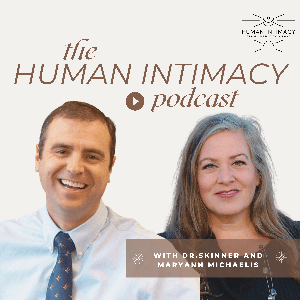
The Human Intimacy Podcast

The Human Intimacy Podcast

Download on the App Store

The Human Intimacy Podcast episodes

  • Words That Shape Us: Rethinking the Language We Use in Relationships (Episode #69)


    Words That Shape Us:
    Rethinking the Language We Use in Relationships

    In this thought-provoking episode of the Human Intimacy Podcast, Dr. Kevin Skinner and MaryAnn Michaelis explore the powerful impact of the words we use in our relationships. From misunderstood terms like gaslighting, addiction, and defensiveness to therapeutic concepts like parts work, triggers, and intimacy, they unpack what these words really mean and why clarity matters.

    Drawing from decades of clinical experience, Dr. Skinner explains how language—used consciously or not—can either create emotional safety or reinforce shame and confusion. MaryAnn adds vivid examples of how common phrases and labels can trigger strong emotional responses, especially when they’ve been used harmfully in the past.

    The episode invites listeners to be more intentional about their communication—pausing to clarify meanings, owning emotional experiences instead of blaming others, and understanding the deeper messages behind the words. Listeners will come away with a richer appreciation of how language shapes healing, self-awareness, and human connection.

    Resources Mentioned in the Episode:
    • Richard C. Schwartz, Internal Family Systems Therapy — foundational model for understanding "parts" of the self

    • Brené Brown — referenced for her work on shame and how addiction is often about numbing and disconnection

      • Key books: The Gifts of Imperfection, Daring Greatly

      • Malcolm Gladwell, Blink: The Power of Thinking Without Thinking — explains unconscious decision-making and rapid intuitive responses

      • Gavin de Becker, The Gift of Fear — explores how intuition and implicit memory keep us safe

      • Joseph LeDoux — neuroscientist referenced for research on the brain’s fear pathways and emotional processing (notably how we feel before we think)

      • Dr. Kevin Skinner

        • Treating Trauma from Sexual Betrayal

        • PTSD Assessment for Betrayed Partners

        • Denial and Blame Scale (early scale now recognized as assessing gaslighting behaviors)

        • Seven Types of Intimacy course — mentioned in the discussion on redefining intimacy beyond sex

        • Podcast Episode: Making Love and Other Non-Sexual Activities (December 2024 / January 2025)


          47 min
        • Grieving What Was—and What Wasn't: Finding Meaning in Loss (Episode 68)


          🎙️ The Human Intimacy Podcast:

          Grieving What Was—and What Wasn't: Finding Meaning in Loss

          📝 Episode Summary:

          In this deeply moving episode of the Human Intimacy Podcast, Dr. Kevin Skinner and MaryAnn Michaelis explore the often-unspoken grief that arises not only from death but from lost experiences, missed relationships, betrayal, and the life we thought we would have. Together, they discuss how grief shows up in unexpected ways—through sadness, anxiety, depression, and even numbness—and why it's essential to give it language, space, and presence.

          From betrayal trauma to the ache of unmet childhood needs, Dr. Skinner and MaryAnn reflect on how grief is not something we simply get over, but something that transforms us. They invite listeners to “buffalo up,” facing the emotional storms head-on to lessen their long-term impact and discover the healing that can come from being seen, supported, and present with our pain.

          This episode affirms that grief is both individual and shared—and through empathy, ritual, and support, we can move from suffering to strength. Whether you're mourning a loved one, a lost relationship, or simply the life you didn’t get to live, this conversation offers tools, language, and hope.

          📚 Resources & References Discussed:
          • Dr. Edith Eger – The Choice

            • Grieving for what happened and for what didn’t happen.

            • Dr. Elizabeth Kübler-Ross – Five Stages of Grief

              • Originally developed for death-related grief, but elements show up in all forms of loss.

              • "Buffalo vs. Cow" Metaphor – Facing emotional storms head-on instead of running from them to shorten their impact.

              • Ted Wiard – Burbles of Emotion (from grief training at Willow House)

                • Describes grief as emotional bubbles that unexpectedly surface.

                • Grief Rituals – Writing, symbolic goodbyes, or creating new experiences to process loss.

                • Suicide & Crisis Lifeline (U.S.): 📞 988 – For anyone in crisis or supporting someone in distress.

                  💬 Key Takeaways:
                  • We grieve both what happened and what never did—and both types deserve space.

                  • Grief often shows up disguised as anxiety, depression, or numbness.

                  • Healing begins by naming our losses and making space to feel them.

                  • Support from others—through presence, not solutions—is essential in the grieving process.

                  • Transformation and post-traumatic growth are possible. Grief changes us, and often, it refines us.


                    39 min
                  • Self-Leadership: The Roadmap to Healing, Hope, and Deeper Intimacy (Episode #67)

                    Self-Leadership:

                    The Roadmap to Healing, Hope, and Deeper Intimacy

                    In this episode of the Human Intimacy Podcast, Dr. Kevin Skinner and MaryAnn Michaelis reflect on Marianne’s powerful experience presenting at the ITAP (International Institute of Trauma and Addiction Professionals) Conference, where she introduced a healing-intensive approach combining Frazier’s Dissociative Table and Accelerated Resolution Therapy (ART). Together, they explore the theme of self-leadership—what it means to take ownership of your healing journey and to navigate pain, trauma, and emotional disconnection with intention and insight.

                    They dive into the importance of understanding our internal parts, drawing from Richard Schwartz’s Internal Family Systems (IFS) and his concept of “No Bad Parts.” Listeners are guided to reflect on their emotional patterns, discover the unmet needs behind their actions, and learn how to respond to their emotions with compassion rather than reactivity. The conversation emphasizes that true self-leadership is not about perfection, but about authenticity, congruency, and ultimately, the ability to show up more fully in our most important relationships.

                    Whether you're healing from betrayal, navigating relationship challenges, or seeking personal growth, this episode offers practical insights and encouragement to help you reconnect with yourself and others.

                    Key Topics Covered:

                    • The role of self-leadership in trauma recovery and personal transformation

                    • Using the Dissociative Table and ART in a one-day intensive model

                    • Internal Family Systems and understanding our emotional “parts”

                    • The difference between insight and action in behavior change

                    • How trauma can lead to emotional reactivity and how to regulate it

                    • Why connection is the ultimate goal of healing and self-mastery

                    • The importance of giving yourself permission to pause and prioritize healing

                      Resources Mentioned:

                      1. Frazier’s Dissociative Table Technique – A tool to identify internal parts and unresolved trauma

                      2. Accelerated Resolution Therapy (ART) – A trauma-informed approach for rapid emotional processing

                      3. Internal Family Systems (IFS) by Richard Schwartz

                        • Book: No Bad Parts by Dr. Richard C. Schwartz

                        • Seven Habits of Highly Effective People by Stephen R. Covey (reference to “Sharpen the Saw”)

                        • Loving-Kindness Meditation – A mindfulness practice focused on compassion for self and others

                        • Emotionally Focused Therapy (EFT) – Insights on unmet needs and attachment ruptures in couples

                        • Quote from C.S. Lewis – “There are no ordinary people. You have never talked to a mere mortal.”

                          Listener Takeaway:

                          You don’t have to be perfect to lead yourself well. Begin by noticing your patterns, asking what your emotions are trying to tell you, and taking small, intentional steps toward the connection and healing you deserve. Self-leadership is ultimately a journey toward becoming the kind of person who can love—and be loved—deeply.

                          34 min
                        • The Lens of Betrayal: Relearning How to See the Ones We Love (Podcast #66)

                          The Lens of Betrayal:

                          Relearning How to See the Ones We Love

                          In this thought-provoking episode of the Human Intimacy Podcast, Dr. Kevin Skinner and MaryAnn Michaelis explore how betrayal changes the way we see the people closest to us. When trust is broken, our brain naturally shifts into self-protection, filtering our perception through trauma, pain, and fear. Dr. Skinner shares personal stories and clinical insights to illuminate how resentment, grief, and disconnection can cloud our ability to see others clearly. Together, they discuss how healing requires slowing down, grounding the nervous system, and re-engaging the prefrontal cortex to ask deeper questions: Who is this person now? Am I ready to see them anew? The episode encourages listeners to examine their own emotional filters, make space for grief, and learn to see others—and themselves—with compassion, clarity, and maturity. This conversation offers hope, not through rushed reconnection, but through the power of perception and presence.

                          Resources Mentioned & Referenced
                          • Reflective Questions to Shift Perspective

                            • “Who is my enemy?”

                            • “What am I fighting for?”

                            • “Am I ready to see this person in a new way?”

                            • Neuroscience and Trauma Concepts

                              • The amygdala’s role in trauma responses (fight, flight, freeze)

                              • The prefrontal cortex as the seat of reflective, relational thinking

                              • Trauma-informed perception: seeing through past filters

                              • Therapeutic Tools and Concepts

                                • Reflective Listening – Taught in the free course: Seven Essential Communication Skills

                                  (Available at humanintimacy.com)

                                • Bids for Connection – From Dr. John Gottman’s research

                                • Back Pocket Technique – Practicing presence by temporarily setting aside your own perspective

                                • Literary Inspiration

                                  • C.S. Lewis, The Weight of Glory:

                                    “There are no ordinary people. You have never talked to a mere mortal…”

                                  • Related Upcoming Topics

                                    • Self-Leadership -Self-Mastery
                                    • When Your Partner Won’t Open Up

                                    • The Fear of Being Seen


                                      44 min
                                    • Consent, Communication, and the Core of Intimacy (Episode #65)

                                      Consent, Communication, and the Core of Intimacy


                                      In this powerful and essential episode of The Human Intimacy Podcast, Dr. Kevin Skinner and MaryAnn Michaelis dive into the nuanced and often misunderstood topic of sexual consent within committed relationships. Drawing from years of clinical experience and recent conversations with clients, they explore what true consent looks like—voluntary, informed, and mutually respectful—and contrast it with coercion, obligation, and self-betrayal.

                                      They examine how past trauma, cultural expectations, sexual addiction, and desire discrepancies can distort intimacy, leaving one or both partners feeling used, unsafe, or unheard. With honesty and compassion, Dr. Skinner and MaryAnn emphasize the importance of open communication, healthy boundaries, and attunement between partners.

                                      Listeners are encouraged to assess their current sexual dynamics, initiate mature conversations about their needs, and repair harm where consent may have been ignored or unclear. Whether you're in recovery from betrayal or simply looking to build deeper intimacy, this episode offers a vital framework for healing and connection.

                                      Resources Mentioned in the Episode:

                                      • "Talking to Strangers" by Malcolm Gladwell – Particularly the chapter on consent, alcohol, and impaired decision-making

                                      • "Tea and Consent" YouTube video (British version) – A visual and accessible explanation of consent

                                      • Research on Sexual Desire Discrepancies – Highlighting how mismatched sexual desire impacts relational satisfaction

                                      • Brett Williams' "Same Team" Framework – A tool for shifting relational conflict toward shared problem-solving

                                      • Concepts from betrayal trauma therapy – Including the importance of informed, voluntary participation and boundaries during sexual reintegration


                                        41 min
                                      • Healing Body Image and Self-Perception After Betrayal (Episode #64)

                                        Healing Body Image and Self-Perception After Betrayal


                                        In this episode of the Human Intimacy Podcast, Dr. Kevin Skinner and MaryAnn Michaelis explore how early life experiences, cultural messaging, and exposure to media and pornography shape self-perception and body image—especially after betrayal. They discuss why betrayed partners often feel "not enough," and they share research shows that pornography harms both users’ and partners’ body image.  

                                        The episode offers practical strategies for healing, including gratitude for the body’s functionality, redefining beauty beyond appearance, and reconnecting with the joyful, authentic self. This conversation invites listeners to free themselves from harmful comparisons and embrace their inherent worth.

                                        Resources Discussed:

                                        - Study: The Association of Pornography Use and Body Image Among Heterosexual and Sexual Minority Men (Archives of Sexual Behavior).

                                        - Key concepts: Self-perception, media influence, social comparison theory, and gratitude-based body acceptance.

                                        —-

                                        Did you miss the First Annual Human Intimacy Conference? Session replays are now available. Click here and use this coupon code to get a 20% discount (Conf20). Watch Dr. Kevin Skinner, MaryAnn Michaelis, Karen Strange, Michelle Mays, Geoff Steurer, and many others as they discuss the healing and recovery process.

                                        46 min
                                      • The Bravery of Letting Go: A Deep Dive into Self-Forgiveness and Healing (Episode #63)

                                        The Bravery of Letting Go:

                                        A Deep Dive into Self-Forgiveness and Healing


                                        In this vulnerable and thought-provoking episode, Dr. Kevin Skinner and MaryAnn Michaelis explore one of the most challenging aspects of the healing journey: self-forgiveness. Whether you've acted in ways you're not proud of or internalized blame after betrayal, the burden of shame can keep you tethered to past pain. Together, they unpack why so many individuals—both betrayed partners and those who have acted out—struggle to forgive themselves, even long after change begins.

                                        The conversation addresses the role of shame as a perceived protector, the internal dialogue that keeps us stuck, and how self-forgiveness isn’t just an emotional release, but a physiological and relational turning point. Drawing from Internal Family Systems (IFS), systems theory, trauma research, and recovery work, Dr. Skinner and MaryAnn examine how embracing self-forgiveness leads to renewed self-trust, authentic change, and deeper connection.

                                        Listeners are also introduced to somatic and spiritual tools for letting go of self-judgment and are encouraged to explore their capacity to receive love—not just give it. The message is clear: your healing matters, and you are worthy of moving forward.

                                        Resources Mentioned:

                                        - Internal Family Systems (IFS) – A therapeutic model exploring parts of the self, especially protective parts tied to shame and fear.  

                                        - Mark Wolynn – Author of It Didn’t Start with You, discussing inherited family trauma and emotional tethering across generations.  
                                        - Dr. Joe Dispenza – Work referenced regarding emotional addiction and how familiar patterns of pain can become neurologically ingrained.  
                                        - Dr. Kristin Neff – [selfcompassion.org](https://selfcompassion.org), a resource hub for meditations and exercises on self-compassion and self-forgiveness.  
                                        - Dr. Carol Dweck – Growth vs. fixed mindset; how change is possible through effort and intentionality.  
                                        - Dr. Kevin Skinner –Treating Trauma from Sexual Betrayal, discussing concepts such as the locus of control and how misplaced self-blame limits healing.  
                                        - 12-Step Recovery Principles – Concepts of surrender, self-reflection, and spiritual healing in addiction recovery.  
                                        - Somatic Exercises for Releasing Shame – Bilateral stimulation, body scans, and metaphor-based visualization to help the body release emotional burdens.  
                                        - Visualization Practices – Inviting clients to connect with a Higher Power, or a loving internal figure like a grandparent, to find grace and compassion within.

                                        38 min
                                      • The Shame We Carry: Giving Voice to the Unspoken (Episode 62)

                                        The Shame We Carry:

                                        Giving Voice to the Unspoken


                                        In this special episode of the Human Intimacy Podcast, Dr. Kevin Skinner and co-host MaryAnn Michaelis delve into the profound impact of shame, secrecy, and silent suffering in relationships—especially in the context of sexual betrayal. They explore the internal negotiations we make with ourselves to hide the parts we fear will lead to rejection, and the cultural contradictions that often deepen our shame.

                                        Drawing from decades of clinical experience, research, and personal insights, they emphasize that healing begins when we give voice to the unspoken. Whether it’s through journaling, therapy, or a safe disclosure process, naming our shame and speaking our secrets out loud—especially in safe spaces—can free us from isolation, enhance emotional and physical health, and open the door to deeper connection.

                                        Listeners will learn how shame manifests in the body, how to recognize its signals, and why expressive writing and safe vulnerability are powerful healing tools. The conversation also highlights how shame affects both betrayed partners and those who have acted out, and how couples can begin to talk honestly—when the timing and safety are right.

                                        Key Topics Covered:

                                        - The burden of silent suffering and hidden behaviors
                                        - The role of internal negotiation and self-deception
                                        - Cultural contradictions around sexuality and shame
                                        - The physiological impact of shame (e.g., depression, immune suppression)
                                        - The healing power of expressive writing and confession
                                        - How to recognize shame in the body
                                        - The need for safe environments for vulnerability and honesty
                                        - Why shame must be addressed in any path to relationship healing

                                        Resources & References Mentioned:

                                        - Dr. James Pennebaker’s research on expressive writing and its impact on depression and immune health  
                                        - Brené Brown's work on vulnerability, shame, and the neuroscience of shame ("shame hits the brain like blunt force trauma")  
                                        - Anna Lembke’s quote: “Recounting our experiences gives us mastery over them”  
                                        - Discussion of shame-centered PTSD framework by Terry Taylor, visualizing shame at the core with different protective reactions (anger, avoidance, depression, addiction)  
                                        - Dr. Skinner’s 100-Day Courses for betrayed partners and those who have acted out, including targeted strategies to address shame  
                                        - Mention of the movie Frozen — and the lesson of “Let It Go” as a metaphor for releasing shame and emotional burdens

                                        Takeaway Message: 

                                        Shame thrives in silence. Healing begins when we find the courage and the safety to speak. Whether through writing, therapy, or trusted relationships, naming and voicing our hidden experiences gives us freedom, connection, and hope.

                                        42 min
                                      • Forgiveness: The Misunderstood Path to Healing and Human Intimacy (Episode #61)

                                        Forgiveness:

                                        The Misunderstood Path to Healing and Human Intimacy


                                        In this heartfelt and powerful episode of the Human Intimacy Podcast, Dr. Kevin Skinner and MaryAnn Michaels dive into the complex, often misunderstood topic of forgiveness—especially within relationships affected by betrayal and emotional wounds. Using real-life role-play, personal insight, and professional wisdom, they explore what forgiveness is—and isn’t.

                                        Together, they examine the common misconceptions surrounding forgiveness, such as equating it with blind trust or minimizing deep pain. They clarify the distinctions between love, trust, and forgiveness, and how rebuilding trust must be an intentional and ongoing process. 

                                        Drawing from Janis Abrahms Spring’s framework in How Can I Forgive You?, they outline four types of forgiveness:

                                        1. Cheap forgiveness,
                                        2. Refusal to forgive,
                                        3. Acceptance,
                                        4. Genuine forgiveness
                                        5. Through this lens, they highlight the importance of emotional honesty, boundaries, and the reparative dance between the one who was hurt and the one who caused harm.

                                          MaryAnn also introduces a reflective visualization exercise called “The Field of Grace”, inviting listeners to explore how and when to release the emotional burdens they've been carrying. Both Dr. Skinner and MaryAnn compassionately affirm that forgiveness is a process—not a moment—and that true healing often comes in unexpected ways.

                                          This episode is a must-listen for anyone navigating the difficult terrain of relational repair, self-awareness, or trauma recovery.

                                          ---

                                          References & Resources Mentioned


                                          - Spring, J. A. (2004). How Can I Forgive You? The Courage to Forgive, the Freedom Not To. HarperCollins.  
                                          - Brown, B. (2015). Rising Strong*. Spiegel & Grau. (Referenced for the "marble jar" trust analogy)  
                                          - Skinner, K. (2017). Treating Trauma from Sexual Betrayal: The Essential Tools for Healing. KSkinner Publishing.  
                                          - Visualization Exercise: The Field of Grace, shared by therapist and colleague Karen Strange  
                                          - Concepts referenced from EFT (Emotionally Focused Therapy) and betrayal trauma research  
                                          - PTSD criteria related to betrayal trauma, particularly avoidance and emotional isolation  

                                          50 min
                                        6. From Self-Deception to Self-Trust: Honoring Emotions After Betrayal (Episode #60)

                                          From Self-Deception to Self-Trust:

                                          Honoring Emotions After Betrayal

                                          In this deeply moving episode, Dr. Kevin Skinner and MaryAnn Michaels are joined by special guest Jennifer Johnson, a clinical mental health counselor and expert in betrayal trauma and sex addiction recovery. Together, they explore the nuanced concept of self-deception—not as a character flaw, but as a survival response often rooted in upbringing, family systems, and emotional safety.

                                          They discuss how many betrayed partners struggle to trust their instincts and emotions, often minimizing their experiences or denying them altogether due to social conditioning, gaslighting, or fear of the truth. The conversation highlights the importance of self-awareness, emotional identification, and self-compassion as key steps toward healing and reclaiming authenticity.

                                          Jennifer shares powerful insights on learning to honor emotions through body awareness, identifying internalized shame, and rediscovering one’s inherent worth. Dr. Skinner closes with a formula: Self-Compassion → Self-Trust = Authenticity—emphasizing that true intimacy begins with being real, both with ourselves and others.

                                          ---

                                           📚 Recommended Resources:

                                          1. Books Mentioned:

                                             - The Betrayal Bond by Patrick Carnes
                                             - It Didn’t Start with You by Mark Wolynn
                                             - No Bad Parts by Richard Schwartz (for Internal Family Systems)
                                             - The Mindful Therapist by Dan Siegel (includes the COAL model)

                                          2. Therapeutic Models Discussed:

                                             - Internal Family Systems (IFS)
                                             - EMDR and Accelerated Resolution Therapy (ART)
                                             - Somatic and trauma-informed emotional regulation strategies

                                          3. Conference Resource:

                                             - Visit HumanIntimacy.com to access the Human Intimacy Conference, including separate tracks for:
                                               - Betrayal Trauma
                                               - Sex Addiction
                                               - Divorce Recovery
                                               - Couples Healing

                                          ---

                                           💬 Assignment for Listeners:

                                          Take time to reflect on your own emotional awareness. Ask yourself:
                                          - What am I feeling right now?
                                          - Where do I feel it in my body?
                                          - Can I name this feeling without judgment?

                                          Then, gently practice offering yourself loving kindness—the "L" in Dan Siegel’s COAL model—especially if this has been hard in the past. As Jennifer said, “You can’t heal what you can’t feel.”

                                          45 min

                                        About The Human Intimacy Podcast

                                        From the publisher's feed

                                        Intimacy is a fundamental human experience that goes far beyond romantic relationships. Join us as we dive into the deep and multifaceted layers of human connection, exploring everything from…

                                        More shows like The Human Intimacy Podcast

                                        For The Love With Jen Hatmaker Podcast by Jen Hatmaker

                                        For The Love With Jen Hatmaker Podcast

                                        6,438 Listeners

                                        From Crisis to Connection - with Geoff & Jody Steurer by Geoff & Jody Steurer

                                        From Crisis to Connection - with Geoff & Jody Steurer

                                        204 Listeners

                                        Helping Couples Heal Podcast by Marnie Breecker

                                        Helping Couples Heal Podcast

                                        450 Listeners

                                        followHIM by Hank Smith & John Bytheway

                                        followHIM

                                        10,738 Listeners

                                        Choose To Be with Choose Recovery Services; Betrayal Trauma Healing by Choose Recovery Services - Alana Gordon and Amie Woolsey

                                        Choose To Be with Choose Recovery Services; Betrayal Trauma Healing

                                        97 Listeners

                                        A Slight Change of Plans by Pushkin Industries

                                        A Slight Change of Plans

                                        2,042 Listeners

                                        Conversations on Sex, Addiction, and Relationships by Timzi9

                                        Conversations on Sex, Addiction, and Relationships

                                        14 Listeners

                                        The Mel Robbins Podcast by Mel Robbins

                                        The Mel Robbins Podcast

                                        19,223 Listeners

                                        Lights On with Carl Lentz by B-Side

                                        Lights On with Carl Lentz

                                        768 Listeners

                                        The Lizzy Jensen Show by Lizzy Jensen

                                        The Lizzy Jensen Show

                                        188 Listeners

                                        Beyond the Facade with Choose Recovery Services and Blueprint Institute by Luke Gordon with Choose Recovery Services and Blueprint Institute

                                        Beyond the Facade with Choose Recovery Services and Blueprint Institute

                                        11 Listeners

                                        Ask the Unfaithful by James & Sam

                                        Ask the Unfaithful

                                        21 Listeners

                                        Sam's Healing Podcast by Samuel

                                        Sam's Healing Podcast

                                        16 Listeners

                                        Office Hours with Arthur Brooks by Arthur Brooks

                                        Office Hours with Arthur Brooks

                                        388 Listeners