
Sign up to save your podcasts
Or

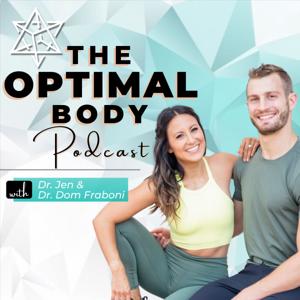


What truly is personal growth? We have Jake Kauffman to discuss the relationship between personal growth, beliefs, and identity. As Jake explains what drew him to personal growth, he dives into how you can re-discover your identity by navigating personal limiting beliefs and re-surfacing subconscious beliefs that were embedded throughout childhood. Jake offers tools along the way to help you approach the dynamics between emotional, social, and physical pain. Through these discussions, he offers insight into the ego, the concept of admired identity, and the 3 D's: Disease, Divorce, Death. Briefly touching base with the neuroscience of physical and emotional pain, he explains the nuances within the topic of personal growth and what it means to be your truest self. Let's dive in!
We're bringing the Jen Health community together to do the FULL BODY LOW IMPACT PLAN together starting on Monday, August 1st. You're getting strength, mobility flows, core activations, and muscle activations - a well-rounded view starting from the foundations and educating up to move optimally and efficiently. We're moving, educating, and providing the opportunity to win prizes! We've never had a challenge this low before - $24.99. Let's do this before its too late!
What you will learn in this interview with
:
1:11 – Why drew Jake to personal growth?
3:13 – What does it take to dive into “personal growth”
6:21 – Tool to discover your identity and conscious awareness
13:24 – What unconscious beliefs did Jake resurface into consciousness and how?
18:27 – Do you need to address your emotional/social pains?
24:25 – What is the “ego”?
32:40 – The admired identity
36:34 – How did Jake navigate the loss of identity?
38:40 – The 3 D’s: Disease, Divorce, Death
39:48 – How can you work with Jake?
Items mentioned:
To learn more about Jake and view full show notes, please visit the full website here: https://jen.health/podcast/227
Thank you so much for checking out this episode of The Optimal Body Podcast. If you haven’t done so already, please take a minute to subscribe and leave a quick rating and review of the show!
Hosted by Simplecast, an AdsWizz company. See pcm.adswizz.com for information about our collection and use of personal data for advertising.
Diagnosed with hip dysplasia? DocJen and Dr. Dom discuss what the hip dysplasia diagnosis is and how it presents in the body. They discuss its prevalence amongst females and newborns and what to do to support a baby's hip, especially considering the use of devices. Finally, they discuss safe management with a physical therapist in person with guidance on active mobility and strength of what is available within the hip.
We're bringing the Jen Health community together to do the FULL BODY LOW IMPACT PLAN together starting on Monday, August 1st. You're getting strength workouts, mobility flows, core activations, and muscle activations - a well-rounded view starting from the foundations and educating up to move optimally and efficiently. We're moving, educating, and providing the opportunity to win prizes! We've never had a challenge this low before - $24.99. Let's do this before it's too late!
What You Will Learn In This PT Pearl:
03:19 - What is hip dysplasia
04:27 - Common characteristics of hip dysplasia
05:14 - Who does it affect?
06:03 - What to look for?
07:30 - What to do to support a baby’s hip
09:33 - Devices and hip competence
11:07 - Extreme swaddling positions
12:55 - What to consider for management?
15:10 - What the research says
Watch Episode 226 on Youtube
For research and full show notes, visit the full website at:
https://jen.health/podcast/226
Thank you so much for checking out this episode of The Optimal Body Podcast. If you haven’t done so already, please take a minute to subscribe and leave a quick rating and review of the show!
Hosted by Simplecast, an AdsWizz company. See pcm.adswizz.com for information about our collection and use of personal data for advertising.
Struggling with a disc herniation? Matt Hall discusses his perspective through rehabilitation and away from surgery. With a quick rundown of his previous symptoms throughout his professional baseball career, Matt explains his journey with different therapists and his hip restrictions. Then, he unveils his symptoms and the effect his beliefs had on his pain experience. With the use of epidurals, he provides insight into how his pain affected his daily life and his focus on disc herniation rehabilitation. Tune into his story through his herniated disc!
Develop true core strength and fire up the hips with the Coba Board Plus. With the architecture of the board and the extra resistance, you'll be able to fire up the whole body and teach the hips and lower back to coordinate with one another for full support Use code OPTIMAL at checkout! (affiliate link).
Get hydrated with LMNT water. No processed sugars and filled with electrolytes (sodium, potassium, and magnesium help lubrication and relaxation within the spine!) Get a free sample pack with every purchase. Click here!
What you will learn in this interview with
:
3:38 –Matt’s previous injuries throughout baseball
4:02 – Matt’s experience with therapists
5:44 – What restrictions did Matt experience?
6:18 – Matt’s disc herniation symptoms
8:38 – Did Matt’s beliefs about his symptoms affect his pain?
9:24 – How did Matt approach his symptoms: Epidurals
13:52 – How did Matt’s pain affect his daily life?
16:32 – Did Matt follow through with rehab or surgery?
25:37 – How does Matt avoid pain now?
27:54 – What is Matt focusing on now?
32:58 – Work with Matt
Items mentioned:
To learn more about Matt and view full show notes, please visit the full website here: https://jen.health/podcast/225
Thank you so much for checking out this episode of The Optimal Body Podcast. If you haven’t done so already, please take a minute to subscribe and leave a quick rating and review of the show!
Hosted by Simplecast, an AdsWizz company. See pcm.adswizz.com for information about our collection and use of personal data for advertising.
Curious about Nerve Blocks? DocJen and Dr. Dom provide clarity about nerve blocks, explaining what a nerve block is, the pros of nerve blocks, as well as how epidurals work. They distinguish surgical and non- surgical types of nerve blocks, and how it’s effect in pain affects the duration of impact. Finally, DocJen and Dr.Dom dive into opioid use, and the importance of movement as a tool to inhibiting pain.
Want to build foot strength? Research suggests wearing barefoot shoes increases foot strength by 60%. Use code ‘TOB’ to grab your very own VivoBarefoot shoes!
**Vivo offers a 100-Day trial period. If you are not completely satisfied, you can send the shoes back and get a refund.
What You Will Learn In This PT Pearl:
00:15 - What is a nerve block?
01:39 - Pros of nerve blocks & surgical types
03:48 - Epidurals
04:36 - Non- surgical nerve blocks
05:28- Side effects vs duration of impact
10:30 - Opioids & tools to inhibit pain output
Watch Episode 224 on Youtube
For research and full show notes, visit the full website at:
https://jen.health/podcast/224
Thank you so much for checking out this episode of The Optimal Body Podcast. If you haven’t done so already, please take a minute to subscribe and leave a quick rating and review of the show!
Hosted by Simplecast, an AdsWizz company. See pcm.adswizz.com for information about our collection and use of personal data for advertising.
Could your pain points be fascia related? We have David Lesondak, a fascia expert, on to discuss what fascia is and its physiological function. As an integrative network of connective tissue, David shares how fascial manipulation has its own method of maneuver and how issues related to fascia can affect areas above or below the symptomatic area. Furthermore, David explains how to establish long-term fascial results and the physiological mechanism of the sensation of "release." Moreover, he provides insight on the function of the IT band, how to optimize tools, and how to approach clients with the sensations they may feel. Finally, David provides detail on how to add to fascial manipulation through at-home guidance. Let's dive in!
What does your fascia need? Adequate amount of hydration to slide and glide with ease and full support. Get hydrated with LMNT water. No processed sugars and filled with electrolytes (sodium, potassium, and magnesium help lubrication and relaxation within the spine!) Get a free sample pack with every purchase. Click here!
Sign up to be notified when the second edition of Devid Lesondak's book release
What you will learn in this interview with
:
2:50 – Why is David passionate about fascia?
3:02 – What is fascia and what is its purpose?
5:14 – How to work with fascia?
8:55 – Physiology of Fascia
12:51 – Stimulate the fascia and… for long-term results
15:57 – Physiology of the “release” sensation
20:51 – How fascial tissues in the feet affect the body up the chain?
25:43 – Should we roll out the IT band?
28:25 – Harder or softer foam rollers?
33:37 – What sensation should you be looking for?
36:54 – What to do at home to help your fascia?
38:21 – How do you know if you should get your fascia checked?
42:39 – How to seek out fascial integration?
48:21 - Learn with David
Items mentioned:
To learn more about David and view full show notes, please visit the full website here: https://jen.health/podcast/223
Thank you so much for checking out this episode of The Optimal Body Podcast. If you haven’t done so already, please take a minute to subscribe and leave a quick rating and review of the show!
Hosted by Simplecast, an AdsWizz company. See pcm.adswizz.com for information about our collection and use of personal data for advertising.
Diagnosed with a Biceps Tendinitis? DocJen & Dr. Dom break down what biceps tendinitis is and the paradigm shift from tendinitis to tendonosis or tendinopathy. Furthermore, they discuss the pathophysiology behind its prevalence amongst overhead or throwing athletes, how bicep injuries may be associated with rotator cuff injuries, and who amongst the general population is most susceptible. Finally, they explain the common symptoms associated with the diagnosis and run through a 5 step approach to rehabilitating biceps tendonosis: managing pain and isometrics, eccentric loading, dynamic movement, plyometrics, and considering the shoulder blade, pectoralis, and core.
Fire up the upper body with the Coba Board Plus. With the architecture of the board and the extra resistance, you'll be able to fire up the upper body and work in isometric and eccentric bicep exercises to rehabilitate that bicep into full function in not time! Use code OPTIMAL at checkout! (affiliate link).
For more exercises and a full 30 day plan that will hit every aspect of shoulder health, explore the shoulder plan on Jen.Health. 10-15 minutes every day, guiding you through how you can find relief through your own education and exploration. Start your free week with us now!
What You Will Learn In This PT Pearl:
00:54 - What is biceps tendinitis?
01:27 - Biceps tendonitis vs tendonosis
02:05 - Which athletes are at most risk
02:57 - Are bicep injuries related to the rotator cuff?
04:37 - Pathophysiology
06:24 - Who else is affected?
06:59 - Symptoms of Bicep tendonopathy
08:46 - Phase 1 to treat a biceps injury?
13:21 - Phase 2 to treat a biceps injury
15:48 - Phase 3 to treat a biceps injury
16:46 - Phase 4 to treat a biceps injury
17:44 - Phase 5 to treat a biceps injury
Watch Episode 222 on Youtube
For research and full show notes, visit the full website at: https://jen.health/podcast/222
Thank you so much for checking out this episode of The Optimal Body Podcast. If you haven’t done so already, please take a minute to subscribe and leave a quick rating and review of the show!
Hosted by Simplecast, an AdsWizz company. See pcm.adswizz.com for information about our collection and use of personal data for advertising.
#womenarenotsmallmen Wondering how to optimize your nutrition & training in and around menopause? Dr. Stacy Sims dives into what menopause is and how vital it is to consider the changes that occur through menopause. She speaks about hormonal replacement therapy and menopause therapy, as well as key behaviours to consider: nutrition and training. She discusses the cultural stigmatization around menopause and whether or not high-intensity exercise is putting excess stress on the body. Fear lifting heavy? Dr. Stacy Sims dives into why heavy strength training is vital and how to navigate fear around joint stress. She describes how the guidelines of 150 minutes of moderate intensity a week is inappropriate for women going through menopause, and how to approach increases in belly fat. Finally, she discusses how to set up your day nutritionally, whether intermittent fasting is necessary, how to optimize muscle development and bone remodelling, as well as how creatine supplementation can be advantageous to brain, gut, and immune health. Grab a notebook and let's dive into how you can mitigate the effects of depleted estrogen, considering blood sugar and insulin, muscle atrophy, bone mass density, belly fat, creatine supplementation, and intensity of exercise.
Get 20% Off Dr Stacy's Microlearning courses that launches July 7th with code OPTIMAL!
Link to get free Hydration cheat sheet and get on the Microlearning Waitlist
Use code OPTIMAL and purchase any of the Microlearning
Vivobarefoot Discount:
Our foundations are everything. Our feet are everything. Our feet are our base of support and affect everything up the chain! A study revealed a 60% increase in foot strength from 6 months of wearing VivoBarefoot shoes. Strengthen your feet to build more resilience and move more with Vivo Barefoot! Use code “TOB” to get 15% off!
**Vivo offers a 100-Day trial period. If you are not completely satisfied, you can send the shoes back and get a refund.
What you will learn in this interview with Dr. Stacy Sims
5:41 –What is menopause?
5:49 – Should we be doing hormonal therapy?
8:59 – Behaviors consider in and around menopause
9:22 – Cultural stigmatization around menopause
12:05 – Will exercise put more stress on the body around peri-menopause?
13:49 – Fear of joint stress of heavy lifts? Here’s what to do.
17:29 – Cardio training in and around menopause
21:07 – What to do about belly fat?
22:54 – How to set up the day nutritionally?
25:58 – Intermittent fasting around menopause?
31:14 – Can we mitigate natural muscle atrophy?
33:14 – Encouraging bone remodeling around menopause
35:28 – Supplements to support the body around menopause
39:45 - The Next Level Book & Learning ore with Dr. Stacy Sims
Items mentioned:
To learn more about Dr. Stacy Sims and view full show notes, please visit the full website here: https://jen.health/podcast/221
Thank you so much for checking out this episode of The Optimal Body Podcast. If you haven’t done so already, please take a minute to subscribe and leave a quick rating and review of the show!
Hosted by Simplecast, an AdsWizz company. See pcm.adswizz.com for information about our collection and use of personal data for advertising.
Diagnosed with a Hip Labrum tear? DocJen & Dr. Dom breakdown what the hip labrum is and how a tear may have occurred. Explaining common characteristics of the diagnosis, they mention who is at most risk, symptoms of hip labrum tears, and explain the mobility and strength components of rehabilitation for a hip labrum tear. Let's dive in.
Grab Jen Health Annual Membership at almost 50% off!
Prevent muscle tears with the Jen Health platform. With 11 different plans to choose from and 3 phases for each plan, DocJen educates through movement with daily videos that help you optimize foundational core, understanding movement, muscle activations, functional workouts, and mobility within short snippets of time daily. Get nearly 50% off the year – that’s a $120 discount! Sign up now!
What You Will Learn In This PT Pearl:
02:46 - What is the hip labrum?
04:30 - How do hip labrum tears occur?
05:25 - Who is at most risk?
08:12 - Symptoms of hip labrum tears
10:08 - Rehabilitation - Mobility
16:13 - Rehabilitation - Strength
Watch Episode 220 on Youtube
For research and full show notes, visit the full website at: https://jen.health/podcast/220
Thank you so much for checking out this episode of The Optimal Body Podcast. If you haven’t done so already, please take a minute to subscribe and leave a quick rating and review of the show!
Hosted by Simplecast, an AdsWizz company. See pcm.adswizz.com for information about our collection and use of personal data for advertising.
Andrea Nakayama, functional nutritionist, explains her methods of strategically approaching symptoms from a root-cause based mindset. She discusses the 3 tiers of nutrition mastery and her best recommendation to identifying the source of your symptoms. With tracking in mind, she explains the importance of stool and elimination, and how the stool spectrum provides informative data about your health. Furthermore, she dives into gut bacteria, providing 3 key takeaways to allow the gut bacteria to flourish. As she explains 4 steps to creating an optimal meal, she approaches nutrition tests, blood glucose levels, and autoimmunity from a functional perspective. Listen in to learn more about functional nutrition!
Coba Board Discount:
Feeling your back or knees instead of your Glutes? Try the Coba Board Plus. With the architecture of the board and the different levels of resistance, you’ll be able to fire up those Glutes without injuring yourself! Use code OPTIMAL at checkout!
Grab Jen Health Annual Membership at almost 50% off!
Prevent muscle tears with the Jen Health platform. With 11 different plans to choose from and 3 phases for each plan, DocJen educates through movement with daily videos that help you optimize foundational core, understanding movement, muscle activations, functional workouts, and mobility within short snippets of time daily. Get nearly 50% off the year – that’s a $120 discount! Sign up now!
What you will learn in this interviewL
2:02 - What is functional medicine?
4:06 - 3 tiers of nutrition mastery
7:38 - Key to recognizing how food is affecting your digestion
10:46 - How to approach tracking
16:24 - Bristol stool chart - what the spectrum tells us
21:51 - Changing the bacteria in your gut
26:19 - 4 steps to an optimal meal
34:02 - Autoimmunity in women
37:20 - Testing for nutrition
40:34 - Getting from pathological range vs functional range
43:11 - Continuous glucose monitor
45:17 - Influencing autoimmunity
Items mentioned:
To learn more about Andrea and view full show notes, please visit the full website here: https://jen.health/podcast/219
Thank you so much for checking out this episode of The Optimal Body Podcast. If you haven’t done so already, please take a minute to subscribe and leave a quick rating and review of the show!
Hosted by Simplecast, an AdsWizz company. See pcm.adswizz.com for information about our collection and use of personal data for advertising.
Could it be a sprain or strain? DocJen & Dr. Dom differentiate sprains from strains, describing their experiences with strain in gymnastics and football respectively. They have into the pathophysiology of strain, explaining why or when they may happen, common systems, risk factors, and causes for strains. Finally, they list how strain grades are diagnosed and the four phases of healing for strains! Tune in to learn more!
Grab Jen Health Annual Membership at almost 50% off!
Prevent muscle tears with the Jen Health platform. With 11 different plans to choose from and 3 phases for each plan, DocJen educates through movement with daily videos that help you optimize foundational core, understanding movement, muscle activations, functional workouts, and mobility within short snippets of time daily. Get nearly 50% off the year – that’s a $120 discount! Sign up now!
What You Will Learn In This PT Pearl:
02:43 - Sprain vs Strain
03:59 - DocJen & Dr. Dom’s experiences with strains
06:22 - Why do strains happen?
07:40 - Grades of strains
11:29 - Common symptoms
11:55 - Risk factors or causes for strains
15:15 - Approaching healing
23:01 - Why mobility is important!
Watch Episode 218 on Youtube
For research and full show notes, visit the full website at: https://jen.health/podcast/218
Thank you so much for checking out this episode of The Optimal Body Podcast. If you haven’t done so already, please take a minute to subscribe and leave a quick rating and review of the show!
Hosted by Simplecast, an AdsWizz company. See pcm.adswizz.com for information about our collection and use of personal data for advertising.
From the publisher's feed

7,197 Listeners

1,060 Listeners
1,997 Listeners

4,864 Listeners

3,417 Listeners

9,156 Listeners
818 Listeners

125 Listeners

625 Listeners
1,407 Listeners

29,124 Listeners

1,475 Listeners
1,671 Listeners

1,214 Listeners

99 Listeners