
Sign up to save your podcasts
Or

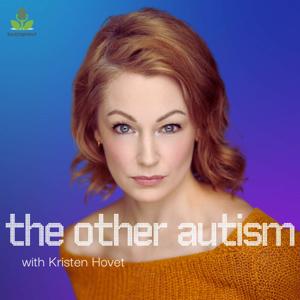


I've had so many jobs over the years — from babysitter to office administrator — and I didn't know until much later that my struggles in certain environments were connected to being autistic. In this episode, I talk about what it means to navigate workplaces that aren't built for neurodivergent minds, and how universal design could change everything. This is about moving from just "accommodating" us to truly including us.
Watch this episode on YouTube.
If you'd like to know more about topics discussed in this episode, check out:
"Workplace Accommodations and Neurodiversity" by Susanne Bruyère and Adrienne Colella (chapter in Neurodiversity and Work: Employment, Identity, and Support Networks for Neurominorities edited by Eric Patton and Alecia Santuzzi)
"Accommodations vs Universal Design" by CultureAlly
"Autistic Adults' Views and Experiences of Requesting and Receiving Workplace Adjustments in the UK" by Jade Davies et al.
Universal Design: Creating Inclusive Environments by Edward Steinfeld and Jordana Maisel
"How Can the Work Environment Be Redesigned to Enhance the Well-Being of Individuals With Autism?" by Michał Tomczak
"Autism and the Right to a Hypersensitivity-Friendly Workspace" by Bouke de Vries
"'It's Like a Ramp for a Person in a Wheelchair': Workplace Accessibility for Employees With Autism" by Michal Waisman-Nitzan et al.
All episodes written and produced by Kristen Hovet.
Send in your questions to [email protected]
Buy me a coffee!
The views, opinions, and experiences shared by guests on this podcast are their own and do not necessarily reflect those of the host or production team. The content is intended for informational purposes only and should not be taken as medical or professional advice. Please consult with a qualified healthcare provider before making any decisions related to your health, fitness, or wellness.
Rebecca is a mental health counsellor in Australia. Diagnosed at 47 — with level-two autism and ADHD combined type — she shares her story of self-recognition, complex emotions around diagnosis, and the challenges of navigating neurodivergence in both personal and professional life.
Rebecca reflects on masking, internalized ableism, and how people-pleasing tendencies developed as survival strategies. The conversation also explores her work as a counsellor and how parenting neurodivergent children has shaped her own self-understanding.
Topics explored include:
Watch this episode on YouTube.
Rebecca recommends these resources:
Camouflaging Autistic Traits Questionnaire (CAT-Q)
Embrace Autism website
Is This Autism? — A Guide for Clinicians and Everyone Else by Donna Henderson and Sarah Wayland, with Jamell White
The Neurodivergent Woman podcast
All episodes written and produced by Kristen Hovet.
Send in your questions to [email protected]
Buy me a coffee!
The views, opinions, and experiences shared by guests on this podcast are their own and do not necessarily reflect those of the host or production team. The content is intended for informational purposes only and should not be taken as medical or professional advice. Please consult with a qualified healthcare provider before making any decisions related to your health, fitness, or wellness.
Dr. Brett Ranon Nachman is an autistic higher education researcher and co-lead of the PEACES study. We talk about what success means for autistic post-secondary students, the impact of internalized ableism and masking, and how campuses can better support marginalized autistic students, including LGBTQIA+ and late-identified individuals.
Brett shares insights from both personal experience and research, and we reflect on the importance of autistic-led scholarship and inclusive academic spaces. This conversation left me feeling hopeful — and I think it will do the same for you.
Watch this episode on YouTube.
Dr. Brett Ranon Nachman's Instagram, BlueSky, and email
Learn more about topics discussed in this episode:
College Autism Network
PEACES Project
All episodes written and produced by Kristen Hovet.
Send in your questions to [email protected]
Buy me a coffee!
The views, opinions, and experiences shared by guests on this podcast are their own and do not necessarily reflect those of the host or production team. The content is intended for informational purposes only and should not be taken as medical or professional advice. Please consult with a qualified healthcare provider before making any decisions related to your health, fitness, or wellness.
millie joins me to talk about autistic culture, creativity, surviving in a neurotypical world, and finding true community. We get into late-diagnosed autism and ADHD, harm reduction, AAC (augmentative and alternative communication), and why autistic spaces can feel like a breath of fresh air. millie also shares how surviving — and thriving — as a disabled, trans, autistic person reshaped their ideas about belonging, burnout, and joy. What if the world isn't made for us — but we could build something better? A rich, raw, and hopeful conversation you won't want to miss.
Watch this episode on YouTube.
Check out millie's website.
All episodes written and produced by Kristen Hovet.
Send in your questions to [email protected]
Buy me a coffee!
The views, opinions, and experiences shared by guests on this podcast are their own and do not necessarily reflect those of the host or production team. The content is intended for informational purposes only and should not be taken as medical or professional advice. Please consult with a qualified healthcare provider before making any decisions related to your health, fitness, or wellness.
Odosa Obasuyi is the founder and CEO of Autinerary, a positive, all-purpose hub for all things autism-related. Odosa is the brother of an autistic sibling, a student at the University of Toronto, and suspects he may be neurodivergent himself. He joins me for a quick chat about the ways Autinerary can help you on your autism journey — whether you're an autistic person or a sibling, parent, friend, or partner of an autistic person!
Watch this episode on YouTube.
If you'd like to know more about topics discussed in this episode, check out:
Autinerary
"Autism Is" merch
Autinerary's TikTok, Instagram, and YouTube
All episodes written and produced by Kristen Hovet.
Send in your questions to [email protected]
Buy me a coffee!
The views, opinions, and experiences shared by guests on this podcast are their own and do not necessarily reflect those of the host or production team. The content is intended for informational purposes only and should not be taken as medical or professional advice. Please consult with a qualified healthcare provider before making any decisions related to your health, fitness, or wellness.
In this episode, I sit down with Dr. Michael Lenz, a physician specializing in pediatrics, internal medicine, lifestyle medicine, and lipidology. Dr. Lenz is the author of Conquering Your Fibromyalgia and host of the podcast by the same name. His passion for lifelong learning and holistic patient care has led him to specialize in chronic pain syndromes — conditions that are often misunderstood, misdiagnosed, and dismissed by the medical community.
Together, we explore:
Dr. Lenz also shares insights from his clinical experience, including real patient stories that highlight the need for greater awareness, compassion, and interdisciplinary care. If you've ever felt unheard or gaslighted by the medical system — or if you want to understand the complex relationship between neurodivergence and chronic pain — this conversation is for you.
Watch this episode on YouTube.
Check out Dr. Michael Lenz's website: Conquering Your Fibromyalgia
All episodes written and produced by Kristen Hovet.
Send in your questions to [email protected]
Buy me a coffee!
The views, opinions, and experiences shared by guests on this podcast are their own and do not necessarily reflect those of the host or production team. The content is intended for informational purposes only and should not be taken as medical or professional advice. Please consult with a qualified healthcare provider before making any decisions related to your health, fitness, or wellness.
Welcome to this guided meditation, created with autistic and neurodivergent brains in mind.
Meditation is often depicted a certain way — sitting still, cross-legged, eyes closed. But here, we do things differently. Here, you are invited to make meditation your own. Maybe that means sitting in a way that feels natural to you. Maybe that means allowing gentle movement, like rocking or fidgeting. Maybe it means simply listening and letting the words wash over you while you garden or play with an animal friend.
This meditation is a space for acceptance. A space for softening. A space for replenishing what you need in this moment, whatever that may be.
Together, we'll breathe deeply, reconnect with our bodies, and visualize the flowing river of a new year — steady, constant, full of possibility. You are exactly as you need to be. You are whole, just as you are.
Take a deep breath, settle in however feels right, and let's begin!
This meditation is brought to you by The Other Autism podcast's patrons. Thank you, dear patrons, for your ongoing support, and for workshopping this episode with me, trialing it before publication, and offering suggestions and feedback for further meditation episodes.
All episodes written and produced by Kristen Hovet.
Send in your questions to [email protected]
Buy me a coffee!
The views, opinions, and experiences shared by guests on this podcast are their own and do not necessarily reflect those of the host or production team. The content is intended for informational purposes only and should not be taken as medical or professional advice. Please consult with a qualified healthcare provider before making any decisions related to your health, fitness, or wellness.
In this episode, I dive into rejection sensitive dysphoria (RSD) and how it connects to both ADHD and autism. I explore the intense emotional responses that come with RSD, the common triggers, and the ways it can impact relationships and self-worth. I also share some therapeutic approaches that might help and explain why it's so important to understand RSD — whether you experience it yourself or want to better support someone who does.
Watch this episode on YouTube.
Take the Rejection Sensitive Dysphoria test. If your score is 45-60, the website recommends that you "see a trained mental health professional as there is a possibility that you may be experiencing symptoms of rejection sensitive dysphoria."
If you'd like to know more about topics discussed in this episode, check out:
"Rejection Sensitive Dysphoria in ADHD and Autism" by Debra Bercovici
"New Insights Into Rejection Sensitive Dysphoria" by William Dodson
"Rejection Sensitivity Dysphoria in Attention-Deficit/Hyperactivity Disorder: A Case Series" by William W. Dodson et al.
"Associations Between Autistic Traits, Depression, Social Anxiety and Social Rejection in Autistic and Non-autistic Adults" by Emine Gurbuz et al.
"Recognising and Responding to Physical and Mental Health Issues in Neurodivergent Women" by Clive Kelly et al.
"What to Know About Autism and Rejection Sensitive Dysphoria" by Amy Marschall
"Rejection Sensitive Dysphoria and Autism Unveiled" by Ralph Moller
"Effects of Rejection Intensity and Rejection Sensitivity on Social Approach Behavior in Women" by Violetta K. Schaan et al.
All episodes written and produced by Kristen Hovet.
Send in your questions to [email protected]
Buy me a coffee!
The views, opinions, and experiences shared by guests on this podcast are their own and do not necessarily reflect those of the host or production team. The content is intended for informational purposes only and should not be taken as medical or professional advice. Please consult with a qualified healthcare provider before making any decisions related to your health, fitness, or wellness.
If you're autistic and you're diagnosed with cancer, will your care be impacted by your unconscious wish to be the perfect patient? Or will it be impacted by an abusive spouse or partner, the kind so many of us on the spectrum find ourselves with? We explore these questions and much more.
In this episode, we honour the life and legacy of Lindsey Carla Holmes, a late-diagnosed autistic woman, who passed away from metastatic ovarian cancer earlier this year.
Joining me is Dr. Paula Holmes-Rodman — Lindsey's sister, caregiver, and collaborator — to discuss aspects of Lindsey's life and the sisters' co-development of the Self-Advocacy Guide for Cancer Patients on the Autism Spectrum.
We explore Lindsey's journey of self-discovery, her resilience and sunshiny disposition, advance care planning, and some of the issues that may leave many autistic folks vulnerable to abusive relationships.
Dr. Holmes-Rodman shares stories from The Lindsey Interview Project, the cat- and snack-filled Sunday afternoon chats that sparked the development of the Self-Advocacy Guide for Cancer Patients on the Autism Spectrum — a Guide uniquely positioned to help autistic cancer patients everywhere.
This episode celebrates Lindsey's hopes for the autistic community, the continued importance of self-advocacy, and the ways listeners can help support Lindsey's vision for a better future.
Watch this episode on YouTube.
Find the Self-Advocacy Guide for Cancer Patients on the Autism Spectrum on Autism Canada.
Watch The Lindsey Interview Project.
All episodes written and produced by Kristen Hovet.
Send in your questions to [email protected]
Buy me a coffee!
The views, opinions, and experiences shared by guests on this podcast are their own and do not necessarily reflect those of the host or production team. The content is intended for informational purposes only and should not be taken as medical or professional advice. Please consult with a qualified healthcare provider before making any decisions related to your health, fitness, or wellness.
Meet Dennis Bourne, a late-diagnosed autistic and ADHD personal trainer and martial arts instructor. Dennis shares his journey growing up undiagnosed in New York with immigrant parents, recounts his experiences as a Hispanic neurodivergent person, and describes how ADHD and autism diagnoses reshaped his worldview.
Dennis also offers fitness and dietary tips for neurodivergent individuals and emphasizes the importance of adaptable routines. Tune in for insights on self-discovery, embracing neurodiversity, and finding strength in both body and mind.
Watch this episode on YouTube.
Follow Dennis Bourne on Instagram and on YouTube.
All episodes written and produced by Kristen Hovet.
Send in your questions to [email protected]
Buy me a coffee!
The views, opinions, and experiences shared by guests on this podcast are their own and do not necessarily reflect those of the host or production team. The content is intended for informational purposes only and should not be taken as medical or professional advice. Please consult with a qualified healthcare provider before making any decisions related to your health, fitness, or wellness.
From the publisher's feed
The Other Autism explores late-diagnosed autism and the latest in autism research, and works to dispel myths and stereotypes about autism and autistic people. Episodes cover leading topics in the…

1,323 Listeners

413 Listeners

2,874 Listeners
644 Listeners
236 Listeners

427 Listeners
676 Listeners
308 Listeners
140 Listeners

282 Listeners
27 Listeners
106 Listeners
151 Listeners

24 Listeners