
Sign up to save your podcasts
Or



Dr. Kim Sage is a licensed clinical psychologist in southern California. Dr. Sage joins me to discuss her discovery that she may be autistic, the problem of autism underdiagnosis, and the close connection between autism and personality disorders (especially narcissistic personality disorder) within families.
Dr. Sage also talks about her early autistic traits, friendship challenges, autistic traits' impacts on romantic relationships, and more.
Watch this episode on YouTube.
Check out Dr. Sage's website: Dr. Kim Sage
And her social media:
TikTok
YouTube
Episode outro music: "I Am Falling For You (Instrumental)" by Loving Caliber
All episodes written and produced by Kristen Hovet.
Send in your questions to [email protected]
Buy me a coffee!
The views, opinions, and experiences shared by guests on this podcast are their own and do not necessarily reflect those of the host or production team. The content is intended for informational purposes only and should not be taken as medical or professional advice. Please consult with a qualified healthcare provider before making any decisions related to your health, fitness, or wellness.
Feeling like a fraud or a fake autistic is so common in those who are diagnosed as autistic in adulthood. In this episode, I talk about impostor syndrome and how it relates to autistic impostor syndrome. I also talk about the impact of impostor syndrome and some strategies for coping with it.
Be sure to stick around right to the end. Toby is super chatty. And so is Google... It gets weird.
Watch this episode on YouTube.
If you'd like to know more about topics discussed in this episode, check out:
"Prevalence, Predictors, and Treatment of Impostor Syndrome: A Systematic Review" by Dena M. Bravata et al.
The Impostor Phenomenon: Overcoming the Fear That Haunts Your Success by Pauline Rose Clance
"Introducing Autistic Impostor Syndrome" by Natalie Engelbrecht
"Feel Like a Fraud?" by Kirsten Weir
Episode outro music: "Spaceman in K-Town" by Kristen Hovet
All episodes written and produced by Kristen Hovet.
Send in your questions to [email protected]
Buy me a coffee!
The views, opinions, and experiences shared by guests on this podcast are their own and do not necessarily reflect those of the host or production team. The content is intended for informational purposes only and should not be taken as medical or professional advice. Please consult with a qualified healthcare provider before making any decisions related to your health, fitness, or wellness.
Are you ready to navigate the intricate maze of adult autism diagnosis?
I dedicate this episode to offering tips and advice to help you determine whether autism assessment is right for you, suggestions on how to find a psychologist who conducts adult autism assessments, and brief strategies on securing financial support if you can't afford the exorbitant assessment fees.
This episode is designed to be a supportive companion on your quest for answers.
If you'd like to know more about topics discussed in this episode, check out:
Dr. David Worling's website
Episode outro music: "Overshare" by dreem
All episodes written and produced by Kristen Hovet.
Send in your questions to [email protected]
Buy me a coffee!
The views, opinions, and experiences shared by guests on this podcast are their own and do not necessarily reflect those of the host or production team. The content is intended for informational purposes only and should not be taken as medical or professional advice. Please consult with a qualified healthcare provider before making any decisions related to your health, fitness, or wellness.
Courtney Benner, a neurodivergent occupational therapist based in Utah, shares how occupational therapy can help autistic adults. She also talks about her neurodivergent identities and the ways these help her relate to her clients.
Courtney shares the lead-up to her diagnoses and how much of an impact they had on her life. Additionally, she shares some very interesting statistics about autistic sleep patterns, explains the zones of regulation and how these can be used or adapted for adults with alexithymia, talks about the hurdles to becoming an autism assessor, and more.
If you'd like to know more about topics discussed in this episode, check out:
Check out "10 Surprising Ways OT Can Help Adults With Autism and ADHD" by Courtney Benner
"Take the ACE [Adverse Childhood Experiences] Quiz" via NPR
Episode outro music: "Stream This" by Smartface
All episodes written and produced by Kristen Hovet.
Send in your questions to [email protected]
Buy me a coffee!
The views, opinions, and experiences shared by guests on this podcast are their own and do not necessarily reflect those of the host or production team. The content is intended for informational purposes only and should not be taken as medical or professional advice. Please consult with a qualified healthcare provider before making any decisions related to your health, fitness, or wellness.
Melissa Elaine, a music industry professional in California, shares the lead-up to getting an autism diagnosis just this past January and what life has been like ever since.
Melissa shares how past therapists chalked up her challenges to trauma and C-PTSD, dismissing her and her family's well-informed suspicions that she may be autistic. She also shares her experiences of going nonverbal, her main autistic attributes as a child, and what aspects of life have changed since her late-autism assessment and identification.
Connect with Melissa on LinkedIn.
If you'd like to know more about topics discussed in this episode, check out:
"Females and Autism/Aspergers: A Checklist" by Samantha Craft
Unmasking Autism: Discovering the New Faces of Neurodiversity by Devon Price
So You Think You're Autistic: A Workbook for the Confused Person Who's Trying to Figure Things Out by Samantha Stein
Episode outro music: "Hidden Lines" by Ooyy
All episodes written and produced by Kristen Hovet.
Send in your questions to [email protected]
Buy me a coffee!
The views, opinions, and experiences shared by guests on this podcast are their own and do not necessarily reflect those of the host or production team. The content is intended for informational purposes only and should not be taken as medical or professional advice. Please consult with a qualified healthcare provider before making any decisions related to your health, fitness, or wellness.
Let's delve into an under-discussed topic — the intersection of autism and non-monogamy. I talk about the differences between polyamory and open relationships, and challenge the stereotype that autistic individuals are incapable of or uninterested in sexual relationships. Drawing from research and personal experiences, I discuss why autistic individuals are more inclined towards non-monogamous relationships.
If you'd like to know more about topics discussed in this episode, check out:
"Neurodiversity and Relationship Variation: Why Some With Autism or ADHD Are Drawn to Consensual Nonmonogamy and/or BDSM" by Elisabeth A. Sheff
"Polyamory vs. an Open Relationship: What's the Difference?" by Emma Singer
"An Exploration of Why Autistic Adults Are Practicing Consensual Non-Monogamy" by Janet Walsh and Mark Stokes
"I'm Autistic and Polyamorous. Here's Why It Works for Me" by Leanne Yau
The Letters of Abelard and Heloise translated by Betty Radice
Episode outro music: "Go to Hell" by Mindme
All episodes written and produced by Kristen Hovet.
Send in your questions to [email protected]
Buy me a coffee!
The views, opinions, and experiences shared by guests on this podcast are their own and do not necessarily reflect those of the host or production team. The content is intended for informational purposes only and should not be taken as medical or professional advice. Please consult with a qualified healthcare provider before making any decisions related to your health, fitness, or wellness.
In the final episode of season two of The Other Autism podcast, I explore the concept of masking. We've talked about it a lot this season, but now I'd like to do a deeper dive.
Topics discussed also include:
If you'd like to know more about topics discussed in this episode, check out:
"Camouflage and Masking Behavior in Adult Autism" by Javad Alaghband-rad et al.
"Looking Good but Feeling Bad: 'Camouflaging' Behaviors and Mental Health in Women With Autistic Traits" by Jonathan Beck et al.
"Conceptualising Autistic Masking, Camouflaging, and Neurotypical Privilege: Towards a Minority Group Model of Neurodiversity" by Elizabeth Radulski
Episode intro and outro music: "Calliope's Cry" by Kristen Hovet
All episodes written and produced by Kristen Hovet.
Send in your questions to [email protected]
Buy me a coffee!
The views, opinions, and experiences shared by guests on this podcast are their own and do not necessarily reflect those of the host or production team. The content is intended for informational purposes only and should not be taken as medical or professional advice. Please consult with a qualified healthcare provider before making any decisions related to your health, fitness, or wellness.
Cat is an Australia-based, late-identified autistic individual who suddenly lost the ability to mask following the death of her baby.
Kristen and Cat discuss being autistic while undergoing fertility treatments, trauma in midlife, out-of-order loss and bereavement, polyvagal theory, the ways life crises often precede late identification of autism, and more.
Correction: Cat said "microwave" when she meant to say "oven", in reference to her grandmother.
If you'd like to know more about topics discussed in this episode, check out:
Strong Female Character by Fern Brady
"Intracytoplasmic Sperm Injection (ICSI)" —Cleveland Clinic
The Book of Woe: The DSM and the Unmaking of Psychiatry by Gary Greenberg
"In Vitro Fertilization (IVF)" —Mayo Clinic
"The Polyvagal Theory: New Insights Into Adaptive Reactions of the Autonomic Nervous System" by Stephen W. Porges
Episode intro and outro music: "Adamant" by Christoffer Moe Ditlevsen, Anna Dager, and Hanna Ekström
All episodes written and produced by Kristen Hovet.
Send in your questions to [email protected]
Buy me a coffee!
The views, opinions, and experiences shared by guests on this podcast are their own and do not necessarily reflect those of the host or production team. The content is intended for informational purposes only and should not be taken as medical or professional advice. Please consult with a qualified healthcare provider before making any decisions related to your health, fitness, or wellness.
Jennifer Dodd is a Portland-based therapist and owner of the Embodied Life Therapy Center. Jennifer is a late-diagnosed autistic individual who has also been diagnosed with the inattentive type of ADHD.
Kristen and Jennifer discuss the ways that ADHD and autism compete with and complement each other, neurodivergent loathing of CBT (sorry, not sorry, CBT!), best types of therapy for autistic folks, the autistic penchant for bottom-up thinking, the times when "mindful masking" just makes sense, and more.
Check out Jennifer's website: Embodied Life Therapy Center
And her Instagram accounts:
Episode intro and outro music: "Lost in the Dark" by Aiyo
All episodes written and produced by Kristen Hovet.
Send in your questions to [email protected]
Buy me a coffee!
The views, opinions, and experiences shared by guests on this podcast are their own and do not necessarily reflect those of the host or production team. The content is intended for informational purposes only and should not be taken as medical or professional advice. Please consult with a qualified healthcare provider before making any decisions related to your health, fitness, or wellness.
Kim Gallo is the author of the new book, The Pivot: For Parents and Educators – Looking at Autism and ADHD Through a Different Lens. She is a speech language pathologist in south Florida and has experience as a former applied behaviour analysis (ABA) practitioner.
Kristen and Kim discuss Kim's changing views on ABA (thanks in large part to TikTok!), the changing landscape of what it means to be autistic in today's world, stigma experienced by autistic individuals, masking and its impact on identity and sense of self, Kim's perspectives on having a neurodivergent young adult daughter, and more.
Check out Kim's website: Kim Gallo SLP: Sensory Smart & Neurodiversity Friendly
Buy The Pivot: For Parents and Educators — Looking at Autism and ADHD Through a Different Lens by Kim Gallo
If you'd like to know more about topics discussed in this episode, check out:
"Individual Differences, ADHD, Adult Pathological Demand Avoidance, and Delinquency" by Vincent Egan et al.
"After Your Child's Diagnosis of Autism Spectrum Disorder: A Quick Start Guide for Ages 6-12" —Government of British Columbia [showing prominence of ABA in British Columbia, Canada]
"Pathological Demand Avoidance: What and Who Are Being Pathologised and in Whose Interests?" by Allison Moore
Why Johnny Doesn't Flap: NT Is OK! by Clay Morton and Gail Morton
"Pathological Demand Avoidance (PDA)" —National Autistic Society
Episode intro and outro music: "I See You" by Hampus Naeselius
All episodes written and produced by Kristen Hovet.
Send in your questions to [email protected]
Buy me a coffee!
The views, opinions, and experiences shared by guests on this podcast are their own and do not necessarily reflect those of the host or production team. The content is intended for informational purposes only and should not be taken as medical or professional advice. Please consult with a qualified healthcare provider before making any decisions related to your health, fitness, or wellness.
From the publisher's feed
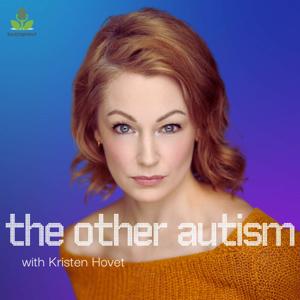
The Other Autism explores late-diagnosed autism and the latest in autism research, and works to dispel myths and stereotypes about autism and autistic people. Episodes cover leading topics in the…

1,323 Listeners

413 Listeners

2,874 Listeners
644 Listeners
236 Listeners
427 Listeners
676 Listeners
308 Listeners
140 Listeners

282 Listeners
27 Listeners
106 Listeners
151 Listeners

24 Listeners