
Sign up to save your podcasts
Or

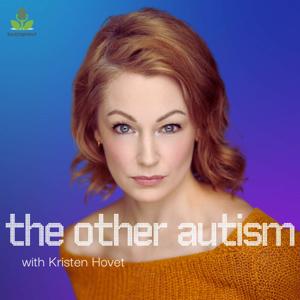


Today, I'm speaking with Sarah, a musician, gardener, and former teacher based in Pennsylvania. Sarah spent much of her life in therapy and struggling with others' misunderstandings and insensitivities. Now, in her 60s and with a handful of mental health diagnoses behind her, she is finding that autism might explain so many of her experiences.
A series of back-to-back crises set the stage as Sarah wrestles with her newfound autistic identity.
Watch this episode on YouTube.
All episodes written and produced by Kristen Hovet.
Send in your questions to [email protected]
Buy me a coffee!
The views, opinions, and experiences shared by guests on this podcast are their own and do not necessarily reflect those of the host or production team. The content is intended for informational purposes only and should not be taken as medical or professional advice. Please consult with a qualified healthcare provider before making any decisions related to your health, fitness, or wellness.
Many think that autistic people lack empathy, but do they? Even if you think you know the answer, you'll find new content about empathy and relating to others in this episode.
Join me as I explore empathy in the context of autism research and the origins of the autistic empathy deficit idea. In this episode, I cover the double empathy problem with help from a friend. How does the double empathy problem explain misunderstandings and communication breakdowns between autistic individuals and neurotypicals?
I also talk about how I personally think of empathy (and how my notions of empathy are surprisingly close to the very first usage of the word!).
Watch this episode on YouTube.
If you'd like to know more about topics discussed in this episode, check out:
"A Reflective Guide on the Meaning of Empathy in Autism Research" by Caroline Bollen
"Autism and Empathy: What Are the Real Links?" by Sue Fletcher-Watson and Geoffrey Bird
"Autism in an Age of Empathy: A Cautionary Critique" by Patrick McDonagh (chapter in Worlds of Autism edited by Joyce Davidson and Michael Orsini)
"On the Ontological Status of Autism: The 'Double Empathy Problem'" by Damian Milton
"The 'Double Empathy Problem': Ten Years On" by Damian Milton et al.
"Object Personification in Autism: This Paper Will Be Very Sad if You Don't Read it" by Rebekah White and Anna Remington
"A Dual Route Model of Empathy: A Neurobiological Perspective" by Chi-Lin Yu and Tai-Li Chou
All episodes written and produced by Kristen Hovet.
Send in your questions to [email protected]
Buy me a coffee!
The views, opinions, and experiences shared by guests on this podcast are their own and do not necessarily reflect those of the host or production team. The content is intended for informational purposes only and should not be taken as medical or professional advice. Please consult with a qualified healthcare provider before making any decisions related to your health, fitness, or wellness.
Today, I'm speaking with Helena, a retail worker and soon-to-be college student and fiction author. Helena came to Canada as a child, but wasn't assessed for autism or schizophrenia until her 20s. She talks about who the biggest bullies were in school and shares some activities that have helped her.
Watch this episode on YouTube.
Check out Helena's Instagram.
All episodes written and produced by Kristen Hovet.
Send in your questions to [email protected]
Buy me a coffee!
The views, opinions, and experiences shared by guests on this podcast are their own and do not necessarily reflect those of the host or production team. The content is intended for informational purposes only and should not be taken as medical or professional advice. Please consult with a qualified healthcare provider before making any decisions related to your health, fitness, or wellness.
Are my traits or symptoms related to autism? Or are they caused by trauma? This is one of the top questions asked by individuals going through the process of identifying their neurodivergent identity in adulthood.
Join me as we explore how autistic and trauma traits intertwine and differ, with a focus on familial mental health challenges and their impacts.
Get clarity on trauma, autism, and PTSD with insights from researchers and therapists working in the field. Gain a deeper understanding of attachment disorders like reactive attachment disorder (RAD) and disinhibited social engagement disorder (DSED) in children.
Watch this episode on YouTube.
If you'd like to know more about topics discussed in this episode, check out:
"Autism and Attachment Disorders — How Do We Tell the Difference?" by Claire Davidson et al.
"Parental Psychiatric Disorders and Autism Spectrum Disorders" by Elina Jokiranta et al.
"The Long-Term Impact of Parental Mental Health on Children’s Distress Trajectories in Adulthood" by Christina Kamis
"Exploring Potential Sources of Childhood Trauma: A Qualitative Study With Autistic Adults and Caregivers" by Connor M. Kerns et al.
"Autism and Reactive Attachment/Disinhibited Social Engagement Disorders: Co-occurrence and Differentiation" by Susan Dickerson Mayes et al.
"Genetic Overlap Among Autism Spectrum Disorders and Other Neuropsychiatric Disorders" by Yoshiro Morimoto et al.
"PTSD and Autism" by Megan Anna Neff
"Family History of Mental and Neurological Disorders and Risk of Autism" by Sherlly Xie et al.
All episodes written and produced by Kristen Hovet.
Send in your questions to [email protected]
Buy me a coffee!
The views, opinions, and experiences shared by guests on this podcast are their own and do not necessarily reflect those of the host or production team. The content is intended for informational purposes only and should not be taken as medical or professional advice. Please consult with a qualified healthcare provider before making any decisions related to your health, fitness, or wellness.
By popular demand, I've released the first reading episode for Patreon paid members. Here is a sneak peak! We're reading Twenty Thousand Leagues Under the Sea, and this is part 1, chapter 1: A Shifting Reef. To listen to upcoming reading episodes, you'll need to be a paid member of The Other Autism's Patreon.
Many listeners (especially those coping with autistic burnout) have written to me over the past couple of years asking for reading, meditation, or audio relaxation episodes. I've decided to do just that, but for Patreon members only. If you aren't a member yet, head over to https://www.patreon.com/TheOtherAutism where all reading episodes will be published!
All episodes written and produced by Kristen Hovet.
Send in your questions to [email protected]
Buy me a coffee!
The views, opinions, and experiences shared by guests on this podcast are their own and do not necessarily reflect those of the host or production team. The content is intended for informational purposes only and should not be taken as medical or professional advice. Please consult with a qualified healthcare provider before making any decisions related to your health, fitness, or wellness.
Here's a deep dive into the controversial topic of trigger warnings. I explore the ongoing debate surrounding the effectiveness and potential dangers of trigger warnings, particularly for those who have experienced complex trauma. I highlight the latest research on trigger warnings, their impact on emotional responses, learning outcomes, and more.
Don't miss this episode where I challenge the common usage of trigger warnings and explore trigger warnings' influence on those they're supposed to protect most.
Watch this episode on YouTube.
If you'd like to know more about topics discussed in this episode, check out:
"Trigger Warning Efficacy: The Impact of Warnings on Affect, Attitudes, and Learning" by Guy Boysen et al.
"A Meta-Analysis of the Efficacy of Trigger Warnings, Content Warnings, and Content Notes" by Victoria Bridgland et al.
"I Was Wrong About Trigger Warnings" by Jill Filipovic
"Helping or Harming? The Effect of Trigger Warnings on Individuals With Trauma Histories" by Payton Jones et al.
"What Does It Mean to Be Triggered?" By Zawn Villines
All episodes written and produced by Kristen Hovet.
Send in your questions to [email protected]
Buy me a coffee!
The views, opinions, and experiences shared by guests on this podcast are their own and do not necessarily reflect those of the host or production team. The content is intended for informational purposes only and should not be taken as medical or professional advice. Please consult with a qualified healthcare provider before making any decisions related to your health, fitness, or wellness.
Today, I'm speaking with Zoe Alexandra Glass, a Jiu Jitsu instructor and artist based in Vancouver, British Columbia. Zoe went from listening to The Other Autism while working in a warehouse to being a guest on the show almost a year after her own diagnosis. She shares the story of receiving her autism diagnosis after nearly losing her home and having considerable mental health challenges during the height of the COVID-19 pandemic.
Zoe also discusses her stance on going undiagnosed for nearly four decades, the types of pragmatic successes she's experiencing in occupational therapy, and the disability assistance and tax credits that are available to autistic folks (with a focus on those in British Columbia and Canada).
Together, we talk about the overlap of autism and eating disorders, the problems with traditional sitting meditation for some autistics, and much more!
Watch this episode on YouTube.
Check out Zoe's TikTok, Substack, and YouTube channel.
And links mentioned in this episode:
Disability Assistance (for British Columbians)
Disability Tax Credit (DTC) (for Canadians)
Registered Disability Savings Plan (RDSP) (for Canadians)
Episode outro music: "Unravel (instrumental)" by Zorro, Ooyy
All episodes written and produced by Kristen Hovet.
Send in your questions to [email protected]
Buy me a coffee!
The views, opinions, and experiences shared by guests on this podcast are their own and do not necessarily reflect those of the host or production team. The content is intended for informational purposes only and should not be taken as medical or professional advice. Please consult with a qualified healthcare provider before making any decisions related to your health, fitness, or wellness.
What aspects of the brain differ between autistic people and non-autistic people? Do these brain differences lead to things like synesthesia in autistic people? Synesthesia is when your senses or perceptions overlap, like when you think of a number and see waves of red or some other colour. Or when you can feel in your own body the sensations and physical pain of another, just by looking at them!
In this episode, I also talk about ableist perspectives in autism research, secondary autism, neurons, glial cells, early brain development, mirror-touch synesthesia as the basis of deep empathy, and much more!
Watch this episode on YouTube.
If you'd like to know more about topics discussed in this episode, check out:
"What Is Synaptic Pruning?" by Jacquelyn Cafasso
"Astroglia in Autism Spectrum Disorder" by Kinga Gzielo and Agnieszka Nikiforuk
"Regional Differences in Synaptogenesis in Human Cerebral Cortex" by Peter Huttenlocher and Arun Dabholkar
"Microglia in the Pathogenesis of Autism Spectrum Disorders" by Ryuta Koyama and Yuji Ikegaya
"Astrocytes and Microglia and Their Potential Link With Autism Spectrum Disorders" by Francesco Petrelli et al.
"Balancing Excitation and Inhibition in the Autistic Brain" by Charlotte Pretzsch and Dorothea Floris
"Synaptic Growth, Synesthesia and Savant Abilities" by Martin Silvertant
"Neuroinflammation, Mast Cells, and Glia: Dangerous Liaisons" by Stephen D. Skaper et al.
"Lack of Neuron 'Pruning' May Be Behind Many Brain-Related Conditions" by Clare Wilson
"Microglia and Astrocytes Underlie Neuroinflammation and Synaptic Susceptibility in Autism Spectrum Disorder" by Yue Xiong et al.
Episode outro music: "It's Too Much" by Kristen Hovet
All episodes written and produced by Kristen Hovet.
Send in your questions to [email protected]
Buy me a coffee!
The views, opinions, and experiences shared by guests on this podcast are their own and do not necessarily reflect those of the host or production team. The content is intended for informational purposes only and should not be taken as medical or professional advice. Please consult with a qualified healthcare provider before making any decisions related to your health, fitness, or wellness.
Today, I'm speaking with Trissa, an autistic parent with ADHD based in Washington State. Trissa talks about ways to regulate yourself as a neurodivergent parent and also give your neurodivergent children ways to self-regulate.
Trissa's helpful tips and suggestions are particularly useful for autistic, ADHDer, and otherwise neurodivergent parents of children who are both experiencing sensory and cognitive overload.
Find out some of the best strategies for neurodivergent parents and kids who are dealing with the ongoing possibility of burnout and meltdown at the same time.
"She would melt down and then it would send me into a meltdown, and because I wasn't thinking about how to regulate myself and what I needed to remain calm, we would cycle together frequently." —Trissa
Watch this episode on YouTube.
Check out Trissa's TikTok
And the Embrace Autism website mentioned in this episode
Episode outro music: "Wild Ride" by oomiee
All episodes written and produced by Kristen Hovet.
Send in your questions to [email protected]
Buy me a coffee!
The views, opinions, and experiences shared by guests on this podcast are their own and do not necessarily reflect those of the host or production team. The content is intended for informational purposes only and should not be taken as medical or professional advice. Please consult with a qualified healthcare provider before making any decisions related to your health, fitness, or wellness.
Autistic burnout is very different from the work-related burnout that non-autistics experience. In this episode, I cover the official definition of autistic burnout, how autistic burnout differs from non-autistic burnout, the latest research on this topic, how burnout relates to shutdown and social hangover, and more. I also discuss my own experiences with burnout and some strategies for avoiding it.
Watch this episode on YouTube.
If you'd like to know more about topics discussed in this episode, check out:
"Risk Markers for Suicidality in Autistic Adults" by Sarah Cassidy et al.
"Autistic Burnout Explained" by Sarah Deweerdt
"Defining Autistic Burnout Through Experts by Lived Experience: Grounded Delphi Method Investigating Autistic Burnout" by Julianne M. Higgins et al.
"'Having All of Your Internal Resources Exhausted Beyond Measure and Being Left With No Clean-Up Crew': Defining Autistic Burnout" by Dora M. Raymaker et al.
Episode outro music: "This Time Around" by oomiee
All episodes written and produced by Kristen Hovet.
Send in your questions to [email protected]
Buy me a coffee!
The views, opinions, and experiences shared by guests on this podcast are their own and do not necessarily reflect those of the host or production team. The content is intended for informational purposes only and should not be taken as medical or professional advice. Please consult with a qualified healthcare provider before making any decisions related to your health, fitness, or wellness.
From the publisher's feed
The Other Autism explores late-diagnosed autism and the latest in autism research, and works to dispel myths and stereotypes about autism and autistic people. Episodes cover leading topics in the…

1,323 Listeners

413 Listeners

2,874 Listeners
644 Listeners
236 Listeners

427 Listeners
676 Listeners
308 Listeners
140 Listeners

282 Listeners

27 Listeners
106 Listeners
151 Listeners
24 Listeners