
Sign up to save your podcasts
Or



When you're diagnosed autistic, the past doesn't change. But the story you tell yourself does.
In this episode, I sit down with Kari Burroughs Kraakevik, an autistic writer, composer, educator, and performing arts business owner. Together, we unpack what it means to re-examine childhood memories through a neurodivergent lens. From being labelled "defiant" over a carton of school milk in third grade to navigating intense sensory environments in college, Kari shares a candid, deeply relatable reflection on identity, high achievement, and the physical cost of living in permanent productivity overdrive.
We explore how sensory overload and an intense need for fairness get mislabelled as behavioural defiance by adults who lack the language to understand it. Kari shares why society eagerly rewards late-diagnosed women for people-pleasing, constant productivity, and pushing past their bodily limits, as well as what happens when the body finally says no.
We also get honest about what actually works (and what doesn't) when seeking therapy as an autistic adult, including EMDR and the search for neuroaffirming care. Kari discusses how running performing arts programs inspired her to build sensory rooms starting from a four-foot broom closet, giving neurodivergent youth the accommodations we never had growing up. Finally, we dive into delayed emotional processing, navigating relationships when your brain needs days to unpack what you're feeling, and Kari's message to her younger self.
Connect with Kari:
Website: https://www.karikraakevik.com/general-7
Instagram: @justmeandmyyellowchair
TikTok: @justmeandmyyellowchair
All episodes written and produced by Kristen Hovet.
Send in your questions to [email protected]
Buy me a coffee!
The views, opinions, and experiences shared by guests on this podcast are their own and do not necessarily reflect those of the host or production team. The content is intended for informational purposes only and should not be taken as medical or professional advice. Please consult with a qualified healthcare provider before making any decisions related to your health, fitness, or wellness.
The healthcare system consistently fails neurodivergent people. What happens when they decide to build something better? I explore that question with Dr. Mel Houser, a board-certified family physician, founder and executive director of All Brains Belong VT, and author of A Failure of Imagination: How the Healthcare System Fails Neurodivergent People, and What We're Doing Instead.
At 37, Mel learned they are autistic, and also ADHD, dyslexic, dyscalculic, and dyspraxic. That experience, alongside what patients and community members shared, shaped an organization built on a simple premise: access comes first, and the people closest to the problem should shape the solutions.
We talk about what it looks like when care is designed around the people who need it most, and why so many of us spend years being handed the wrong explanation for what's happening in our bodies. If you have ever left an appointment feeling unheard, or worked hard to be understood by a system that wasn't built with you in mind, I think this conversation will land.
I ask Mel about the symptoms many of us bring to our doctors, including chronic fatigue, chronic pain, dizziness, migraines, gut problems, sensory sensitivities, and allergic-like reactions. She explains why these tend to cluster, and why treating them one at a time can make the others worse.
Mel's book comes out in early November 2026 from Beaver's Pond Press and is available for preorder now. Links to the book, All Brains Belong VT, and the Get Connected page are below:
A Failure of Imagination
All Brains Belong VT
All Brains Belong — Get Connected
EVERYONE who signs up to our giveaway wins a FREE spicy toy or gift card for toys! https://bbvibes.com/theotherautism
#bbpartner
All episodes written and produced by Kristen Hovet.
Send in your questions to [email protected]
Buy me a coffee!
The views, opinions, and experiences shared by guests on this podcast are their own and do not necessarily reflect those of the host or production team. The content is intended for informational purposes only and should not be taken as medical or professional advice. Please consult with a qualified healthcare provider before making any decisions related to your health, fitness, or wellness.
I sat down with clinical psychologist and energy healing coach Nicole Parkes to talk about how her own autism and ADHD diagnoses changed the way she works with clients. We get into what it feels like when pathological demand avoidance (PDA) takes over, why talk therapy alone wasn't enough to help her heal from trauma, and the particular exhaustion of chronic illness layered on top of neurodivergence.
Nicole also opens up about a more recent chapter of self-discovery that surprised her, and shares something her own coach once told her that changed how she sees her whole life.
This episode goes to some unexpected places, and I think you may come away from it thinking differently about what it means to be wired the way you are.
Find Nicole at nicoleparkescoaching.com or on Instagram @nicoleparkescoaching.
All episodes written and produced by Kristen Hovet.
Send in your questions to [email protected]
Buy me a coffee!
The views, opinions, and experiences shared by guests on this podcast are their own and do not necessarily reflect those of the host or production team. The content is intended for informational purposes only and should not be taken as medical or professional advice. Please consult with a qualified healthcare provider before making any decisions related to your health, fitness, or wellness.
Most autism research still isn't about autistic adults. It's about children, and causes, and where autism comes from. But every so often, research surfaces that's actually about us — our health as we age, our burnout, our bodies in midlife, and even the question of why autism has been part of the human story all along. This is the first of my roundup episodes, where I bring you several of the most interesting recent findings in autism research, all in one place.
In this episode, I cover five recent findings: a Swedish study linking autism to a higher risk of early-onset Parkinson's disease; a hard look at where NIH autism research money goes, and how little of it reaches adults; a new qualitative study on what autistic burnout feels like, and why being late-diagnosed makes it worse; the emerging science of menopause and autism, and what happens when a lifetime of coping strategies stops working; and the compelling question of whether the same genetic changes that shaped the human brain also made us more neurodiverse.
If you'd like to read the research yourself, here are the sources:
The autism and Parkinson's study, "Risk of Parkinson Disease in Individuals With Autism Spectrum Disorder," by Weiyao Yin et al. in JAMA Neurology (2025) and the Karolinska Institutet summary
The NIH autism research funding analysis from Autism Speaks (2026)
The autistic burnout study, "How Does 'Autistic Burnout' Feel? A Qualitative Study Exploring Experiences of Earlier and Later-Diagnosed Autistic Adults," by Dorota Ali, Will Mandy, and Francesca Happé in Autism (2026)
The autism and menopause study, "Common and Unique Menopause Experiences Among Autistic and Non-Autistic People: A Qualitative Study," by Martha A. Piper and Rebecca A. Charlton in the Journal of Health Psychology (2025)
On autism and evolution, "A General Principle of Neuronal Evolution Reveals a Human-Accelerated Neuron Type Potentially Underlying the High Prevalence of Autism in Humans," by Alexander L. Starr and Hunter B. Fraser in Molecular Biology and Evolution (2025), and the earlier "Widespread Signatures of Positive Selection in Common Risk Alleles Associated to Autism Spectrum Disorder," by Renato Polimanti and Joel Gelernter in PLOS Genetics (2017)
All episodes written and produced by Kristen Hovet.
Send in your questions to [email protected]
Buy me a coffee!
The views, opinions, and experiences shared by guests on this podcast are their own and do not necessarily reflect those of the host or production team. The content is intended for informational purposes only and should not be taken as medical or professional advice. Please consult with a qualified healthcare provider before making any decisions related to your health, fitness, or wellness.
Julie M. Green's son was diagnosed autistic at three. She wasn't diagnosed until 44 — almost a decade of advocating fiercely for her child's needs while missing her own. In this episode, we talk about why that gap is so common, and what finally closed it for her.
For Julie, recognition didn't arrive in a single lightning-bolt moment. It came slowly, over years of small things adding up — until meeting another late-diagnosed autistic woman gave her a model she'd never had for what autism could actually look like. We talk about masking and why it's not a conscious choice, the survival strategy of becoming the "quiet girl" who stays small to avoid getting anything wrong, and the way that same people-pleasing can quietly open a person up to harm.
We also cover the things that often go unspoken: alexithymia, the difficulty of naming your own emotions even when you feel them intensely; face blindness and the social minefield it creates; and the particular weight of maternal guilt when you don't yet know why parenting feels so much harder for you than it seems to for everyone else. Julie shares how she's reframed burnout, why she now believes modelling rest matters more than martyring herself for her son, and what radical acceptance really looks like, including on the days it still feels out of reach.
If you'd like to know more about Julie M. Green's work, check out:
Her memoir, Motherness: A Memoir of Generational Autism, Parenthood, and Radical Acceptance
Her weekly Substack newsletter, The Autistic Mom
Her article in The Globe and Mail, "Receiving an Autism Diagnosis as an Adult Is Not 'Trendy'"
Julie M. Green on Instagram
Julie M. Green's website
All episodes written and produced by Kristen Hovet.
Send in your questions to [email protected]
Buy me a coffee!
The views, opinions, and experiences shared by guests on this podcast are their own and do not necessarily reflect those of the host or production team. The content is intended for informational purposes only and should not be taken as medical or professional advice. Please consult with a qualified healthcare provider before making any decisions related to your health, fitness, or wellness.
And the evidence is catching up!
For most of autism's diagnostic history, clinicians have repeated some version of the same number: autism is about four times more common in boys than in girls. That number has shaped which children get screened, which symptoms get recognized, and which ones get explained away as anxiety or shyness or a hormonal thing. Generations of autistic women and girls have been missed because the people doing the looking were taught to look for boys.
In this episode, I walk through a 2026 study published in the BMJ that followed 2.7 million Swedish birth records over 35 years. The findings suggest the four-to-one ratio is collapsing — and in adolescent and adult diagnosis, it has either evened out or flipped. Autistic women were never rare. We were just being missed.
Topics covered include:
If you'd like to know more about topics discussed in this episode, check out:
"Time Trends in the Male to Female Ratio for Autism Incidence: Population Based, Prospectively Collected, Birth Cohort Study" by Caroline Fyfe et al.
"What Is the Male-to-Female Ratio in Autism Spectrum Disorder? A Systematic Review and Meta-Analysis" by Rachel Loomes et al.
"'Putting on My Best Normal:' Social Camouflaging in Adults With Autism Spectrum Conditions" by Laura Hull et al.
"Clinical Characteristics and Problems Diagnosing Autism Spectrum Disorder in Girls" by Hannah Young et al.
All episodes written and produced by Kristen Hovet.
Send in your questions to [email protected]
Buy me a coffee!
The views, opinions, and experiences shared by guests on this podcast are their own and do not necessarily reflect those of the host or production team. The content is intended for informational purposes only and should not be taken as medical or professional advice. Please consult with a qualified healthcare provider before making any decisions related to your health, fitness, or wellness.
A short, audio-only episode. No research breakdown this time — just a few honest things I wanted to say before getting back into the swing of things.
Some of you noticed the gaps in the feed over the last couple of years. This is a brief check-in about why, what I'm bringing back with me, and what's coming up next. It's also for the autistic listeners who have been through hard things at the hands of people who were supposed to love you. You're a big part of the reason this show exists.
The next regular research episode will be along soon. Thank you for sticking around.
If anything in this episode resonates and you want to reach out, you can write to me or send an audio or video recording to [email protected].
All episodes written and produced by Kristen Hovet.
Send in your questions to [email protected]
Buy me a coffee!
The views, opinions, and experiences shared by guests on this podcast are their own and do not necessarily reflect those of the host or production team. The content is intended for informational purposes only and should not be taken as medical or professional advice. Please consult with a qualified healthcare provider before making any decisions related to your health, fitness, or wellness.
Every few months, a headline lands that makes autistic people brace for impact. A young man does something terrible. Somewhere in the story, the word "autistic" appears. And the public conversation drifts, again, toward the idea that there's something inherently dangerous about how our brains work.
In this episode, I walk through a 2026 study from Autism in Adulthood that pushes back on that drift. Researchers interviewed family members, friends, and clinicians who watched autistic people slide into extreme ideologies up close. What they found is more complicated, more compassionate, and more useful than the headlines suggest.
Topics covered include:
Watch this episode on YouTube.
If you'd like to know more about topics discussed in this episode, check out:
"Family and Clinician Perspectives About How Autism and Extremism Intersect" by Sachindri Wijekoon et al.
"Neurodivergence and the Rabbit Hole of Extremism: Uncovering Lived Experience" by Sachindri Wijekoon et al.
"Autism in England: Assessing Underdiagnosis in a Population-Based Cohort Study of Prospectively Collected Primary Care Data" by Elizabeth O'Nions et al.
"Understanding the Use of the Term 'Weaponized Autism' in an Alt-Right Social Media Platform" by Christie Welch et al.
"Social and Individual Grievances and Attraction to Extremist Ideologies in Individuals With Autism: Insights From a Clinical Sample" by Cécile Rousseau et al.
All episodes written and produced by Kristen Hovet.
Send in your questions to [email protected]
Buy me a coffee!
The views, opinions, and experiences shared by guests on this podcast are their own and do not necessarily reflect those of the host or production team. The content is intended for informational purposes only and should not be taken as medical or professional advice. Please consult with a qualified healthcare provider before making any decisions related to your health, fitness, or wellness.
Janet Walsh-Adams is a neurodivergent PhD candidate at Deakin University, researching a pattern that many autistic people have noticed for years: autistic adults may be more likely to pursue consensual non-monogamy (CNM). We talk about what CNM is (and what it isn't) and how stigma — not the relationship style itself — often creates the biggest risks.
Janet shares personal context alongside early findings from her work, including how autism, ADHD, gender diversity, and LGBTQIA+ identity can overlap with relationship structures like CNM, polyamory, kink/BDSM, and relationship anarchy. We also dig into what clinicians still need to learn (and unlearn) about autistic intimacy, and what Janet hopes her research will change — especially when it comes to safety and autonomy.
Topics explored include:
Watch this episode on YouTube.
Follow Janet on LinkedIn.
If you'd like to know more about topics discussed in this episode, check out:
"Sexuality, Gender, and Autism" by K. Cooke et al. (chapter in The Palgrave Encyclopedia of Disability edited by Gabriel Bennett and Emma Goodall)
All episodes written and produced by Kristen Hovet.
Send in your questions to [email protected]
Buy me a coffee!
The views, opinions, and experiences shared by guests on this podcast are their own and do not necessarily reflect those of the host or production team. The content is intended for informational purposes only and should not be taken as medical or professional advice. Please consult with a qualified healthcare provider before making any decisions related to your health, fitness, or wellness.
From the publisher's feed
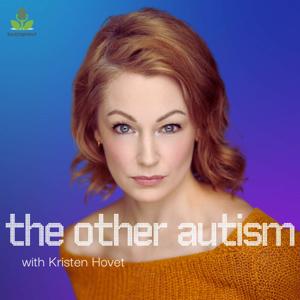
The Other Autism explores late-diagnosed autism and the latest in autism research, and works to dispel myths and stereotypes about autism and autistic people. Episodes cover leading topics in the…

1,323 Listeners

413 Listeners

2,874 Listeners
644 Listeners
236 Listeners
427 Listeners
676 Listeners
308 Listeners
140 Listeners

282 Listeners

27 Listeners
106 Listeners
151 Listeners

24 Listeners