
Sign up to save your podcasts
Or

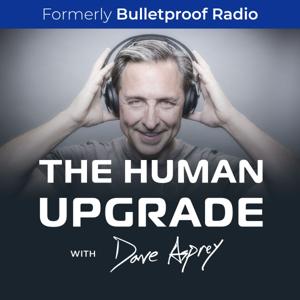

In this episode of Bulletproof Radio, my guest is Robert Soler, who researches, engineers and designs lighting systems that work best for the human brain and body. We get right into the biology of lighting and why LED lighting has been your No. 1 enemy indoors for years.
As a subject-matter expert for NASA's Circadian Lighting System onboard the International Space Station, Robert helped design the first LED light for use there. He has since co-founded a NASA spin-off company to bring the same technology to the general public. He’s now vice president of Human Biological Technologies and Research at Biological Innovation and Optimization Systems (BIOS).
Robert and the BIOS team set out to create better lighting to improve human sleep patterns, cognitive function and general health. Their research on circadian lights has been proven to provide benefits in alertness, jet lag, athlete performance, twilight, seasonality, skin response, photoreception, and more.
BIOS is the only truly circadian lighting developed for humans to mimic natural sunlight. “The whole premise is brighter days, darker nights,” Robert says.
BIOS and my company TrueLight have partnered to launch the first consumer lightbulb that works with your circadian rhythm, not against it. We’ve even captured exciting new technology: “We took out the bad blue and re-appropriated into the good blue region, giving those ‘sky blue’ signals that we need and getting rid of the bad blue in the shorter wavelengths,” Robert says.
Listen on to learn how key photoreceptors drive your circadian rhythms, and how this new bulb’s human compatibility can revolutionize your light and your life.
Enjoy the show! And get more resources at https://blog.daveasprey.com/category/podcasts/,
See Privacy Policy at https://art19.com/privacy and California Privacy Notice at https://art19.com/privacy#do-not-sell-my-info.
 View all episodes
 By Dave Asprey

4.6
69326,932 ratings
In this episode of Bulletproof Radio, my guest is Robert Soler, who researches, engineers and designs lighting systems that work best for the human brain and body. We get right into the biology of lighting and why LED lighting has been your No. 1 enemy indoors for years.
As a subject-matter expert for NASA's Circadian Lighting System onboard the International Space Station, Robert helped design the first LED light for use there. He has since co-founded a NASA spin-off company to bring the same technology to the general public. He’s now vice president of Human Biological Technologies and Research at Biological Innovation and Optimization Systems (BIOS).
Robert and the BIOS team set out to create better lighting to improve human sleep patterns, cognitive function and general health. Their research on circadian lights has been proven to provide benefits in alertness, jet lag, athlete performance, twilight, seasonality, skin response, photoreception, and more.
BIOS is the only truly circadian lighting developed for humans to mimic natural sunlight. “The whole premise is brighter days, darker nights,” Robert says.
BIOS and my company TrueLight have partnered to launch the first consumer lightbulb that works with your circadian rhythm, not against it. We’ve even captured exciting new technology: “We took out the bad blue and re-appropriated into the good blue region, giving those ‘sky blue’ signals that we need and getting rid of the bad blue in the shorter wavelengths,” Robert says.
Listen on to learn how key photoreceptors drive your circadian rhythms, and how this new bulb’s human compatibility can revolutionize your light and your life.
Enjoy the show! And get more resources at https://blog.daveasprey.com/category/podcasts/,
See Privacy Policy at https://art19.com/privacy and California Privacy Notice at https://art19.com/privacy#do-not-sell-my-info.

176 Listeners
770 Listeners
674 Listeners

4,583 Listeners
580 Listeners

364 Listeners

4,986 Listeners
7,279 Listeners
141 Listeners
717 Listeners
4,872 Listeners
3,457 Listeners

9,231 Listeners
1,829 Listeners

142 Listeners
2,560 Listeners
1,781 Listeners

840 Listeners
292 Listeners
1,196 Listeners
3,097 Listeners