
Sign up to save your podcasts
Or

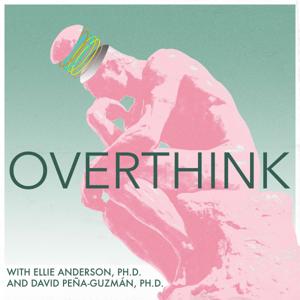

Do we ever have a duty to commit treason? In episode 155 of Overthink, Ellie and David talk about “the crime of crimes.” They look at the emergence of this legal concept and its evolution over time, and discuss some of the most important historical cases involving treason: Benedict Arnold, Aaron Burr, and John Brown. Can we say that treason is always bad when America's founding itself depended on an act of treason? Who is capable of committing a treasonous act? And is treason ever morally permissible? In the Substack bonus segment, your hosts discuss how treason is seen in Hobbes’ political philosophy and whether we need to recover insurrection as a political possibility.
Works Discussed:
Neil Cartlidge, “Treason,” The Cambridge Companion to Medieval Law and Literature
Cécile Fabre, “The Morality of Treason”
George P. Fletcher, “The Case for Treason”
Michel Foucault, Discipline and Punish
Phyllis Greenacre, “Treason and the Traitor”
Leonard Harris, “Honor and Insurrection or A Short Story about why John Brown (with David Walker’s Spirit) was Right and Frederick Douglass (with Benjamin Banneker’s Spirit) was Wrong”
Lee McBride, “Insurrectionary Ethics and Racism”
Enjoy our work? Support Overthink via tax-deductible donation: https://www.givecampus.com/fj0w3v
Join our Substack for ad-free versions of both audio and video episodes, extended episodes, exclusive live chats, and more: https://overthinkpod.substack.com/
See Privacy Policy at https://art19.com/privacy and California Privacy Notice at https://art19.com/privacy#do-not-sell-my-info.
 View all episodes
 By Ellie Anderson, Ph.D. and David Peña-Guzmán, Ph.D.

4.8
452452 ratings
Do we ever have a duty to commit treason? In episode 155 of Overthink, Ellie and David talk about “the crime of crimes.” They look at the emergence of this legal concept and its evolution over time, and discuss some of the most important historical cases involving treason: Benedict Arnold, Aaron Burr, and John Brown. Can we say that treason is always bad when America's founding itself depended on an act of treason? Who is capable of committing a treasonous act? And is treason ever morally permissible? In the Substack bonus segment, your hosts discuss how treason is seen in Hobbes’ political philosophy and whether we need to recover insurrection as a political possibility.
Works Discussed:
Neil Cartlidge, “Treason,” The Cambridge Companion to Medieval Law and Literature
Cécile Fabre, “The Morality of Treason”
George P. Fletcher, “The Case for Treason”
Michel Foucault, Discipline and Punish
Phyllis Greenacre, “Treason and the Traitor”
Leonard Harris, “Honor and Insurrection or A Short Story about why John Brown (with David Walker’s Spirit) was Right and Frederick Douglass (with Benjamin Banneker’s Spirit) was Wrong”
Lee McBride, “Insurrectionary Ethics and Racism”
Enjoy our work? Support Overthink via tax-deductible donation: https://www.givecampus.com/fj0w3v
Join our Substack for ad-free versions of both audio and video episodes, extended episodes, exclusive live chats, and more: https://overthinkpod.substack.com/
See Privacy Policy at https://art19.com/privacy and California Privacy Notice at https://art19.com/privacy#do-not-sell-my-info.

43,940 Listeners

43,628 Listeners
15,272 Listeners

10,742 Listeners
2,110 Listeners

147 Listeners

10,366 Listeners

1,461 Listeners

1,542 Listeners

315 Listeners

5,525 Listeners
585 Listeners

1,346 Listeners
523 Listeners

747 Listeners

146 Listeners

582 Listeners

205 Listeners
1,237 Listeners

574 Listeners

502 Listeners

194 Listeners

289 Listeners
2,528 Listeners
94 Listeners

0 Listeners

79 Listeners

234 Listeners
717 Listeners

11 Listeners

316 Listeners

8,838 Listeners

358 Listeners
39 Listeners
27 Listeners