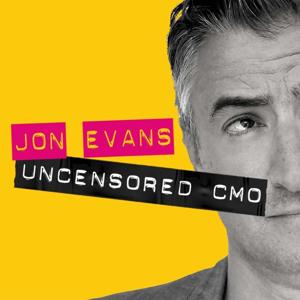
Uncensored CMO

Uncensored CMO

Download on the App Store
  • Favorites

    52

    Followers

  • Typical duration

    54 min

    per episode

Based on Podcast App listening data

Uncensored CMO episodes

  • Mini Episode - 5 Reasons to "Look Out" - Orlando Wood

    Here's my mini conversation with Orlando Wood, author of Lemon and Look Out where I ask him about 5 key insights from the new book:

    1. why it’s rude to stare and how the fixed gaze took over art and advertising 
    2. whether you can actually build a brand online 
    3. the serious case for humour 
    4. how emotions capture our attention 
    5. the surprising power of the finer details 


    Listen to my longer conversation with Orlando: https://share.transistor.fm/s/9496c9dd
    Buy the book: https://ipa.co.uk/knowledge/publications-reports/look-out/

    9 min
  • Why it’s time to Look Out - Orlando Wood

    Orlando Wood is Chief Innovation Officer of System1 Group and Honorary Fellow of the Institute of Practitioners in Advertising. He is also a member of the IPA’s Effectiveness Leadership Group. Author of Lemon (IPA, 2019), co-author of System1, Unlocking Profitable Growth (2017), his research on advertising effectiveness draws on psychology and a study of the creative arts.


    Orlando’s work has influenced thinking and practice in the research, marketing, and advertising, winning him awards from the ARF (Great Minds Distinction Award), the AMA (4 under 40), Jay Chiat (Gold Award for Research Innovation), ISBA (Ad Effectiveness Award), MRS (Best Paper and Research Effectiveness Awards) and ESOMAR (Best Methodology).


    Orlando led the IPA’s Creativity and Effectiveness research for Effectiveness Week in 2018, 2019 and 2020. He has repeatedly worked with Peter Field and the IPA’s DataBank to demonstrate the long and broad effects achieved by emotional advertising, including the performance of fluent devices, a term he coined.


    Orlando is a frequent conference speaker and has been published in The Journal of Advertising Research, Admap, and Market Leader.


    What we covered in this episode:

    • Why digital disruption means we need to start ‘looking out’
    • His last book was a Lemon but it did rather well
    • How Prof Iain McGilchrist inspired Orlando
    • What history can tell us about what is happening today
    • How understanding the brain helps us capture & sustain attention
    • The left brain argument for right brain creativity
    • How our culture lost its vitality
    • The separation of writing a book during lockdown
    • Orlando reads his own introduction to the book
    • Its rude to stare. How the stare has been used throughout history
    • How advertising is starting to reflect art from periods of disruption & conflict
    • Fake news isn’t new. How the printing press created a publishing revolution
    • How the industrial revolution created a loss of community
    • The rapid rise of anxiety and the loss of humour
    • The different modes of attention and why they matter
    • Why we can’t see the wood for the trees
    • We watch what interests us and sometimes that’s advertising
    • How emotion orientates our attention, encodes in memory & aids decision making
    • The role of digital to support brand building ‘broad beam’ advertising
    • Why brand building becomes more important for online businesses
    • How emotion drives more viewing of advertising in digital environments
    • The trap of using digital style ‘narrow beam’ advertising on TV
    • What features in advertising holds attention and drives business effects
    • The swordfish strangler called Wilford. Why uniqueness creates believability.
    • Yorkshire Tea and creating connections
    • Poking fun at rigidity and the serious case for humour 
    • What’s too silly to be said can be sung
    • How colour grading can change our mood and how effective an Ad will be
    • The pandemic and why we need a right-brained reaction
    • The story of a dog and cone and the inspiration for this book
    • Look Out for the book o Amazon and via the IPA’s website
    1 hr 3 min
  • When Brands Stop Advertising - Dr Nicole Hartnett, Ehrenberg-Bass Institute

    Nicole is an advertising and media researcher with a particular interest in how to design effective advertising content.

    Her expertise spans advertising measurement, management and decision making, distinctive brand assets, brand performance metrics and consumer behaviour. She has published in international journals including the Journal of Advertising, Journal of Advertising Research, and the European Journal of Marketing. Nicole also has extensive experience conducting research projects for the Institute’s sponsors across industries and markets, and regularly presents seminars and workshops on various marketing topics.


    What we covered in this episode:

    • Why Marketers are not good judges of advertising
    • Marketing departments are not better than a coin toss
    • Intermediate campaign variables don’t often correlate to sales
    • Why experience doesn’t make you any better at spotting winners
    • The importance of distinctive assets
    • Why characters are a dying art form
    • Why we all need to be a little more Churchill
    • The case for not changing the creative
    • What happens when brands stop advertising
    • Alcohol, babies, pet food & Pandemics
    • Why scale matters when you go dark
    • How your trajectory determines how bad going dark will be
    • What to do when you manage a portfolio and have to cut spend
    • The long term consequence of going dark
    • Why you need a range of distinctive assets to aid memory
    • The power of blackcurrants as a Ribena distinctive asset
    • Why the high turnover of brand managers is bad for effectiveness
    • Why How Brands Grow is the one book every marketer should have
    • Quiet behind the scenes discipline is what matters when everything changes
    • The comfort of familiarity when it comes to memory
    • Building your business around what doesn’t change
    • Are you measuring what really matters
    • Organisations suffer from short term memory and short datasets
    • Learning from success and failures over a long time series
    • Why the insight department need to start letting go
    • Winning the Boardroom battle with data


    1 hr 7 min
  • The Long and the Short of It - Peter Field

    Peter Field has spent 15 years as a strategic planner in advertising and has been a marketing consultant for the last 20 years. His pioneering work on the link between creativity and effectiveness – such as Media in Focus with Les Binet - has earned Peter a global reputation as one of the Godfathers of Effectiveness.

    What we covered in this episode:

    • How he become ‘Godfather of effectiveness’
    • Getting fired from two agencies 
    • The evidence based approach to marketing
    • Creating the IPA database 
    • Origin of The Long and Short of It 
    • The curse of short term thinking 
    • Why brands take time to build 
    • The power of emotion to create connections 
    • The window in which you measure effectiveness is vital 
    • Long term is broad reach emotional creative 
    • Why the 60/40 ratio works 
    • Why brand building matters even more for DTC
    • The conflation of physical and mental availability on line 
    • The myth of digital replacing brand 
    • Convincing the CFO of the role of brand building 
    • Why investors really get it 
    • Why the ESOV model matters and what it tells us 
    • The impact of brand size on ESOV
    • The challenge facing new entrants and why challenger brand thinking matters 
    • How economies of scale benefit market leaders 
    • The amplification power of creativity 
    • The tidal wave of disposable creativity 
    • How award judges are celebrating short term activation 
    • Even effectiveness awards lack long term results 
    • The dangers of going dark in a recession 
    • Why we should be more P&G than Coke
    • Why it’s time to celebrate consistency 
    • The power of strong fluent devices
    • What happens when brands stop advertising
    • The one thing we should be talking about which we aren’t 
    • The breakdown in the correlation between media spend and share of voice 
    • Why we should be measuring share of attention rather than share of voice  
    • It’s time to start paying for attention


    Peter Field

    • The Long and the Short of It
    1 hr 4 min
  • The Case for Creativity & Cannes Lions - James Hurman

    Here's the articles before you listen:

    • Read the Campaign article
    • Read James' article


    Part 1 – The Case for Creativity in Business

    • Growing up in a world that didn’t recognise the potential of creativity
    • How Apple ‘Crazy Ones’ Ad inspired James to pursue Advertising
    • James’ mission to prove the value of Creativity
    • Why Jon was supposed to have a career as an Actuary
    • What the research tells us about the role of Creativity on your success
    • Why we should define effectiveness in hard commercial terms
    • Establishing a universal definition with the Creative Effectiveness Ladder
    • Why understanding your commercial contribution will get you promoted
    • Why the CMO needs to match the certainty and measurability of their Exec colleagues
    • How to sell a Gorilla playing drums to your business
    • We overestimate what we can achieve in 1 year and underestimate what we can achieve in 10
    • The surprising impact on light buyers even on large brands
    • Very few people are buying right now so you must focus on creating future demand
    • The seduction of short term performance metrics
    • How the failure rate of start-ups warn us about the danger of rely on short term metrics only
    • Why it takes an average of 7 years to have an ‘over-night success’
    • The importance of using familiarity when launching a new innovation
    • Why you shouldn’t ditch the old creative if its good


    Part 2 – The Controversy over Cannes

    • How little time CMO’s actually spend on Advertising
    • Jon shares the story before his Effie and Cannes Lion wins
    • How Jon created the name for Uncensored CMO on the beach at Cannes
    • System1 puts Cannes Lion winners to the test
    • Why James reacted so strongly to my Campaign article
    • The importance of recognising the power of Creativity in Advertising
    • How the emotion being created by Cannes winners has changed
    • The case for picking a side and standing up for your values
    • Effectiveness awards look back whilst Creative awards look forward
    • What the Nike winners tell us about Juries decision making
    • Aldi Kevin the Carrot and the power of consistency
    • Whether we can judge creative on a first impression only
    • The importance of authenticity when it comes to purpose
    • Wisdom of Crowds and how a Nat Rep samples can be a good guide to effectiveness
    • The power of Excess Creative Share of Voice in addition to standard ESOV
    • How the opinion of others impacts on our opinion of a brand
    • The history of Essity’s Bodyform campaign and how agency & client worked together
    • Peter Field’s Crisis in Creativity and how we have seen a significant shift to short termism
    • What the role of Creative Awards should be
    • Why we all need to work towards a longer term view and apply creativity to the health of our business
    1 hr 49 min
  • Go Luck Yourself - Andy Nairn, Lucky Generals

    Andy Nairn is one of the 3 founders of Lucky Generals, a creative company for people on a mission. It's been shortlisted for Campaign's Agency of the Year for 5 years in a row. In 2021, Campaign named him the top brand strategist in the UK, for the 3rd time in a row. Business Insider has also named him one of the top 5 creative people in world advertising. He's won 24 IPA Effectiveness Awards (including the 2005, 2007 and 2010 Grands Prix) as well as the top 2 planning prizes in the USA (Gold Effie and Gold APGUS). And he's just launched his first book GO LUCK YOURSELF, with all the royalties going to help working class kids get a lucky break into the creative industry. 

    What we covered in this episode:

    • How lockdown led to Andy writing a book
    • Why he went from law to advertising
    • Jon’s ‘lucky’ break creating a new business
    • Why successful companies use their luck better
    • Good luck is more how you handle bad luck
    • How being clear on your purpose helps prepare for bad luck
    • How Napolean inspired Lucky Generals
    • The importance of a popular idea rather than PowerPoint slides
    • Why strategists should make things simple rather than being super intellectuals
    • Lucky Lockdown and a socially distanced Teapot from Yorkshire
    • How Lucky General took Yorkshire Tea from No.3 to No.1
    • Lucky timing and how the Coop strategy would have been much cooler in Swedish
    • Trolling Tesco with the Coop’s recycling message
    • Premier league footballers lacing up in support of the LGBTQ community
    • Lucky dog story and the role of jeopardy in creating a good ad
    • Making the best Super Bowl ad for Amazon
    • Why the more boring the category the more interesting you become
    • How we lost our history and forgot the power of nostalgia
    • Why lucky mascots are unloved marketing gold
    • How Lucky Generals got everyone to complete their tax returns
    • How the navy beat enemy u-boats by using a new paint scheme
    • What took Taylors so long to put coffee in bags and how they turned this into an advantage
    • Going commando for a good cause and the power of a beautiful constraint
    • Lucky legacy and the battle of the bread brands
    • How they updated the legendary Hovis boy on a bike campaign a won ad of the decade
    1 hr 20 min
  • The fast and the fearless - Nils Leonard, Uncommon

    Nils Leonard has spent over 20 years in the advertising and design industries working at a number of the most recognised agencies in London. In 2017, he founded the Uncommon Creative Studio alongside Lucy Jameson and Natalie Graeme, which aims to be “a creative studio building brands the real world is happy exists”.

    This episode is split into 3 parts, including a bonus segment from my recording with Nils over a year ago. Here's what we covered:

    Part 1 - Creating brands you wish existed 

    • How Nils turned art into a career
    • How he found the 1 ad land job at the Job centre
    • The importance of culture & trust in the turnaround of Grey
    • Why it’s always the people and not the name above the door you should care about
    • The importance of being so clear on your mission that people choose to be in the room
    • How Volvo Life Paint was the inspiration for Uncommon
    • Why you should invest in your own idea rather than begging others to do it
    • Mystery project names, secret hotels and being followed by private investigators
    • How Halo coffee came into the world
    • Why the stories we tell ourselves manifest who we are
    • How panic drove the early success for the agency
    • The power of a website with nothing on it
    • Walking away from a major new client because it didn’t lead to Uncommon work
    • Giving young men confidence via the one second suit

    Part 2 - The Uncommon work

    • Why Uncommon’s B&Q campaign brought tears to my eyes
    • Uncovering a real truth that led to those funny bright orange posters for B&Q
    • Blowing things up with Reality TV stars for ITV
    • Why we need to make the Ad break as entertaining as the programme
    • Backing start ups with an Uncommon accelerator
    • Moving from advertising to design, experience and new product launches
    • Why the Olympics needs to hold up a mirror to the world right now
    • An Uncommon year to win Campaign Agency of the Year
    • How the Pandemic crisis put creativity into overdrive
    • The emotion of seeing people in the office again
    • Nils gives his best advice to CMO’s on how to get to the best work
    • Painting a picture of cultural success as much as commercial success
    • Don’t be ashamed of talking about your personal ambition to make an impact in the world
    • Jim Carey “if you can fail at what you don’t love why wouldn’t you risk trying at something you do”
    • How fear gives us loopholes to get out of what we should be doing
    • Why you can’t brief someone else on your dream. Only you can make it happen.

    Part 3 - a pre-pandemic view on the world

    • An early mistake by Nils when he did ‘release copy’ too early how Jon shut down the underground
    • Why your personal purpose matters and how we are seeing a return to creativity
    • The Gigabyte landfill of social content that no-body is asking for
    • How people used to look forward to the Ads as much as the programs themselves
    • Is the fire in your belly stronger than the fear in your head?
    • Breaking the internet with BrewDog’s first ever TV Ad
    • How we entered the age of outrage and sharing what we are offended by
    • Why you should treat outdoor like Instagram
    • The woods are burning so make a choice because everything we do is something we don’t do
    • How making good work is actually a magnet for talent
    • What the Uncensored CMO’s mission should be to galvanise people to start their own venture
    • Make a difference in the world because our time is short
    1 hr 13 min
  • Can't Sell, Won't Sell; Why adland has stopped selling and started saving the world - Steve Harrison

    Pick up a copy of Steve's book "Can't Sell, Wont Sell" here.

    Steve was European Creative Director (OgilvyOne) and Global Creative Director (Wunderman) either side of starting his own agency, HTW, where, in the seven years the agency operated, he won more Cannes Lions (18) in his discipline than any creative director in the world. His work has subsequently featured in the D&AD Copy Book. He has also authored Changing the world is the only fit work for a grown man; How to write better copy; and How to do better creative work - the latter becoming the most expensive advertising book ever when it traded on amazon for £3,854 a copy.

    What we covered in this episode:

    • Why a propose driven entry will increase your chances of winning a Cannes
    • Why creative should come up with an idea to dramatise the benefit of the brand and then sell it to the client
    • How Turkeys beat Lions and what that says about our priorities are
    • Creative awarded campaigns are less effective than in the entire 24 year history of the IPA database
    • Do people still believe in advertising’s role in creating demand? We need to see our purpose as commercial again
    • The drug of fast data. Why we prioritise what is easy to measure rather than what works
    • Lack of accountability to track and evaluate the impact over the long term
    • Why you should judge a CMO on year 2
    • The importance of winning the board room battle
    • Clients no longer appreciates the time and talent to create great work. The public now to anything they can to avoid advertising. A once powerful business tool is now debased and devalued. Chairman of D&AD.
    • Dropped commercial purpose for social purpose
    • Great examples of social and commercial purpose combining
    • Why social purpose shouldn’t be marketing strategy
    • First purpose is shareholders and employees
    • Lazy solution to a complex marketing problem
    • The insanity of Gillette’s toxic masculinity and how it performed badly against men
    • How did we disconnect from the audience we serve? 84% are 18-40, 80% AB etc we live in a London centric metropolitan bubble
    • How regional agencies reacted differently to London ones
    • Steve’s surprise at the reaction for his book and why he believes social purpose is being pushed by a small clique
    • Why the boycott of GB News should worry us whatever political side we at
    • Why Twitter pressure groups shouldn’t dictate your media strategy
    • Why fear is driving the politicisation of business
    • How pampers got social and commercial purpose right
    • Steve’s manifestos for change
    • Every speech should end with the commercial value of Advertising
    • A new initiative to make creative effectiveness
    • Awards panels needs cognitive diversity
    • What a CMO thinks of Cannes
    • How people fear speaking up
    • Steve’s vision for the future of awards
    1 hr 6 min
  • Improving your mental game - Dolvett Quince

    Dolvett Quince is a real inspiration to his millions of followers but it’s not his Fitness that captured my attention, although you cant argue with the chiselled good looks and winning smile, but his mindset that really impresses. Having overcome a very troubled childhood Dolvett has not let any excuse stop him from pursuing what he loves and being successful. In this episode he shares the mindset that shaped him and the habits that helped him become successful. Consider this a workout for your mind.

    What we covered in this episode:

    • Dolvett shares his troubled family background and how it was both a gift and a curse
    • The impact of being told he would never amount to anything
    • How facing adversity shaped his outlook on life.
    • The power of forgiveness and how it sets you free.
    • Dolvett’s plan to become the next 007
    • Why giving away everything he knows to other trainers led to his success
    • Why Jeff Bezos no longer packs his own boxes
    • How do you scale yourself when you hit maximum capacity
    • Why he added cheats into his diet – leaning to clean and earning the cheat
    • Overcoming your perception of yourself and why it’s all in your mind
    • How he could predict who would succeed on The Biggest Loser
    • The impact of the Pandemic on his Fitness business and how ‘stopping helps you see’
    • The power of persistence and joining the 1% club of podcasts
    • What Dolvett is doing next
    • Can you stay humble and also be successful?
    • The power of Self Love to help you succeed
    • What Dolvett would tell to his 21 year old self
    • The 3 kinds of people in the WWW, those that Wait, Wish & Will
    • Changing lives ‘one rep at a time’ and other great quotes
    • The reason for Dolvett’s next book ‘work out the doubt’
    • The importance of learning from failure and getting back up and going again
    • Why the most successful people are those that teach others
    50 min
  • Making econometrics like art on a Friday and not maths on a Monday – Dr Grace Kite

    What we covered in this episode:

    • What is Econometrics and why you do it?
    • The critical role of people in any econometric project
    • Cristiano, Coke and the complete misattribution of data
    • Importance of senior buy-in to an Econometrics project
    • Making econometrics like art on a Friday not maths on a Monday
    • Marketing as an investment not a cost
    • How the data captures the behaviour of people
    • What Grace learnt when rebranding her business
    • Why Grace has been turning business down
    • How Jon created the Uncensored CMO brand in 45mins
    • Why every tech company has a blue logo
    • Traditional vs Modern marketing and who is right
    • Is creative effectiveness really in decline?
    • How life stage influences media choice more than anything
    • The Wrong and the Right of it and what the data really says
    • Why ‘it depends’ is usually the right answer
    • The importance of evidence over opinion on social media
    • Does paid search actually lead to sales?
    • The role of search as a window into consumer demand
    • Does Share of Search actually predict demand for your brand
    • The one thing Marketers are not talking about but should be


    About Dr Grace Kite

    With more than 20 years’ experience, Dr Grace Kite is a business economist who’s worked on more than 120 econometrics projects across all the main advertising buying categories. In each of these categories, she has developed deep knowledge on market trends and the true nature of competition.

    Grace is a columnist at marketing week and WARC and a regular speaker on marketing effectiveness. With over 4,000 social media followers, she now appears alongside the likes of Mark Ritson and Les Binet. She believes that knowledge that arises from effectiveness analysis doesn’t get fed back to the people that plan campaigns often enough. Her writing and talks set out to ‘lift the lid’ in a way that normal people can understand.

    After earning a PhD in Economics, Grace took on increasingly senior roles at Mindshare, Millward Brown, Holmes & Cook, Mediacom, PHD and OMD. In 2010 she founded the business now known as magic numbers.

    Her work has led to twelve IPA Effectiveness award winners plus a Cannes Grand Prix. She was a technical judge for the 2020 IPA awards, and will judge for WARC in 2021.

    1 hr 1 min

About Uncensored CMO

From the publisher's feed

The Uncensored CMO was created to explore the good, the bad and quite frankly downright ugly truth about marketing theory & practice.

More shows like Uncensored CMO

The Digital Marketing Podcast by Daniel Rowles and Ciaran Rogers

The Digital Marketing Podcast

113 Listeners

Squiggly Careers by The Squiggly Career

Squiggly Careers

57 Listeners

The Diary Of A CEO with Steven Bartlett by DOAC

The Diary Of A CEO with Steven Bartlett

8,301 Listeners

Nudge by Phill Agnew

Nudge

178 Listeners

The CMO Podcast by vYve & Jim Stengel

The CMO Podcast

348 Listeners

On Strategy Showcase by Fergus O’Carroll

On Strategy Showcase

46 Listeners

The Prof G Pod with Scott Galloway by Vox Media Podcast Network

The Prof G Pod with Scott Galloway

5,365 Listeners

A Bit of Optimism by Simon Sinek

A Bit of Optimism

2,213 Listeners

ReThinking by TED

ReThinking

640 Listeners

The WARC Podcast by WARC

The WARC Podcast

11 Listeners

Ruthie's Table 4 by iHeartPodcasts

Ruthie's Table 4

281 Listeners

Marketing Against The Grain by Hubspot Media

Marketing Against The Grain

357 Listeners

When It Hits the Fan by BBC Radio 4

When It Hits the Fan

36 Listeners

The Next Wave - AI and The Future of Technology by Mindstream (Hubspot Media)

The Next Wave - AI and The Future of Technology

55 Listeners

High Performance Business by High Performance

High Performance Business

1 Listeners