
Sign up to save your podcasts
Or


Send a text
🔗 Join the Masterclass:
➡️ https://www.amenkaur.com/masterclass
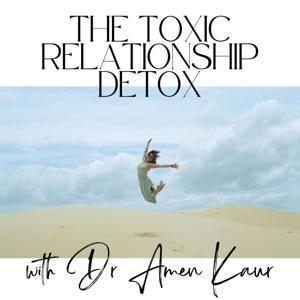
Navigating the aftermath of a toxic relationship can leave you feeling deeply misunderstood — especially by those closest to you. How do you explain that you're not being dramatic, not stuck in the past, but genuinely healing from neurobiological and soul-level wounds?
In this episode, we unpack the science of trauma healing using powerful, practical analogies you can share with family or friends who don't understand your journey.
💔 Your brain after relationship trauma is like a broken bone — it needs care, rest, and the right support to heal.
🐾 Your nervous system? It's like a traumatized animal, frozen in fear, needing time and safety before it can trust again.
We break down how trauma physically reshapes your brain — overactivating the amygdala (fight/flight), shrinking the hippocampus (memory), and disrupting the prefrontal cortex (decision-making). This explains why you might feel foggy, indecisive, or trapped in rumination — even when you know better.
Toxic love creates trauma bonds that operate like addiction — training your brain to confuse chaos with connection. Breaking free isn’t about willpower; it requires intentional, somatic healing: breathwork, movement, nervous system regulation, and trauma-informed therapy.
If you’re supporting someone on this path, know this: your presence matters more than your advice. Healing happens through feeling, not rehashing. It's not about returning to who they were — it's about helping them become who they were always meant to be.
Healing isn’t selfish — it’s sacred. You’re not broken. You adapted to survive. Now it’s time to reclaim your power.Share this episode with someone who needs to understand your healing.
💌 Or use these frameworks to finally explain your journey — in a way that actually makes sense.
🌿 Free Gift for My Listeners:
If you’ve been feeling stuck, overthinking, or ready for a calmer, more confident way to grow — I have a free masterclass for you.
It’s called “How to Reset Your Biology for Calm, Confident Success — Even If You’ve Faced Setbacks.”
You’ll learn how to release survival stress, regulate your nervous system, and grow from safety, not struggle.
🎁 Watch it free here → www.amenkaur.com/masterclass
Because you can only grow as far as your body feels safe to go — and it’s time to start again from calm, clarity, and connection. 🌸
🎧 More Ways to Grow
📺 YouTube: @dramenkaur
📷 Instagram: @dramenkaur
🎥 TikTok: @dramenkaur
🧠 Best For: Transformation, Empowerment, self-help, confidence, mindset, healing, identity transformation, psychology-based growth, neurobiology, success without burnout.
⚖️ Disclaimer
This podcast is for educational purposes only and does not replace professional advice.
If engaging in guided practices, ensure you’re in a safe, grounded space.
By listening, you accept full responsibility for how you use this information.
 View all episodes
 By Dr Amen Kaur

4.7
109109 ratings
Send a text
🔗 Join the Masterclass:
➡️ https://www.amenkaur.com/masterclass
Navigating the aftermath of a toxic relationship can leave you feeling deeply misunderstood — especially by those closest to you. How do you explain that you're not being dramatic, not stuck in the past, but genuinely healing from neurobiological and soul-level wounds?
In this episode, we unpack the science of trauma healing using powerful, practical analogies you can share with family or friends who don't understand your journey.
💔 Your brain after relationship trauma is like a broken bone — it needs care, rest, and the right support to heal.
🐾 Your nervous system? It's like a traumatized animal, frozen in fear, needing time and safety before it can trust again.
We break down how trauma physically reshapes your brain — overactivating the amygdala (fight/flight), shrinking the hippocampus (memory), and disrupting the prefrontal cortex (decision-making). This explains why you might feel foggy, indecisive, or trapped in rumination — even when you know better.
Toxic love creates trauma bonds that operate like addiction — training your brain to confuse chaos with connection. Breaking free isn’t about willpower; it requires intentional, somatic healing: breathwork, movement, nervous system regulation, and trauma-informed therapy.
If you’re supporting someone on this path, know this: your presence matters more than your advice. Healing happens through feeling, not rehashing. It's not about returning to who they were — it's about helping them become who they were always meant to be.
Healing isn’t selfish — it’s sacred. You’re not broken. You adapted to survive. Now it’s time to reclaim your power.Share this episode with someone who needs to understand your healing.
💌 Or use these frameworks to finally explain your journey — in a way that actually makes sense.
🌿 Free Gift for My Listeners:
If you’ve been feeling stuck, overthinking, or ready for a calmer, more confident way to grow — I have a free masterclass for you.
It’s called “How to Reset Your Biology for Calm, Confident Success — Even If You’ve Faced Setbacks.”
You’ll learn how to release survival stress, regulate your nervous system, and grow from safety, not struggle.
🎁 Watch it free here → www.amenkaur.com/masterclass
Because you can only grow as far as your body feels safe to go — and it’s time to start again from calm, clarity, and connection. 🌸
🎧 More Ways to Grow
📺 YouTube: @dramenkaur
📷 Instagram: @dramenkaur
🎥 TikTok: @dramenkaur
🧠 Best For: Transformation, Empowerment, self-help, confidence, mindset, healing, identity transformation, psychology-based growth, neurobiology, success without burnout.
⚖️ Disclaimer
This podcast is for educational purposes only and does not replace professional advice.
If engaging in guided practices, ensure you’re in a safe, grounded space.
By listening, you accept full responsibility for how you use this information.

853 Listeners
763 Listeners
1,163 Listeners

569 Listeners
775 Listeners
518 Listeners
141 Listeners
44 Listeners
693 Listeners
1,736 Listeners
294 Listeners
553 Listeners

86 Listeners

203 Listeners

129 Listeners