
Sign up to save your podcasts
Or

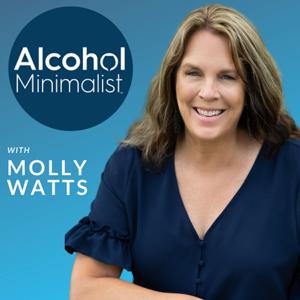

In this reflective episode, Molly explores the concept of emotional freedom—what it is, what it isn't, and how it's connected to both her personal story and the Alcohol Minimalist approach.
Recorded on Martin Luther King Jr. Day and the day after what would have been her father’s 98th birthday, Molly connects the legacies of two powerful men who shaped her understanding of what true strength looks like: calm, steady, and intentional.
You’ll learn how emotional regulation plays a critical role in creating lasting change with alcohol habits, and why your ability to pause between feeling and acting is key to sustainable freedom. Drawing from neuroscience, psychology, and her own lived experience, Molly unpacks the subtle but powerful shift from automatic drinking to intentional living.
Topics Discussed
Key Quotes
“Between stimulus and response, there is a space. In that space is our power to choose our response. In our response lies our growth and our freedom.”“You can tell the size of a man by the size of the thing that makes him mad.”
— Adlai Stevenson, as taught to Molly by her father
Resources Mentioned
Weekly Reflection Prompt
What does emotional freedom mean to me right now?
Not in theory. Not for the future. But right now.
Ask yourself:
Low risk drinking guidelines from the NIAAA:
Healthy men under 65:
No more than 4 drinks in one day and no more than 14 drinks per week.
Healthy women (all ages) and healthy men 65 and older:
No more than 3 drinks in one day and no more than 7 drinks per week.
One drink is defined as 12 ounces of beer, 5 ounces of wine, or 1.5 ounces of 80-proof liquor. So remember that a mixed drink or full glass of wine are probably more than one drink.
Abstinence from alcohol
Abstinence from alcohol is the best choice for people who take medication(s) that interact with alcohol, have health conditions that could be exacerbated by alcohol (e.g. liver disease), are pregnant or may become pregnant or have had a problem with alcohol or another substance in the past.
Benefits of “low-risk” drinking
Following these guidelines reduces the risk of health problems such as cancer, liver disease, reduced immunity, ulcers, sleep problems, complications of existing conditions, and more. It also reduces the risk of depression, social problems, and difficulties at school or work.
 View all episodes
 By Molly Watts, Mindful Drinking & Behavior Change Coach

4.8
156156 ratings
In this reflective episode, Molly explores the concept of emotional freedom—what it is, what it isn't, and how it's connected to both her personal story and the Alcohol Minimalist approach.
Recorded on Martin Luther King Jr. Day and the day after what would have been her father’s 98th birthday, Molly connects the legacies of two powerful men who shaped her understanding of what true strength looks like: calm, steady, and intentional.
You’ll learn how emotional regulation plays a critical role in creating lasting change with alcohol habits, and why your ability to pause between feeling and acting is key to sustainable freedom. Drawing from neuroscience, psychology, and her own lived experience, Molly unpacks the subtle but powerful shift from automatic drinking to intentional living.
Topics Discussed
Key Quotes
“Between stimulus and response, there is a space. In that space is our power to choose our response. In our response lies our growth and our freedom.”“You can tell the size of a man by the size of the thing that makes him mad.”
— Adlai Stevenson, as taught to Molly by her father
Resources Mentioned
Weekly Reflection Prompt
What does emotional freedom mean to me right now?
Not in theory. Not for the future. But right now.
Ask yourself:
Low risk drinking guidelines from the NIAAA:
Healthy men under 65:
No more than 4 drinks in one day and no more than 14 drinks per week.
Healthy women (all ages) and healthy men 65 and older:
No more than 3 drinks in one day and no more than 7 drinks per week.
One drink is defined as 12 ounces of beer, 5 ounces of wine, or 1.5 ounces of 80-proof liquor. So remember that a mixed drink or full glass of wine are probably more than one drink.
Abstinence from alcohol
Abstinence from alcohol is the best choice for people who take medication(s) that interact with alcohol, have health conditions that could be exacerbated by alcohol (e.g. liver disease), are pregnant or may become pregnant or have had a problem with alcohol or another substance in the past.
Benefits of “low-risk” drinking
Following these guidelines reduces the risk of health problems such as cancer, liver disease, reduced immunity, ulcers, sleep problems, complications of existing conditions, and more. It also reduces the risk of depression, social problems, and difficulties at school or work.
1,713 Listeners
1,082 Listeners
2,558 Listeners
27,775 Listeners
142 Listeners
1,372 Listeners
719 Listeners
1,245 Listeners
187 Listeners
563 Listeners
1,087 Listeners

19,524 Listeners
1,794 Listeners
472 Listeners
1,211 Listeners