
Sign up to save your podcasts
Or

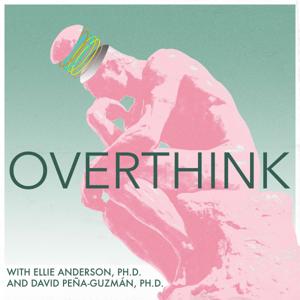

Is the emotional opacity of men a social justice issue? In episode 71, Ellie and David break down the concepts of emotional and hermeneutic labor. The notion of emotional labor was originally created to shed light on gendered workplace interactions, but it has since been applied to romantic and other kinds of relationships. Is this expanded use of the term justified? Ellie’s research suggests that the concept of hermeneutic labor may better explain asymmetries of power in romantic relationships between men and women. Hermeneutic labor imbalances are produced by men’s inability to name and interpret their feelings and by the societal expectation that women manage their own emotions and those of their male partners simultaneously. How does Ellie’s research on hermeneutic labor shift our perspective on the issue of gender in emotional work?
Works Discussed
Ellie Anderson, “Hermeneutic Labor: The Gendered Burden of Interpretation in Intimate Relationships Between Women and Men”
Arlie Russell Hochschild, The Managed Heart
bell hooks, The Will to Change: Men, Masculinity, and Love
Judith Farr Tormey, "Exploitation, Oppression and Self-Sacrifice"
Ronald Levant, “Desperately seeking language: Understanding, assessing, and treating normative male alexithymia”
Olúfẹ́mi Táíwò, “Stoicism (as Emotional Compression) Is Emotional Labor”
Kathi Weeks, "Hours for What We Will: Work, Family, and the Movement for Shorter Hours”
Support the show
Substack | overthinkpod.substack.com
Website | overthinkpodcast.com
Instagram & Twitter | @overthink_pod
Email | [email protected]
YouTube | Overthink podcast
See Privacy Policy at https://art19.com/privacy and California Privacy Notice at https://art19.com/privacy#do-not-sell-my-info.
 View all episodes
 By Ellie Anderson, Ph.D. and David Peña-Guzmán, Ph.D.

4.8
452452 ratings
Is the emotional opacity of men a social justice issue? In episode 71, Ellie and David break down the concepts of emotional and hermeneutic labor. The notion of emotional labor was originally created to shed light on gendered workplace interactions, but it has since been applied to romantic and other kinds of relationships. Is this expanded use of the term justified? Ellie’s research suggests that the concept of hermeneutic labor may better explain asymmetries of power in romantic relationships between men and women. Hermeneutic labor imbalances are produced by men’s inability to name and interpret their feelings and by the societal expectation that women manage their own emotions and those of their male partners simultaneously. How does Ellie’s research on hermeneutic labor shift our perspective on the issue of gender in emotional work?
Works Discussed
Ellie Anderson, “Hermeneutic Labor: The Gendered Burden of Interpretation in Intimate Relationships Between Women and Men”
Arlie Russell Hochschild, The Managed Heart
bell hooks, The Will to Change: Men, Masculinity, and Love
Judith Farr Tormey, "Exploitation, Oppression and Self-Sacrifice"
Ronald Levant, “Desperately seeking language: Understanding, assessing, and treating normative male alexithymia”
Olúfẹ́mi Táíwò, “Stoicism (as Emotional Compression) Is Emotional Labor”
Kathi Weeks, "Hours for What We Will: Work, Family, and the Movement for Shorter Hours”
Support the show
Substack | overthinkpod.substack.com
Website | overthinkpodcast.com
Instagram & Twitter | @overthink_pod
Email | [email protected]
YouTube | Overthink podcast
See Privacy Policy at https://art19.com/privacy and California Privacy Notice at https://art19.com/privacy#do-not-sell-my-info.

43,956 Listeners

43,622 Listeners

15,271 Listeners

10,740 Listeners
2,112 Listeners

147 Listeners
10,361 Listeners

1,461 Listeners

1,541 Listeners

315 Listeners

5,526 Listeners
586 Listeners
1,346 Listeners

523 Listeners

747 Listeners

146 Listeners

582 Listeners

205 Listeners

1,237 Listeners

574 Listeners

502 Listeners

194 Listeners
289 Listeners

2,528 Listeners

94 Listeners

0 Listeners

79 Listeners

234 Listeners

717 Listeners

11 Listeners
316 Listeners
8,842 Listeners

358 Listeners
39 Listeners

27 Listeners