
Sign up to save your podcasts
Or


When you think about someone taking a psychedelic drug like magic mushrooms, the first images that come to mind probably don’t involve a medical professional in a white coat or any sort of clinical setting.
However, the perception of these drugs is changing as researchers and health professionals continue to learn new ways these drugs can treat a variety of mental health conditions.
Much of the research has to do with microdosing, or taking such a small dose of a drug that it doesn’t produce a “trip.” One of the more commonly microdosed drugs is psilocybin, the naturally occurring psychedelic compound found in “magic mushrooms.”
That led our small-but-mighty team at Hyperfocus to wonder, “What could this all mean for ADHD treatment?”
So, we looked for someone who might know, and it led us to Dr. Richard A. Friedman. He’s a professor, psychiatrist, and director of the Psychopharmacology Clinic at Weill Cornell Medicine, Cornell University’s medical school. Richard has also written about his areas of expertise for The New York Times and is a contributing writer at The Atlantic.
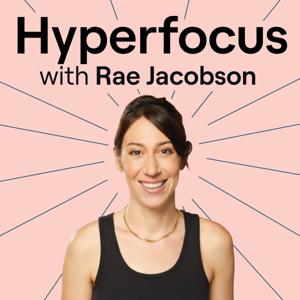
On this week’s episode of Hyperfocus, he sits down with mental health journalist Rae Jacobson to answer all her questions on microdosing, psychedelics as medicine, and what it could mean for ADHD and more.
Related resources
Timestamps
(02:58) What is microdosing?
(10:43) What do we know about ADHD and microdosing?
(15:30) How do psychedelics work in the brain?
(30:44) Richard’s hopes for future research and microdosing
We love hearing from our listeners! Email us at [email protected].
You can also listen to episodes of Hyperfocus on The ADHD Channel for Women (formerly known as MissUnderstood).
Understood is a nonprofit organization dedicated to empowering people with learning and thinking differences, like ADHD and dyslexia. If you want to help us continue this work, donate at understood.org/give
Hosted by Simplecast, an AdsWizz company. See pcm.adswizz.com for information about our collection and use of personal data for advertising.
 View all episodes
 By Rae Jacobson, Understood.org

4.8
2222 ratings
When you think about someone taking a psychedelic drug like magic mushrooms, the first images that come to mind probably don’t involve a medical professional in a white coat or any sort of clinical setting.
However, the perception of these drugs is changing as researchers and health professionals continue to learn new ways these drugs can treat a variety of mental health conditions.
Much of the research has to do with microdosing, or taking such a small dose of a drug that it doesn’t produce a “trip.” One of the more commonly microdosed drugs is psilocybin, the naturally occurring psychedelic compound found in “magic mushrooms.”
That led our small-but-mighty team at Hyperfocus to wonder, “What could this all mean for ADHD treatment?”
So, we looked for someone who might know, and it led us to Dr. Richard A. Friedman. He’s a professor, psychiatrist, and director of the Psychopharmacology Clinic at Weill Cornell Medicine, Cornell University’s medical school. Richard has also written about his areas of expertise for The New York Times and is a contributing writer at The Atlantic.
On this week’s episode of Hyperfocus, he sits down with mental health journalist Rae Jacobson to answer all her questions on microdosing, psychedelics as medicine, and what it could mean for ADHD and more.
Related resources
Timestamps
(02:58) What is microdosing?
(10:43) What do we know about ADHD and microdosing?
(15:30) How do psychedelics work in the brain?
(30:44) Richard’s hopes for future research and microdosing
We love hearing from our listeners! Email us at [email protected].
You can also listen to episodes of Hyperfocus on The ADHD Channel for Women (formerly known as MissUnderstood).
Understood is a nonprofit organization dedicated to empowering people with learning and thinking differences, like ADHD and dyslexia. If you want to help us continue this work, donate at understood.org/give
Hosted by Simplecast, an AdsWizz company. See pcm.adswizz.com for information about our collection and use of personal data for advertising.
1,328 Listeners
445 Listeners
2,533 Listeners
117 Listeners
109 Listeners

94 Listeners
42 Listeners
2,875 Listeners

246 Listeners
720 Listeners
624 Listeners

20 Listeners
167 Listeners

29 Listeners
178 Listeners
27 Listeners
97 Listeners
9 Listeners
54 Listeners
82 Listeners
2 Listeners

377 Listeners
2 Listeners