
Sign up to save your podcasts
Or



Based on Podcast App listening data
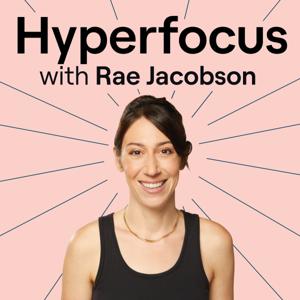
“Isn’t everyone a little ADHD?” If you have ADHD, you’ve heard it. Maybe you’ve felt the flash of rage, and the sadness underneath, because the question can make it sound like your life-altering brain difference is being reduced to a personality quirk. But there’s a more thoughtful version that could be worth asking: Is ADHD a spectrum?
Psychiatrist and writer Dr. Awais Aftab, author of the newsletter “Psychiatry at the Margins,” helps host Rae Jacobson untangle what that word “spectrum” actually means. A spectrum doesn’t mean everyone is a little bit ADHD. But he helps explain how we draw the line between neurodivergent and neurotypical, and what it really means for something to be a “disorder.” They get into why diagnosis rates may be rising in a world of 1,000 emails a day, the role of medication, and why changing environments won’t help everyone equally.
Rae also gets honest about the whiplash of ADHD narratives, from “broken” to “superpower” to “we’re all a little like this,” and about rebuilding a sense of self along the way. It gets emotional.
For more on this topic
For a transcript and more resources, visit Hyperfocus on Understood.org. You can also email us at [email protected].
Getting your child the support they need at school shouldn’t feel like a fight. But for millions of families, it does. In Zero Reject, an investigative podcast from Understood.org, award-winning journalist Anya Kamenetz looks at how changing federal policies are reshaping special education — and what’s at stake for families trying to access the support their children are legally entitled to. Start listening now.
Understood is a nonprofit where millions of people who are navigating neurodivergence find clear guidance, practical tools, and people who get it. To help us continue this work, donate at u.org/give
Hosted by Simplecast, an AdsWizz company. See pcm.adswizz.com for information about our collection and use of personal data for advertising.
Are you mad at me? It’s a question “Hyperfocus” host Rae Jacobson has asked more times than she can count.
So when Rae saw a book with that exact title, she was a little unnerved. The book is by psychotherapist Meg Josephson, and it’s about the fawn response: a survival instinct that can look like people-pleasing.
In this conversation, Meg breaks down what fawning is and why it’s hard to spot — and even harder to stop doing
Meg explains how fawning overlaps with (but isn’t identical to) rejection sensitive dysphoria and why it shows up as masking for a lot of neurodivergent people. And she talks about the moment she realized that years of people-pleasing meant she really didn’t know herself at all.
In this episode of “Hyperfocus,” learn about a pattern a lot of us have been running on autopilot without realizing it. And learn subtle strategies for change.
For more on this topic
For a transcript and more resources, visit Hyperfocus on Understood.org. You can also email us at [email protected].
Getting your child the support they need at school shouldn’t feel like a fight. But for millions of families, it does. In Zero Reject, an investigative podcast from Understood.org, award-winning journalist Anya Kamenetz looks at how changing federal policies are reshaping special education — and what’s at stake for families trying to access the support their children are legally entitled to. Start listening now.
Understood is a nonprofit where millions of people who are navigating neurodivergence find clear guidance, practical tools, and people who get it. To help us continue this work, donate at u.org/give
Hosted by Simplecast, an AdsWizz company. See pcm.adswizz.com for information about our collection and use of personal data for advertising.
We’re dropping into your feed a week early to announce a new investigative podcast from Understood.org. It’s called Zero Reject: The Uncertain Future of Special Education. This is episode 1. If you like it, follow Zero Reject wherever you get your podcasts.
Beth Gellman-Beer spent her whole career fighting for kids with disabilities — first as a student written off as “lazy,” then as a federal civil rights attorney who found her dream job protecting students like her younger self.
Then her entire office was eliminated.
Reporter Anya Kamenetz traces Beth’s journey from an unfair fourth-grade classroom to the front lines of a sweeping overhaul at the Department of Education’s Office for Civil Rights — and what it means for the 25,000 families still waiting for a response to their complaints. With fewer people to enforce the law, what happens to the students the system was built to protect?
For more on this topic
For a transcript and more resources, visit Hyperfocus on Understood.org. You can also email us at [email protected].
Getting your child the support they need at school shouldn’t feel like a fight. But for millions of families, it does. In Zero Reject, an investigative podcast from Understood.org, award-winning journalist Anya Kamenetz looks at how changing federal policies are reshaping special education — and what’s at stake for families trying to access the support their children are legally entitled to. Start listening now.
Understood is a nonprofit where millions of people who are navigating neurodivergence find clear guidance, practical tools, and people who get it. To help us continue this work, donate at u.org/give
Hosted by Simplecast, an AdsWizz company. See pcm.adswizz.com for information about our collection and use of personal data for advertising.
Podcaster PJ Vogt has talked about his ADHD for years. Casually. Almost cheerfully. Then things changed. He decided to go off his ADHD medication, and he found the neuropsych report from when he was 13. It didn’t say what he thought.
On this episode of Hyperfocus, PJ, who’s spent his entire career making some of the most popular podcasts around – like Reply All and Search Engine — talks about his journey to understand his own brain. And how when he reread that old assessment, he found something messier than the story he’d been telling himself.
Host Rae Jacobson follows him through that reckoning and the big question: What happens when the label that shaped your identity turns out to be blurrier than you imagined?
They talk through the trade-offs he’s still sorting out now that he’s stopped taking medication, and the advice he’d give younger people with a brain like his.
For more on this topic
For a transcript and more resources, visit Hyperfocus on Understood.org. You can also email us at [email protected].
Getting your child the support they need at school shouldn’t feel like a fight. But for millions of families, it does. In Zero Reject, an investigative podcast from Understood.org, award-winning journalist Anya Kamenetz looks at how changing federal policies are reshaping special education — and what’s at stake for families trying to access the support their children are legally entitled to. Start listening now.
Understood is a nonprofit where millions of people who are navigating neurodivergence find clear guidance, practical tools, and people who get it. To help us continue this work, donate at u.org/give
Hosted by Simplecast, an AdsWizz company. See pcm.adswizz.com for information about our collection and use of personal data for advertising.
How does ADHD collide with femininity and gender expression? This has been a big question on Rae’s mind. So recently, she sat down with her friend and colleague Cate Osborn for a chat on her podcast, Sorry I Missed This. We’re sharing that episode with you today.
Cate and Rae dig into what it felt like to watch other girls “get it.” The tidiness. The calm. The effortlessness. All things that executive dysfunction made feel out of reach.
They talk about the pressure to be nurturing, organized, and endlessly available — and what happens when your brain doesn’t cooperate with any of it. And they look at the research on outcomes for women and girls with ADHD.
For more on this topic
For a transcript and more resources, visit Hyperfocus on Understood.org. You can also email us at [email protected].
Getting your child the support they need at school shouldn’t feel like a fight. But for millions of families, it does. In Zero Reject, an investigative podcast from Understood.org, award-winning journalist Anya Kamenetz looks at how changing federal policies are reshaping special education — and what’s at stake for families trying to access the support their children are legally entitled to. Start listening now.
Understood is a nonprofit where millions of people who are navigating neurodivergence find clear guidance, practical tools, and people who get it. To help us continue this work, donate at u.org/give
Hosted by Simplecast, an AdsWizz company. See pcm.adswizz.com for information about our collection and use of personal data for advertising.
Your smartwatch tracks your steps and your pulse. Soon, devices like it could track your brainwaves, and even tell if the wearer is neurodivergent.
Brain-monitoring wearables that purport to help with focus, sleep, and even ADHD are already being sold online. This is called “neurotechnology,” and it’s a fast-moving market with almost zero regulation. Stephen Damianos of the Neurorights Foundation joins us to unpack the potential promise — and dangers — of this emerging technology. We discuss the unique risks it poses for neurodivergent people, and why your brain data might be the most valuable, and least protected, information you own.
For more on this topic
For a transcript and more resources, visit Hyperfocus on Understood.org. You can also email us at [email protected].
Getting your child the support they need at school shouldn’t feel like a fight. But for millions of families, it does. In Zero Reject, an investigative podcast from Understood.org, award-winning journalist Anya Kamenetz looks at how changing federal policies are reshaping special education — and what’s at stake for families trying to access the support their children are legally entitled to. Start listening now.
Understood is a nonprofit where millions of people who are navigating neurodivergence find clear guidance, practical tools, and people who get it. To help us continue this work, donate at u.org/give
Hosted by Simplecast, an AdsWizz company. See pcm.adswizz.com for information about our collection and use of personal data for advertising.
Many people with inattentive ADHD feel like something is missing from their diagnosis. That missing piece might be cognitive disengagement syndrome, or CDS: a cluster of symptoms including daydreaming, confusion, daytime sleepiness, and more.
CDS isn’t officially its own disorder. But scientists and clinicians are beginning to recognize it as something distinct from ADHD — though it often overlaps.
Pediatric psychologist Melissa Miller explains how CDS differs from ADHD, what it looks like, and why it’s linked to anxiety and depression. She also shares early research on treatment, plus the strengths that may come with it.
For more on this topic
For a transcript and more resources, visit Hyperfocus on Understood.org. You can also email us at [email protected].
Getting your child the support they need at school shouldn’t feel like a fight. But for millions of families, it does. In Zero Reject, an investigative podcast from Understood.org, award-winning journalist Anya Kamenetz looks at how changing federal policies are reshaping special education — and what’s at stake for families trying to access the support their children are legally entitled to. Start listening now.
Understood is a nonprofit where millions of people who are navigating neurodivergence find clear guidance, practical tools, and people who get it. To help us continue this work, donate at u.org/give
Hosted by Simplecast, an AdsWizz company. See pcm.adswizz.com for information about our collection and use of personal data for advertising.
ADHD can create all kinds of challenges in the workplace. Like a list of infinite things to do and to remember. A busy, ever-changing schedule. And co-workers who don’t always know what’s going on in your mind.
There’s a lot to figure out. But recently, Rae Jacobson found herself wondering what it's like on the other side — to manage someone who’s neurodivergent and still figuring it out.
So, Rae called her former boss, Caroline Miller, the editorial director of the Child Mind Institute.
On this episode of Hyperfocus, Rae and Caroline go over this question and Caroline shares some advice on ADHD at work — for employees and managers alike.
To get a transcript of this show and check out more episodes, visit the Hyperfocus podcast page at Understood.org
We love hearing from our listeners. Email us at [email protected].
Note: This episode originally aired on November 7, 2024.
Related resources
Getting your child the support they need at school shouldn’t feel like a fight. But for millions of families, it does. In Zero Reject, an investigative podcast from Understood.org, award-winning journalist Anya Kamenetz looks at how changing federal policies are reshaping special education — and what’s at stake for families trying to access the support their children are legally entitled to. Start listening now.
Understood is a nonprofit where millions of people who are navigating neurodivergence find clear guidance, practical tools, and people who get it. To help us continue this work, donate at u.org/give
Hosted by Simplecast, an AdsWizz company. See pcm.adswizz.com for information about our collection and use of personal data for advertising.
Fidget toys, like NeeDohs, are sold out and banned in classrooms. Journalist Anna North joins us to unpack how fidget toys went from gag gifts to a generational obsession, and what that shift reveals about neurodivergence, attention, and play. Plus, fidget toys are not just for kids. We look at how they are destigmatizing fidgeting for neurodivergent adults. And we dig into the science behind fidgeting, the history of the fidget spinner, and whether this wave of acceptance for sensory needs will survive.
For more on this topic:
For a transcript and more resources, visit Hyperfocus on Understood.org. You can also email us at [email protected].
Getting your child the support they need at school shouldn’t feel like a fight. But for millions of families, it does. In Zero Reject, an investigative podcast from Understood.org, award-winning journalist Anya Kamenetz looks at how changing federal policies are reshaping special education — and what’s at stake for families trying to access the support their children are legally entitled to. Start listening now.
Understood is a nonprofit where millions of people who are navigating neurodivergence find clear guidance, practical tools, and people who get it. To help us continue this work, donate at u.org/give
Hosted by Simplecast, an AdsWizz company. See pcm.adswizz.com for information about our collection and use of personal data for advertising.
Finding a therapist is hard. Finding one who actually understands ADHD? That’s a different problem entirely. Clinical psychologist Dr. Michelle Frank, who has ADHD herself, breaks down why people with ADHD struggle to stick with therapy. She looks at everything from the executive function demands of just getting there, to sensory issues, to the rejection sensitivity that makes you think “Does my therapist hate me?!” Plus: How to advocate for yourself in the room, even when your provider doesn’t specialize in ADHD.
For more on this topic
For a transcript and more resources, visit Hyperfocus on Understood.org. You can also email us at [email protected].
Getting your child the support they need at school shouldn’t feel like a fight. But for millions of families, it does. In Zero Reject, an investigative podcast from Understood.org, award-winning journalist Anya Kamenetz looks at how changing federal policies are reshaping special education — and what’s at stake for families trying to access the support their children are legally entitled to. Start listening now.
Understood is a nonprofit where millions of people who are navigating neurodivergence find clear guidance, practical tools, and people who get it. To help us continue this work, donate at u.org/give
Hosted by Simplecast, an AdsWizz company. See pcm.adswizz.com for information about our collection and use of personal data for advertising.
From the publisher's feed
1,326 Listeners

441 Listeners

2,513 Listeners
117 Listeners
109 Listeners

94 Listeners
34 Listeners

2,871 Listeners
246 Listeners
711 Listeners
629 Listeners
19 Listeners
175 Listeners

29 Listeners
176 Listeners
27 Listeners
98 Listeners
9 Listeners
54 Listeners
80 Listeners
2 Listeners

378 Listeners
2 Listeners